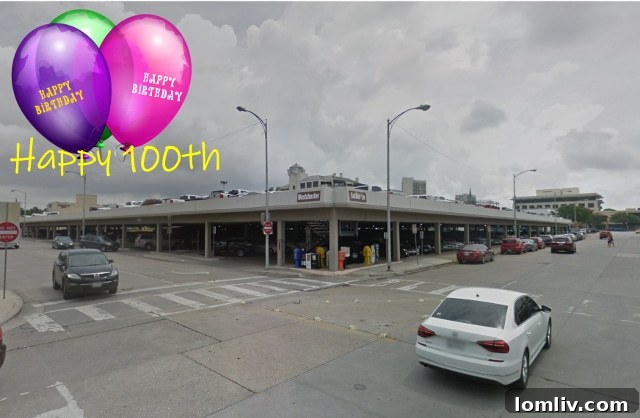
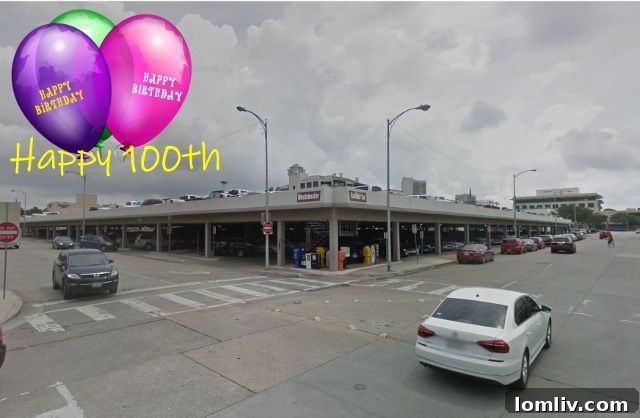
The quest for meaningful urban revitalization in Dallas’s prestigious Preston Center recently reached a critical juncture. A task force, spearheaded by City Council member Jennifer Gates, concluded its final public meeting focused on the future of the long-standing Preston Center parking garage. As the accompanying image, a speculative glimpse into 2055, vividly illustrates, the current, aging structure may well persist to celebrate its centennial. This tongue-in-cheek prediction underscores the profound stalemate that continues to plague efforts to transform this vital piece of Dallas infrastructure, threatening to relegate Preston Center’s potential to a century of missed opportunities.
At the heart of this protracted conflict lies a fundamental disagreement between two key entities: the Preston Center Parking Corporation, which holds control over the garage’s operation and usage, and the City of Dallas, the rightful owner of the underlying land. Progress hinges entirely on a consensus between these two parties, a consensus that has proven elusive. While the City has demonstrated a degree of flexibility in negotiation, the Parking Corporation operates under a stringent requirement for unanimous internal agreement, effectively granting a single dissenting voice the power to obstruct any forward momentum for the entire Preston Center revitalization project.
From the outset of these discussions, the Parking Corporation’s position has been unequivocally clear: a public park within the Preston Center district is not in their interest. Their rationale, openly expressed, views every square foot dedicated to green space as a direct loss of potential sales or revenue-generating opportunities. This perspective, however, stands in stark contrast to decades of urban planning research and numerous case studies that consistently demonstrate how well-integrated urban parks and green spaces significantly enhance the commercial vitality and property values of surrounding districts. In an era where evidence-based decision-making is increasingly critical for sustainable urban development, the Parking Corporation’s stance appears to reside firmly in a “post-fact” landscape, prioritizing perceived immediate commercial gains over proven long-term economic and community benefits.
The Perceived Money Grab: A Public Funds Dilemma in Urban Development
The proposal put forth by the Preston Center Parking Corporation has been widely characterized as a significant “money grab,” sparking considerable public backlash and skepticism. Their ambitious plan requests a staggering $10 million from the North Central Texas Council of Governments (NCTCOG), an additional $10 million from the City of Dallas, and the outright transfer of the four-acre parcel of land upon which the existing parking garage currently stands. This land alone is estimated to be valued between $30 million and $40 million, representing a substantial public asset. Beyond these primary demands, the corporation also seeks various other financial contributions, all ostensibly to fund their vision for the site.
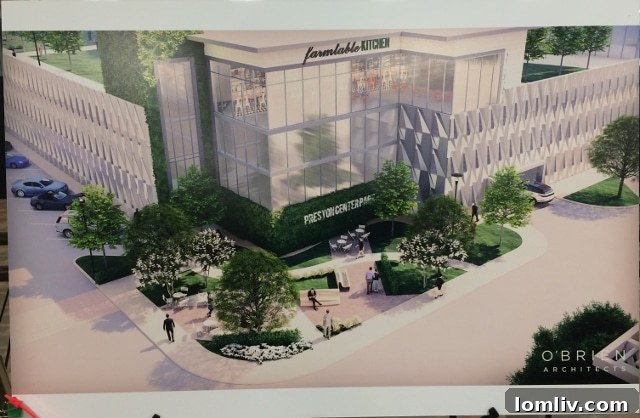
What exactly does the Parking Corporation intend to build with such a substantial public subsidy and land donation? Their proposal involves constructing a high-rise apartment building on one half of the four-acre property. On the other half, they envision a three-story above-ground parking garage, conspicuously lacking direct ground-level public access to green space. Instead, their design includes a park situated on top of this elevated parking structure, accessible only via an elevator – a feature euphemistically termed a “vertical transportation system” by Parking Corp. representative Robert Dozier during his presentation. This description, with its bureaucratic flourish, only served to highlight the impracticality and detachment of the proposed “park” from the vibrant, ground-level urban environment that truly fosters community engagement and pedestrian activity.
The overwhelmingly negative reaction from the audience each time this developer-driven dream was presented speaks volumes. It brought to mind the old adage, “If I only spoke to people who liked me, I wouldn’t speak at all.” The public perceived the proposal for what it truly was: a self-serving private enterprise, heavily reliant on public funds and public land, designed primarily to benefit surrounding landowners and developers rather than the broader community or the general public good. This perception was further cemented by their rationale for demanding free land and significant public monies: the claim that the project would generate over $1 million annually in new property taxes.
However, this financial justification quickly unraveled under scrutiny. Walker Consultants, an authority frequently cited in these discussions, indicated that the typical lifespan of a parking garage is between 50 to 70 years. Given this timeframe, the proposed garage would only begin to “pay for itself” in terms of new tax revenue as it neared the end of its projected useful life. This scenario was starkly likened to a car catching fire just as you make the final payment – a dire and unsustainable investment of taxpayer dollars. The long-term implications for public infrastructure, financial responsibility, and genuine urban development weigh heavily against such a short-sighted approach, raising serious questions about the accountability and foresight of such a plan for Preston Center’s future.
The City’s Balanced Proposals and the Elusive Compromise
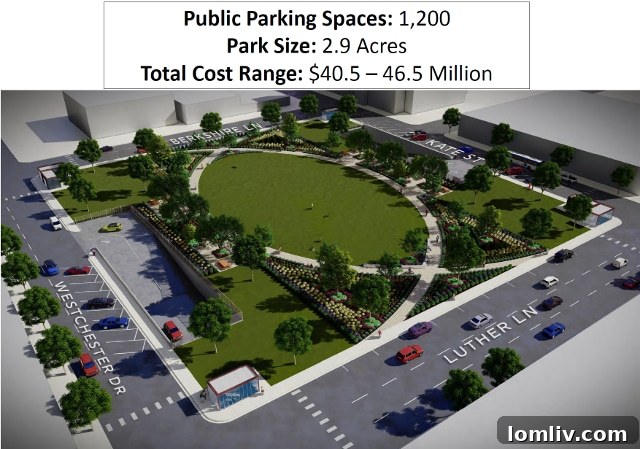
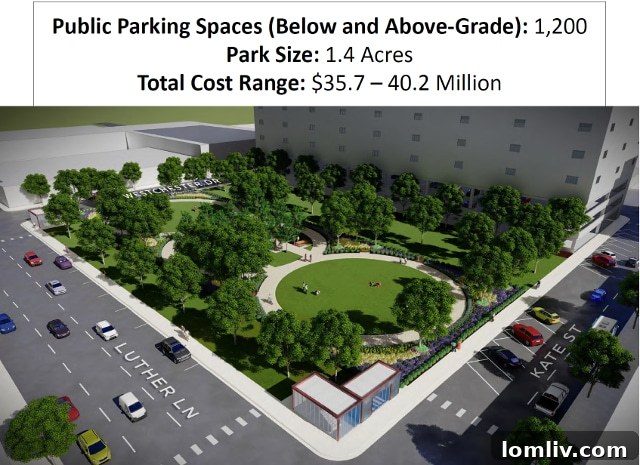
In stark contrast to the Parking Corporation’s financially self-serving plan, the City of Dallas, through its consultants, Walker, presented a series of more community-centric concepts designed to foster genuine urban revitalization in Preston Center. These proposals were introduced after careful consideration, aiming to balance development needs with the widespread public desire for improved green spaces and pedestrian-friendly environments.
The primary and most favored concept involved a fully underground parking garage, freeing up the entire four-acre surface area for a vibrant public park. This vision resonated deeply with the community and various stakeholders who were genuinely interested in enhancing the quality of life and economic vitality of Preston Center, rather than merely profiting from its redevelopment. A full four-acre park at ground level would transform the area, providing much-needed green infrastructure, promoting walkability, and creating a true urban amenity that could serve as a focal point for the entire district.
Walker’s secondary concept presented a more balanced, albeit less ideal, approach: a 50/50 split between a park and an apartment building. Crucially, this proposal differed significantly from the Parking Corporation’s vision because the two-acre park component would be situated at ground level, making it easily accessible and integrated into the urban fabric. This direct ground-level access is a fundamental aspect of successful urban green spaces, fostering spontaneous use, promoting pedestrian flow, and enhancing the overall aesthetics and functionality of a commercial district. The contrast with the Parking Corporation’s proposal, which placed a park atop an elevated parking structure requiring a “vertical transportation system” for access, could not have been starker. While the Parking Corporation enthusiastically championed their apartment building component, the notion of a ground-level park was, for them, a “compromise too far.” This rigid stance highlighted their unwavering commitment to maximizing private development at the expense of public space and community benefits.
The repeated rejections of the City’s more balanced proposals underscore a fundamental lack of compromise from the Preston Center Parking Corporation. Since their initial “money grab” plan received an overwhelmingly cool reception at the January meeting, their position has remained essentially unchanged. It appears to be an “all or nothing” proposition for them, despite the immense public interest and the potential for a truly transformative urban development. Unfortunately, as the primary controllers of the existing garage’s usage, they currently hold all the decisive cards, effectively stalling any progress and leaving the future of Preston Center’s revitalization in a frustrating deadlock.
Advocating for Hardball: A Path Forward for Preston Center
Given the persistent impasse and the Preston Center Parking Corporation’s uncompromising stance, a more assertive approach from the City of Dallas is not just warranted but necessary. The current situation, characterized by an unwillingness to genuinely engage in dialogue for the broader public good, calls for the City to play “hardball.” This strategy would involve setting firm deadlines and consequences, demonstrating that public funds and public land are not simply open for private entities to appropriate without delivering substantial community benefits.
My personal inclination in this scenario is to advocate for a firm “nothing” – that is, no public funds, no public land, until a truly beneficial compromise is reached. Specifically, City Council member Gates should issue a clear ultimatum to the Parking Corporation: a 90-day window to reach a mutually agreeable and equitable compromise. Should they fail to do so, the City’s allocated $10 million, earmarked for this redevelopment, should be immediately reallocated to other, less contentious and more impactful urban development projects elsewhere in Dallas. The NCTCOG’s pledged $10 million should follow suit, signaling a unified front against private interests holding public progress hostage. This action would underscore the principle that taxpayer money must serve the public good, not merely line the pockets of private stakeholders.
Furthermore, if compromise remains elusive, the Parking Corporation should be left solely responsible for the escalating maintenance costs of the aging, existing garage. Let the structure continue to deteriorate under their sole stewardship until building inspections mandate its structural integrity is compromised, forcing them to address the issues at their own expense, potentially even requiring the removal of the top deck. This approach would incentivize genuine negotiation by shifting the financial burden back to the entity that benefits most from the existing arrangement. Crucially, the City must unequivocally commit to never relinquishing ownership of the land. Whether for an apartment building, another private development, or any other purpose that does not prioritize comprehensive public benefit, the strategic value of this land to the future of Preston Center is simply too high to cede.
Addressing Construction Concerns and Exploring Alternative Urban Solutions
A frequent complaint raised by the Parking Corporation revolves around the perceived inconvenience and lengthy timeframe associated with constructing a park and an underground parking facility. However, these concerns often overlook readily available solutions and broader urban planning considerations. Walker Consultants, in their analysis, effectively countered these arguments by highlighting the significant surplus of parking spaces available in existing garages surrounding Preston Center. This surplus could easily alleviate any temporary loss of parking during a phased construction, ensuring that businesses in the commercial district remain accessible and viable.
Beyond existing infrastructure, innovative temporary solutions could also be explored. For instance, the approximately 10 vacant acres located directly across Northwest Highway, currently owned by Mark Cuban, present a compelling opportunity. This land could be temporarily leased as an overflow parking lot, providing a convenient and accessible alternative during the construction phase. Looking further ahead, a more visionary approach could involve rezoning Cuban’s land for low-impact commercial use once the primary Preston Center redevelopment is complete. Such a rezoning could strategically incentivize him to invest in an underground tunnel connecting his property directly to Preston Center. This would not only enhance pedestrian safety by eliminating dangerous street crossings but also significantly improve accessibility, fostering a more integrated and walkable urban environment.
Such strategic land use changes could yield even broader benefits for Preston Center. Rezoning highway-facing lots for commercial use, for example, could adjust residential proximity slopes, potentially enabling increased height and density among other high-rise developments within the district, contributing to a more dynamic and economically robust urban core. Yet, these forward-thinking possibilities often clash with existing, outdated planning frameworks. Regrettably, the much-touted “visionary” Preston Center Area Plan, a document intended to guide future development, has been widely criticized as a “worthless waste of time and money,” notably for its failure to provide a workable framework that could accommodate such innovative solutions, effectively “hanging Cuban out to dry” on his valuable land parcels.
Ultimately, while beautifully rendered architectural concepts and ambitious proposals abound, the sobering reality remains that neither party currently possesses the substantial financial resources required to construct anything as ambitious as a comprehensive redevelopment of this scale. This persistent funding gap, coupled with the ongoing lack of consensus, condemns the Preston Center parking garage to its current state for the foreseeable future. Thus, we are left to ironically celebrate a “Happy pre-100th birthday” to the Preston Center garage. One might even imagine Preston Center Plaza gleefully throwing a celebratory party, in appreciation for a century of operating without the inconvenience of genuine competition or modern urban amenities that might challenge its established status quo. The true cost of this stalemate is not merely financial, but represents a missed opportunity for the entire Dallas community to transform a critical urban node into a vibrant, future-ready commercial and public space.

Remember: My focus consistently revolves around high-rises, Homeowners’ Associations (HOAs), and the intricate world of property renovation. However, my passion extends to appreciating both modern and historical architecture, always viewed through the lens of a balanced and forward-thinking urban planning philosophy, particularly in dialogue with the YIMBY (Yes In My Backyard) movement. My commitment to insightful real estate commentary has been recognized by the National Association of Real Estate Editors, who honored my writing with three Bronze awards in 2016, 2017, and 2018 (2016, 2017, 2018), alongside two Silver awards in 2016 and 2017 (2016, 2017). If you have a compelling story to share, a perspective on urban development, or even an unconventional marriage proposal, please don’t hesitate to reach out via email at [email protected]. While you’re welcome to search for me on Facebook and Twitter, fair warning: you likely won’t find me there, but the thought is always appreciated.