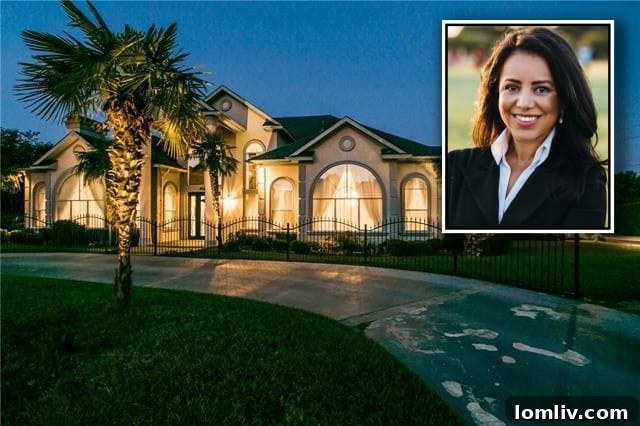
Texas State Representative Victoria Neave Faces Foreclosure Over Delinquent Property Taxes
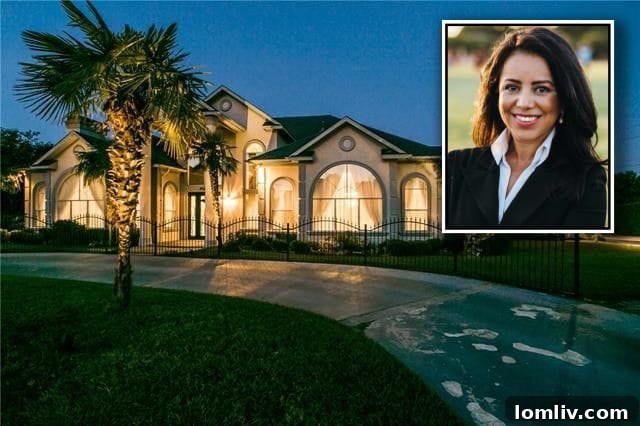
State Representative Victoria Neave has forged a reputation as an effective legislator since embarking on her career in the Texas legislature, notably winning against Kenneth Sheets in 2016. However, her recent public attention stems from a considerably different matter: her substantial delinquent property taxes. This situation brings to light the personal financial challenges that can confront public figures, even those with established legislative careers.
The Accumulation of Significant Property Tax Debt
Neave, who proudly represents District 107, encompasses vital areas including parts of East Dallas and Mesquite. Earlier reports this year highlighted that Rep. Neave owed Dallas County for back taxes on her property located on Abrams Road. The situation escalated when Richardson ISD subsequently filed documentation revealing that Neave was also indebted to the school district for nearly $24,000. This additional claim brought her total outstanding delinquent property tax bill to a staggering amount exceeding $50,000.
The accumulation of such a significant tax burden can have severe consequences for any property owner, and for a public official, it also raises questions regarding financial stewardship and public accountability. Delinquent property taxes not only incur penalties and interest but can also lead to legal action, as demonstrated in Neave’s case. The funds collected from property taxes are crucial for local government services, including public education, making the non-payment an issue of public interest.
Foreclosure Looms: Property Set for Auction
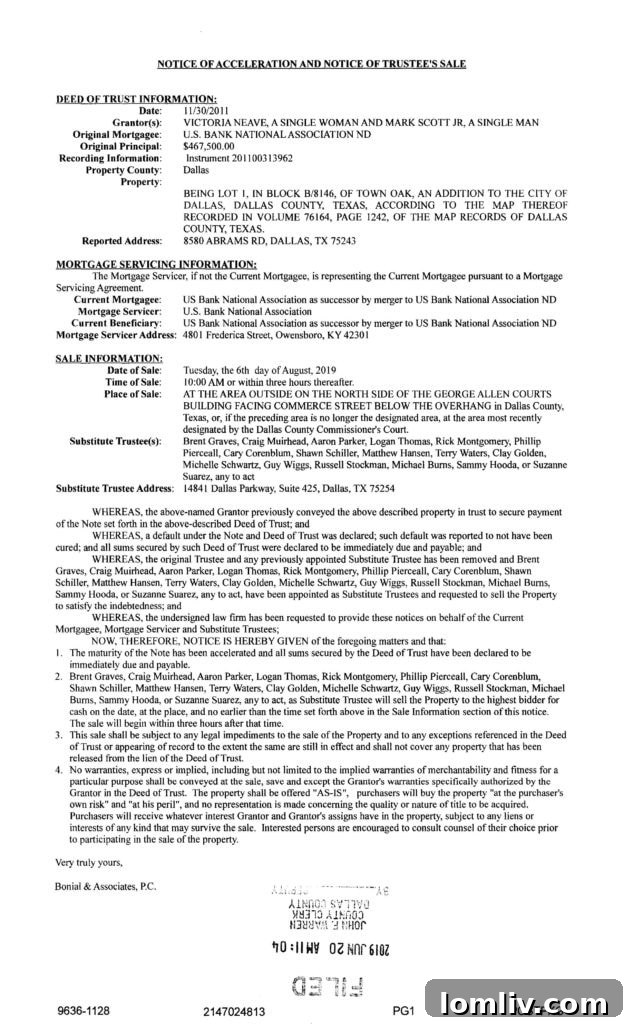
The repercussions of these unpaid taxes are now taking a critical turn. The property, situated at 8580 Abrams Road, is slated to be sold on the Dallas County courthouse steps in October, as indicated by a formal notice of trustee’s sale. This development signifies the most severe legal action taken against a property owner for unpaid taxes, where the property is seized and sold to recover the outstanding debt.
Initial reports indicated an earlier sale date. Daltxrealestate.com encountered an initial notice filed on June 2, which had originally scheduled the foreclosure sale for August 6. However, the authenticity of this initial notice could not be confirmed on the Dallas County website. Seeking clarification, further inquiry was made with one of the involved trustees. Michael Burns, an attorney with Bonial & Associates, confirmed the revised timeline via email, stating, “Property is now posted for the October 1, 2019 foreclosure sale.” He further clarified, “The sale described on what you forwarded (posting for the August 6, 2019 foreclosure sale) will not go forward.” This adjustment provided a slightly extended timeframe, though the impending sale remained certain.
A trustee’s sale is a public auction, typically held at the courthouse, where the property is sold to the highest bidder to satisfy the outstanding debt. This process is a common legal mechanism to resolve severe cases of mortgage default or, as in this instance, delinquent property taxes. For a public figure, the public nature of such an event adds another layer of scrutiny and potential political ramifications.
The Public Disclosure of a Protected Address
When Dallas County initiated legal proceedings against Neave for the delinquent taxes, her ex-fiance, Mark Scott Jr., was named as a co-defendant. He is also prominently listed as a co-grantor in the official sale notice. This shared ownership adds complexity to the legal and financial challenges surrounding the property.
Intriguingly, in February, Scott publicly denied still owning the property. However, county property tax records present a different narrative. These records clearly show that the last recorded change of deed occurred in 2011, when Neave and Scott jointly purchased the home. It is widely understood that the two likely benefited from a specific provision designed to shield the residential addresses of prosecutors and elected officials from publicly accessible property records. This provision is typically implemented for security reasons, acknowledging the heightened risks public servants may face.
Despite this protective measure, the lawsuit filed by Dallas County inadvertently made the property’s address public. This turn of events underscores how legal actions, even those related to civil matters like tax delinquency, can override privacy provisions and expose sensitive information. For an elected official, the public revelation of personal financial struggles and residential details can significantly impact their public image and political standing.
Rep. Neave’s Response and Financial Snapshot
Following the unfolding situation, a *Texas Monitor* article reported that Neave declined an interview request but provided a statement via email. In her communication, Neave stated, “Despite my best efforts to make payments, I take full responsibility for being in arrears. I am expediting the process to put the house back on the market and am working on settling the past due balance as soon as possible.” This statement acknowledges her financial responsibility and indicates an active effort to resolve the issue through the sale of the property.
According to state financial documents, State Representative Neave’s primary and steady sources of income are her law firm and her state legislative salary. The financial compensation for state legislators in Texas is relatively modest: they earn $600 per month. Additionally, they receive a per diem of $190 for every day the legislature is officially in session. When the legislature is in session, this equates to an annual income of approximately $33,800. While a law firm can provide additional income, the legislative salary itself, when compared to the cost of living and property values in areas like East Dallas, highlights the potential financial pressures faced by elected officials. Managing significant property debt and tax obligations on such an income can be a considerable challenge, potentially explaining the difficulties encountered in keeping up with payments.
A History of Market Challenges for the Abrams Road Property
This is not the first time the property at 8580 Abrams Road has been on the market. Earlier this month, further details emerged regarding the house being listed for sale once again, this time with a list price of $750,000. However, a deeper look into the property’s sales history reveals a recurring pattern of market struggles.
MLS (Multiple Listing Service) records show that the home was previously listed on the market in both 2015 and 2017. On both occasions, the listings expired without the property being sold. The property’s initial asking price was significantly higher, nearly $1.5 million. Over the intervening years, the price was gradually reduced, eventually reaching its current figure of $750,000. This substantial price drop, combined with repeated failures to sell, suggests potential challenges with market valuation, property condition, or perhaps even underlying financial encumbrances that might deter potential buyers. The current listing, under the shadow of an impending foreclosure, adds another layer of urgency and complexity to the sale process, as buyers may be wary of the legal and financial entanglements.
Implications for Public Trust and Accountability
The situation surrounding State Representative Victoria Neave’s delinquent property taxes and the looming foreclosure sale is more than just a personal financial matter; it carries significant implications for her political career and public trust. As an elected official, Neave is held to a higher standard of transparency and accountability by her constituents and the public at large. While personal financial struggles can affect anyone, when they impact a public servant, they can raise questions about their ability to manage responsibilities effectively and maintain fiscal integrity.
The public nature of the foreclosure proceedings, coupled with the previous attempts to sell the property and the substantial tax debt, creates a narrative that could influence voter perception. Constituents in District 107, encompassing East Dallas and Mesquite, might scrutinize how their representative handles her own finances, especially given the impact of property taxes on local services and schools. Neave’s proactive statement taking responsibility is a step towards mitigating potential fallout, but the ultimate resolution of the property sale and tax debt will be critical in shaping future perceptions. This ongoing saga serves as a potent reminder of the intersection between personal finance and public service, and the constant scrutiny faced by those in elected office. The outcome of the October 1st foreclosure sale will undoubtedly be closely watched by the community and beyond.