

What Renters Really Want: Decoding Tenant Preferences in Today’s Apartment Market
The landscape of housing in the United States is continuously evolving, with a significant shift towards renting becoming increasingly apparent. This trend is not merely a fleeting moment but a sustained movement driven by various economic and social factors. For instance, in areas like North Texas, a notable number of individuals choose to rent after selling their homes, often as an interim solution before their next property purchase. This local trend mirrors a broader national phenomenon, as highlighted by a Pew Research Center study, which revealed a substantial increase in the proportion of U.S. households opting to rent. Over the last decade, the number of apartment dwellers saw a 5 percent surge, reaching its highest point in 50 years. This demographic shift is particularly pronounced among younger generations; a striking 65 percent of households led by Americans aged 35 and younger are currently renting, an 8 percent increase from the previous reporting period. These statistics underscore a pivotal moment in the rental market, emphasizing the growing importance of understanding the modern renter’s priorities and preferences.
With an ever-expanding population choosing to rent, the needs and desires of tenants are more crucial than ever for property managers, developers, and rental platforms. Recognizing this, Apartment Guide conducted a comprehensive survey to delve into the minds of apartment hunters. Their goal was to uncover precisely what renters truly seek, not only in their ideal apartment but also throughout the entire apartment search process. This insightful research provides invaluable data that can help shape the future of the rental industry, ensuring that housing options align with tenant expectations and foster positive living experiences.
Navigating the Apartment Hunt: Emotions and Expectations
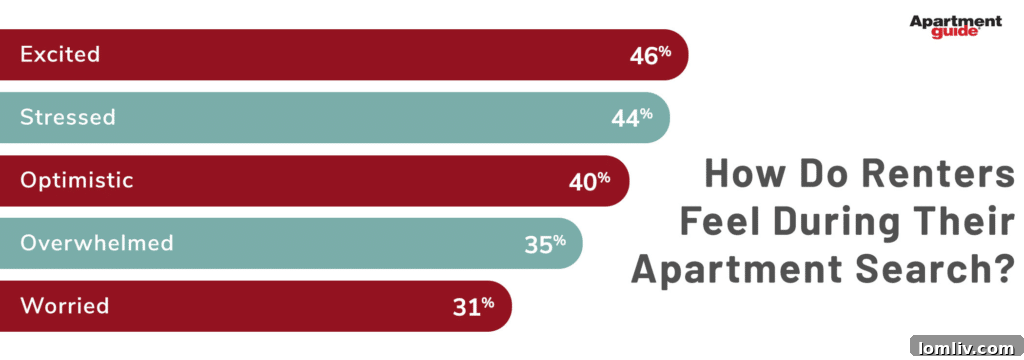
The journey of finding a new home, even a rental, is often a complex emotional experience, fraught with both anticipation and apprehension. Apartment Guide’s survey illuminated the contrasting sentiments that renters typically encounter during their search. While a considerable portion of renters experienced feelings of stress (44 percent) and being overwhelmed (35 percent) by the task of securing a new residence, there was also a strong current of positive emotion. Encouragingly, 46 percent of renters reported feeling “excited,” and 40 percent felt “optimistic” about the prospect of discovering their next living space. These findings suggest that while the process can be daunting, many renters approach it with a sense of hope and eagerness for a fresh start. For property managers and real estate professionals, understanding this emotional spectrum is vital. Acknowledging and addressing the sources of stress while nurturing the excitement can significantly improve the renter’s experience, making the search more manageable and enjoyable.
Key Priorities: What Matters Most to Renters?
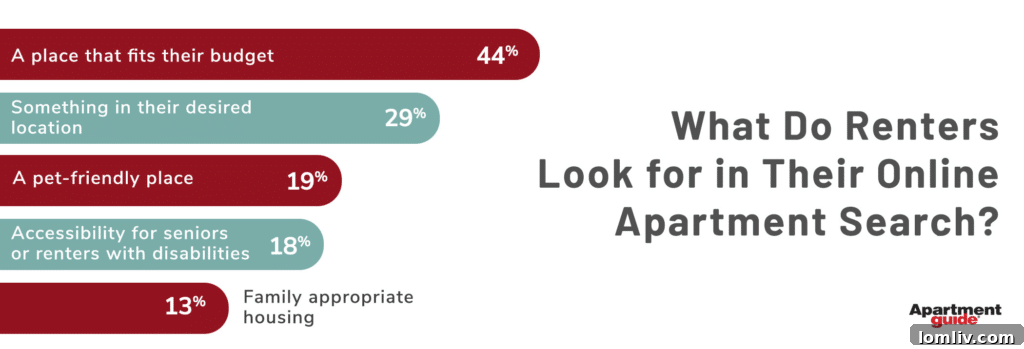
When it comes to selecting a new rental property, renters consider a multitude of factors, each contributing to their overall decision-making process. The survey identified several critical areas of concern, including affordability, location, pet-friendliness, accessibility for seniors and individuals with disabilities, and the availability of family-friendly amenities. Historically, the real estate adage “location, location, location” has dominated discussions. However, Apartment Guide’s findings challenge this long-held belief, at least for the rental market. Surprisingly, only 29 percent of respondents identified location as their primary concern. This indicates a significant shift in renter priorities, suggesting that other factors now hold greater sway.
Indeed, a much larger proportion of respondents—44 percent—considered affordability as the paramount aspect of their apartment search. This statistic profoundly highlights the financial pressures faced by many renters today. The rising cost of living and stagnant wages often mean that budget constraints dictate housing choices more than any other factor. While location still holds importance, ranking second overall, it is clearly secondary to the financial feasibility of a rental unit. Understanding this hierarchy of needs is crucial for property developers and landlords who aim to attract and retain tenants in a competitive market.
The Undeniable Dominance of Price in Rental Decisions
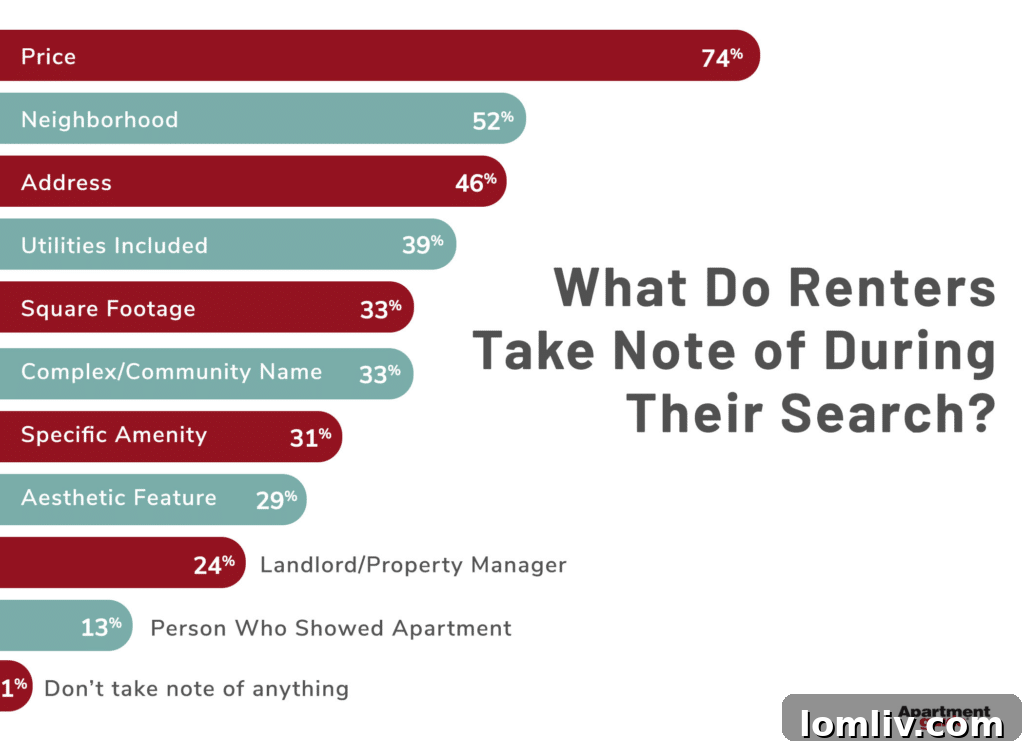
Delving deeper into the factors influencing a renter’s choice, the survey unequivocally demonstrated the overwhelming influence of price. It’s not an exaggeration to state that for most prospective tenants, their budget fundamentally dictates their options. A staggering 74 percent of Apartment Guide’s survey respondents reported that price was their chief consideration when evaluating a new apartment. This finding underscores a critical reality in the rental market: regardless of amenities, aesthetic appeal, or community features, if a unit falls outside a renter’s budget, it’s simply not an option. This makes pricing strategies incredibly important for property owners looking to maximize occupancy rates.
Following price, location and address emerged as the second and third most important considerations, respectively. This suggests that once the affordability hurdle is cleared, proximity to work, schools, public transport, and desirable neighborhoods becomes a crucial differentiator. Rounding out the top considerations were whether utilities were included in the rent and the unit’s total square footage. These factors often represent additional costs or space constraints that directly impact a renter’s overall financial comfort and daily living experience. The demand for transparent pricing, including utility costs, and clear information on living space, indicates renters’ desire for comprehensive details before committing to a lease.
The Art of Compromise: What Renters Are Willing to Give Up
The search for the perfect home, whether buying or renting, almost invariably involves some level of compromise. In the context of homeownership, real estate agents often advise buyers that while certain aspects like location are immutable, others can be changed or improved. For renters, the scenario presents a slightly different dynamic. The rental market, particularly in large metropolitan areas, can sometimes offer a somewhat homogenous selection of properties, where many modern apartment interiors share similar designs and finishes. This uniformity might lead renters to question where they are most flexible in their choices.
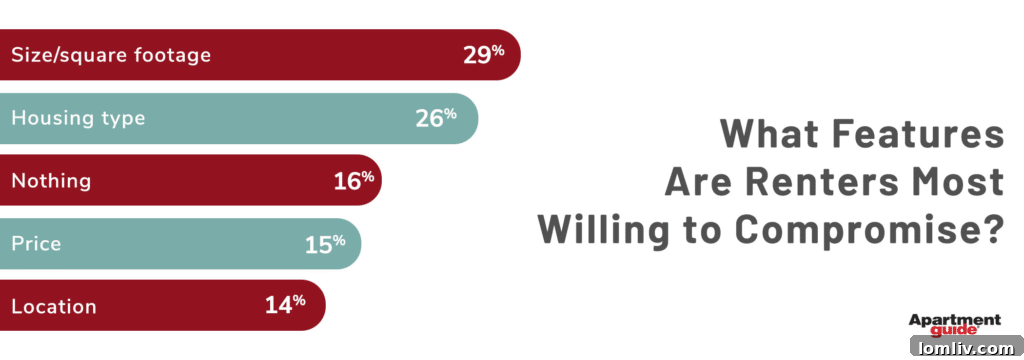
The Apartment Guide survey explored this aspect of flexibility, asking renters what they would be most willing to compromise on. The results indicated that overall square footage was the area where renters were most likely to concede. A significant 29 percent of respondents stated that the size of the unit was less important to them than other factors. This willingness to compromise on space often stems from a prioritization of more critical elements like affordability or a desirable location. Renters might opt for a smaller living area if it means staying within budget or securing an apartment in a prime neighborhood that minimizes commute times or offers superior amenities. This insight is valuable for developers considering diverse unit sizes to meet varying market demands and price points.
Learning from Experience: Common Renter Regrets
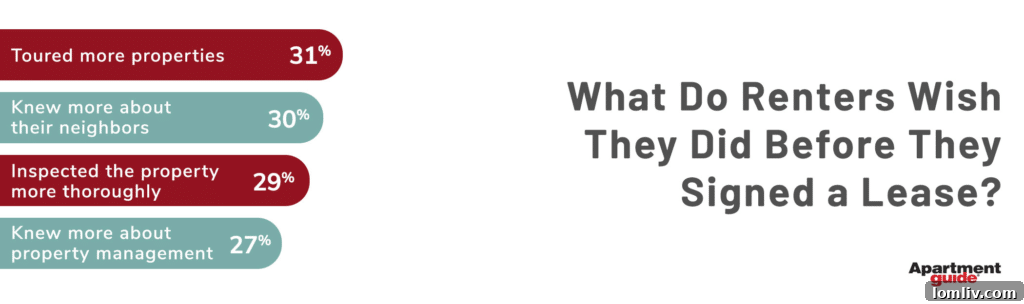
Reflecting on past experiences can provide invaluable lessons for future endeavors, and apartment hunting is no exception. The Apartment Guide survey also delved into common regrets renters had about their previous search and leasing experiences. Understanding these pitfalls can help prospective tenants avoid similar mistakes and empower them to make more informed decisions.
One of the most frequently cited regrets, expressed by 31 percent of survey respondents, was wishing they had toured more properties. This highlights the importance of comparison shopping and exploring a wider range of options before making a commitment. Seeing more units allows renters to better gauge market value, compare features and amenities, and ensure they are truly selecting the best fit for their needs and budget. Hasty decisions, often driven by market pressure or time constraints, can lead to post-move-in dissatisfaction.
Another significant regret, shared by 30 percent, was wishing they had gotten to know their neighbors more before moving in. This speaks to the value of community and the desire for a positive living environment. A friendly and respectful neighborhood can greatly enhance the rental experience, while problematic neighbors can contribute to stress and discomfort. Engaging with potential neighbors during property tours or community visits can offer insights into the building’s atmosphere and social dynamics.
According to Apartment Guide, 29 percent of respondents expressed regret over not having inspected their apartment and the property more thoroughly before signing a lease. This oversight can lead to discovering undisclosed maintenance issues, faulty appliances, or general wear and tear after moving in. A meticulous pre-move-in inspection, ideally documented with photos or videos, is crucial for both the renter’s peace of mind and for avoiding potential disputes over security deposits upon move-out. Likewise, 27 percent of renters wished they had gotten to know apartment management better before leasing. Establishing a good rapport and understanding the management’s responsiveness, communication style, and policies can significantly impact the ease of addressing future concerns, from maintenance requests to lease renewals. A proactive approach to understanding management can mitigate future frustrations and contribute to a smoother tenancy.
Conclusion: Shaping the Future of the Rental Market
The insights garnered from Apartment Guide’s comprehensive survey paint a vivid picture of the modern renter’s priorities, challenges, and aspirations. As the rental population continues to grow, driven by demographic shifts and evolving economic realities, understanding these preferences becomes paramount for all stakeholders in the housing industry. Affordability stands out as the undisputed king of concerns, with location, pet-friendliness, accessibility, and family-friendly amenities following closely behind. Renters are willing to compromise on space, but they expect transparency and support throughout their tenancy.
The journey of finding an apartment is an emotional one, marked by both stress and excitement. By acknowledging renters’ common regrets—such as not touring enough, failing to vet neighbors or management, and insufficient property inspection—the industry can develop better resources and guidance to empower future tenants. For landlords and property managers, these findings are a clear call to action: focus on competitive pricing, transparent communication, responsive management, and diverse amenities that cater to a wide range of needs. By aligning offerings with what renters truly want, the rental market can foster greater tenant satisfaction, reduce turnover, and build stronger, more sustainable communities for the growing number of Americans who choose to call an apartment home.
For a deeper dive into the detailed survey results and methodologies, the full report is available here.