The Elusive American Dream: Why Homeownership Remains Out of Reach for Many Renters
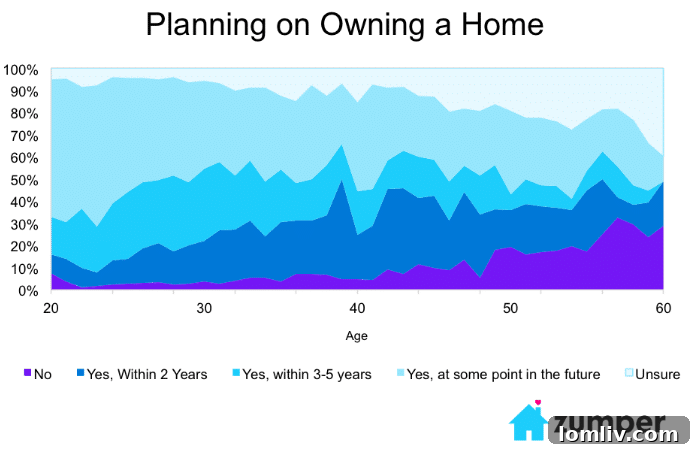
For generations, homeownership has stood as a cornerstone of the American Dream, symbolizing stability, prosperity, and a tangible stake in the future. Yet, despite its enduring appeal, this aspirational milestone is becoming an increasingly distant reality for a significant portion of the population. A recent national survey of renters vividly highlights this stark discrepancy: while an overwhelming majority harbor dreams of owning their own home, the financial barriers to achieving this goal are formidable, leaving countless individuals trapped in the rental cycle.
The sentiment is particularly acute in bustling metropolitan areas, where vibrant economies often mask deep-seated affordability crises. Dallas, Texas, serves as a poignant illustration of this national trend. In the survey, a staggering 97 percent of Dallas respondents expressed a desire for homeownership. However, when juxtaposed with the harsh realities of the local housing market, only 63 percent of these hopeful individuals could realistically afford a mortgage within the city limits. This concerning gap underscores a broader challenge facing aspiring homeowners across the United States. The comprehensive survey, which gathered insights from 6,000 renters nationwide, was meticulously conducted by Zumper, a prominent apartment rental search company, offering a vital snapshot of the contemporary housing landscape.
The Widening Chasm: Wage Stagnation vs. Soaring Home Prices
Delving into the root causes of this growing affordability crisis, Tanguy Le Louarn, head of data science at Zumper, points directly to a critical economic imbalance. “The main contributing factor to this discrepancy seems to be that home values in Dallas are outpacing wage growth,” Le Louarn observed. This imbalance is not merely a subtle shift but a dramatic acceleration that puts homeownership further out of reach for average earners. Over the past year, various reports tracking the Dallas real estate market have shown home prices escalating by approximately 10 percent, with some analyses even reporting increases well into the mid-double digits. This rapid appreciation creates an insurmountable hurdle for many.
In stark contrast to this aggressive upward trajectory in home values, wage growth in Dallas has experienced a notable slowdown. A report from the Dallas Fed recently highlighted that higher-paying jobs are increasingly being replaced by lower-paying ones, creating a downward pressure on overall wage levels. The conclusion is unambiguous: “Dallas wages cannot keep up with the increasing home values.” This creates a scenario where, no matter how diligently individuals save or how modest their aspirations, the market continues to outrun their earning potential. This dynamic is not exclusive to Dallas; it mirrors a nationwide struggle where real incomes for many Americans have stagnated or declined in purchasing power, making the dream of a down payment and manageable mortgage payments increasingly unattainable.
The survey’s findings paint an even more sobering national picture: in a third of all cities surveyed, less than half of renters earned sufficient income to even qualify for a mortgage. This statistic casts a long shadow over the future of homeownership, signaling a systemic issue that extends far beyond individual financial choices. It suggests that, for a significant portion of the working population, the financial criteria for entering the housing market are simply beyond their reach, regardless of their desire or work ethic.
Redefining the American Dream: A Shifting Mentality?
Interestingly, the survey uncovered a nuanced perspective on the very definition of the “American Dream.” While nearly every respondent aspired to homeownership at some point, only 71 percent explicitly believed that the “American Dream” inherently involves owning a home. This distinction is crucial, suggesting a potential re-evaluation of societal ideals. Le Louarn elaborated on this evolving viewpoint: “While almost everyone wants to own a home at some point, the fact that only 71 percent of our respondents believe that the ‘American Dream’ involves homeownership highlights a potential shift in mentality of how this ideal can be achieved.”
This shift may reflect a pragmatic adaptation to economic realities. While homeownership has long been lauded as a sound financial investment, its perceived role as the ultimate life goal may be diminishing for a growing segment of the population. Le Louarn added, “While owning a home tends to be a good financial investment, it does not seem to be the end goal for as many people as it used to.” This sentiment is further reinforced by current trends: homeownership rates have plummeted to historical lows, while the renter population continues to swell, particularly among younger demographics like Millennials. This demographic transformation is not merely incidental; it signifies a broader societal reorientation towards renting, driven by a complex interplay of economic constraints, lifestyle preferences, and a changing understanding of financial security.
The Historical Decline of Homeownership and Its Drivers
The current state of homeownership is not an anomaly but rather the continuation of a decades-long trend. As the report meticulously points out, the homeownership rate in the United States, as reported by the Census Bureau, has been on a steady decline since peaking in late 2005 at 69 percent. This trajectory continued downwards, reaching a historical low of 62.9 percent during the second quarter of 2016. To put this in historical context, the homeownership rate averaged around 64 percent between 1965 and 1990, indicating that the current figures represent a significant deviation from long-term norms. This decline is largely attributed to the reverberations of the 2008 financial crisis, which tightened lending standards, eroded household wealth, and made entry into the housing market considerably more challenging for first-time buyers.
Beyond macroeconomic factors, the survey also uncovers fascinating insights into renters’ perceptions and intentions regarding homeownership. It appears that some renters may harbor an optimistic, perhaps even unrealistic, view of their financial readiness for such a significant investment. For instance, among the surveyed renters, their self-stated financial position — whether assessed as “fair,” “good,” or “excellent” — had a surprisingly minimal effect on their stated intention to buy a home. Approximately 90 percent of individuals across all these self-assessed financial categories still planned on purchasing a home. This suggests a powerful underlying desire that may override an objective assessment of financial preparedness, or perhaps a lack of full understanding of the complex financial requirements involved.
Another intriguing finding pertains to student loan debt, a pervasive issue for many younger Americans. Counterintuitively, renters burdened with student loans actually demonstrated a greater intention of eventually buying a home, with 93 percent expressing this goal compared to 87 percent of those without loans. While this might seem perplexing at first glance, it could also indicate higher levels of education among those with student debt, which often correlates with higher earning potentials over the long term. Thus, while ambition and ability are two distinct concepts, the presence of student loans might, in some cases, signal a strategic investment in future earning capacity rather than an insurmountable barrier to homeownership. However, it undeniable that the burden of student loan payments significantly impacts monthly budgets and the ability to save for a down payment.
The Down Payment Dilemma: A Major Hurdle for Aspiring Homeowners
While a significant majority of renters in numerous cities articulated their intent to purchase a home, the survey’s financial analysis revealed a sobering truth: many simply cannot afford the critical upfront cost—the down payment. Based on respondents’ self-reported incomes and using the method employed by Bloomberg to calculate the minimum salary required for a mortgage, the data clearly indicated a widespread inability to accumulate sufficient funds for a down payment. This initial capital outlay, typically ranging from 3.5% to 20% of the home’s purchase price, often represents the most significant hurdle for first-time buyers. Saving tens of thousands of dollars while simultaneously paying rent, often in competitive and expensive markets, is a monumental task for many working individuals and families.
It’s important to contextualize these findings by acknowledging the demographic composition of the survey sample. The 6,000 respondents skewed younger than the general population. This demographic characteristic suggests that the ability to afford a mortgage could potentially increase as these younger individuals advance in their careers and, critically, if they are able to sustain solid wage growth over time. However, this optimistic outlook is contingent on a robust economic environment that supports consistent income increases, a factor that has proven volatile in recent decades.
Millennials and the Roommate Economy: A Strategy for Saving
In response to these challenging economic realities, particularly the struggle to save for a down payment, Millennials are adopting practical strategies, one of the most prominent being cohabitation. The survey uncovered a striking trend: a whopping 62 percent of Millennials reported that they shared their living space with at least one other person. While this figure is partially influenced by the younger end of the Millennial spectrum (ages 20 to 23), many of whom are still in college or early career stages and commonly live with roommates, the prevalence of shared living arrangements remains remarkably high even for older Millennials. The figure was nearly 55 percent for those between the ages of 24 and 32. This widespread adoption of the “roommate economy” is a direct reflection of the pressure to manage rising rents and accumulate savings, offering a tangible pathway towards financial stability in an increasingly expensive housing market.
In conclusion, the American Dream of homeownership, while deeply ingrained in the national psyche, is undergoing a profound transformation. The survey by Zumper paints a vivid picture of a generation caught between aspiration and affordability, grappling with stagnant wages, soaring home prices, and the burden of student debt. While the desire to own a home remains strong, the path to achieving it has become significantly more challenging, leading to a potential redefinition of what true financial security and the “American Dream” truly entail for modern Americans. Addressing this widespread affordability crisis will require multifaceted approaches, ranging from economic policies that promote wage growth to innovative housing solutions, to ensure that the dream of homeownership remains a realistic aspiration for future generations.