Uncovering the Absurd: “The Worst Room” and the Global Rental Market Crisis
In an age where finding affordable, decent housing feels increasingly like a treasure hunt with very few rewards, certain corners of the internet emerge as both a commiseration point and a stark reflection of reality. One such online haven is “The Worst Room,” a Tumblr blog that has garnered a significant following for its humorous yet undeniably depressing portrayal of rental listings across various cities. What began as a personal quest by a New Yorker navigating the city’s notoriously cutthroat housing market has evolved into a global archive of rental nightmares, ranging from the bizarre to the downright unsafe.
The blog serves as a digital magnifying glass, exposing the indignities and absurdities that renters are often expected to tolerate in the face of skyrocketing prices and diminishing inventory. It’s a compelling, often shocking, look at how the fundamental need for shelter can be twisted into something almost unrecognizable by economic pressures and landlord opportunism. Think of it as the housing market’s equivalent of Terrible Real Estate Agent Photos, but with a deeper, more profound societal commentary woven into its very fabric.
The Genesis of a Rental Relatability Revolution
The concept behind “The Worst Room” sprang from a deeply personal, and universally relatable, struggle: the arduous task of securing suitable accommodation in a major metropolis. For its creator, a New Yorker, the search for a new home involved sifting through an endless parade of listings that defied logic and basic human dignity. Imagine encountering offers for a “bedroom” that is essentially a closet, a “living space” in a shared hallway, or even a tent pitched precariously in the backyard of a derelict property. These weren’t exaggerations but actual proposals from a market where demand far outstrips supply, and landlords hold unprecedented leverage.
The blog quickly resonated with people not just in New York, but across the globe. Renters everywhere recognized the frustrating parallels in their own cities, where a combination of gentrification, stagnant wages, and speculative real estate practices has pushed housing costs to unsustainable levels. “The Worst Room” became more than just a collection of bad listings; it became a collective sigh of exasperation, a shared acknowledgment that the system is often broken, forcing individuals into compromises they should never have to make just to put a roof over their heads.
A Catalog of Rental Absurdities: More Than Just Four Walls
The blog meticulously categorizes and dissects various forms of rental oddities, each post a testament to the creative ways landlords and agents attempt to market uninhabitable or highly questionable spaces. These often include:
- The Miniature Marvels: Listings where “cozy” is an understatement, featuring rooms barely large enough to fit a bed, often converted from closets, hallways, or even partitioned sections of larger rooms with makeshift walls.
- The Open-Concept Extremes: “Bedrooms” with no doors, or living rooms repurposed as sleeping quarters without any semblance of privacy, forcing roommates into awkward and uncomfortable cohabitation.
- The Unconventional Locations: Basements devoid of natural light, attics with precarious access, sheds transformed into “garden suites,” or even tents and caravans pitched in urban backyards, all advertised as legitimate housing options.
- The Bathroom Blunders: Shared bathrooms located in odd places, or worse, listings where the bathroom facilities are questionable, unhygienic, or not easily accessible.
- The Price-to-Value Disparity: Perhaps the most infuriating aspect, where exorbitant rents are demanded for spaces that offer minimal amenities, poor conditions, or severely compromised living standards.
Each example on “The Worst Room” serves as a poignant reminder of the increasing pressure on renters, especially younger generations and those with limited incomes, to accept less and less for more and more money. It highlights a critical juncture in urban living where the basic right to a safe and private dwelling is increasingly becoming a luxury.
The Dallas Craigslist Incident: A Sketchy Saga Unveiled
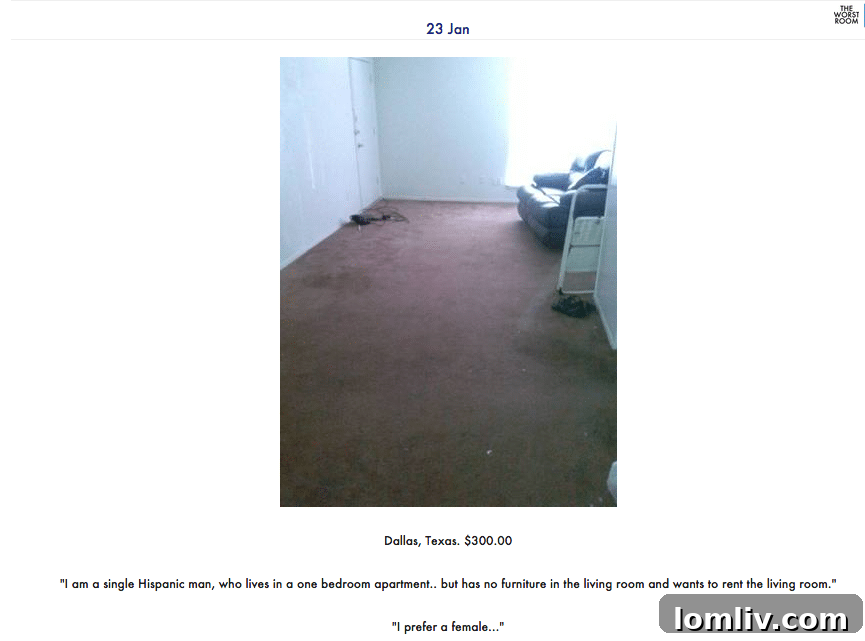
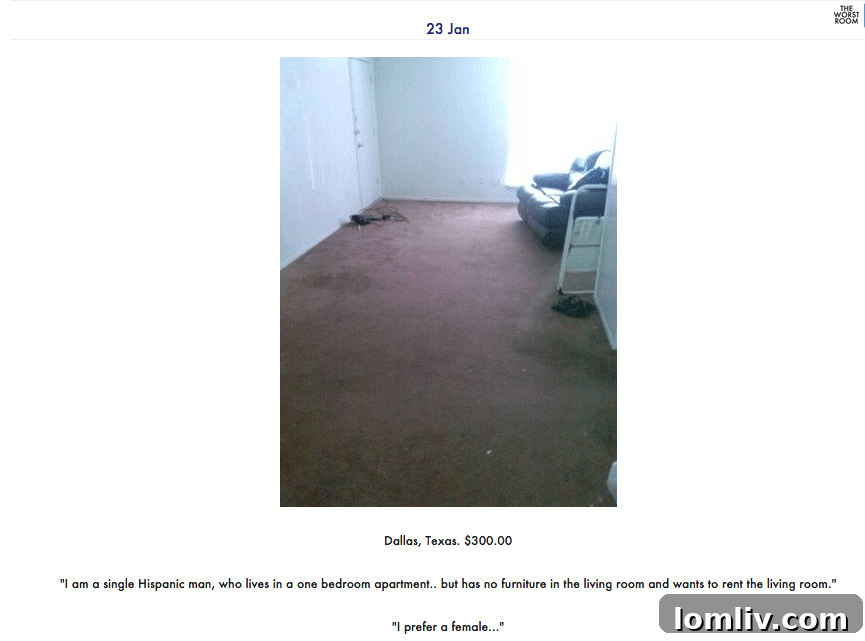
Among the countless bizarre submissions featured on “The Worst Room,” one particular post from Dallas, Texas, captured significant attention. It was brought to light via a Facebook message, highlighting an advertisement on Craigslist that perfectly encapsulated the blog’s core mission. The listing offered an “unfurnished living room” for $300 a month, to be shared within a one-bedroom apartment. The landlord, described as a “single Hispanic man,” explicitly stated a preference for a female tenant.
This particular listing raised numerous red flags, not only for its audacious request but also for the implicit risks involved. While the advertisement attempted to reassure potential renters by noting that “you won’t be sharing rooms” – implying the living room was the only available space – the premise itself was fraught with potential complications. Paying $300 to sleep in someone’s unfurnished living room, with a specific gender preference from the primary occupant, immediately sparks concerns about privacy, safety, and exploitation. Even the small consolations, like the mention of a window and access to the outdoors, do little to alleviate the pervasive sense of unease.
The Dallas case isn’t just a quirky anecdote; it’s a stark example of the lengths to which some individuals might go to find affordable housing, and the questionable ethics of those who capitalize on such desperation. It underscores the urgent need for greater transparency and regulation in the private rental market, particularly concerning shared living arrangements sourced through informal channels like Craigslist.
Beyond the Laughter: “The Worst Room” as Social Commentary
While often presented with a darkly humorous tone, “The Worst Room” is far from just a novelty blog. It functions as a powerful form of social commentary, reflecting deeper systemic issues within urban societies worldwide. It illuminates:
- The Intensifying Housing Crisis: The blog provides anecdotal evidence of a widespread crisis, where housing is treated as a speculative commodity rather than a fundamental human right.
- Income Inequality: The prevalence of such grim listings speaks volumes about the growing gap between stagnant wages and soaring living costs, forcing many into precarious housing situations.
- The Erosion of Living Standards: When shared living rooms and converted closets become acceptable “rental units,” it signals a significant decline in what is considered a basic standard of living.
- Vulnerability and Exploitation: The blog implicitly highlights how vulnerable individuals can become targets for exploitative landlords, particularly those who face limited options due to financial constraints or other social factors.
By bringing these often-hidden realities into the public sphere, “The Worst Room” encourages dialogue about urban planning, housing policies, tenant rights, and the ethical responsibilities of property owners. It’s a testament to the power of citizen journalism and collective voice in drawing attention to pressing societal challenges.
Navigating the Treacherous Rental Landscape Safely
For those currently engaged in the daunting search for a rental property, “The Worst Room” serves as a cautionary tale and an important reminder to approach the market with vigilance and skepticism. While the blog highlights extreme cases, the underlying principle remains: prioritize your safety, privacy, and well-being above all else. Here are some essential tips for navigating the rental market:
- Trust Your Gut: If a deal seems too good to be true, or if something feels off about a listing or a landlord, it probably is. Your instincts are often your best defense against scams and uncomfortable situations.
- Prioritize Safety and Privacy: Always ensure the rental offers adequate security and a private space that aligns with your needs and comfort levels. Avoid situations that compromise your personal boundaries or safety.
- Verify and Document: Before committing, always verify the landlord’s identity and property ownership. Document everything in writing, including lease agreements, move-in conditions, and any communications.
- Know Your Rights: Familiarize yourself with tenant rights in your city or region. Understanding legal protections can empower you to avoid exploitation and address issues effectively.
- Inspect Thoroughly: Conduct a comprehensive inspection of the property before signing any agreement. Look for signs of disrepair, pest infestations, and ensure all amenities are functional.
- Beware of Unusual Requests: Be wary of landlords who make personal requests, ask for excessive personal information, or demand payment methods that are untraceable.
Conclusion: A Humorous Yet Harrowing Look at Modern Renting
“The Worst Room” continues to captivate and inform, offering a unique blend of humor and harrowing reality. It is a powerful cultural artifact reflecting the current state of housing in many urban centers—a landscape where the search for a basic home can turn into an absurd, undignified, and sometimes dangerous ordeal. While we might chuckle at the sheer audacity of some listings, the underlying message is a serious one: the struggle for affordable, safe, and respectable housing is real and ongoing.
As long as housing markets remain fiercely competitive and economic disparities persist, blogs like “The Worst Room” will continue to serve as vital platforms for communal empathy and a stark reminder that a dignified living space should be a right, not a luxury or a punchline.