
The Remote Work Revolution: Reshaping Real Estate, Cities, and Our Lives

The landscape of work and living is undergoing a profound transformation, driven by technological advancements and shifting societal priorities. Recently, insights from the Northwest Region 2015 and Beyond meeting, featuring speakers from the North Central Texas Council of Governments, highlighted critical challenges facing regions like the Dallas-Fort Worth Metroplex. The discussion centered on the deteriorating state of our roadways, the relentless growth of the Metroplex, and the region’s deepening reliance on tollways. These issues are stark reminders of the immense pressure urban infrastructure faces: a staggering $24 billion needed merely to repair existing roadways, with an additional $95 billion required for future improvements. These figures underscore an unsustainable trajectory for traditional commuting and urban development.
In the face of such formidable challenges, many individuals are seeking alternatives to minimize the daily grind of commuting. For many, the most effective solution is to bypass it entirely. This article explores the growing trend of remote work, its far-reaching implications for real estate and urban planning, and offers a personal perspective on embracing this new professional paradigm.
My Journey to a Commute-Free Life
My own professional life exemplifies this shift. I am proudly employed by a German technology company, yet my “office” is right here at home. My direct manager resides in Silicon Valley, his boss in Munich, and her superior in upstate New York. My team members are scattered across Virginia, Michigan, Munich, and California, and I support a global sales organization. This distributed model is no longer an anomaly but a growing norm, challenging the long-held belief that productivity requires physical co-location.
Historically, working from home was often confined to specific roles: telemarketing, home daycare, or small, self-run businesses such as accounting, insurance, or financial advisory services. The notion of holding a well-compensated position within a global enterprise from the comfort of one’s home was largely unheard of. However, much like many aspects of modern life, technology has evolved, and with it, corporate attitudes have profoundly changed. High-speed internet, sophisticated video conferencing tools, cloud-based collaboration platforms, and project management software have collectively dismantled geographical barriers, enabling seamless remote operations.
The Irrefutable Benefits of Remote Work
A burgeoning body of research consistently supports the premise that remote workers are often more productive than their office-bound counterparts. A primary driver for this enhanced productivity is the significant reduction in distractions inherent in a traditional office environment. Beyond individual performance, managers themselves are increasingly recognizing the benefits, often sharing the same desire as their employees to avoid high-rent and heavily congested urban centers. This shift also reflects a broader ideological movement where work is increasingly project-focused; as long as deadlines are met and quality standards upheld, the physical location of the work becomes largely irrelevant.
My personal journey mirrors this evolving professional landscape. From my hometown of Chicago, I moved to Silicon Valley in 1998, then to Houston in 2001, Florida in 2004, and Phoenix in 2006. Each of these moves was dictated by job requirements, demanding my physical presence at corporate headquarters. This whirlwind decade of relocation came to an exhilarating halt in Dallas in 2007. The pivotal change? My job no longer cared where I worked. This newfound flexibility was a game-changer, allowing me to choose a place to live based on personal preference rather than corporate mandate.

Real Estate and the Geographic Shift
For the real estate industry, the implications of this trend are monumental. Individuals like myself, who prioritize quality of life and affordability over proximity to a corporate campus, are becoming increasingly common. While many of my colleagues are tied to expensive locales like California and the D.C.-adjacent Virginia, I enjoy a significantly more expansive lifestyle—often with a larger home, more amenities, and a lower cost of living—all while earning the same competitive salary. For others, this flexibility means embracing a tranquil rural setting, a stark contrast to the urban intensity traditionally demanded by so many employers.
This raises a crucial question: how will population distribution shift when a substantial segment of the workforce can choose to live where they want to, rather than where they must, merely to earn a living? We can anticipate a renaissance for many smaller towns and mid-sized cities that possess the right infrastructure, community spirit, and natural attractions, emerging from decades of economic stagnation. Individuals priced out of hyper-expensive areas like New York City and Silicon Valley—a group that includes almost everyone—will finally have the opportunity to contribute their skills and earn a competitive salary from a more affordable distance, fostering greater economic equity.
Moreover, as highly compensated workers disperse, this decentralization could alleviate some of the housing pressure in traditional economic hubs, potentially making these areas more affordable for a broader spectrum of people, including essential workers and service industry professionals. The long-term impact on urban density, property values, and local economies will be fascinating to observe and manage.
States that have historically pursued large corporate headquarters with the promise of job creation may find the benefits of this strategy diminishing over time. In the future, securing jobs in this manner will increasingly depend on the manufacturing and hands-on service sectors, where a physical presence is non-negotiable. After all, assembling an automobile with remote workers remains impractical, and a decent haircut via video call is currently impossible. However, for a vast array of knowledge-based professions, the physical office is becoming obsolete, liberating individuals from the “moving mania” that once characterized career progression at the expense of putting down roots.
While employee comfort and satisfaction are certainly considerations, the primary driver behind businesses enabling remote work is, unequivocally, economic sense. Remote workers tend to log more hours and exhibit higher productivity for the same salary, offering a compelling return on investment. Furthermore, and perhaps most significantly, remote employees eliminate the need for costly office space, furniture, utilities like air conditioning and electricity, and company-provided internet access. The financial savings for corporations are enormous, translating directly to improved bottom lines. While businesses reap significant monetary benefits, workers also gain immeasurably. The freedom to live in a desired location, the flexibility to integrate personal appointments like a midday gym session during off-peak hours, and the simple pleasure of not having to navigate a communal fridge filled with a coworker’s mystery leftovers are all tangible, life-enhancing perks.
Socialization and the Remote Worker
The topic of socialization among remote workers often sparks debate. Many believe that working from home can be a lonely experience, devoid of the casual “water cooler” conversations and impromptu chit-chat that characterize traditional offices. While this may hold true for some, I encourage individuals to experience it firsthand for a few months before drawing conclusions. Many people thrive on social interaction and find that the autonomy of remote work allows them to channel their social energy more deliberately into after-hours engagements, rather than being drained by constant workplace interactions.
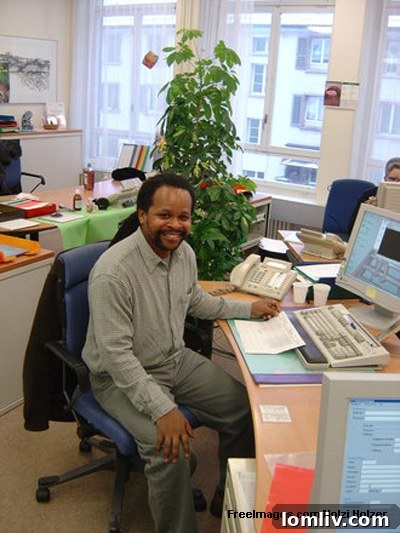
My own experience illustrates this point perfectly. I am one of those individuals who has a finite capacity for “people” interaction each day. When I worked in an office, upon returning home, I was often utterly “D-O-N-E” with social engagement, rarely seeking out friends or social situations. Now, with the flexibility of working from home, I find myself actively pursuing social situations, enjoying casual dinners with friends, and even exploring the community for daltxrealestate.com content. The ability to control my daily social input has profoundly enhanced my overall well-being and community engagement.
The Evolution of the Home Office
Beyond geographical shifts, the architectural and design requirements of residential properties are also undergoing significant change. Centuries ago, having a dedicated workspace within the home was a common feature for many professions. With the advent of the industrial revolution and the centralization of labor, this largely faded away as workers congregated in offices and factories. Now, we are witnessing a return to home-based work, which necessitates proper, dedicated spaces within the home for professional activity.
While many contemporary homes boast “home offices,” these often range from a laptop station haphazardly set up in the kitchen to a grand, library-like room that serves more as a showpiece than a functional workspace. I challenge the notion that many of these configurations truly support the demands of a full-time, 9-to-5 professional schedule. What current housing stock often lacks are actual, purpose-built dedicated spaces meticulously outfitted for serious, uninterrupted office work.
The reliance on sophisticated technology to enable effective remote work makes the design and location of these spaces critically important. Video conferencing, for instance, is increasingly vital for replicating the face-to-face communication found in traditional office environments. The unprofessionalism conveyed by a cluttered guest bedroom background, or the distracting sounds of children and pets, can significantly diminish a worker’s professional image. Furthermore, the physical working space is crucial for the worker’s well-being and productivity. Attempting to conduct a full day’s work from a cramped, dark, uninviting, or cluttered corner is detrimental to focus and morale.
For real estate professionals, understanding and catering to the needs of the remote worker is paramount. Homebuyers now require a more thoughtfully designed office setup. Key considerations include: Are there appropriate internet “drops” (wired Ethernet ports) in the designated office room? While Wi-Fi is ubiquitous for PCs and mobile devices, many desk phones and high-quality video cameras still benefit from, or even require, a wired internet connection for optimal performance and reliability. In households with children, separate, dedicated office internet connections might be necessary to avoid bandwidth congestion. Is the proposed office located in a semi-secluded area, minimizing disturbances from daily household noises? Is it well-lit, preferably with ample natural light? Devising a comprehensive checklist tailored for the remote worker can be an invaluable service for real estate agents, earning praise and loyalty from a growing segment of clients. This detailed approach to home office planning is undoubtedly a trend we will see accelerating in the years to come, profoundly influencing how homes are designed, marketed, and valued.
Remember: Do you have an HOA story to tell? A little high-rise history? Realtors, want to feature a listing in need of renovation or one that’s complete with flying colors? How about hosting a Candy’s Dirt Staff Meeting? Shoot Jon an email. Marriage proposals accepted (they’re legal)! [email protected]