Embracing the “Broken Concept”: The Evolution of Open Plan Living
For years, the open concept floor plan reigned supreme in home design. It promised expansive spaces, abundant natural light, and seamless flow, quickly becoming the aspirational ideal for modern living. However, as families grew and lifestyles evolved, many homeowners began to uncover the inherent challenges of completely wall-less environments. Enter the “Broken Concept” – a revolutionary design philosophy emerging from Europe that skillfully redefines openness, offering what many now consider Open Concept 2.0.
At its core, the Broken Concept isn’t about abandoning openness entirely. Instead, it’s about achieving a harmonious balance between the airy feel of an open plan and the necessary privacy and functional distinction of traditional rooms. Think of it as a sophisticated middle ground, designed to maximize connectivity while strategically integrating elements that allow for separation when needed. This innovative approach addresses the real-world complexities of modern households, where diverse activities and personal needs often coexist under one roof.
Beyond Open Concept: Introducing the Broken Concept Revolution
The initial appeal of open concept was undeniable: knocking down walls to combine multiple rooms created grander spaces, perfect for entertaining and fostering family connection. Kitchens seamlessly flowed into living and dining areas, making homes feel larger and more interconnected. Yet, as time wore on, the downsides became apparent. The constant noise, the lack of distinct zones for different activities, and the pervasive feeling of never truly having a private retreat began to chip away at the dream.
Imagine trying to focus on reading a book while someone else watches a loud sporting event, or needing a quiet space for a work call when children are playing nearby. These scenarios highlight the tension between constant communal living and the innate human need for personal space and quiet. The Broken Concept directly addresses these issues, acknowledging that while we crave connection, we also require designated areas for focused work, relaxation, or simply a moment of peace. It’s about designing homes that are adaptable, fluid, and responsive to the ebb and flow of daily life, without resorting to isolating, box-like rooms.
The Enduring Appeal of Openness: What We Love About Open Concept
It’s important to recognize that the Broken Concept doesn’t discard the benefits of open living; it refines them. Many aspects of open concept design are undeniably positive and are thoughtfully integrated into this new philosophy. The ability to host large gatherings with ease, allowing guests to circulate freely between the kitchen, dining, and living areas, remains a highly desirable feature. The increased transmission of natural light, which brightens interiors and enhances mood, is another non-negotiable benefit.
Furthermore, improved sight lines across larger spaces can make supervising children easier, or simply allow for a greater sense of connection among family members even when engaged in different activities. Open concepts are also masterful at making several smaller, poky rooms feel significantly larger and more grand. The Broken Concept seeks to preserve these advantages, ensuring that the feeling of spaciousness and connectivity is maintained, but with added layers of thoughtful design that address privacy and functional needs.
Crafting Defined Zones: Strategies for Broken Concept Design
The essence of the Broken Concept lies in its intelligent use of architectural elements to create flexible boundaries. Rather than fixed walls, designers employ innovative solutions that allow spaces to be opened or enclosed as desired, offering dynamic control over the home’s layout and ambiance.
Flexible Partitions: The Art of Dynamic Division
One of the most defining features of Broken Concept homes is the strategic use of flexible partitions. These elements replace traditional solid walls, allowing room functions and their previously fixed boundaries to be blurred or sharpened at will. Consider the example of sliding back a dining chair into what would typically be “living” space when hosting a large dinner party, then easily closing off the dining area for a more intimate setting afterward.
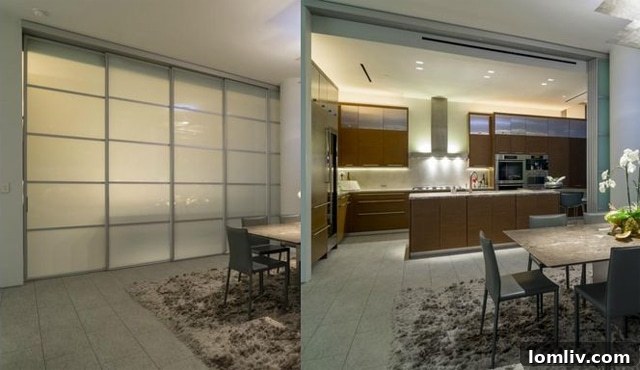
Modern homes leverage a variety of partition types: sleek sliding doors that disappear into pocket walls, elegant bi-fold doors, or even decorative screens that can be repositioned. The unit at the Azure, listed with Allie Beth’s Juli Harrison, beautifully demonstrates this with a recessed wall of frosted glass that can be effortlessly opened or closed depending on the need. Such design choices not only enable traffic to circulate more freely but also grant homeowners the power to redefine their environment instantly, catering to various moods and activities. From a bustling kitchen during meal prep to a serene dining area for an evening meal, these flexible dividers empower a home to adapt.
Harnessing Light: Glass as a Connector and Separator
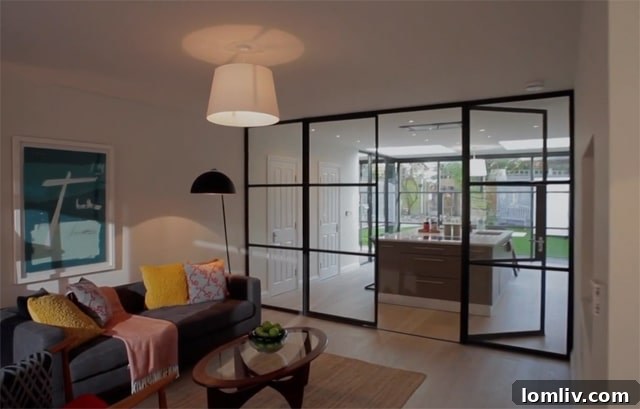
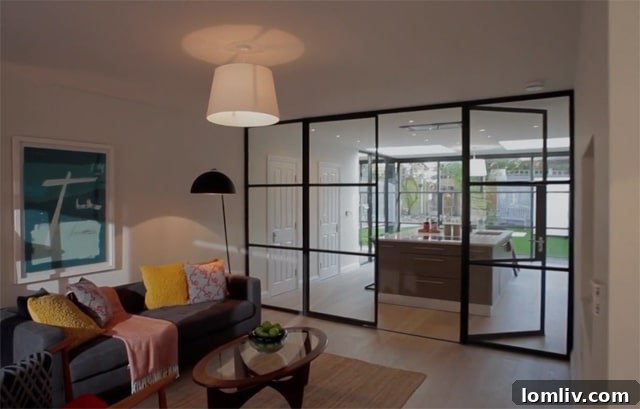
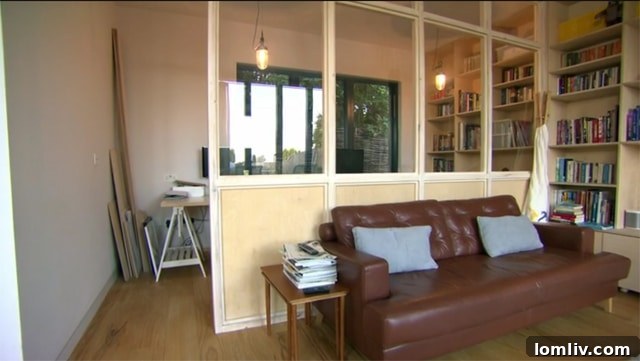
Light transmission is a paramount consideration in the Broken Concept. While solid walls block light and views, glass partitions offer an elegant solution. They allow natural light to flood deep into the interior of a home, creating a bright and airy atmosphere, while still providing a sense of division. Imagine an office or study separated from the main living area by a glass wall; it offers visual connectivity and light sharing, but with a crucial acoustic barrier for concentration.
The choice of glass can further refine the level of privacy. Clear glass ensures maximum transparency, ideal for spaces where visual connection is desired, such as a home gym or a children’s play area adjacent to the living room. Frosted, reeded, fluted, or smart glass (which can turn opaque at the flick of a switch) offers varying degrees of visual privacy without completely sacrificing light. For those moments requiring complete seclusion, simple curtains or blinds can be integrated, providing traditional unseen privacy. This dual functionality ensures that the psychological benefits of abundant natural light are maintained, while the practical need for discretion is met.
Architectural Nuances: Extending Visual Flow
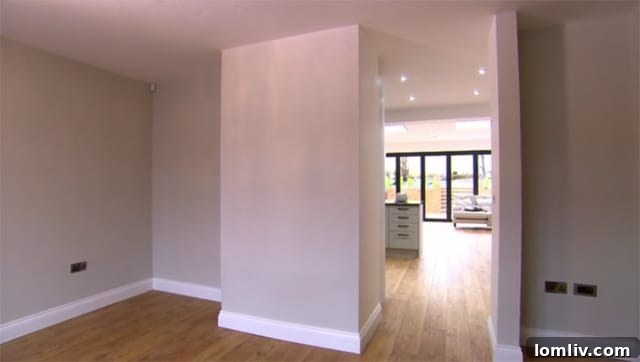
Beyond movable partitions, the Broken Concept also employs subtle architectural strategies to enhance visual continuity and spatial perception. While a full open concept would completely connect two spaces without any barrier, the Broken Concept steps back from this absolute. Instead, it often involves removing traditional archways and extending room connection points all the way to the ceiling. This simple yet effective modification instantly elevates the sense of scale and openness.
By making these openings seamless across the ceiling, designers create the illusion of a single, expansive space, even when a structural wall might remain on either side. This effect is similar to how unified flooring material, like hardwood or large format tiles, can visually connect adjacent areas, making a home feel larger and more cohesive. These architectural decisions create “implied” boundaries rather than hard divisions, allowing for an effortless flow that guides the eye and enhances the overall spaciousness of the interior.
Clever Design Tricks for Enhanced Spatial Perception
The Broken Concept also leverages ingenious visual tricks to amplify the feeling of space and connectivity without requiring significant structural changes. These design elements are about subtly influencing how the eye perceives and navigates a room, making it feel larger and more integrated.
The Illusion of Space: Floating Elements
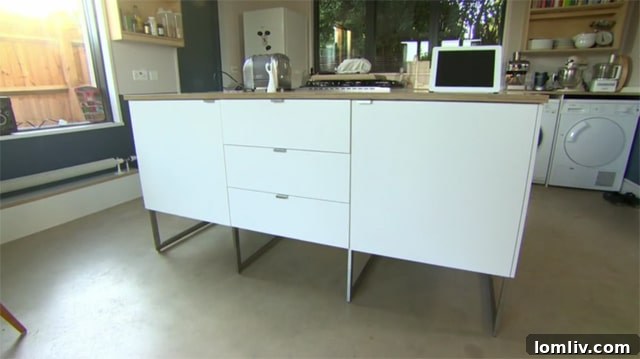
One powerful technique is the use of floating elements, particularly in kitchens. When cabinetry is designed with legs, or wall-mounted with a gap underneath, the eye naturally extends past the base of the cabinet and onto the floor below. This continuous sightline creates the illusion of more expansive floor space, making the entire room feel larger and less constrained. Coupled with seamless flooring that extends from one area to another, these floating cabinets enhance the sense of connection throughout the home.
This approach also serves to delineate the kitchen area without resorting to the typical monolithic island, which, while functional, can sometimes feel like a solid barrier. Similar principles can be applied in bathrooms with floating vanities or in living rooms with wall-mounted shelving and entertainment units, all contributing to a lighter, more open aesthetic.
Strategic Furnishing and Layout
Beyond structural and fixed elements, the careful selection and arrangement of furniture play a vital role in Broken Concept design. Large area rugs can effectively define zones within a larger space, signaling a distinct living or dining area without the need for walls. Furniture placement itself becomes a tool for soft demarcation: placing a sofa with its back to an entryway, for instance, subtly creates a separate conversational zone.
Multi-functional furniture, such as ottomans with storage or console tables that can serve as temporary workspaces, further enhances the adaptability of these dynamic spaces. The choice of color palettes can also influence spatial perception; lighter, consistent colors tend to expand a space, while strategically placed darker accents can create depth and highlight specific areas without making them feel enclosed.
The Imperative of Walls: Why Some Boundaries Remain Essential
Despite the focus on openness and flexibility, the Broken Concept smartly acknowledges that not all walls can, or should, be removed. There are fundamental practicalities and psychological comforts that only well-placed walls can provide. For instance, kitchens heavily rely on upper cabinet real estate for essential storage. Without these vertical surfaces, functionality and organization would be severely compromised.
Similarly, living rooms often need anchor points for entertainment systems, artwork, or bookshelves, defining a central focus for the space. And perhaps most importantly, personal spaces like bathrooms and bedrooms demand full privacy. Imagine the eye-burning visuals of your partner’s morning rituals if these areas lacked solid boundaries! Walls are also critical for acoustic control, preventing noise bleed between different zones and ensuring quiet for rest or work.
These essential walls provide structural integrity, opportunities for integrated lighting, and the necessary backdrop for defining a home’s character and aesthetic. The Broken Concept is about intelligent design, not indiscriminate demolition, recognizing that true comfort and functionality arise from a thoughtful balance.
Designing Your Home with the Broken Concept Philosophy
Adopting the Broken Concept in your home design requires thoughtful consideration of your lifestyle and needs. Begin by assessing how you and your family truly live. Do you frequently entertain? Do you require distinct quiet zones for work or study? What are your priorities regarding natural light, privacy, and noise control?
Consider the dynamics of your household. A busy family with young children might benefit from flexible barriers that allow for supervision while containing play areas, whereas a couple might prioritize seamless flow for social gatherings but desire a private sanctuary for relaxation. Working with experienced architects and interior designers who understand this philosophy can be invaluable. They can help translate your needs into practical design solutions, suggesting the best types of partitions, materials, and architectural modifications to create a home that is both beautiful and highly functional.
The Broken Concept is more than just a trend; it’s a forward-thinking approach to contemporary living that embraces adaptability. It encourages homeowners to think beyond rigid room definitions and instead envision dynamic spaces that can transform to suit various activities, offering a truly personalized living experience.
Conclusion: The Best of Both Worlds with Broken Concept Design
The “Broken Concept” represents a sophisticated evolution in home design, moving beyond the all-or-nothing approach of traditional open plans. It offers a compelling solution for modern living, delivering many of the celebrated design advantages of open concept — enhanced light, improved flow, and a sense of spaciousness — while critically retaining the individual, task-based spaces essential for privacy, quiet, and separation. This intelligent balance creates homes that are not only aesthetically pleasing but also profoundly functional and adaptable.
By integrating flexible partitions, clever visual tricks, and strategic architectural modifications, the Broken Concept allows for dynamic living environments that can effortlessly transition between communal vibrancy and private sanctuary. It acknowledges that in our busy lives, the ability to connect and retreat are equally vital. As we look to the future of interior architecture, the Broken Concept stands out as a thoughtful, human-centric approach, promising homes that truly serve the diverse and evolving needs of their inhabitants, offering the best of both worlds.