Navigating the North Texas Housing Market: A Deep Dive into Dallas-Fort Worth’s Slowdown and Future Trends
The real estate landscape across North Texas, particularly within the Dallas-Fort Worth metropolitan area, has been a dynamic subject of discussion. Recent reports indicate a distinct shift, moving away from the frenzied pace of previous years towards a more balanced, albeit slower, market. This comprehensive analysis will explore where Dallas stands amidst this national market adjustment, how its home sales compare to statewide figures, and what these evolving conditions signify for both prospective buyers and sellers in one of the nation’s most vibrant economies.
From fluctuating median list prices to significant inventory increases and the persistent challenges of affordability, we delve into the core factors shaping the current housing market. Drawing insights from leading real estate analyses, this report offers a clear picture of the trends influencing Dallas and Fort Worth, helping you understand the nuances of this pivotal moment in local real estate.
Dallas Ranks Among Top Metro Areas Experiencing Notable Market Slowdowns
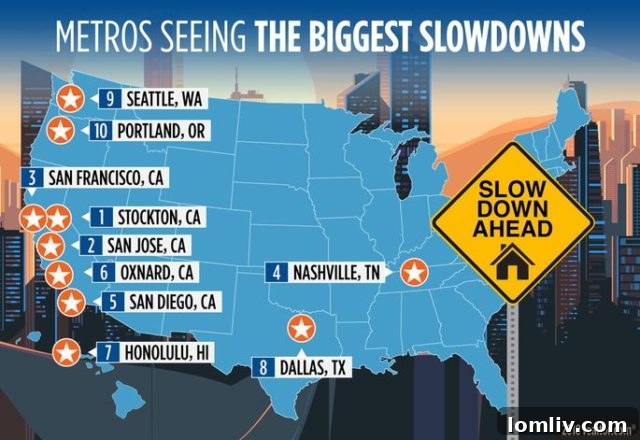
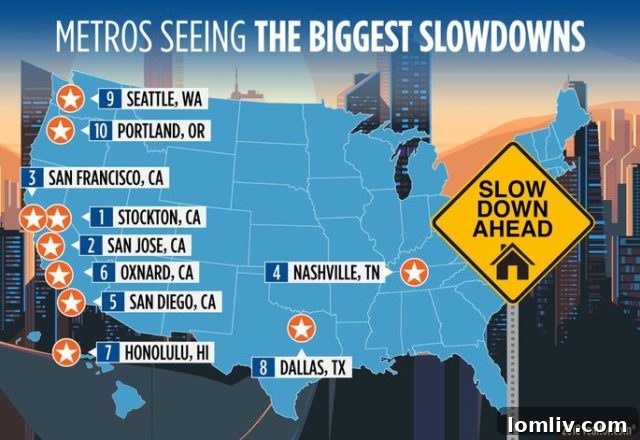
Following a period marked by escalating prices and fierce competition, numerous headlines have signaled a cooling, or even a ‘sputter,’ in the broader U.S. housing market. Realtor.com recently undertook a thorough examination of the ten metropolitan areas witnessing the most significant shifts in their housing markets. Dallas emerged on this critical list, securing the eighth position, indicating a substantial adjustment from its prior red-hot status.
It’s crucial to clarify the nature of this “slowdown.” As the Realtor.com report emphasizes, this doesn’t universally translate to plunging prices, particularly in many of the listed metros, which are predominantly situated on the West Coast. Instead, the market is largely experiencing a deceleration—a return to more sustainable, grounded conditions after a prolonged period of rapid growth. This rebalancing suggests that while the era of quick gains may be moderating, a market collapse is not necessarily on the horizon. For potential bargain hunters, the report advises tempering expectations, as widespread steep discounts are not the primary characteristic of this adjustment phase.
However, the report also highlighted several key indicators that point towards these market adjustments: surging inventory levels and an increase in the average number of days properties remain on the market. Nationally, list prices did rise between October 2017 and October 2018, but only by a modest 7.3 percent. This figure stands in stark contrast to the nearly 10 percent increase observed in 2017, underscoring a clear moderation in price appreciation.
Len Kiefer, deputy chief economist at Freddie Mac, shared his perspective with Realtor.com, stating, “There’s a rebalancing that needs to happen. Prices have risen so high in some of these markets that it’s very tough from an affordability perspective [for buyers]. … It’s not surprising to me that we’re seeing a little bit of a leveling off.” This sentiment perfectly encapsulates the current environment: rather than a bubble bursting, the market is experiencing a necessary and healthy recalibration, akin to bathwater settling rather than a sudden drainage.
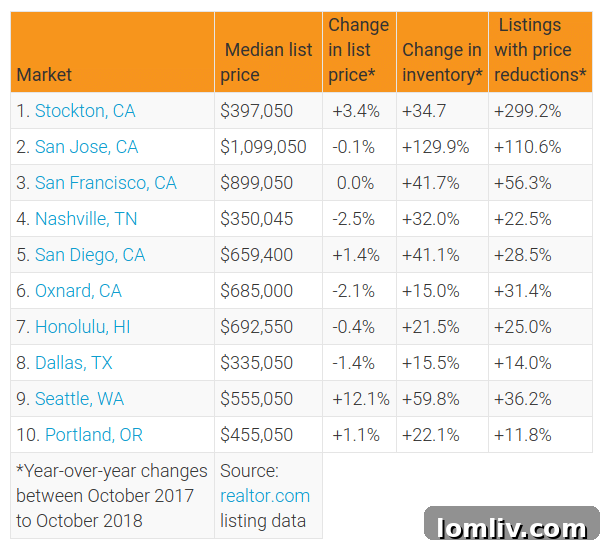
So, how precisely does this slowdown manifest in Dallas? The median list price for the year reached $335,050. More telling, this figure represents a year-over-year (YOY) decline in list price of 1.4 percent. Concurrently, Dallas experienced a substantial 15.5 percent increase in housing inventory, signaling more options for buyers. Furthermore, approximately 14 percent of listings saw price reductions, reflecting sellers’ adjustments to changing market realities. These statistics paint a clear picture of a market transitioning from seller-dominated to a more balanced playing field.
To put Dallas’s situation into perspective, consider Stockton, California, which topped Realtor.com’s list of slowing metros. There, the median list price stood at $397,050. While list prices in Stockton were still on an upward trend, the market witnessed an almost 35 percent surge in inventory and a staggering near 300 percent increase in listings undergoing price reductions. This comparison highlights that while Dallas is experiencing a significant slowdown, it’s not exhibiting the extreme indicators seen in some other top-ranked areas.
Key Factors Driving the Current Market Adjustment
The Realtor.com report pinpoints four primary reasons behind the nationwide and local market deceleration:
- Rising Mortgage Rates: The cost of borrowing has a direct and profound impact on buyer affordability. As interest rates climb, monthly mortgage payments increase, effectively reducing the purchasing power of many prospective homeowners. This shifts some buyers to lower price points or out of the market entirely, tempering demand.
- Unsustainable Price Increases: Years of aggressive price appreciation had pushed home values to unprecedented highs in many regions, including Dallas. This made homeownership increasingly challenging for a significant portion of the population, leading to a natural correction as prices outpaced wage growth and affordability limits.
- Increased Seller Activity and Inventory: The previously favorable seller’s market incentivized many homeowners to list their properties, aiming to capitalize on high demand and escalating values. This influx of new listings, combined with a slower sales pace, contributes directly to an increase in available housing inventory, giving buyers more choices and negotiating power.
- Impact of New Construction: A robust pipeline of new homes provides essential housing options for buyers. While beneficial for addressing long-term housing shortages, a steady stream of new construction can also temper sales of existing homes, adding to overall inventory and creating more competition among sellers.
Texas Housing Market Outlook: Home Sales Rebound Amidst Flat Trajectory
Beyond the localized dynamics of Dallas, the broader Texas housing market also paints a picture of intricate shifts. Following a notable slowdown in September, statewide home sales experienced an 11.8 percent rebound in October. However, despite this monthly surge, the overall trajectory for sales across Texas remains relatively flat, as revealed by the latest housing report from The Real Estate Center at Texas A&M University.
The report highlights persistent challenges that continue to exert downward pressure on market activity. A critical issue identified is the enduring shortage of homes priced below $300,000, which disproportionately impacts first-time buyers and those with limited budgets. Compounding this, rising interest rates further constrain affordability, making it harder for many to enter or move up within the housing market. While housing inventories have seen a modest increase, this growth has been insufficient relative to the underlying demand, particularly in more affordable segments. Furthermore, total housing starts—a key indicator of future supply—declined for the fifth time in six months, suggesting potential future supply constraints.
Despite these headwinds, the construction sector has shown some robust activity. Current construction levels reached their highest point since 2007, buoyed by elevated construction employment and attractive wages. This surge in activity indicates a strong effort to meet housing needs. However, economists at the center cautioned that this momentum might moderate in the fourth quarter, largely due to the continued ascent of interest rates and the aforementioned dip in housing starts, signaling a potential slowdown in new supply coming online.
In terms of single-family housing construction permits, Dallas demonstrated exceptional growth, surpassing Houston’s long-held top ranking. The report noted that Dallas issued over 3,000 permits, with significant growth observed in rapidly expanding areas like Collin and Tarrant Counties. This localized construction boom is vital for addressing the regional housing demand, yet it contrasts with the statewide trend of falling total housing starts.
Even with localized gains in new construction and a sales slowdown that has provided some breathing room, statewide months of inventory (MOI) remains below the critical four-month threshold. A balanced housing market is generally considered to have approximately six months of inventory, meaning that Texas as a whole still leans towards a seller’s market, albeit a less aggressive one than before.
Digging deeper into specific price cohorts, the report indicated that listing inventories for single-family homes priced above $400,000 exhibited the largest uptick this year, reaching 6.4 MOI after bottoming out below 5.9 MOI in February. This suggests that the luxury and higher-end markets are experiencing greater supply. In the crucial $200,000-$300,000 range, the MOI reached an annual high of more than 3.2 months, reflecting a slight easing of competition. However, the market for homes priced less than $200,000 remained exceptionally tight, with the MOI holding firm at 2.8 months and constant downward pressure on inventory levels, underscoring severe affordability challenges in this segment.
Dallas and Fort Worth: Local Dynamics in a Broader Trend
Within the statewide context, Dallas and Fort Worth showcase distinct characteristics. New MLS listings provided a significant boost to the MOI in Dallas, pushing it to three months. This indicates an increased supply of homes entering the market, offering more choices for buyers. In contrast, Fort Worth’s MOI dipped below 2.4 months, suggesting a tighter supply relative to demand in the western half of the Metroplex.
The report reiterated that “Rising interest rates, declining affordability, and supply shortages continued to hinder activity on homes priced less than $300,000, which accounts for nearly 70 percent of sales through an MLS.” This statistic underscores the profound impact of these factors on the vast majority of real estate transactions. Despite the broader market moderation, closed listings above the $200,000 price cohort continued to hover around record highs, indicating strong buyer appetite and capacity in the mid-to-upper segments of the market.
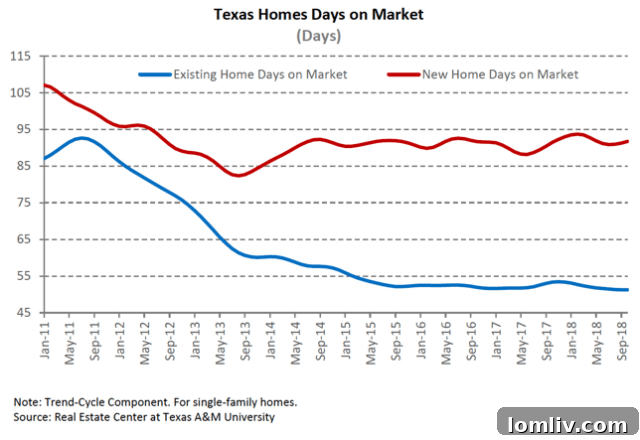
The average “Days on Market” (DOM) continues to hold at less than two months statewide, reflecting a relatively swift sales cycle. Specifically, homes in Dallas averaged about 50 DOM, while properties in Fort Worth moved even faster, averaging approximately 40 days on market. This speed demonstrates that even with a slowdown, desirable properties are still being absorbed efficiently. Demand for homes priced less than $200,000 remains robust statewide, consistently accounting for the largest proportion of sales through the MLS. However, the strongest demand, indicating where buyers are most actively engaging and often competing, was observed in the $200,000-$300,000 range across most major metro areas, including Dallas-Fort Worth.
Analyzing price trends, the report stated, “In Dallas and Fort Worth, the repeat sales indices stabilized at 4.0 and 5.2 percent YOY growth, respectively.” This indicates a continued, albeit moderated, appreciation in home values when comparing sales of the same properties over time. Statewide, the median home price increased to $235,200. In Dallas, after breaking records the month prior, the median price slightly dipped below $281,600, signaling the beginning of the market’s leveling off. Fort Worth, on the other hand, saw its median home price hit $236,700, reflecting its consistent growth and appeal.
Conclusion: A Rebalancing Act for North Texas Real Estate
The North Texas housing market, encompassing Dallas and Fort Worth, is clearly undergoing a significant rebalancing. While not a dramatic collapse, the market is transitioning from an overheated, seller-dominated environment to one characterized by moderation, increased inventory, and a greater emphasis on affordability. The data from Realtor.com and The Real Estate Center at Texas A&M University collectively paints a picture of a market adjusting to higher interest rates, more sustainable price growth, and an increasing supply of homes.
For buyers, this shift translates into more choices, potentially less competition, and slightly more negotiating power, especially in higher price ranges. However, the persistent shortage of homes under $300,000, coupled with rising mortgage rates, continues to pose challenges for those seeking entry-level housing. For sellers, understanding these new dynamics is crucial. While rapid double-digit price gains may be a thing of the past, strategically priced homes in good condition are still moving relatively quickly, particularly in certain price segments. The increase in days on market and price reductions indicates that realistic pricing and presentation are more vital than ever.
Ultimately, the Dallas-Fort Worth real estate market is maturing. This “leveling off” is a healthy, necessary correction that, while potentially slower for some, creates a more stable and accessible environment for the long term. Both buyers and sellers in North Texas should stay informed of these evolving trends to make well-timed and strategic decisions in this dynamic housing landscape.