The real estate industry, often characterized by its intricate web of agents, brokers, and traditional practices, is no stranger to disruption. However, few events have captured the industry’s attention quite like the swift and unexpected dissolution of the partnership between real estate giants RE/MAX and Redfin. In what can only be described as a rapid divorce from a two-month romance, this alliance, initially hailed as a strategic collaboration, crumbled under the weight of differing philosophies and Redfin’s aggressive pursuit of a new, agent-light model.
This article delves into the details of this short-lived agreement, explores the controversial program that triggered its demise, and examines the broader implications for real estate agents, consumers, and the future landscape of the market, particularly considering its potential impact on competitive regions like the Dallas-Fort Worth area.
The Unlikely Alliance: RE/MAX and Redfin’s Brief Partnership
In mid-March, a surprising announcement reverberated through the real estate world: RE/MAX, the venerable 40-year-old Denver-based national real estate franchise broker, had forged a unique partnership with Redfin. Redfin, known for its tech-forward approach, had evolved over the years from a perceived threat aiming to render real estate agents obsolete to a brokerage employing agents with discounted commission fees. This collaboration raised eyebrows, as it seemed to bridge the gap between traditional brokerage models and the burgeoning tech-centric platforms.
The core of the partnership offered RE/MAX agents exclusive access to Redfin’s highly sought-after agent referral program. This wasn’t a small-scale endeavor; it covered a vast network of 5,000 U.S. ZIP codes and extended across Canada, where Redfin had recently launched its widely used home search website. While the referral fee was discounted—25 percent of the agent’s commission compared to the standard 30 percent—it still represented a significant opportunity for lead generation and market expansion for RE/MAX agents.
Leaders from both companies outwardly expressed enthusiasm for the reciprocal revenue potential. Kerri Callahan, RE/MAX’s chief financial officer, articulated the perceived synergy to Inman News in March, stating, “Redfin is a good complement to the RE/MAX model, given their online presence and our offline presence.” The idea was seemingly simple yet powerful: combine Redfin’s robust digital reach and lead generation capabilities with RE/MAX’s extensive network of experienced, on-the-ground agents. It promised a win-win scenario, where Redfin could extend its service footprint and RE/MAX agents could tap into a new stream of qualified referrals. However, this promising honeymoon period proved to be remarkably brief, ending abruptly just two months later.
Redfin Direct: The Program That Broke the Partnership
The catalyst for the partnership’s abrupt end was Redfin’s launch of a new program called “Redfin Direct.” This innovative, and in many ways provocative, service began its pilot in Boston and aimed to fundamentally alter the transaction process for sellers. Redfin Direct was designed to allow Redfin’s listing customers to receive offers directly from unrepresented buyers. The overarching goal was to provide sellers with a highly competitive offer that dramatically reduced commission costs.
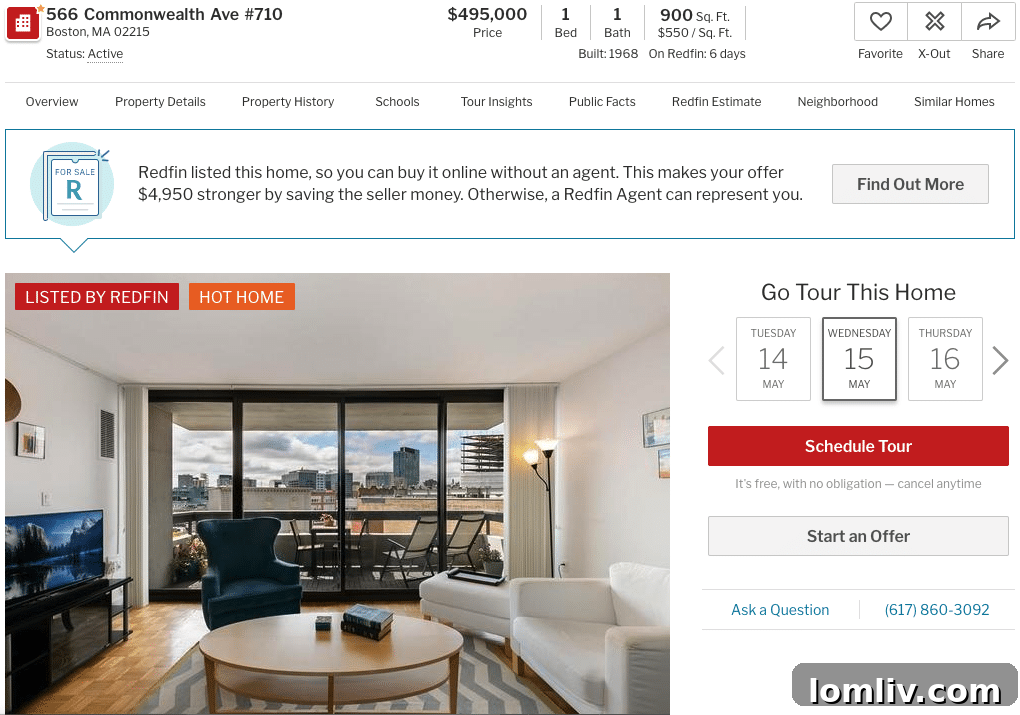
Under Redfin Direct, the total commission structure was slashed to a mere 2 percent: 1 percent for the Redfin listing agent and an additional 1 percent as a transaction fee. This model effectively eliminated the need for a buyer’s agent, promising significant cost savings for consumers. While designed with the consumer’s wallet in mind, this approach represented a direct challenge to the traditional, agent-centric model that underpins the vast majority of real estate transactions. This bold move did not sit well with the leadership at RE/MAX, particularly CEO Adam Contos, who reportedly underwent a swift change of heart after initially appearing to support Redfin’s innovations just weeks prior.
RE/MAX’s Withdrawal and Core Values
The launch of Redfin Direct ignited a firestorm within RE/MAX. For a company that has championed the value of its agents for over 45 years, a program designed to bypass buyer’s agents entirely was a direct affront to its core philosophy. On the Monday following the announcement, Adam Contos made his position unequivocally clear, stating, “That program goes against every value RE/MAX has had for more than 45 years. I feel very strongly and passionately about that, as does our Board of Directors and my leadership team.” This statement underscored the fundamental philosophical chasm that had opened between the two companies.
Consequently, RE/MAX withdrew from its corporate partnership with Redfin, a partnership that was originally intended to last for two years. The decision, though sudden, was a resolute declaration of RE/MAX’s commitment to its agents and the full-service experience they provide. While Redfin expressed understanding for RE/MAX’s position, it also reiterated its unwavering commitment to its mission. In a statement, Redfin acknowledged RE/MAX’s concerns, stating, “Redfin has the utmost respect for RE/MAX as a company, for its agents and leaders. RE/MAX agents who already work as Redfin’s partner agents will continue to be our partners, and RE/MAX agents can continue to enroll in our partner program, but Redfin can now enroll partner agents from other brokerages to serve Redfin.com visitors in the U.S. and Canada.” This clarified that while the exclusive corporate alliance was over, individual RE/MAX agents could still participate in Redfin’s referral program, though without the prior exclusivity. Redfin’s concluding statement, “We believe in consumer choices; our mission is to redefine real estate in consumers’ favor,” served as a powerful declaration of its long-term strategic direction, even if it meant alienating traditional partners.
Industry Reactions and the Future of the Agent
The abrupt end of the RE/MAX-Redfin partnership sent ripples throughout the real estate industry, sparking intense debate about the role of agents and the future of commissions. Matt Templeton of Keller Williams Urban Dallas, attending a KW technology update in Austin at the time, offered insightful commentary on the situation. Templeton highlighted the rapid pace of technological change compelling companies to adapt quickly, leading inevitably to “mistakes” or “fumbles” as industry incumbents grapple with how to secure their position in the future.
Templeton articulated what many industry observers likely suspected: a lasting partnership between RE/MAX and Redfin was inherently improbable. Redfin, notoriously quoted in Fast Company for its ambition to “make the middleman as cheap and as small as possible,” embodies a philosophy diametrically opposed to that of a brokerage like RE/MAX, which champions a comprehensive, full-service consumer experience delivered by professional agents. The conflict was always simmering beneath the surface.
“I suspected this unlikely partnership was of course going to break up after Redfin announced that they would offer a way for buyers to make offers on their listings without a Realtor. That seems to be what prompted these issues,” Templeton noted. He also shed light on the internal pressures faced by RE/MAX agents, whose clients began questioning why they weren’t receiving the same discounts offered by Redfin agents, given the “partnership.” This dynamic created an untenable situation for RE/MAX, forcing them to confront the inherent contradiction of aligning with a company whose stated mission directly threatened their agents’ livelihoods. Templeton succinctly captured the dilemma: “It was like RE/MAX said, ‘Sure, we will partner with a nemesis who has proclaimed that they want to put brokerages and agents like us out of business. We will take the short-term benefit of your leads knowing that you hope to use this as a distribution network to enter into the markets that you haven’t been able to enter yet so that when you are strong enough in those markets, you can continue on your mission of putting us out of business.’ ”
This event forces the real estate industry to confront several critical questions: What was the true cost for RE/MAX in undertaking this experiment? Did they inadvertently surrender valuable market data or suffer a backlash from their agent network? What does this tell us about the current state of both the Redfin network—its ambition and readiness to disrupt—and the RE/MAX system—its steadfast commitment to the traditional agent model? Are we to expect more such experimental, short-lived alliances as technology continues to reshape the industry?
The Evolving Role of the Real Estate Agent
At the heart of this conflict is the ongoing debate about the value and necessity of real estate agents, particularly buyer’s agents, in an increasingly digital world. Redfin Direct, by enabling transactions without a buyer’s agent, implicitly suggests that certain aspects of the agent’s role can be automated or directly handled by consumers. This sparks a crucial conversation about the unique services agents provide—negotiation expertise, market insight, legal guidance, emotional support during a stressful process, and local knowledge—that technology alone cannot yet fully replicate. While consumers appreciate cost savings, the complexity and significance of a home purchase often necessitate professional guidance. The question is not if technology will evolve, but how agents will adapt, demonstrate their irreplaceable value, and redefine their services in a new paradigm.
Potential Impact on the Dallas Real Estate Market
The fundamental question that lingers for many is the broader market impact of such disruptive models. Specifically, what would be the ramifications for the Dallas real estate market should Redfin roll out a similar program in North Texas? The Dallas-Fort Worth metroplex is one of the most dynamic and competitive real estate markets in the United States, characterized by robust population growth, strong job creation, and a diverse housing inventory. It’s a market where both traditional brokerages and tech-forward platforms vie for dominance.
If Redfin Direct were to launch in North Texas, several scenarios could unfold:
- Increased Pressure on Commissions: Even if only a niche segment of buyers and sellers initially adopts the agent-less model, the mere presence of a 2% total commission option would undoubtedly put downward pressure on traditional commission rates across the board. Agents might be forced to justify their fees more explicitly or offer tiered service models.
- Heightened Competition Among Agents: Dallas agents, already operating in a competitive environment, would face added pressure to differentiate themselves. Those who can clearly articulate the unique value they bring—beyond simply facilitating a transaction—would likely thrive.
- Consumer Education and Adoption: The success of such a program in Dallas would heavily depend on consumer readiness to engage in agent-less transactions. While some sophisticated buyers and sellers might welcome the savings, many may still prefer the peace of mind and expertise offered by a dedicated agent, especially in a market known for its complexities and rapid pace.
- Brokerage Adaptation: Local Dallas brokerages, both large franchises and independent firms, would need to evaluate their strategies. This could involve enhancing their technology offerings, emphasizing agent training in negotiation and market analysis, or developing hybrid models that offer flexible commission structures.
- Market Polarization: The Dallas market could become more polarized, with a segment of buyers and sellers opting for discounted, agent-less services, while another segment continues to demand and pay for premium, full-service agent representation.
The unique characteristics of the Dallas market—its blend of luxury properties, suburban developments, and urban revitalization—mean that a one-size-fits-all model might not fully capture its diverse needs. However, the allure of cost savings is universal, and Redfin’s aggressive stance signals that the battle for the consumer’s favor, and their wallet, is far from over.
Conclusion: A Real Estate Crossroads
The rapid unraveling of the RE/MAX and Redfin partnership serves as a stark reminder of the seismic shifts occurring within the real estate industry. It highlights a fundamental tension between established, agent-centric models and the disruptive force of technology-driven platforms aiming to redefine the transaction process and reduce consumer costs. While RE/MAX reaffirmed its unwavering commitment to its agents and their full-service value proposition, Redfin reiterated its mission to empower consumers with choice and redefine real estate in their favor, even if it means challenging long-standing norms.
This event underscores that the real estate industry stands at a crossroads. The future will likely see a continued evolution in how properties are bought and sold, the role of real estate professionals, and the structure of commissions. As companies like Redfin push the boundaries of innovation, traditional brokerages must adapt, innovate, and continue to demonstrate the irreplaceable value of human expertise and personalized service in what remains one of life’s most significant financial and emotional decisions. The questions raised by this short-lived partnership will continue to shape discussions and strategies across the global real estate landscape for years to come.