By Quin Mathews
Special Contributor
North Dallas, a region synonymous with vibrant communities and picturesque landscapes, holds a rich history shaped by both nature’s fury and the unwavering spirit of its residents. Have you ever wondered about the intriguing origins of streets like Wandsworth Drive, or how the iconic Northaven area came to boast its magnificent canopy of Live Oaks? This narrative delves into the transformative power of nature, the resilience of a community, and the deep roots of a neighborhood forged over decades. Join us on a journey through time, where powerful storms and dedicated planting efforts have sculpted the very character of North Dallas, leaving behind stories as enduring as the trees themselves.
Echoes of the Past: Witnessing a Cyclone in 1957
This story, at its heart, is a dual exploration of devastating tornadoes and the enduring legacy of trees. My earliest encounter with what the classic children’s book, The Wizard of Oz, vividly termed a “cyclone,” occurred surprisingly close to what would later become ground zero for a more recent tempest. It was 1956, and Mrs. Biggerstaff, our beloved teacher, was captivating our “Gremlins” class at the Mary Boswell School. Situated within St. Luke’s Episcopal Church – directly across from the fire station that would tragically be obliterated by a later tornado and adjacent to the bustling Preston Royal Shopping Center – we were a group of wide-eyed preschoolers and kindergartners.
Mrs. Biggerstaff’s animated reading of The Wizard of Oz concluded with an announcement that sent ripples of excitement through our young hearts: the Wizard would make its television debut that very Saturday night. The anticipation was palpable. Cyclone, tornado – to us, the terms were interchangeable, infused with a thrilling, almost mythical quality. Then, on April 2, 1957, the mythical became real. My mother’s urgent call brought me to our front porch. There, to the south, I witnessed an immense, long, and stringy funnel cloud stretching towards the earth. No one urged me to seek shelter indoors; instead, we stood in awe, watching as nature unleashed its power, and I experienced my first encounter with hailstones. That day, somewhere within the path of that formidable storm, at least nine lives were tragically lost, leaving an indelible mark on the collective memory of Dallas.

From Barren Prairie to Verdant Canopy: The Early Landscape of North Dallas
Today, following the recent devastating tornado, certain sections of North Dallas have been tragically “un-landscaped,” revealing a stark glimpse into their past. The year 1957 painted a very different picture of this burgeoning suburb. Trees were a rarity, not the ubiquitous shade providers they are today. Our parents, part of a generation brimming with post-war optimism and a pioneering spirit, purchased and built their homes on vast, treeless lots. One can only marvel at their foresight – or perhaps, their audacious optimism – in planting slender, young saplings into the dry prairie soil, envisioning a future where these tiny trees would eventually root deeply and offer much-needed shade. This act of planting, a testament to their long-term vision, speaks volumes about the early residents’ commitment to transforming a barren expanse into a thriving, green community.
Wandsworth Drive’s Transformation: A Community’s Vision for Mimosa Lane
My parents’ journey in shaping North Dallas began even earlier. In 1947, they built their first home on a street then known as Wandsworth. This unassuming road stretched from Preston Road almost to Hillcrest, where it abruptly dead-ended. Early photographs of the area reveal an almost pastoral scene: horses and cattle grazing peacefully on an open, treeless field. It was a landscape untamed, waiting for human touch and cultivation. However, the residents of Wandsworth Drive were not content with this raw beauty alone. A powerful sense of community cohesion emerged. Homeowners, ranging from the Dickey barbecue family on the western side to my own parents on the eastern end, rallied together. Their collective initiative was truly remarkable: they decided to plant beautiful mimosa trees along their street, transforming its character. Furthermore, through their unified efforts, they successfully petitioned the city to rename the street. Wandsworth Drive, a name that echoed old English charm, was reborn as Mimosa Lane, a tribute to their shared vision and hard work. Though mimosa trees later fell out of horticultural fashion, the evocative name, Mimosa Lane, remains to this day, a permanent testament to that early community spirit and the first ambitious tree-planting project in the evolving landscape of North Dallas.
The Northaven Land Rush: Cultivating a Community and its Canopy
As families grew and the demand for space expanded, my parents joined the vigorous “land rush” further north. They acquired a lot for $5,000 on an old farm road, which would soon be known as Northaven. Their specific section of this rapidly developing area was christened Eudora Estates. This new development came with a strict, yet progressive, set of architectural and aesthetic codes: no garages were permitted in the front of the houses, only classic wooden shingles were allowed for roofing, and chain-link fences were expressly prohibited. These regulations were not merely arbitrary rules; they reflected a deliberate effort to cultivate a cohesive, aesthetically pleasing, and upscale suburban environment, ensuring a uniform and high-quality appearance across the neighborhood. Every month or so, a new house would rise from the earth, each adhering to these meticulous standards. Soon, the local Arthur Kramer School was burgeoning, housing an impressive 700 students, a clear indicator of the area’s rapid growth.
Amidst this construction boom, another crucial element was taking root. My parents, like many other new homeowners in Eudora Estates, sourced their trees from the esteemed Pinkus family’s Northaven Gardens, a local institution that quickly became a cornerstone of the community. On our particular block, neighbors once again came together, demonstrating that collective foresight and community action were intrinsic to North Dallas’s development. They reached a mutual agreement: to plant live oaks at the curb. These were not mature trees, but rather tiny saplings, delicate and unassuming. Yet, these small acts of planting, multiplied across blocks and neighborhoods, represented a profound investment in the future. It took decades, an entire generation, for these modest saplings to mature into the majestic, sprawling canopy of Live Oaks that now gracefully covers the streets of Northaven, providing shade, beauty, and a defining characteristic that has come to symbolize the area’s enduring appeal.
A Journey Through Devastation: North Dallas in the Aftermath of the Tornado
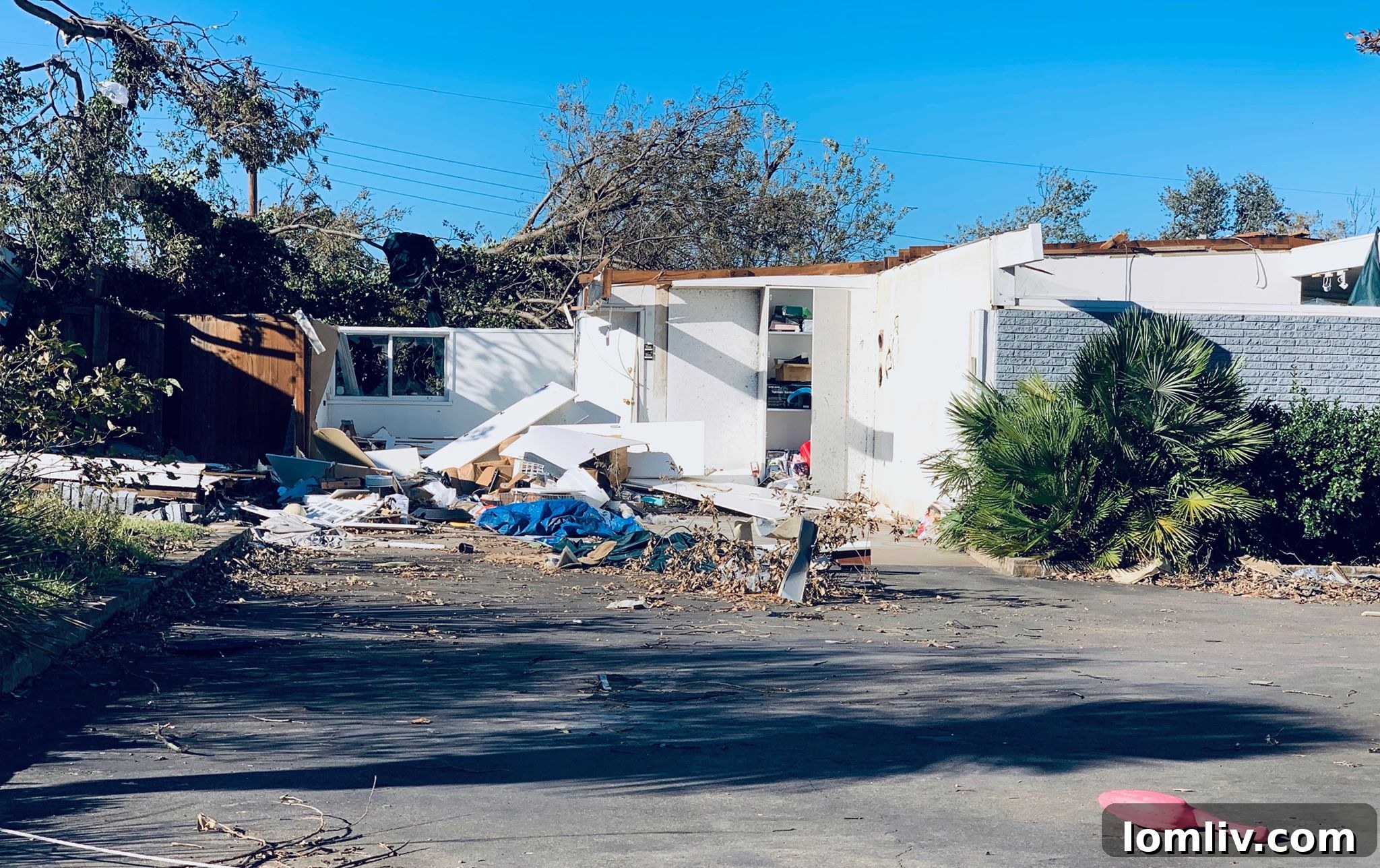
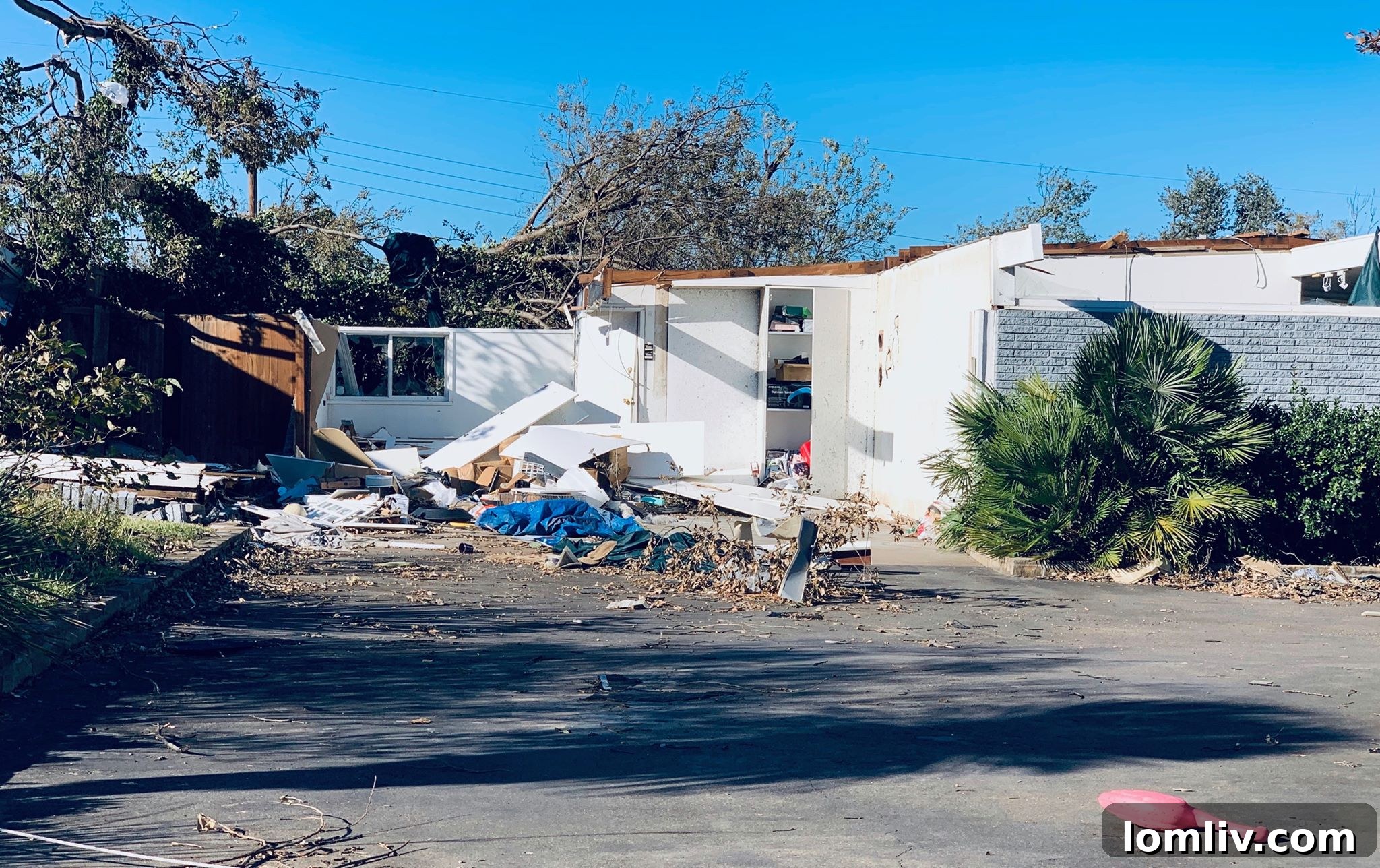
Last week, after a respectful interval, I felt enough time had passed for me to tour the areas ravaged by the recent tornado without impeding the ongoing recovery efforts. My roots in this part of Dallas run deep; I knew virtually every house from south of Royal Lane to Forest Lane, and from Hillcrest Avenue to Central Expressway. This expansive territory was the realm of my childhood bike rides, the homes of countless friends, and the daily route of my newspaper delivery. Each street, each block, held a tapestry of memories. I vividly recall a particular house on Northaven where a newspaper customer, perhaps amused by my youthful ambition, once tipped me a quarter for a beer – a memory made all the more poignant by the fact that the inside of that very house is now heartbreakingly exposed to the outside, its walls ripped away. I also remembered a family who long ago lived in a truly beautiful mid-century home, characterized by its distinctive, low-slung roofline and high windows. That architectural gem now stands as little more than four skeletal walls, a ghost of its former elegance.
The devastation extended beyond individual homes. Northaven Gardens, the very nursery that supplied the trees which shaped this community decades ago, is itself a wreckage, a cruel irony given its historical significance. As I navigated block by block, the stark reality of the present jolted my cherished memories. The familiar streets, once lined with towering trees and welcoming homes, were transformed into scenes of profound loss. Every overturned car, every pile of splintered wood, every exposed foundation was a testament to the tornado’s indiscriminate power. It was a deeply personal and emotional experience to witness the landscape of my youth so brutally altered, a stark reminder of nature’s formidable force and the fragility of even the most established communities.
Resilience and Renewal: The Enduring Spirit of North Dallas
In a twist of fate, our family’s old house and its immediate block were miraculously untouched, standing in stark contrast to the homes just a block away that were completely obliterated. It was a sobering demonstration of the tornado’s unpredictable path. The people who now own our former residence have lovingly added new extensions, painted the original Mexican adobe brick a subtle, elegant gray tone, and reimagined the space. They have truly made it their own, infusing it with new life and personal character. There is a profound sense of satisfaction, a good feeling, in witnessing an old house not just endure, but thrive and evolve into something new and beautiful in the hands of its current caretakers. It serves as a poignant metaphor for the enduring spirit of the neighborhood itself.
And those houses that were touched, or tragically destroyed, will undoubtedly have futures, too. The treeless ground, now eerily resembling the barren landscape of 1957, will once again be host to new growth. New saplings will be planted, and over time, they will mature, gradually restoring the much-needed shade and beauty that defines this area. Waiting decades to witness a tree mature from a fragile sapling into a magnificent, shade-providing giant is not merely an act of patience; it is an investment of time well spent, a testament to hope and a commitment to future generations. To those who now reside in this neighborhood, many of whom I may not know personally, please understand: you have chosen a truly exceptional place to grow up, to build a family, or to grow old. We, who share a deep history and affection for this community, are unequivocally pulling for you. This is solid, proven earth, resilient and nurturing. It will steadfastly hold you, your families, and the new trees you plant and tenderly nurture, ensuring that North Dallas will not only recover but flourish once more, stronger and greener than ever.
Quin Mathews became a news anchor at age 22, while still a college student, and remained in broadcast journalism for 21 years. In 1993 he left WFAA-TV in Dallas to devote full time to Quin Mathews Films.
Quin has shot documentaries around the world on subjects like emerging artists in China, folk churches in Mexico and solar power in Africa. His films about art have shown in major museums in the United States, Asia and Europe.
In 1988, with radio partner Sharon Benge, he co-founded the program “Art Matters,” which during its 25 year run, broadcasted more than 2,500 interviews with people in the arts across the world.
In 2008 Quin received the Legends Award from the Dallas Contemporary. In 2012, He was honored with the Lifetime Achievement Award from the Business Council for the Arts.