Welcome to our comprehensive real estate news roundup, where we delve into the most impactful developments shaping the housing market. This week, we examine the significant withdrawal of a prominent flat-fee brokerage from the U.S. market, provide a detailed analysis of May’s housing performance in the dynamic Texas market, and celebrate a Dallas-Fort Worth community recognized among the nation’s most affluent towns. Stay informed about the trends and stories that matter most in the evolving world of real estate.
Purplebricks Exits U.S. Market: A Look at the Flat-Fee Brokerage’s Retreat
In a move that sent ripples through the real estate industry, U.K.-based Purplebricks announced its decision to cease operations in the United States, less than two years after an ambitious entry into the market. Having launched with much fanfare in Los Angeles, the flat-fee brokerage struggled to establish a firm foothold and adapt its unique business model to the complexities of the American real estate landscape.
The company’s expansion efforts in the U.S. proved challenging, culminating in a reported full-year operating loss of 34.1 million pounds, roughly equivalent to $43 million at the time, as highlighted by Inman. This significant financial setback underscored the difficulties Purplebricks faced in scaling its operations and achieving profitability across the vast and diverse American market. Prior to its U.S. departure, the firm had already initiated a similar withdrawal from Australia in the spring, signaling broader strategic re-evaluations concerning its international expansion strategy.
A key indicator of the internal struggles at Purplebricks’ U.S. division was the departure of its U.S. CEO, Eric Eckhardt, in May. This leadership change came amidst growing pressures and the company’s attempts to pivot its strategy. Faced with consumer resistance to its purely flat-fee model, which traditionally involves sellers paying a fixed fee regardless of the sale price, Purplebricks had begun experimenting with more conventional brokerage models that included commission-based structures. However, these adjustments proved insufficient to reverse its fortunes in a highly competitive market dominated by established full-service brokerages and increasingly sophisticated local agents.
The flat-fee model, which has seen some success in other markets, encountered unique challenges in the U.S., including different legal frameworks, entrenched consumer expectations for agent services, and the sheer geographic scale requiring substantial marketing and operational investments. Purplebricks’ exit serves as a cautionary tale for proptech companies attempting to disrupt traditional models without fully understanding the nuances of local market dynamics and consumer preferences. Its withdrawal leaves a void but also opens opportunities for other innovative models that can better cater to the diverse needs of American homebuyers and sellers.
Source: Inman
Texas Housing Market Update: May Sees Months of Inventory at 3.8
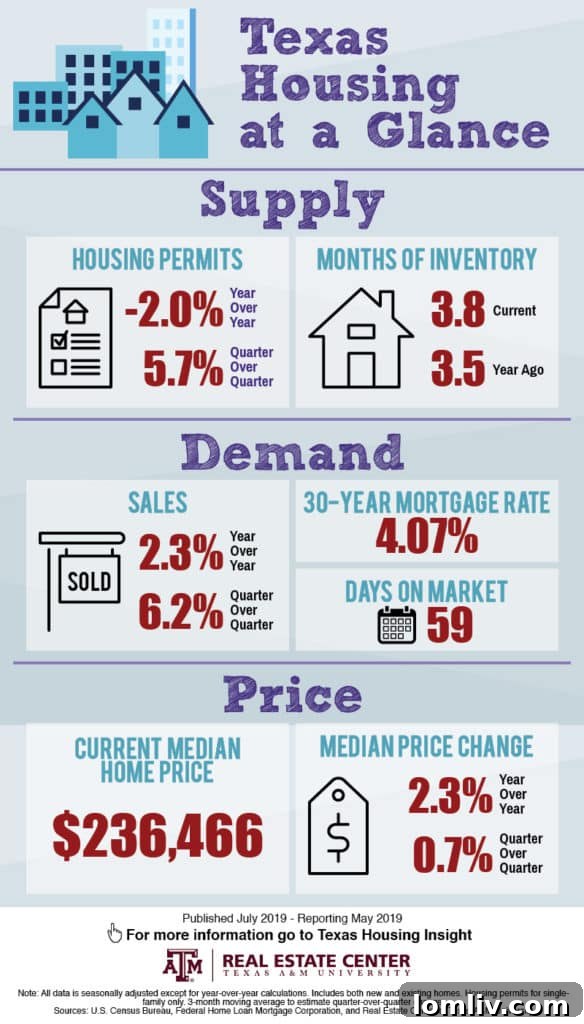
The Texas real estate market continued its robust performance into May, with the Months of Inventory (MOI) standing at 3.8 months. This crucial metric offers valuable insight into the balance between housing supply and demand, indicating how long it would take to sell all available homes on the market at the current sales pace if no new listings were added. Historically, a balanced housing market is generally considered to have an MOI of around 6.0 to 6.5 months.
The fact that Texas recorded an MOI of 3.8 months in May signals a strong seller’s market across the state. In such an environment, demand significantly outstrips supply, leading to quicker sales, competitive bidding, and upward pressure on home prices. For buyers, this translates into fewer options, the need to act swiftly, and potentially higher purchase prices. Sellers, on the other hand, benefit from favorable market conditions, often receiving multiple offers and achieving sale prices at or above their asking price.
Several factors contribute to Texas’s consistently low months of inventory. The state has experienced significant population growth over the past decade, driven by its vibrant job market, lower cost of living compared to coastal states, and attractive business environment. Major metropolitan areas like Dallas-Fort Worth, Houston, Austin, and San Antonio continue to be magnets for new residents and businesses, fueling relentless demand for housing. Despite ongoing construction, the pace of new home builds has often struggled to keep up with the influx of new residents, creating a persistent supply deficit.
Furthermore, while interest rates can influence affordability and market activity, the fundamental demand drivers in Texas, coupled with a limited supply of existing homes for sale, tend to maintain a tight market. The 3.8-month MOI in May suggests that the Texas housing market remains highly dynamic and competitive, reflecting the state’s economic resilience and its appeal as a prime destination for both individuals and businesses. This tight inventory environment underscores the importance of staying informed and working with experienced real estate professionals for both buyers and sellers navigating this active market.
Dallas-Fort Worth’s Gem: University Park Named One of America’s Richest Towns
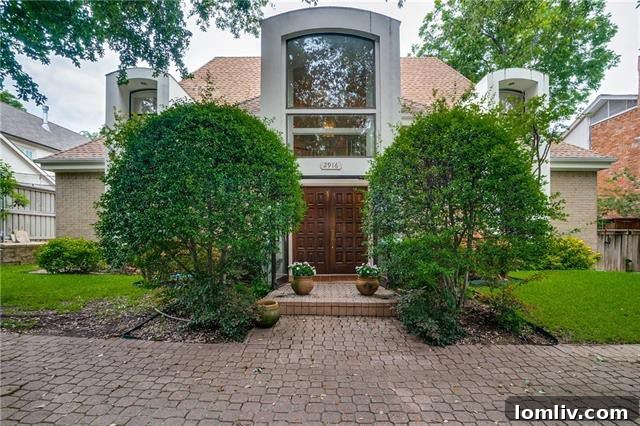
An extensive analysis conducted by 24/7 Wall St. identified the 34 richest towns in the U.S., revealing striking commonalities among these affluent communities, including a notable concentration within a select few states. Texas proudly featured two of these elite towns, with one nestled right in the heart of the Dallas-Fort Worth metropolitan area.
University Park, a distinguished enclave within Dallas-Fort Worth, secured an impressive No. 8 position on the list. This prestigious community boasts a median household income of an astounding $211,741, significantly surpassing national averages. Complementing this high earning power, the median home value in University Park stood at an impressive $1,193,800, reflecting the highly sought-after nature of its real estate. Known for its tree-lined streets, excellent schools, and proximity to Southern Methodist University (SMU), University Park offers an unparalleled quality of life that attracts discerning residents seeking luxury, privacy, and convenience.
Another Texas jewel, Bellaire, a vibrant suburb of Houston, also made the cut, ranking at No. 15. Residents in Bellaire enjoy a median income of $195,018, supported by a robust median home value of $803,000. Like University Park, Bellaire benefits from a strong local economy, top-tier educational institutions, and a desirable residential environment.
The methodology employed by 24/7 Wall St. to compile this exclusive list involved a rigorous review of household income data from the U.S. Census Bureau’s American Community Survey. The analysis focused specifically on American towns with populations ranging between 1,000 and 25,000, ensuring a focus on distinct, smaller communities rather than sprawling metropolitan areas. The study cast a wide net, considering boroughs, census-designated places, cities, towns, and villages to provide a comprehensive snapshot of America’s wealthiest pockets.
Beyond their financial metrics, these richest towns shared a host of underlying characteristics. Notably, all 34 towns identified in the study were located in just 11 states, indicating concentrations of wealth tied to specific regional economies, often driven by tech, finance, or other high-value industries. A particularly salient commonality was the remarkably high educational attainment among their adult populations. Every town on the list boasted a percentage of adults holding a bachelor’s degree that was nearly double the national figure of 30.9 percent.
In University Park, an exceptional 87.2 percent of adults held at least a bachelor’s degree, underscoring the community’s highly educated workforce and resident base. Bellaire also demonstrated a strong commitment to education, with 79.6 percent of its adult population possessing a bachelor’s degree or higher. This strong correlation between higher education levels and elevated household incomes is a consistent theme across America’s most affluent communities. These communities often feature a robust professional class, access to premier educational institutions, and a culture that values intellectual and professional development, all of which contribute to sustaining their high economic status and robust property values.
Source: USA Today