Dallas’s Urban Future: The High-Stakes Debate Over the Saltillo Apartments Redevelopment
After a brief respite from the buzzing development scene, all eyes are once again on Dallas as Provident Realty Advisors prepares for a pivotal moment. Tomorrow, the future of urban development in the city will be firmly on the agenda, specifically concerning a transformative project along the iconic Katy Trail.
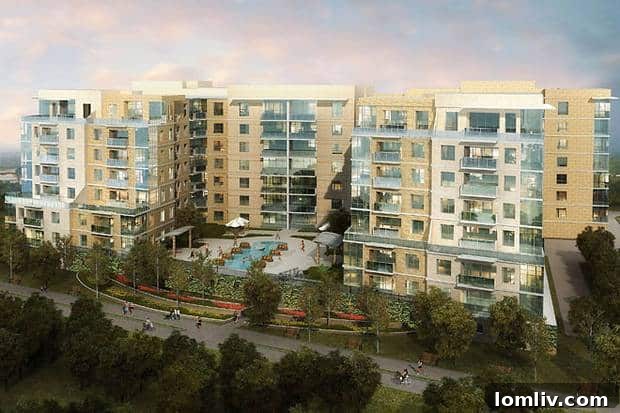
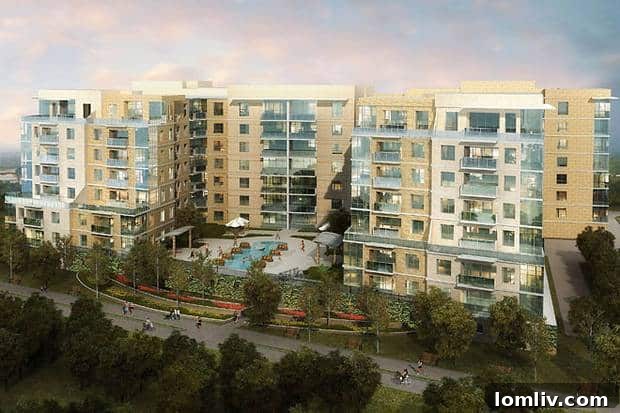
On Wednesday, at 1:00 p.m., the Dallas City Council is set to convene and deliberate on the crucial rezoning approval for a significant new apartment development. This ambitious project aims to replace the long-standing and, by many accounts, outdated Saltillo Apartments with a modern, 258-unit, $80 million complex. More than just a simple construction proposal, this debate encapsulates the broader trajectory of Dallas’s growth. It forces a critical decision: will the city embrace increased density in its most appropriate and vibrant neighborhoods, or will it push developers and their investments towards the ever-expanding suburbs?
Overcoming Initial Hurdles: The Road to City Council
Securing approval for this project has been far from straightforward. Many will recall the significant challenges faced in getting this vision past the Dallas Plan Commission. Despite the aesthetically pleasing and thoughtful design, the process was fraught with contentious discussions. Nevertheless, on May 9, the Dallas Plan Commission granted its approval with a near-unanimous vote. The sole dissenting voice came from Jaynie Schultz, representing Lee Kleinman on the commission – a surprising turn given the past controversies surrounding other large-scale developments in the area.
The Heart of the Opposition: Density and Impact
The proposed development sparked considerable debate among various community stakeholders. Two prominent groups, the Town of Highland Park and the Friends of the Katy Trail, emerged as key opponents, each articulating distinct concerns.
Highland Park’s Stance: Protecting Privacy and Green Space
Highland Park vehemently opposed the rezoning, primarily citing concerns that a larger, new complex would negatively impact the serene Abbott Park, a small green space bordering the area. Their core apprehension revolved around the concept of increased density and its potential ripple effects. Highland Park Mayor Joel Williams clarified that his town is not inherently anti-development but emphasized his council’s resolution passed last fall. This resolution articulated fears that the proposed building’s height would infringe upon residents’ privacy, particularly those adjacent to Abbott Park.
Friends of the Katy Trail: Preserving the Trail’s Character
Concurrently, the Friends of the Katy Trail raised objections regarding the project’s scale. Their primary worry was that the development was too tall and overly dense, and its 90-foot building structure was uncomfortably close to the beloved Katy Trail. They expressed apprehension that the popular running and biking path would transform into a “canyon” lined with towering structures, diminishing its natural, open feel and recreational appeal.
A Champion for Progress: The Oak Lawn Committee’s Endorsement
In contrast to the opposition, a powerful local advocacy group, the Oak Lawn Committee (OLC), has been a steadfast supporter of the Saltillo redevelopment. Founded in 1985 following the demolition of the historic Esquire Theater, the OLC emerged as a formidable protector of Oak Lawn’s unique character and development guidelines (PD 193). This organization has been instrumental in shaping Oak Lawn, preserving its tree-lined streets, intimate charm, and ensuring it remains one of Dallas’s most significant tax revenue generators.
“There’s been lots of misinformation about this project,” stated Brenda Marks, president of the Oak Lawn Committee. “Most of it came from Highland Park.” Marks highlighted the OLC’s long-standing commitment to the redevelopment of the Saltillo apartments, a vision they’ve pursued since 2005. While an earlier plan for a St. Regis Hotel and condominiums was derailed by the Great Recession, the OLC found Provident Realty’s current proposal even more compelling.
Brenda Marks articulated the OLC’s enthusiastic support: “This one has what we believe is good density development. It’s on the trail, near major transportation corridors, near the vibrant Knox Henderson retail, and very walkable.” For the OLC, this project represents the epitome of appropriate urban infill – a development that perfectly aligns with the area’s existing infrastructure and lifestyle, unlike, for instance, a large-format retail store near Cityplace. They also acknowledged the developer’s thoughtful design, noting that the building’s 85-foot height stair-steps away from the trail, a concession made to neighboring homeowners to minimize visual impact.
Developer’s Commitment: Listening to the Community
Provident Realty Advisors demonstrated a strong commitment to community engagement and responsiveness. Jerry L. Jackson, PE, LEED AP, vice president of development and the lead on the Saltillo project, emphasized their dedication: “We so listened to the community. We could have kept the plan as it was approved, but we decided to relate to and listen to our neighbors. As a result, we made three very significant changes.” These crucial modifications were implemented even after the initial Plan Commission approval, underscoring the developer’s willingness to integrate feedback.
The three significant changes made by Provident Realty include:
- Significant Height Reduction Near the Trail: Jerry Jackson tirelessly worked to lower the building height as much as possible, specifically on the trail side. This was a direct effort to mitigate concerns about a “canyon-like” feel along the Katy Trail while still maintaining essential underground parking facilities.
- Innovative H-Shaped Design and Minimized Trail Exposure: The height of the building structure closest to the Katy Trail was drastically reduced to just 28 feet tall, well below the then-current code allowance of 36 feet. Furthermore, an innovative H-shaped building design was implemented. This strategic layout ensures that only two portions of the total structure – the “wings” or H-bottoms – are adjacent to the trail, thereby significantly minimizing the building’s visual exposure to the beloved pathway. The main bulk of the building’s height is strategically focused towards Cole Street, not the trail, and balcony fencing will be transparent to maintain an open feel. “We worked hard to develop something that treats the Katy Trail with respect, like a front yard,” Jerry Jackson explained. “We feel our building complements an already fantastic neighborhood.”
- Unprecedented Noise Mitigation: In a truly groundbreaking move, the developer agreed to a ban on outdoor speakers on the building, around the pool area, and any speakers attached to the building by the developer. This unprecedented inclusion in the zoning agreement directly addresses Highland Park neighbors’ concerns about potential noise pollution. “Our Highland Park neighbors expressed concern about the noise,” Jerry stated, “so we mitigated it, and eliminated the problem.”
The Larger Conversation: Dallas’s Growth Imperative
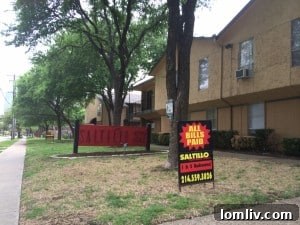
The Saltillo redevelopment project transcends its immediate location, becoming a microcosm of Dallas’s larger urban planning challenges and opportunities. Currently, the Saltillo complex houses 78 rental units. The new development will boast 258 brand-new units, a substantial increase that will introduce more residents, diners, bikers, walkers, shoppers, and taxpayers into the vibrant Knox-Henderson area. This increased density, while welcomed by many, inevitably triggers “Not In My Backyard” (NIMBY) reactions, a common occurrence across different parts of the city.
As a commentator for The Dallas Morning News aptly pointed out, “Such enhanced density seems to be the right fit for a neighborhood that is already surprisingly walkable and becoming more so all the time.” The article also critically questioned the consistency of opposition from Highland Park, noting, “for the HP crowd, these were the same folks that fought to stop a privately funded toll-tunnel to take the traffic off Mockingbird, so I don’t pay much attention to their Crocodile tears about congestion. Will HP continue constructing towers on Turtle Creek, yet oppose a comparably modest development in a neighboring community?”
A Vision for the Future: Plan Commissioner Paul Ridley’s Powerful Plea
The central question facing Dallas’s elected representatives on Wednesday is fundamental: Does Dallas want to continue growing and evolving as a leading urban center? Or will it cede growth to its periphery, exacerbating issues like suburban sprawl and lengthy commutes? Will citizens choose to restrict growth to specific, limited areas only? Dallas Plan Commissioner Paul Ridley eloquently articulated this crucial choice during a meeting last May, a message that resonates with every Dallas citizen:
“We have a clear choice at this point for the commission. We can either embrace the future of Dallas and the necessity to increase the density of a city that has in most respects reached its boundaries and has very little new developable open land to redevelop. That requires us to look at appropriate places in close-end locations that can support additional development at higher densities, such as this project and I believe this location. Or, the opposite choice is to remain mired in the past of 50 or 60-year-old two-story apartment buildings that are becoming more and more dilapidated and force development to occur on the fringes of the Metroplex in the far northern, and eastern and western suburbs where utilities are expensive to maintain, where new schools have to be built, and where people have to drive 50 miles to get to their jobs in downtown Dallas.”
“I’m a strong advocate for the former where it makes sense and I think it makes sense in this instance. This is not such a great departure in density from the existing development restrictions. It is an increase of 18 units over 2.4 acres from what is allowed today (258 versus 40 units). It is a height of 84 feet compared to 36 feet, but only over a relatively small portion of the site. One of the things that I like about this project is that it is very sensitive to the trail. In fact, its front door is the trail. It establishes a wide 25-foot setback before any building structure is erected and then it steps back at two different levels away from the trail preventing any significant shade of the trail or any impositions on site lines from the trail.”
“This is also an area of the city, which is a small pocket of MF-2 zoning surrounding, which is much higher height limitations of 240 feet in the LC zoning to the south. At Knox Street there is an apartment building that is situated directly on the trail that is 15 to 18 stories tall, twice as tall as this building, and to the north where there is an office building and future apartments that will extend up to over 200 feet in height. This location is two blocks from Central Expressway so it is readily accessible to a major avenue for reaching any corner of the Metroplex.”
“This project has strong support from the neighboring properties in Dallas and from the Dallas Oak Lawn Committee. They are the people who have the interest of Dallas at heart and I think that this is a project that is in the best interest of Dallas and I encourage your support.”
Conclusion: A Defining Moment for Dallas Development
The Dallas City Council’s decision on the Saltillo Apartments redevelopment is more than a vote on a single property; it’s a profound statement on the city’s vision for its future. It will determine whether Dallas embraces thoughtful, dense urban development in well-connected areas, fostering walkability and vitality, or if it succumbs to pressures that could inadvertently promote sprawl and dilute the urban core’s potential. With strong support from key local groups like the Oak Lawn Committee and significant concessions from Provident Realty Advisors, this project presents a compelling case for smart, sustainable growth. The city council’s choice will undoubtedly shape the landscape and character of Dallas for decades to come, defining its identity as a progressive, vibrant metropolitan hub.