A New Era for Dallas: Voters Approve $1.5 Billion Transformation of Convention Center and Fair Park
In a resounding display of civic commitment, Dallas voters have given the green light to a monumental $1.5 billion investment aimed at revitalizing two of the city’s most significant assets: the 65-year-old Kay Bailey Hutchison Convention Center and the historic Fair Park. This transformative project, set to inject new life into both downtown and South Dallas, will be primarily funded by a two percent increase in the hotel occupancy tax, signaling a clear vision for the city’s future as a premier destination for tourism and conventions.
The measure, presented to voters as Proposition A, garnered significant support, passing with an impressive 67.68 percent of the vote. Over 186,000 residents cast their ballots in favor, endorsing a comprehensive plan designed to secure Dallas’s competitive edge in the national hospitality landscape and foster substantial economic growth across diverse communities. This decisive outcome reflects a widespread understanding of the critical need for modern infrastructure and enhanced visitor experiences to drive the city’s prosperity, ensuring Dallas remains a vibrant and attractive global hub for decades to come.
Catalyzing Growth: The Mandate from Dallas Voters
The overwhelming approval for Proposition A underscores a collective belief in the power of strategic investment to shape Dallas’s urban fabric and economic trajectory. While the vision for a modernized convention center and a rejuvenated Fair Park excited many, a notable segment of the electorate, approximately 32 percent, expressed reservations. These concerns largely centered on the financial safeguards of the initiative: specifically, the provision that if the dedicated hotel tax revenue falls short of covering the bond obligations, the burden could potentially shift to local taxpayers. This aspect fueled much of the debate leading up to the election, highlighting the careful balance between ambitious development and fiscal responsibility.
However, proponents consistently emphasized that the hotel occupancy tax is a specialized funding mechanism, strategically designed to harness revenue generated directly from visitors and tourists. This ensures that the bulk of the financial commitment for these ambitious projects is shouldered by those utilizing Dallas’s hospitality services, rather than directly impacting the pockets of Dallas residents through increased property or sales taxes. This crucial distinction helped to assuage many concerns, positioning the investment as a self-sustaining engine for growth. The success of Proposition A thus represents a calculated risk and a powerful statement from Dallasites who recognize the long-term dividends of investing in world-class facilities and vibrant public spaces that attract capital, talent, and visitors.
Bridging Communities and Boosting the Economy: Vision from Leaders
Fair Park First: Securing a Legacy for Generations
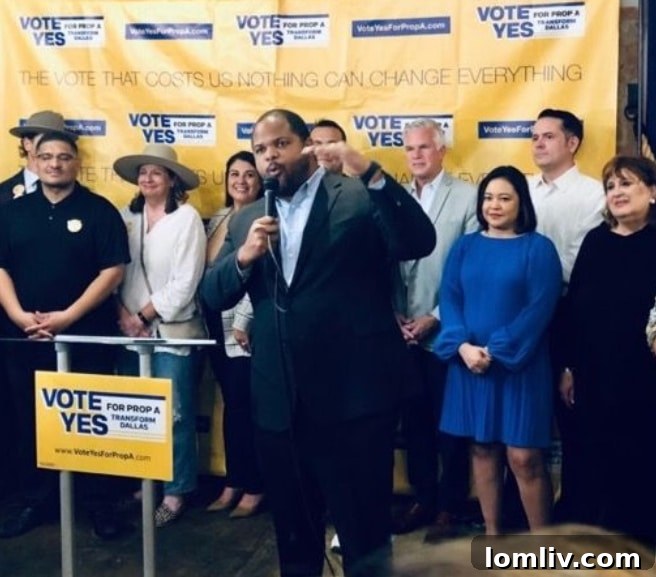
Brian Luallen, CEO of Fair Park First, shared his profound excitement following the election results, emphasizing the critical role this investment plays in preserving and elevating one of Dallas’s most cherished landmarks. “We’re so excited that the citizens of Dallas recognize the importance of investing in our tourism and hospitality economy, as well as our history at Fair Park,” Luallen remarked. He underscored the dual benefit of the project, stating, “This is going to be a transformative investment which secures Fair Park for generations to come, along with an incredible economic development opportunity which literally bridges downtown and South Dallas for the first time ever.” This sentiment highlights not only the preservation of historical assets but also the creation of new economic pathways and connections that have long been sought after within the city.
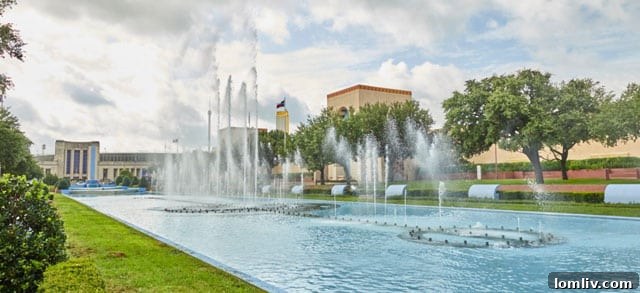
Fair Park, a National Historic Landmark, holds immense cultural and historical significance for Dallas. Its unique collection of Art Deco architecture, its role in hosting the State Fair of Texas, and its diverse array of museums and recreational facilities make it a cornerstone of the city’s identity. The approved renovations promise to enhance its appeal, ensuring that future generations can continue to enjoy and benefit from this irreplaceable urban treasure. The investment isn’t merely about physical upgrades; it’s about re-energizing a vital part of Dallas’s heritage and ensuring its relevance in a rapidly evolving metropolitan landscape, creating a vibrant, accessible hub that draws both locals and tourists alike. These improvements are set to elevate Fair Park’s status as a year-round destination, moving beyond seasonal events to become a constant source of cultural enrichment and community engagement.
Downtown Dallas Inc.: Crafting a Vibrant, Connected Urban Core
Jennifer Scripps, President and CEO of Downtown Dallas Inc., echoed Luallen’s enthusiasm, highlighting the profound impact these projects will have on urban development and job creation. “Downtown Dallas Inc. is grateful to Dallas voters for empowering our city to move forward with this once-in-a-generation opportunity to transform the southern side of downtown and restore six treasured Fair Park venues,” Scripps affirmed in a post-election statement. Her organization has been intimately involved in the planning stages, collaborating with City Hall on the Kay Bailey Hutchison Convention Center master plan for several years, recognizing its strategic importance to the entire urban core and its potential to reshape the city’s economic landscape.
Scripps further elaborated on the transformative potential, expressing excitement “to continue the important work of designing and building a new walkable, vibrant, mixed-use entertainment district that will create thousands of new jobs and generate millions of dollars in economic development, as well as attract new visitors and residents for decades to come.” This vision extends beyond mere facility upgrades; it encompasses the creation of an integrated urban environment where convention-goers and residents can seamlessly interact with retail, dining, and entertainment options. Such a district will not only enhance the visitor experience but also significantly boost local commerce, cultivate a dynamic urban atmosphere, and ultimately elevate Dallas’s global standing as a progressive and desirable city to live, work, and visit. The synergy created by a world-class convention center surrounded by a bustling new district promises to be a major draw for both domestic and international audiences, solidifying Dallas’s position as a premier urban destination.
Proposition A: Understanding the Numbers and the Impact
The detailed results from the Dallas County Elections Department, released on Wednesday, Nov. 9, at 5 a.m., painted a clear picture of the public’s mandate. A total of 623,306 ballots were cast across 464 vote centers, representing a robust 43.81 percent of the county’s 1.4 million registered voters. This strong turnout for a local proposition election underscores the deep community engagement and the perceived importance of these infrastructure projects to the future of Dallas. It demonstrates that citizens are actively invested in the strategic direction and economic vitality of their city.
Breaking down the vote for Proposition A specifically, Dallas voters cast 186,338 ballots (67.68 percent) in favor of the measure, demonstrating a solid consensus for the proposed investments. Conversely, 88,991 ballots (32.32 percent) were cast against it. These numbers not only confirm the broad public support but also highlight the democratic process at play, where diverse viewpoints were heard and ultimately, a collective decision was made for the city’s advancement. The mandate is clear: Dallas is ready to invest in its future, leveraging its tourism assets to spur widespread economic and urban revitalization. The voter turnout itself is a testament to the community’s recognition of how significantly these projects will impact the city’s trajectory.
Comprehensive Revitalization: Plans for Fair Park and the Kay Bailey Hutchison Convention Center
Fair Park: A Historic Landmark Reimagined
The vision for Fair Park’s future is both ambitious and respectful of its storied past. New designs unveiled in September detailed approximately $300 million in critical upgrades across its sprawling facilities. These enhancements are slated for iconic structures such as the historic band shell, the majestic coliseum, the legendary Cotton Bowl Stadium, and the various exhibition halls. The comprehensive plan seeks not only to modernize these venues to meet contemporary standards but also to preserve their architectural integrity and historical charm. Upgrades will include improved infrastructure, enhanced visitor amenities, and potentially new programming spaces, ensuring that Fair Park remains a vibrant hub for entertainment, culture, and community gatherings for decades to come. The goal is to elevate the overall experience for attendees of the State Fair, concerts, sporting events, and cultural exhibitions, cementing Fair Park’s status as a premier multi-use urban park.
Fair Park officials have meticulously outlined their long-term strategy for the park’s evolution in a detailed 260-page master plan. This extensive document serves as a blueprint for sustainable development, guiding decisions on everything from landscape improvements and accessibility to programming and economic sustainability. It reflects a commitment to balancing preservation with progress, ensuring that Fair Park continues to serve as a vital green space and cultural institution for all Dallas residents and visitors. The master plan emphasizes creating a more cohesive and welcoming environment, integrating various attractions and improving connectivity within the park itself and with surrounding neighborhoods, thereby maximizing its potential as a year-round attraction.
The Kay Bailey Hutchison Convention Center: Modernizing a National Asset
The Kay Bailey Hutchison Convention Center already stands as one of the largest and most active convention facilities in the nation, drawing over a million visitors annually for an incredibly diverse range of events—from major corporate conventions and trade shows to high-profile concerts and athletic competitions. Boasting an expansive 1 million square feet of exhibit space, three grand ballrooms, 88 versatile meeting rooms, a state-of-the-art theater, and a sizeable arena, the center is a powerhouse of economic activity for Dallas. However, as with any facility of its age and scale, officials recognize that the space is in dire need of significant renovations and a strategic reconfiguration to remain competitive and meet the evolving demands of the global convention industry, which increasingly prioritizes flexibility, technology, and attendee experience.
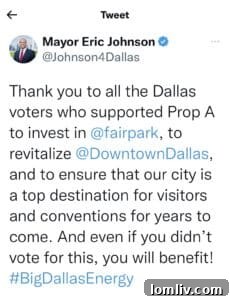
The necessity for these upgrades was powerfully articulated by the center’s namesake, former U.S. Senator Kay Bailey Hutchison, who appeared before the Dallas City Council in April. She emphasized the profound potential of the expansion to truly remake the city, forging vital connections between downtown and the vibrant southern part of Dallas. Drawing on her extensive experience, Senator Hutchison highlighted the intense competition Dallas faces from other major cities and states. “I’m for this expansion because I know what the competition is like,” she stated. “I know that the competition is heavy from other coasts, as well as in Texas. We need to be competitive. We want to be the best. We want more visitors to come to our city. When we have conventions, people come back and bring their families.” Her passionate endorsement underscored the economic imperative and the significant ripple effect that a world-class convention center has on a city’s tourism, hospitality, and overall appeal.
Crucially, Senator Hutchison also reinforced the funding mechanism’s integrity, assuring the public that “It will not affect our general fund or our taxpayers. The visitors will pay for this expansion.” This clear distinction has been a cornerstone of the project’s public messaging, reassuring residents that the investment is self-sustaining and benefits the city without burdening its general tax base. The strategic upgrades will include modernizing technology, improving logistical flow, enhancing guest comfort, and creating more flexible spaces that can adapt to a wider array of events, thereby attracting even larger and more prestigious gatherings to Dallas. This modernization is not just about aesthetics; it’s about functionality, sustainability, and securing Dallas’s position as a top-tier convention destination for the next half-century.
The Power of Hotel Occupancy Tax: Fueling Tourism and Local Prosperity
The decision to fund this monumental $1.5 billion initiative through an increase in the hotel occupancy tax (HOT) is a cornerstone of its financial viability and public acceptance. The hotel occupancy tax is a dedicated revenue stream, specifically earmarked by law to support tourism-related ventures. This means the funds generated from the two percent increase cannot be diverted to other city services such as public safety, street repairs, or general operational expenses. Instead, they are channeled directly into projects that enhance Dallas’s appeal as a tourist and convention destination, creating a virtuous cycle where visitors contribute to the infrastructure that attracts more visitors.
This funding model offers significant advantages. By leveraging the economic activity generated by visitors, Dallas can undertake major capital projects without placing additional strain on its general fund or imposing new taxes on local residents. The increased revenue from the HOT will directly support the bond repayments for the convention center modernization and Fair Park redevelopment. This strategy not only safeguards the local taxpayer but also aligns with the principle that those who directly benefit from the city’s tourism infrastructure—namely, hotel guests—contribute to its maintenance and expansion. The economic ripple effects extend far beyond the direct project costs. The influx of construction jobs will provide immediate employment opportunities, while the completed projects will lead to sustained job growth in hospitality, entertainment, retail, and transportation sectors. Local businesses, from restaurants and boutiques to service providers, will experience increased patronage, contributing to a broader economic uplift and strengthening Dallas’s reputation as a dynamic and welcoming city. This dedicated funding mechanism ensures that Dallas can make long-term, strategic investments in its future without compromising its essential public services.
A Future-Forward Dallas: Connecting Downtown to South Dallas
Perhaps one of the most compelling aspects of this ambitious investment is its potential to literally and figuratively bridge the gap between downtown Dallas and South Dallas. For decades, a perception of disconnection has existed, often hindering cohesive urban development and equitable growth. The strategic location of both the Kay Bailey Hutchison Convention Center and Fair Park provides a unique opportunity to stitch these areas together, fostering greater accessibility, improved infrastructure, and a shared sense of community pride. This integration is vital for creating a truly unified and prosperous city.
The vision for a new walkable, vibrant, mixed-use entertainment district around the convention center and improved connectivity to Fair Park aims to dismantle historical barriers. This includes not just physical links like better pedestrian pathways and public transportation options, but also social and economic integration. By drawing visitors and new businesses into South Dallas, the project promises to stimulate revitalization, create local entrepreneurial opportunities, and ensure that the economic benefits are broadly shared across the city. This long-term commitment to unified development will enhance the quality of life for residents in both areas, create more inclusive public spaces, and project an image of Dallas as a truly progressive metropolis—one that values connection, diversity, and sustainable growth. The synergy between a state-of-the-art convention center and a revitalized historic park will create a powerful magnet, attracting talent, investment, and tourism, ultimately solidifying Dallas’s position as a vibrant, future-forward global city for generations to come, fostering an environment where all communities can thrive.