Unpacking the Preston Road and Northwest Highway Development Vote: A Deep Dive into Community Sentiment
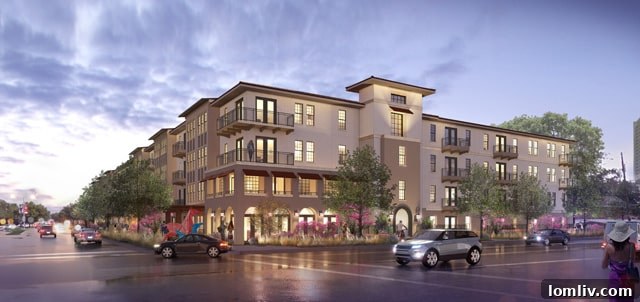
The highly anticipated results are in from a crucial ballot distributed to property owners residing “Behind the Pink Wall,” aimed at gauging community sentiment regarding the proposed, scaled-down Transwestern building. This significant development project, earmarked for the prominent northeast corner of Preston Road and Northwest Highway in Dallas, has been a focal point of intense discussion and debate within the Preston Hollow neighborhood for years. The recent vote sought to provide a definitive measure of support or opposition, shaping the future landscape of this vital intersection, a key corridor for Dallas real estate development.
For those familiar with the history of urban planning and development proposals at this particular site, the mention of “Transwestern” immediately conjures memories of prolonged community battles and impassioned arguments. Indeed, earlier, larger proposals for this prime Preston Hollow location ignited fierce opposition, leaving a lasting impression on residents and local stakeholders alike. The current iteration, a refined and reduced-scale plan, represents Transwestern’s latest attempt to move forward with a project designed to integrate more harmoniously with the existing neighborhood fabric. This recent ballot, therefore, wasn’t just a simple tally; it was a snapshot of a community’s evolving perspective on urban growth, balancing the need for modernization with the desire for preservation within established Dallas neighborhoods.
The Numbers Speak: A Closer Look at the Ballot Results and Their Implications for Dallas Development
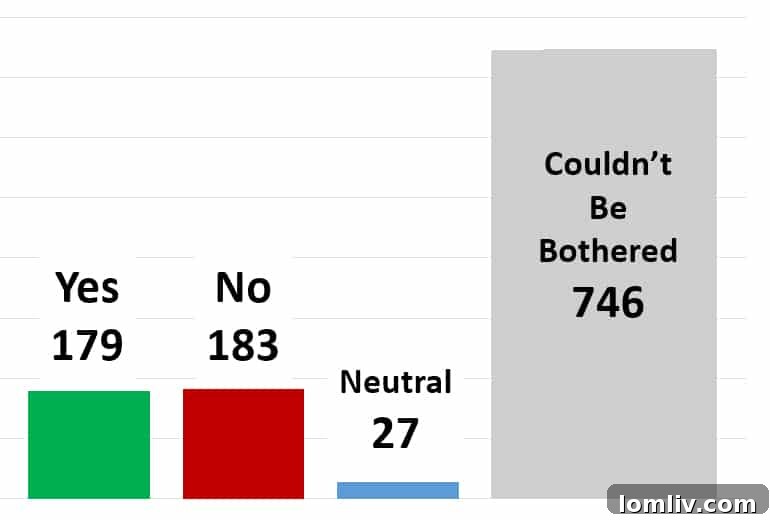
The raw vote tallies, released last week, initially suggest a narrow rejection of the Transwestern proposal. The figures show 179 votes “for” the latest development plan and 183 votes “against” it. At first glance, this razor-thin margin of just four votes against the proposal might seem like a clear indication of community disapproval. However, a deeper analysis reveals a more nuanced and complex picture, challenging such a facile determination. To truly understand the collective will of the Pink Wall residents concerning this Preston Road project, we must look beyond the immediate “yes” and “no” categories and consider the significant number of “neutral” responses and, perhaps most tellingly, the overwhelming percentage of non-votes.
The difference of merely four votes in a community ballot of this magnitude is hardly a resounding mandate for either side. It places the decision squarely in the realm of a statistical toss-up, indicating a significant lack of overwhelming consensus. Neither proponents nor opponents can claim a strong mandate to proceed or halt the project based solely on these numbers. This ambiguity underscores the ongoing division and the inherent challenges in balancing development needs with community desires for continuity and minimal disruption in established Dallas neighborhoods. It highlights the delicate balance urban planners face when addressing critical mixed-use projects at high-traffic intersections like Preston Road and Northwest Highway.
Decoding the “Neutral” Stance: Are They More Pro Than Con for This Preston Hollow Project?
Beyond the stark binary of “for” and “against,” the ballot included a “neutral” option, attracting 27 votes. While often overlooked, the interpretation of these neutral votes can significantly shift the perceived outcome. It’s a compelling argument that those who selected “neutral” are more aligned with an implicitly positive view than an overtly negative one. When faced with a clear choice to actively oppose a major development project, opting for neutrality often suggests a lack of strong objection, implying a willingness to accept the outcome, whatever it may be. The psychological principle here is simple: if someone truly harbored significant concerns or opposition regarding the Transwestern development, they would likely cast a “no” vote to express that dissent unequivocally.
Consider a relatable scenario: when asked for an opinion on a course of action and responding with “I don’t care, do whatever you want,” the person initiating the action typically proceeds with their original intent. This human tendency to interpret non-resistance as implicit consent often applies to community decisions as well. For these 27 residents, their neutrality could indicate that while they might not be enthusiastic champions of the Transwestern project, they also don’t see enough negatives – such as increased traffic, noise, or negative impact on property values – to actively block its progression. The author, having cast a neutral vote personally, admits that under pressure, their stance would have tilted towards “yes,” seeing more positives than negatives about this particular Dallas development. This personal insight further supports the notion that a significant portion of “neutral” votes could effectively be reclassified as leaning towards acceptance, adding critical weight to the “for” side of the ledger and potentially shifting the overall sentiment to a majority in favor of the Preston Road development.
The Silent Majority: Apathy and Its Impact on the Transwestern Development
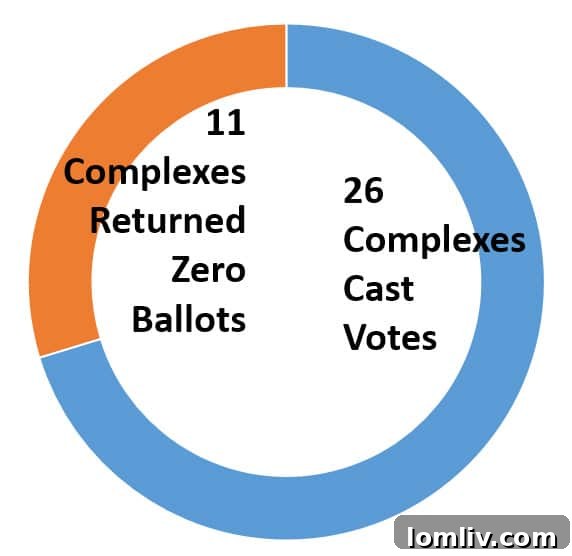
Perhaps the most striking and impactful revelation from this ballot is the colossal number of residents who chose not to vote at all. Out of a possible 1,135 votes (representing condominium units), an astonishing 746 individuals or unit owners abstained from participating. This translates to a staggering 66 percent non-participation rate. Even more revealing, out of 37 residential complexes, 11 cast absolutely no votes whatsoever. This level of apathy, especially concerning a major urban development literally “spitting distance” from their homes at a key Dallas intersection, raises significant questions about community engagement and priorities within the Pink Wall neighborhood.
While such low voter turnout might be somewhat common in state or federal elections – where citizens must register, apply for absentee ballots, or physically travel to polling places, sometimes battling inclement weather or other inconveniences – the context here is entirely different. This was a hyper-local issue, directly affecting property values, daily commutes along Preston Road, and the character of one’s immediate living environment. Moreover, the voting process for this specific ballot was incredibly simple: ballots were conveniently slipped under doors or placed in mailboxes. There was no need to brave the elements, navigate traffic, or commit significant personal time. Residents merely had to pick up the ballot in the comfort of their own homes, grasp a pen, and check one of three boxes. Yet, two-thirds of the eligible voters couldn’t be bothered to engage in this minimal effort for a project directly impacting their Dallas community.
This widespread indifference, particularly in a demographic often associated with higher civic participation – residents of the Pink Wall are generally known to be older, a demographic typically more engaged in local issues and property concerns – is profoundly telling. It suggests that for 746 property owners, the future of the Transwestern project on this corner holds little personal significance or urgency. This could stem from a variety of factors: genuine lack of strong feelings either way, a belief that their vote wouldn’t make a difference, busy schedules, or simply a tacit acceptance that some form of development at Preston Road and Northwest Highway is inevitable. Regardless of the underlying reasons, this massive abstention rate fundamentally alters the interpretation of the “for” and “against” counts, indicating that a significant portion of the community, while not explicitly supportive, is also not actively opposed to the new Transwestern building.
A Peculiar Voting System: Units Over Individuals in HOA Decisions
Another critical factor influencing the ballot results and often overlooked in broader discussions about community development is the unique voting structure employed for this specific decision. Unlike traditional elections where “one person, one vote” is the bedrock principle, this balloting assigned a vote to each condominium unit. This means that property owners with multiple units possessed multiple votes, thereby amplifying their individual influence on the outcome regarding the Preston Road development. For instance, an investor living out-of-state who owns five units in the Pink Wall neighborhood – perhaps never having even set foot in the complex for years – would cast five votes, despite having virtually no personal daily impact from the proposed development at Preston Road and Northwest Highway.
This system inherently skews the results, potentially favoring investor interests or large property holders over the sentiment of resident-occupants who would experience the direct consequences of the development, such as changes in traffic patterns, neighborhood aesthetics, or local amenities. While this structure is common in HOA and condominium association votes, it raises valid questions about whether the outcome truly reflects the collective desire of the community members who call the Pink Wall home. The voice of a long-term resident with a single unit, deeply invested in the neighborhood’s character and quality of life, carries the same weight as someone whose primary concern might be property appreciation or rental income, rather than community aesthetics or traffic flow. This disproportionate representation further complicates the interpretation of the vote as a true reflection of the neighborhood’s consensus on the Transwestern project.
The Park Deville Anomaly: Delaying for an Unfunded Study in Dallas Urban Planning
A particularly interesting data point emerged from one specific complex: Park Deville. This complex cast 16 of its 17 votes against the Transwestern proposal. A note accompanying their ballot results indicated a desire to delay any decision until Jennifer Gates’ Land Use Study is completed. While seemingly a rational request for more information in the context of urban planning, this rationale, upon closer examination, borders on the amusingly impractical. It suggests a willingness to abide by whatever the study recommends, whether it be a complete halt to development, a five-story structure, or even a fifty-story skyscraper. Given that Park Deville directly borders the proposed development site at Preston Road and Northwest Highway, it stretches credulity to believe that its residents would genuinely accept any recommendation, particularly one that significantly increased density or height, drastically altering their immediate environment.
Furthermore, the feasibility of relying on this study for an immediate development decision is highly questionable. Jennifer Gates’ Land Use Study is currently not fully funded and is projected to be at least two years away from presenting any quantifiable recommendations. To tie a significant development decision to a long-term, unverified, and unfunded study introduces an unnecessary and unrealistic delay. This position appears less like a genuine commitment to comprehensive planning and more like a tactical maneuver to postpone or outright reject the Transwestern development under the guise of wanting more information. Such “silliness,” as the author puts it, highlights the complex interplay of community politics, genuine concerns, and strategic delays that often characterize major urban development debates in Dallas, particularly in sought-after areas like Preston Hollow.
The Broader Narrative: Shifting Perceptions and the Path Forward for Preston Road Development
It’s important to acknowledge that much of the resident-generated material surrounding the Transwestern development has historically been predominantly negative. From initial “Vote NO” campaigns that galvanized opposition to more recent mailings advocating against the project, the narrative has largely been dominated by voices of dissent. Considering this strong, organized opposition, the actual ballot results – with a mere four-vote difference between “for” and “against” and a significant “neutral” contingent – appear considerably more positive than many might have anticipated. This suggests that while vocal opposition exists within the Pink Wall neighborhood, it may not represent the silent majority, or at least, not as overwhelmingly as previously believed.
The outcome of this ballot, therefore, is not a definitive rejection but rather a complex portrait of a community grappling with change. It indicates that a substantial portion of the Pink Wall residents are either open to, or at least not vehemently against, the scaled-down Transwestern proposal for Preston Road and Northwest Highway. When factoring in the implicit consent of the neutral votes and the sheer indifference of the vast majority who didn’t vote, the balance undeniably shifts towards a more favorable outlook for the project. This opens the door for Transwestern to proceed, carefully considering the feedback received while recognizing the lack of overwhelming opposition for this key Dallas real estate venture.
Conclusion: The Time for Thoughtful Development at Preston Road is Now
In light of this comprehensive analysis, the message to Transwestern appears clear: the path forward for this vital Dallas mixed-use project, while not without its vocal critics, is far from blocked. The ballot results, when stripped of superficial interpretation and examined for their underlying nuances, reveal a community that is either cautiously accepting or genuinely indifferent to the proposed development. The narrow margin of “no” votes, coupled with the potential reinterpretation of “neutral” votes as implicitly favorable, and the overwhelming apathy of non-voters, collectively paint a picture of an opportunity ripe for action and progress for Preston Hollow.
The Dallas landscape is constantly evolving, and vital intersections like Preston Road and Northwest Highway are prime candidates for thoughtful, well-planned development that can enhance urban vitality, provide modern amenities, and contribute to economic growth. With the current proposal being a scaled-down version designed to mitigate previous community concerns, and a vote that certainly doesn’t present an insurmountable barrier, the time seems right for progress. Therefore, echoing the sentiment that emerges from a deeper understanding of these results: build baby, build. Let the thoughtful revitalization of this important Dallas corner commence, bringing renewed energy and functionality to a key community hub, enhancing both property values and the overall quality of life in the surrounding Pink Wall neighborhood.