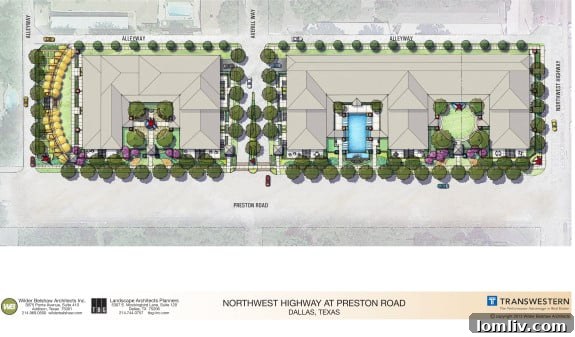
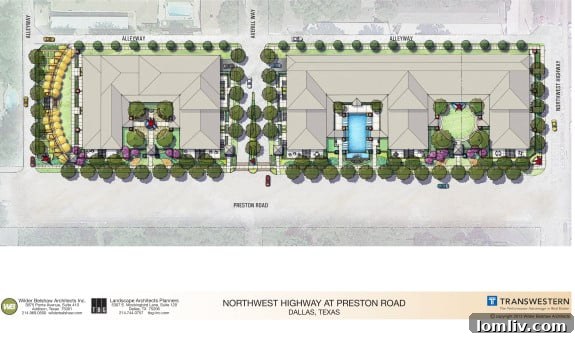
The upscale community of Preston Hollow, Dallas, finds itself at a pivotal moment, grappling with a proposed Transwestern development that has sparked considerable debate among its residents. At the heart of this discussion is the potential introduction of luxury apartments, a concept that elicits strong opinions ranging from enthusiastic support for modernization and urban convenience to vehement opposition rooted in concerns over traffic, neighborhood character, and infrastructure strain. This critical juncture highlights the complex balance between urban development and the preservation of a cherished residential environment.
One prominent voice in this unfolding dialogue is Charles Sartain, a long-time resident of Northwood, an area in close proximity to the proposed Transwestern project. Sartain, in a thoughtful Letter to the Editor published in the Dallas Morning News, articulately posits that there is indeed a demonstrable demand for high-end, luxury apartments within the Preston Hollow vicinity. His perspective suggests a forward-thinking view, acknowledging evolving demographic trends and the potential for such developments to cater to diverse segments of the population, including empty nesters seeking to downsize without leaving their beloved neighborhood, or young professionals drawn to the area’s amenities and prestige. However, Sartain’s support for the concept is tempered with a crucial caveat: a deep-seated desire for comprehensive traffic studies and a more transparent disclosure of information regarding the project’s full scope and impact. This call for data-driven assessment underscores a common plea among residents for decisions to be rooted in thorough analysis rather than speculation.
Furthermore, Sartain challenges the notion that a stance of “no negotiations” or an outright rejection of the development before it even reaches the zoning stage represents the collective sentiment of the entire neighborhood. Preston Hollow is a diverse and expansive community, stretching geographically from the bustling Hillcrest area all the way to the Dallas North Tollway. This vast expanse encompasses a rich tapestry of residential styles and demographics, from the charming, mid-century ranches that line streets like Northwood, home to residents like Sartain, to the sprawling, tree-canopied estates and creek-lined properties characteristic of Old Preston Hollow. This inherent diversity in housing, lifestyle, and generational perspectives naturally fosters a varied spectrum of opinions on development matters, making it challenging to present a monolithic neighborhood viewpoint.
The debate surrounding the Transwestern luxury apartment development is not merely about bricks and mortar; it’s about the future identity of Preston Hollow. Residents on both sides of the issue are passionate about their community, albeit with differing visions. Those in favor of the development, often echoing Sartain’s sentiments, point to the economic benefits, increased property values in commercial areas, and the provision of diverse housing options that cater to a dynamic urban population. They might argue that responsible development can revitalize underutilized parcels of land, contribute to the local tax base, and attract businesses that further enhance the neighborhood’s appeal. The demand for luxury rental options in Dallas continues to grow, driven by a strong job market and a lifestyle preference among certain demographics. Proponents believe that well-designed, high-quality apartments can seamlessly integrate into the existing fabric of Preston Hollow, adding vibrancy without detracting from its core character.
Conversely, a vocal segment of the community, often characterized as “the protesters,” expresses profound apprehension. Their primary concerns frequently revolve around the potential for increased traffic congestion on already busy thoroughfares, the strain on existing infrastructure such as water and sewer systems, and the preservation of the neighborhood’s established residential aesthetic. For many long-term residents, Preston Hollow represents a sanctuary, a leafy enclave offering a quality of life distinct from the denser urban core. The prospect of high-density apartment complexes, regardless of their luxury status, raises fears of overcrowding, diminished privacy, and a fundamental alteration of the peaceful, suburban-like atmosphere they cherish. These residents often advocate for a more cautious approach to development, prioritizing the maintenance of their current quality of life over potential economic gains.
“No negotiation” and “squelch it before it gets to zoning” are not the prevailing opinions in the neighborhood. The protesters say they want somebody to fight for them. We want a plan commission and council who will fight for a rational debate and vote for a reasonable result.
This powerful quote from Sartain encapsulates the call for a reasoned and democratic process. It highlights a critical distinction between outright rejection and a desire for constructive engagement. While some residents undoubtedly wish to see the project stopped entirely before it gains momentum, Sartain’s perspective, which he believes is shared by many, champions the democratic process. He and others seek a city Plan Commission and City Council that will not merely rubber-stamp or blindly reject proposals, but rather actively facilitate a “rational debate.” This implies a comprehensive review process that includes community input, expert analysis, and a willingness to consider modifications or compromises that could lead to a “reasonable result.” A reasonable result, in this context, would be an outcome that thoughtfully addresses the needs of the developer, the city, and, most importantly, the diverse residents of Preston Hollow.
The importance of a thorough traffic study cannot be overstated in this discussion. Preston Hollow’s main arteries, such as Preston Road and Northwest Highway, are already subject to significant traffic volumes. Adding hundreds of new residential units, each potentially contributing multiple vehicles to these roads, could exacerbate existing congestion, prolong commute times, and increase safety concerns for pedestrians and cyclists. A robust traffic impact analysis would model these potential changes, identify critical intersections, and propose mitigation strategies, such as road improvements, signal timing adjustments, or public transport enhancements. Without such data, residents are left to extrapolate impacts based on anecdotal experience, fueling fear and resistance.
Beyond traffic, the development’s impact on local schools, parkland, and emergency services also warrants careful consideration. An increase in population density, even in a luxury development, places additional demands on these public resources. The city’s infrastructure planning must evolve in tandem with its growth, ensuring that essential services can adequately support new residents without compromising the quality of life for existing ones. This integrated planning approach is precisely what proponents of “rational debate” advocate for.
The political dimensions of this debate are also significant. Local city council members and the Plan Commission are tasked with balancing competing interests and making decisions that shape the urban landscape for decades to come. Their role is to ensure that development proposals align with the city’s comprehensive plan, zoning ordinances, and the broader public interest. Residents on all sides of the issue will be looking to these elected and appointed officials to demonstrate leadership, transparency, and a commitment to thoughtful urban planning. The outcome of the Transwestern proposal in Preston Hollow could set a precedent for future developments in similar affluent, established neighborhoods across Dallas.
In conclusion, the proposed Transwestern luxury apartment development in Preston Hollow is more than just a real estate project; it’s a microcosm of the challenges facing rapidly growing urban centers. It forces a conversation about evolving demographics, the definition of community character, infrastructure capacity, and the efficacy of local governance. While strong opinions on both sides are a natural part of democratic processes, the call for a “rational debate” and a commitment to understanding all facets of the impact is paramount. As Charles Sartain and many of his neighbors suggest, genuine engagement, comprehensive studies, and an open-minded approach from all stakeholders – residents, developers, and city officials alike – will be essential in forging a path forward that genuinely serves the best interests of Preston Hollow and the city of Dallas.