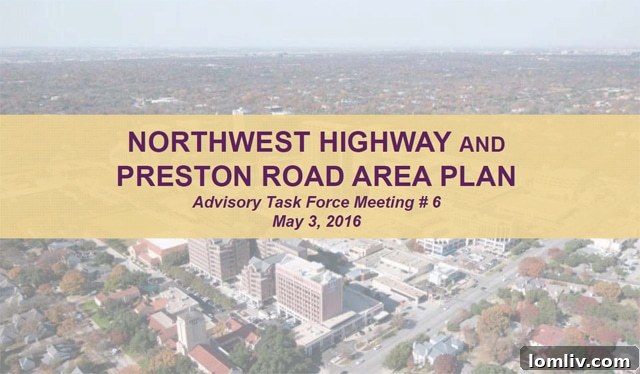
Preston Center Development: Embracing Transparency and Community Vision
In the complex landscape of urban development, the principle of “Keep It Simple, Stupid” (KISS) often proves to be an invaluable guide. Yet, recent presentations regarding the future of Preston Center have highlighted a significant departure from this fundamental wisdom, leaving community members and task force representatives grappling with complex data and opaque proposals.
For nearly three hours, stakeholders endured a detailed presentation by Kimley-Horn, consultants tasked with shaping Preston Center’s future at a cost of $350,000. While efforts to refine their communication are evident, the delivery often felt disconnected from the needs of a lay audience, suggesting either infrequent engagement with non-technical groups or a recent transition from academic environments. As a data-driven individual, I found myself questioning the presentation methodology, and the subsequent barrage of questions and requests for clarification from Task Force members underscored the widespread challenge in comprehending the presented information.
Effective urban planning hinges on clear, digestible data, especially when proposing significant changes to an established community. What remains conspicuously absent from the ongoing discussions, despite repeated appeals, is a clear, sequential progression of data that illuminates the current state, potential under existing regulations, and the desired future of Preston Center. To truly empower informed decision-making and foster genuine community engagement, the following data points are essential:
- Current Footprint Analysis: A comprehensive, lot-by-lot breakdown detailing the exact square footage currently existing within Preston Center, meticulously categorized by its usage (retail, residential, office). This analysis must include precise totals to establish a baseline understanding of the existing urban fabric.
- Zoning Capacity Assessment: Specific, lot-by-lot calculations illustrating the maximum additional square footage and permissible building heights achievable under current zoning regulations and existing Planned Development (PD) allowances. This clarifies the “as-of-right” development potential.
- Proposed Zoning Modifications: A detailed, lot-by-lot outline of the specific square footage and height increases recommended by the Task Force, indicating the desired changes that would necessitate amendments to current zoning. This clearly defines the community’s aspirations for growth.
These three steps represent a logical, progressive narrative: What exists today? What is currently permissible? What is truly desired? Without this foundational clarity, any subsequent discussion of development proposals is built on an unstable understanding, fostering confusion rather than consensus.
Beyond the fundamental structural data, further layers of detail are critical for a holistic understanding of future impacts:
- Usage Mix and Impact Analysis: Specific details on the recommended types of usage (office, retail, residential) and a thorough analysis of how their proposed mix will individually and collectively impact critical areas such as traffic flow, parking availability, and overall urban density.
- Ratio-Based Development Recommendations: Precise details on the proposed development ratios designed to achieve the desired community outcomes. These recommendations should be directly informed by the extensive community feedback gathered over the past 15 months, ensuring plans reflect local priorities.
- Interactive Community Feedback Loop: A clear mechanism for gathering and integrating community perspectives on the presented plans. This isn’t merely asking “What do you think?” but actively seeking structured input on specific proposals.
These additional points address the “ingredients” of the proposed development, the “recipe” for achieving the desired outcome, and an open forum for critical “questions.”
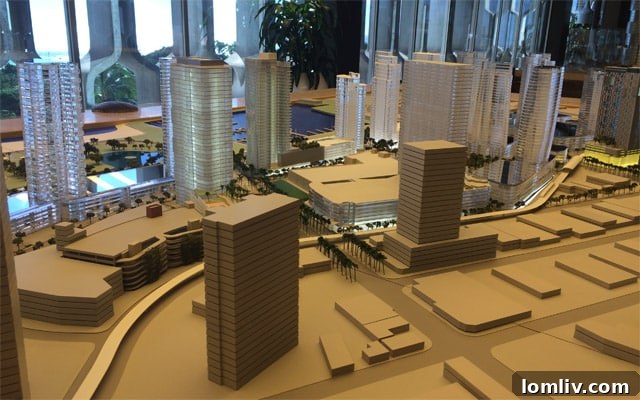
One of the most significant impediments to public understanding in urban planning is the difficulty many people face in translating abstract numbers on a page into three-dimensional space. The power of a physical model cannot be overstated. As urban planning advocate Laura Miller rightly suggested, simple tools like LEGOs or two-by-fours could be employed to create scale models reflecting stages 1, 2, and 3 of the proposed development. Instead, presentations often rely on vague, emotionally charged phrases such as “double,” “X hundreds of thousands of added square feet,” or “X thousands of added residential units.” While these phrases convey magnitude, they utterly fail to provide a tangible mental image of the future, leaving residents unable to truly envision the outcomes for their community.
The St. Michael’s Controversy: A Case Study in Transparency and Trust
The imperative for transparency was vividly underscored by the ongoing saga involving St. Michael’s and All Angels church. Earlier in the year, whispers of clandestine plans for a monumental tower on Frederick’s Square ignited significant community concern. (For detailed background, see reports here, here, and here.) The community’s response has been unequivocal, serving as a powerful reminder that development plans cannot proceed in a vacuum.
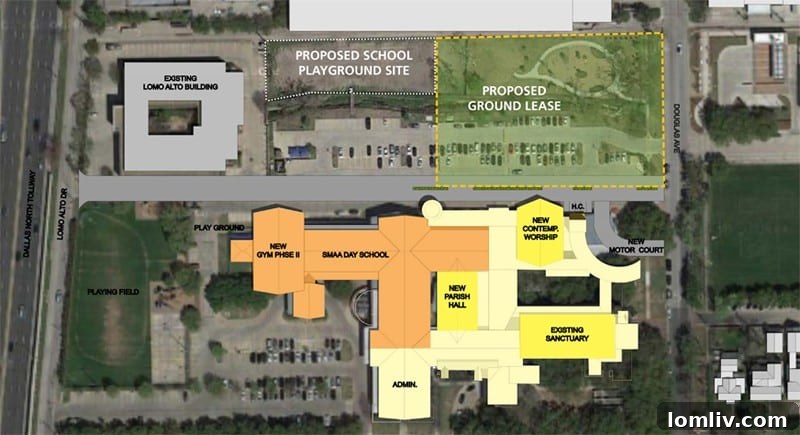
During a recent meeting, Betsy del Monte, the Zone 5 representative from south of St. Michael’s, presented a petition revealing strong resident opposition to the church’s aspiration to upzone its three-story lot for a tower. A staggering 80 percent of the 71 homes in the zone, totaling 57 residences, firmly rejected the proposal. This sentiment was echoed by a letter from the HOA of the upscale condominiums at 8181 Douglas, expressing unanimous displeasure at the prospect of a view-obstructing high-rise overshadowing their properties. Their concerns centered not only on the visual impact but also on the exacerbation of existing traffic and parking challenges, particularly given the proximity to an expanding St. Michael’s Day School with its associated pick-up and drop-off issues. The prospect of an office tower creating a constant influx and efflux of vehicles during rush hours, akin to a “maniacal PEZ dispenser,” painted a vivid picture of potential chaos. Furthermore, the issue of privacy – with high-rise office occupants “peering” into residential homes – raised significant concerns about quality of life.
The discussion did not subside. Throughout the evening, the church’s plans became a recurring point of contention. Jay Grogan, Zone 3 representative and a key figure from St. Michael’s involved in the proposed project, found himself consistently on the defensive. He sought to downplay the church’s progress, attempting to characterize the extensive project detailed in their own newsletter as mere “idle chatter and scribbles on the back of a napkin.” However, Laura Miller’s pointed retort resonated: “Well, all I know is that you issued an RFP to every builder in town before choosing Lincoln Property.” This statement served as a stark reminder of the concrete actions taken by the church, directly contradicting the narrative of nascent, informal plans.
Navigating the NIMBY Landscape: Balancing Concerns with Progress
While Miller’s critique of the St. Michael’s situation was compelling, her subsequent attempt to extend the “church versus neighbors” analogy to Mark Cuban’s undeveloped lots on Northwest Highway, opposite Preston Center, introduced a complex dynamic. This particular issue, a long-standing point of contention for Miller, inadvertently risked diluting a strong argument about traffic, density, and proximity, giving it the potential appearance of a “Not In My Backyard” (NIMBY) stance. There is a significant distinction between legitimate concerns regarding a 250,000-square-foot tower directly impacting one’s immediate vicinity and advocating for extreme restrictions, such as an “iron shroud” around Cuban’s property, even going as far as rejecting minimal three-story townhouses.
The challenge with the NIMBY label is its potential to undermine valid community input. It becomes difficult to discern where genuine concern for community character and infrastructure ends, and where resistance to any change, regardless of merit, begins. For instance, do residents on Del Norte Lane, adjacent to the “Pink Wall,” possess the sole authority to dictate what can or cannot be redeveloped in that area? Historical precedent, such as the contentious battle over the Laurel apartments, suggests that many residents believe they do. However, a blanket “no” without substantive reasoning or alternative proposals can stagnate necessary urban evolution and preclude beneficial mixed-use developments that could enhance the area’s vitality.

The Paradox of Walkability: Are We Just Paying Lip Service?
For the past year, “walkability” has been consistently lauded as a cornerstone of success for the Preston Center project. The narrative has consistently championed pedestrian-friendly design, even leading to discussions with TXDoT about the feasibility of a bike lane, however precarious, along Northwest Highway. This emphasis on active transportation signals a commitment to creating a more vibrant, accessible, and sustainable urban environment.
However, this stated commitment was recently challenged when a Task Force member inquired about the explicit inclusion of valet parking areas within the overall parking optimization plans. The juxtaposition of promoting walkability – encouraging people to move on foot or by bike – with the simultaneous planning for extensive valet services highlights a potential disconnect between stated goals and practical implementation. While valet parking offers convenience, its prominence in development plans can signal a prioritization of vehicular access and convenience over the fundamental objective of fostering a truly pedestrian-oriented district. This raises a crucial question: are we truly building for walkability, or are these discussions merely paying “lip service” to a popular urban planning concept while continuing to cater primarily to automobile dependency?
Achieving a truly walkable Preston Center requires integrated planning that prioritizes pedestrian infrastructure, minimizes car reliance, and actively discourages features that reinforce car-centric habits. The inclusion of valet parking, while potentially serving a niche convenience, must be carefully weighed against its symbolic and practical implications for the broader goal of creating a truly pedestrian-first environment. Without a consistent and integrated approach, the vision for a walkable community risks becoming an unfulfilled promise.
Conclusion: The Path to a Community-Centric Preston Center
The future of Preston Center rests on a foundation of clear communication, transparent planning, and genuine community engagement. The ongoing discussions underscore the critical need for developers and consultants to adhere to the KISS principle, presenting data in an accessible format, utilizing visual aids, and openly addressing community concerns. The controversies surrounding specific development proposals serve as potent reminders that public trust is fragile and must be meticulously cultivated through honest dialogue and responsive planning.
Ultimately, the goal is not merely to build, but to build better – to create a Preston Center that is vibrant, sustainable, and genuinely reflective of the community’s vision. This requires moving beyond ambiguous pronouncements and towards concrete, understandable plans that foster collaboration and build consensus.
Remember: Do you have a story to tell about local development or community engagement? Perhaps a piece of high-rise history or a compelling HOA anecdote? Realtors, interested in featuring a listing that exemplifies renovation success or a property with unique potential? Or how about hosting a Candy’s Dirt Staff Meeting at your location? Share your insights and stories with us. Even marriage proposals are accepted (they’re legal now!). Reach out to Jon at [email protected].