Embracing Dallas Heritage: A Deep Dive into the Preservation Dallas Architectural Tour and the Iconic Parks Estate
As communities across the nation celebrate Preservation Month, highlighting the invaluable efforts to safeguard our architectural heritage, Dallas stands out with its commitment to revitalizing historic landmarks. This May, one event shines brightest on the calendar: the annual Preservation Dallas Architectural Tour. This meticulously curated experience offers a rare glimpse into some of Dallas’s most celebrated historic homes and buildings, all of which are past recipients of the prestigious Preservation Achievement Awards. It’s an unparalleled opportunity for architecture enthusiasts, history buffs, and community members alike to explore the success stories of thoughtful restoration and enduring design.
This year’s tour on May 21 promises an inspiring journey through Dallas’s past and present, showcasing properties that embody the spirit of historic preservation. Among the stellar lineup of stops are the venerable Parks Estate, pictured above in its restored glory; the architecturally significant Relief and Annuity Building at 511 N. Akard; the charming residence at 203 N. Willomet; the historic Parkland Hospital and Nurses Quarters, a testament to medical heritage; and the contemporary Continental Lofts, a masterful example of adaptive reuse. Each location on the tour offers a unique narrative of challenges overcome, meticulous restoration, and renewed purpose, illustrating the profound impact of dedicated preservation efforts.
Having had the distinct privilege to contribute to the narrative descriptions for each tour stop, I was afforded an exclusive, personal preview of these magnificent properties. This behind-the-scenes access allowed me to truly appreciate the intricate details, the unique character, and the hidden stories embedded within their walls. Experts and homeowners, those who know these buildings intimately, generously pointed out every significant feature, from grand architectural elements to subtle, charming nuances. It was an enriching experience that deepened my appreciation for the commitment and passion involved in historic preservation.
Among the many inspiring stories, the Parks Estate stands out as a personal favorite and a shining example of what passionate preservation can achieve. Its transformation is nothing short of miraculous, a testament to resilience and vision that will undoubtedly fill every visitor with a profound sense of pride. I extend my deepest gratitude to the homeowner, Mark Rogers, for graciously opening his remarkable residence to the tour attendees. If you haven’t yet secured your ticket to this extraordinary event, now is the time. The opportunity to witness these architectural masterpieces firsthand is not to be missed. Ensure your spot on this captivating tour today.
Join us as we delve deeper into the fascinating history and breathtaking restoration of the Parks Estate, a true gem you can explore in person this Saturday.
The Enduring Legacy of the Parks Estate: From Grand Home to Community Landmark and Back
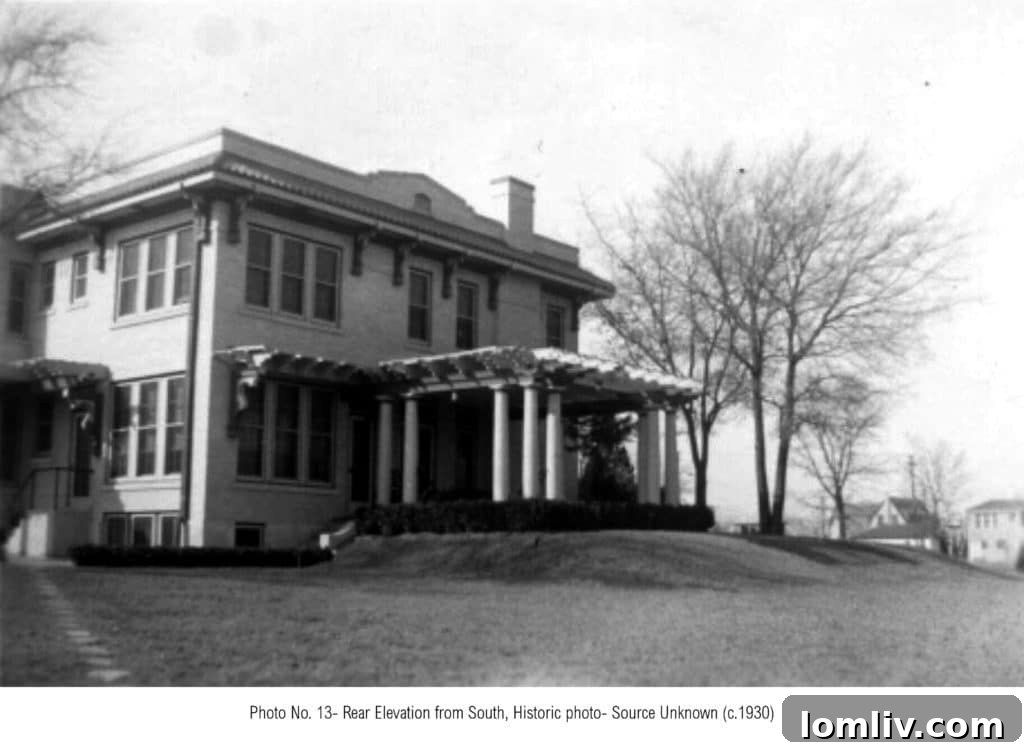
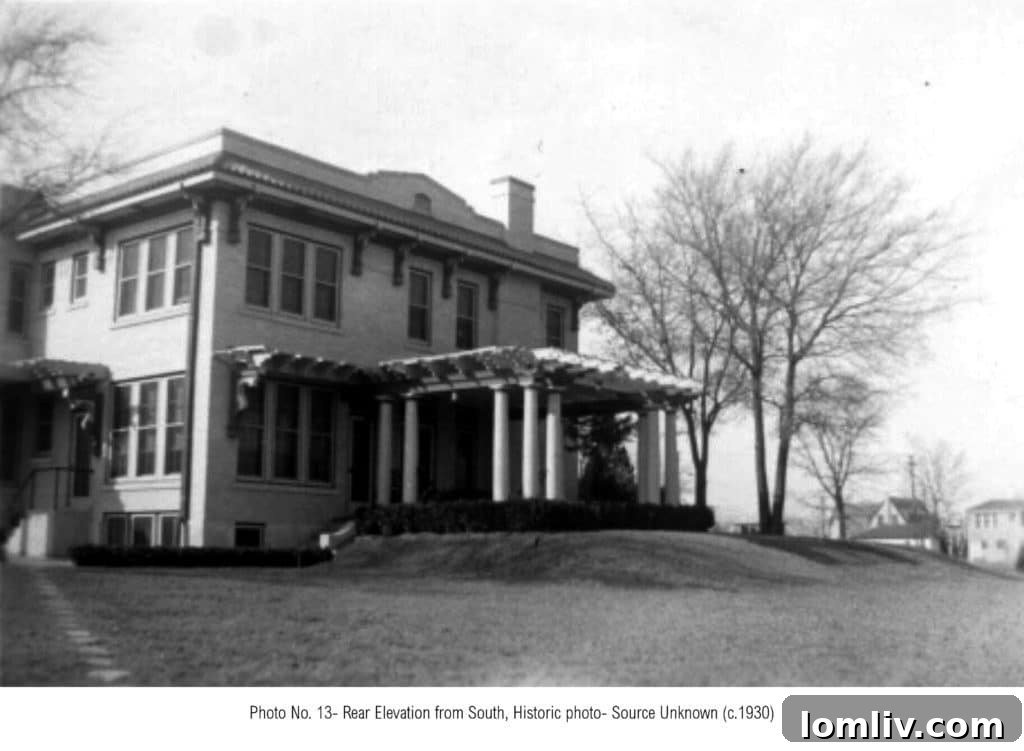
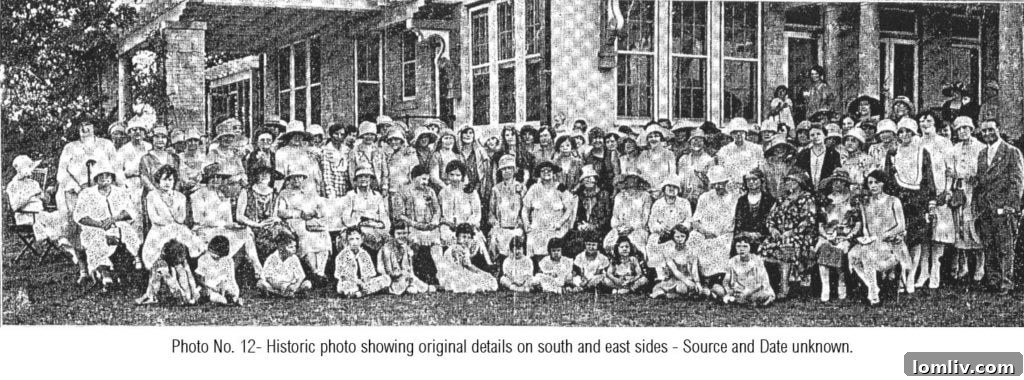
Built in 1922, the Parks Estate, originally the esteemed home of Lucy and Joseph Parks, has long been an iconic landmark in East Dallas. This magnificent Spanish Mission-style residence, an architectural triumph designed by Clarence Bulger—who would later gain widespread acclaim for his numerous church designs across Texas—served as the cherished family home for an impressive 35 years. Bulger’s signature style, characterized by its distinctive stucco exteriors, low-pitched red tile roofs, and decorative archways, is beautifully exemplified in the Parks Estate, contributing significantly to the architectural fabric of its era.
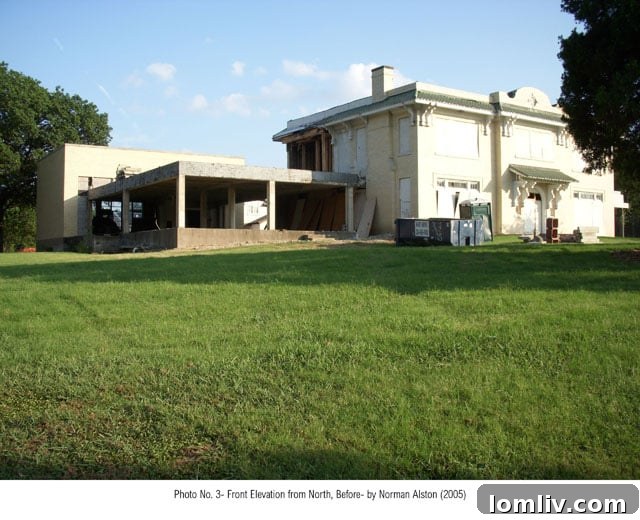
However, the mid-20th century brought significant changes to the neighborhood. In 1957, reflecting a shift in community needs and demographics, the estate was acquired and repurposed into a YMCA facility. While this conversion undoubtedly served as a valuable community resource, it unfortunately took a heavy toll on the historic integrity of the estate itself. The building underwent a series of drastic structural additions and alterations, fundamentally reshaping its original design and character. A bulky parking garage, auxiliary structures, a swimming pool, and a basement were integrated into the property. Most notably, parts of these new additions were mounted directly onto the facade of the historic building, resulting in an appearance that starkly contrasted with its original elegance, as these images reveal:
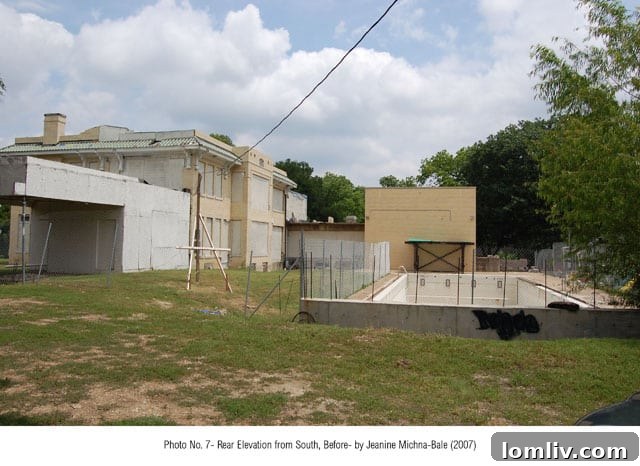
A Near Loss and a Triumphant Rebirth: The Parks Estate’s Journey to Restoration
After decades of service as a YMCA, the estate was sold to a private owner in 1999. However, the dream of restoring the property to its former splendor remained elusive, hampered by persistent financial challenges. The future of the Parks Estate seemed uncertain, teetering on the brink of irreversible decline. It wasn’t until 2003 that a turning point arrived, when Preservation Dallas, recognizing its immense historical and architectural value, courageously listed the Parks Estate as one of the city’s “Most Endangered” properties. This critical designation brought much-needed attention to the beleaguered estate, mobilizing community support and galvanizing local authorities. The City of Dallas unanimously approved landmark designation for the property, a vital step that acknowledged its significance but, regrettably, could not stave off the looming threat of foreclosure.
For many historic properties, the combination of city liens, unpaid mortgages, and structural deterioration can spell the ultimate demise of preservation efforts. Yet, the story of the Parks Estate took a fortunate turn, thanks to the foresight and dedication of those who recognized its inherent worth. Dallas authorities, understanding the property’s potential as a cultural cornerstone, worked diligently to transfer the deed to Preservation Dallas. This pivotal intervention empowered the organization to seek a new steward, ultimately finding Kathi and Tom Lind, whose vision and commitment would breathe new life into the neglected estate. The Linds, known for their passion for historical properties, then enlisted the expertise of Norm Alston, a renowned architect celebrated for his extraordinary ability to perform “miracles” in historic restoration. It was at this moment, with Alston’s masterful touch, that the true rebirth of the Parks Estate commenced, transforming a story of decay into a vibrant testament to restoration.
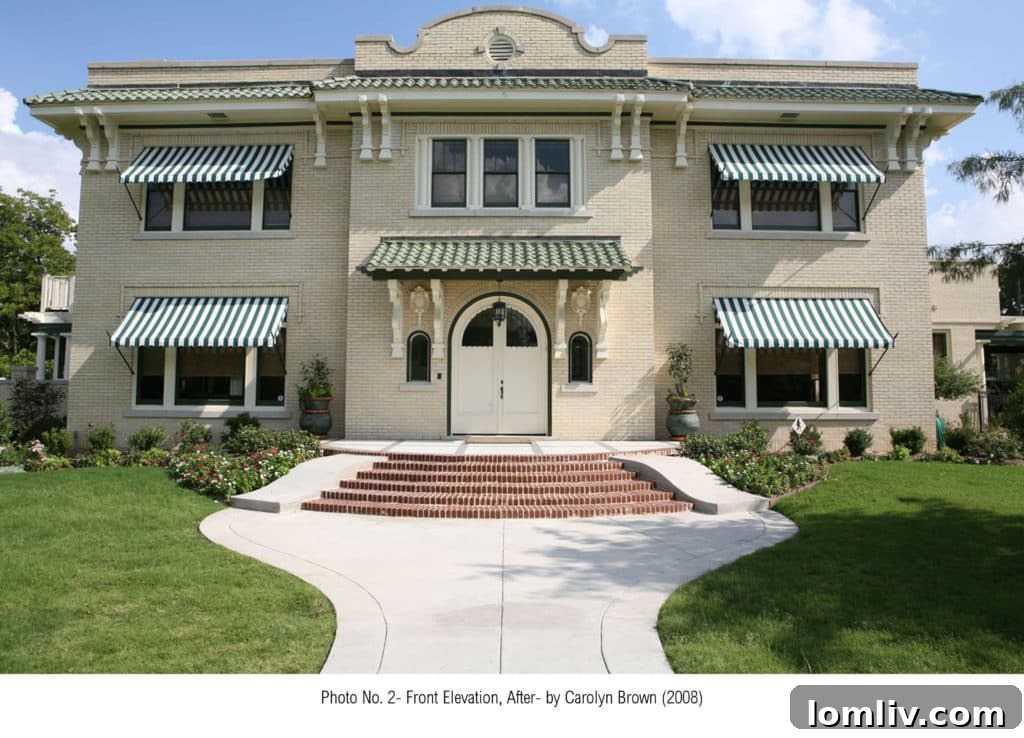
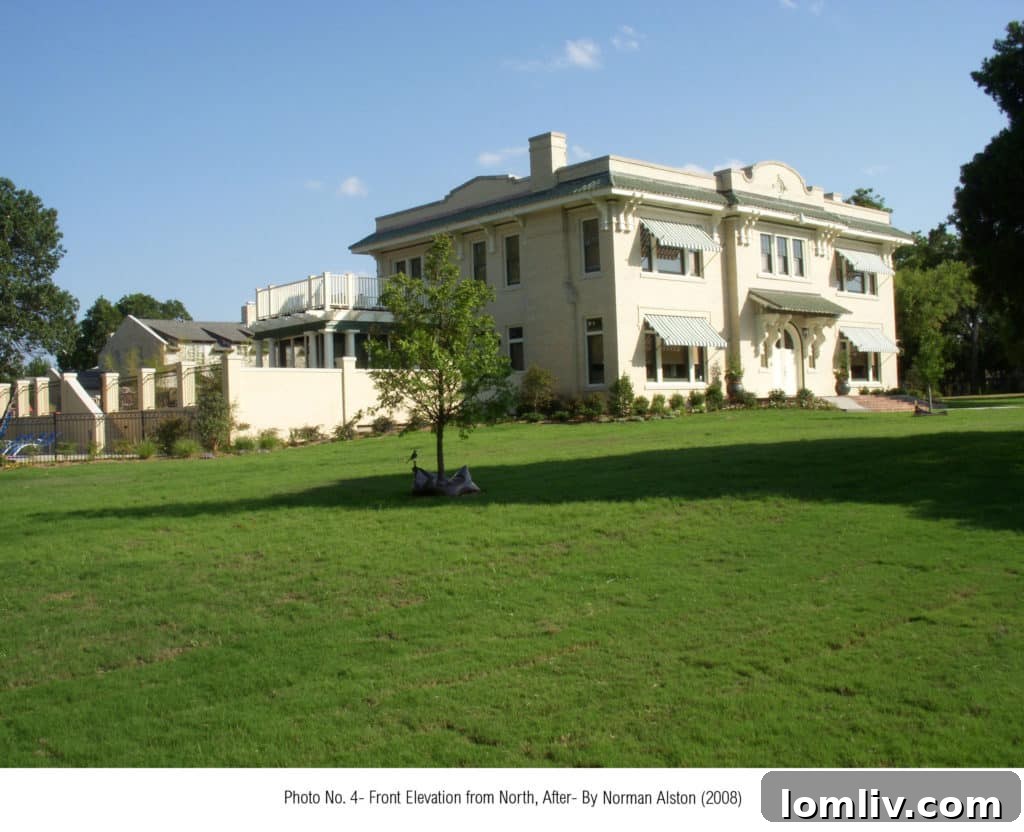
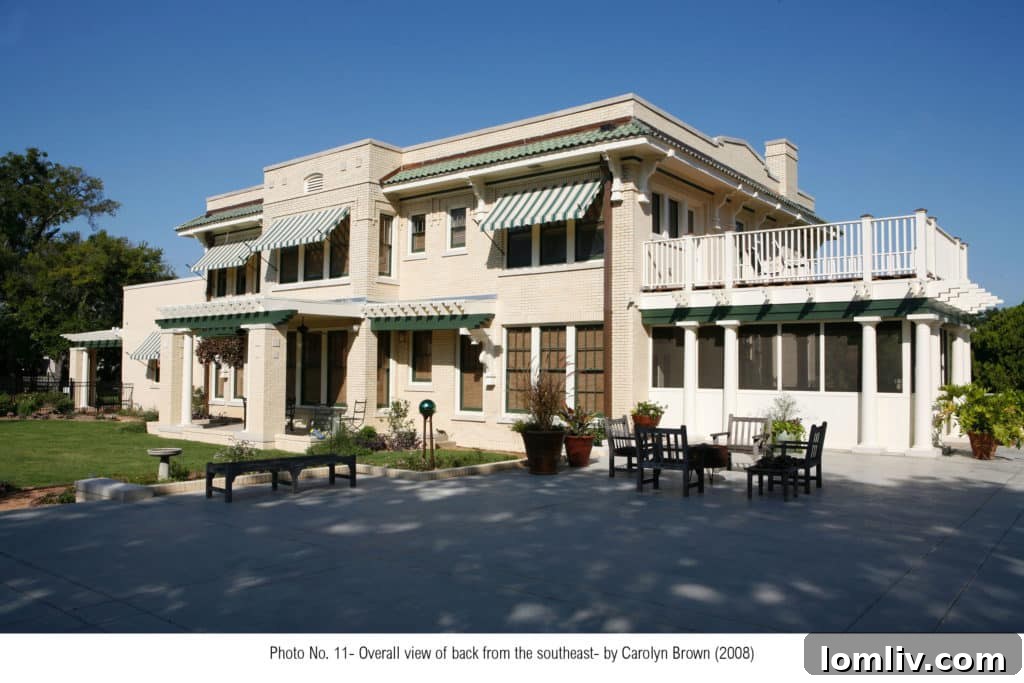
Step Inside: Architectural Marvels and Meticulous Restoration
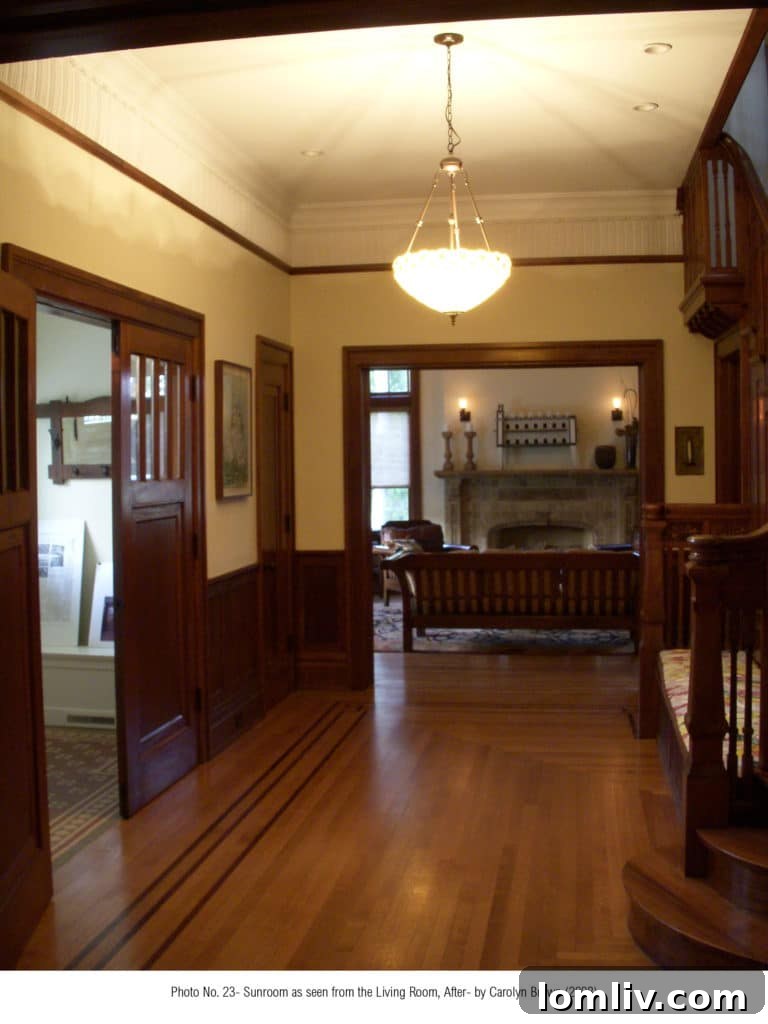
Stepping through the Parks Estate’s magnificent arched double doors, salvaged with care from a warehouse in Ellis County, is an experience that instantly transports you to another era. The grand foyer, a symphony of elegance and history, sets the stage for the wonders within. The entryway floor, adorned with subtly patterned tiles, offers a delightful visual echo of the home’s distinctive green-and-white exterior color scheme. This intricate detail was painstakingly recreated based on the vivid memories shared by two sisters who grew up in the home, their recollections proving invaluable in faithfully restoring its original aesthetic. Such stories woven into the very fabric of the house truly bring its history to life.
Exquisite Millwork and the Unique Black Walnut Stairway
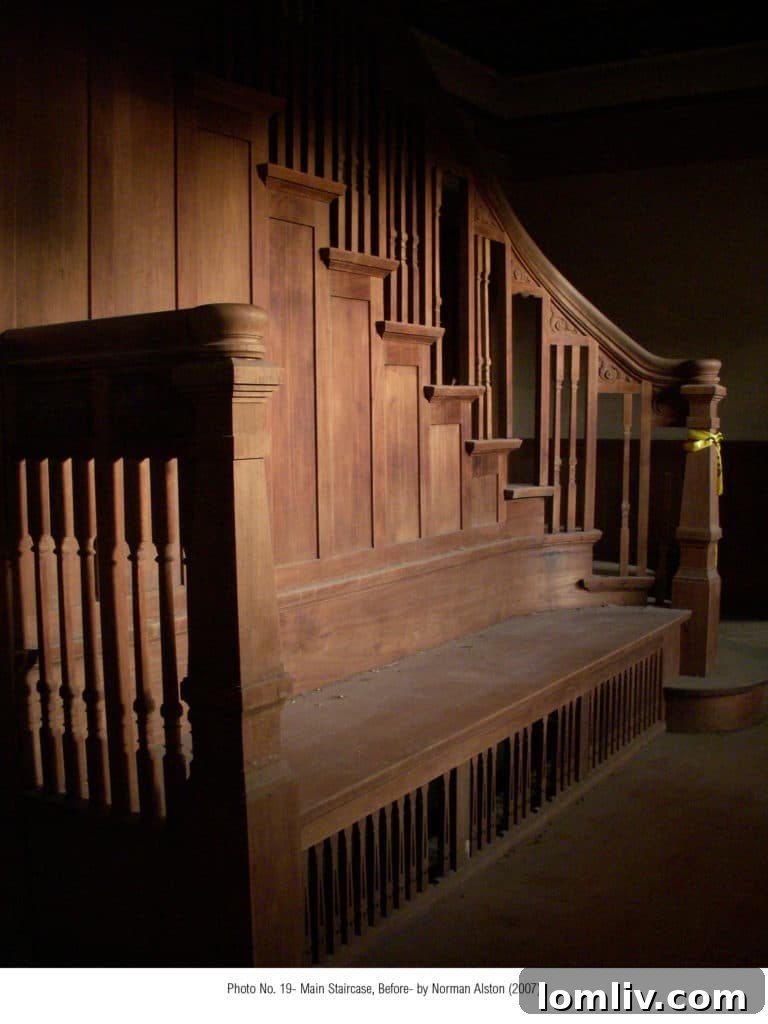
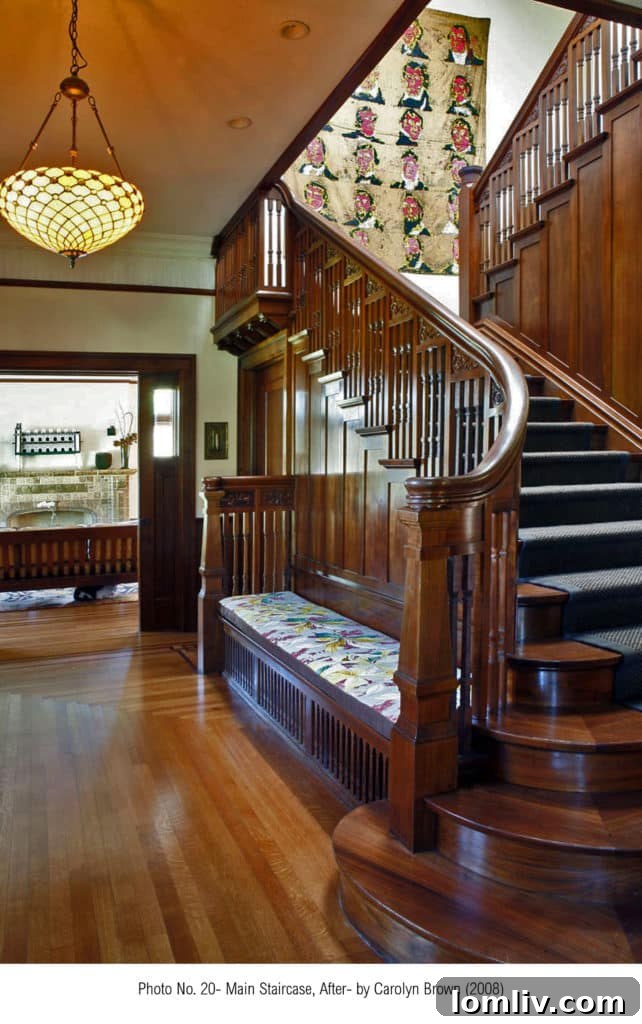
The foyer and entry hall are further distinguished by their incredible moulding, trim, and millwork, each element a testament to the artisans who painstakingly matched, stained, and varnished every piece to perfection. Architect Norm Alston revealed a fascinating detail about the grand stairway: its construction from black walnut, an exceptionally unusual choice for a residential application of this scale. At the time of the home’s original construction in the 1920s, black walnut was more commonly associated with the creation of caskets than decorative architectural millwork. Alston posits a captivating theory that the stairway’s distinctive panels, banisters, and handrails might have been produced by the Dallas Coffin Company, an establishment that operated from a 1911-built warehouse in the Cedars neighborhood. This historical connection adds another layer of intrigue to the home’s story, contrasting its original purpose with the warehouse’s modern transformation into the chic NYLO hotel.
The Living Room: A Symphony of Originality and Restored Grandeur
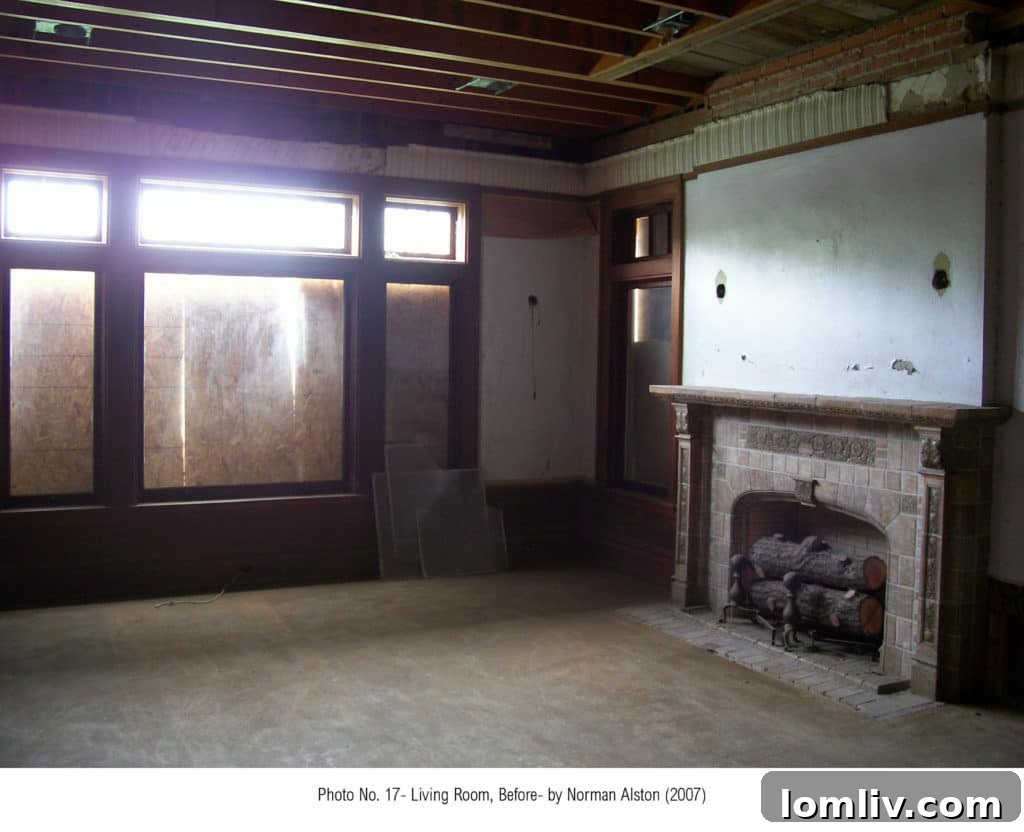
In my opinion, the living room is where the Parks Estate truly reaches its zenith of restored brilliance. Visitors will be captivated by the incredible original windows, many of which were miraculously salvaged from the building’s basement during the restoration process—a true testament to resourceful preservation. Look up to admire the perfectly matched acanthus leaf mouldings near the ceilings, a subtle yet exquisite detail that speaks to the home’s original opulence. Also noteworthy is the consistent botanical motif found in the paneling and built-in cabinetry throughout the home. Given the period of its construction and the exceptional level of craftsmanship evident everywhere, producing such uniform and exacting results for this intricate detail would have been an incredibly labor-intensive endeavor, showcasing unparalleled dedication to artistry.
Furthermore, visitors must take a moment to appreciate the stunning wood floors, boasting a beautiful inlay pattern. It’s almost unbelievable to think that these magnificent floors were once hidden and damaged by carpet glued directly to their surface. Fortunately, upon the removal of the carpet and a thorough assessment of the damage, it was discovered that these original floors had never once been sanded or refinished. This fortunate oversight meant that the restoration team could bring them back to their pristine condition without losing any of their original character. Homeowner Mark Rogers, a collector with a discerning eye for history and authenticity, maintains these precious wooden elements with meticulous care. While he couldn’t quantify the exact amount of Scott’s Liquid Gold he uses monthly, he did affirm that maintaining such pristine woodwork requires a significant amount of dedication and “elbow grease.”
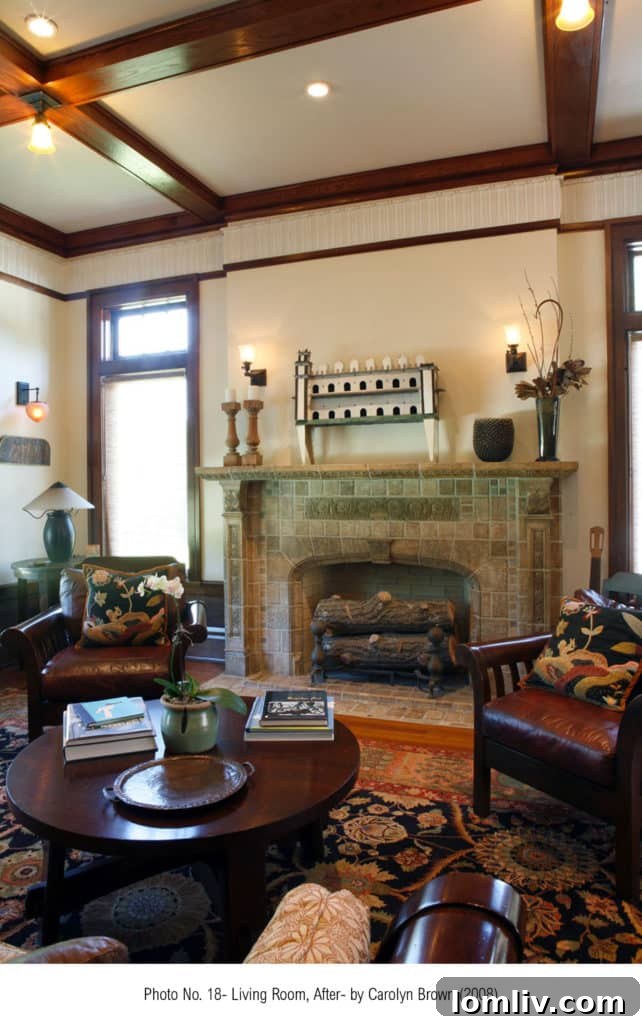
The Distinctive Batchelder Fireplaces: A Collector’s Dream
Adding to its unique charm, the Parks Estate boasts three rare Batchelder fireplaces, all of which were expertly salvaged and restored by the talented decorative arts conservator, Stashka Star. Where original tiles were beyond repair or restoration, Star embarked on the painstaking process of matching them precisely from a carefully curated stash discovered in Arlington, ensuring historical accuracy. My personal favorite is the elegant fireplace situated in the dining room, radiating warmth and character. The other two fireplaces are ingeniously stacked, with one gracing the first-floor living room and its counterpart residing directly above it in what is now the master bedroom—a space originally utilized as an upstairs living area. These fireplaces are not merely decorative; they are functional works of art that speak to the home’s original grandeur and the dedication to restoring every detail.
Beyond the Main Rooms: Hidden Gems and Sustainable Innovations
While the main living areas of the Parks Estate are undeniably stunning, the entire house is a masterpiece of design and restoration, holding delightful surprises around every corner. I won’t reveal too many of these captivating details, as the experience of discovery is part of the tour’s charm (and a compelling reason to purchase your ticket!). However, let’s just say that unexpected delights await in spaces like the kitchen, where you’ll find a cool handwashing sink and a cleverly integrated refrigerator/freezer, blending modern convenience with historical aesthetics. Furthermore, intriguing discoveries can be made even beneath the house.
When the obtrusive parking structure and other accessory buildings from the YMCA era were razed, the original basement structure was wisely retained. This subterranean space has been ingeniously transformed into a haven for homeowner Mark Rogers, serving not only as a functional garage for his beloved classic cars—including a beautiful T-Bird and an original lime green Datsun 240z—but also as a personal retreat. Rogers’s passion for history extends beyond architecture; he cherishes the narrative inherent in the objects that surround us, whether a grand house, a vintage automobile, or a simple beer tray. The Parks Estate, in his capable hands, perfectly exemplifies how a historic property can transcend its original form to become a living testament to a dedicated steward’s appreciation and vision, blending past and present seamlessly.
An Eco-Conscious Solution: The Rainwater Harvesting Cistern
One might wonder what became of the swimming pool that was once a prominent feature of the former YMCA grounds. Rather than incurring the significant cost and environmental impact of demolishing and filling the pool, the visionary owners opted for an innovative and sustainable solution. They enlisted the expertise of Ron’s Organic Dynamics, specialists in ecological solutions, to cap and convert the pool into a state-of-the-art rainwater harvesting cistern. This ingenious system now serves as the sole source of irrigation for the lush, meticulously maintained landscaping at the Parks Estate, demonstrating a harmonious blend of historic preservation and modern environmental stewardship. It’s a powerful example of how creative thinking can transform an old challenge into a sustainable asset, enhancing the property’s ecological footprint while preserving its historical essence.
Secure Your Place in History: Experience the Preservation Dallas Architectural Tour
The Parks Estate is more than just a house; it’s a living narrative of Dallas’s architectural evolution, a testament to the power of preservation, and a beacon of sustainable restoration. Its journey from a grand family home, through periods of adaptation and neglect, to its triumphant rebirth, is a story that truly resonates. This property, along with the other distinguished stops on the tour, offers invaluable insights into the dedication, craftsmanship, and vision required to protect and celebrate our shared cultural heritage.
Don’t miss this unique opportunity to immerse yourself in the rich architectural tapestry of Dallas. Buy your ticket today and join Preservation Dallas for an unforgettable journey through history, design, and community spirit. Stay tuned for more captivating details about the remaining three stops on the May 21 Preservation Dallas Spring Architectural Tour, each promising its own unique story of architectural significance and successful preservation.