

The dynamic landscape of short-term rentals (STRs) in North Texas is currently undergoing substantial transformation, as local municipalities increasingly contend with the intricate balance between fostering economic growth, upholding individual property rights, and safeguarding the tranquility and safety of their residential communities. A pivotal moment in this evolving narrative arrives on Monday, May 15, 2023, when the City of Plano, a rapidly expanding and strategically important community within the Dallas-Fort Worth metroplex, will officially enact a temporary, year-long prohibition on all new short-term rental properties within its boundaries. This landmark decision is set to have far-reaching implications for homeowners, prospective real estate investors, and long-term residents across Plano, underscoring a proactive stance by city authorities to address escalating concerns linked to the proliferation of STRs in areas predominantly zoned for residential living.
This comprehensive moratorium is the culmination of extensive public discussions, detailed city council deliberations, and significant community engagement. It represents a strategic pause designed to afford the City of Plano a critical period to meticulously develop and implement robust, long-term regulatory frameworks. These forthcoming regulations aim to effectively manage the burgeoning STR market, ensuring its operations align seamlessly with Plano’s overarching vision for sustainable urban development, community integrity, and an enhanced quality of life for its cherished residents. Crucially, this temporary ban is not retroactive; existing short-term rental operations that were legally established and operational prior to May 15 are not immediately impacted. Nevertheless, the ultimate future and operational guidelines for all STRs within Plano remain a central and actively debated topic.
Plano’s Decisive Action: Responding to Community Safety and Quality of Life
The resolution to impose a temporary prohibition on new short-term rentals was a decision of considerable weight, reached after careful consideration and directly responsive to the growing apprehension among Plano residents. For well over a year, the subject of short-term rentals has emerged as a fiercely debated and often polarizing issue, not only within Plano but also across numerous other municipalities throughout the entire North Texas region. Local residents have consistently and vociferously engaged with their city officials, articulating a broad spectrum of concerns. These concerns span from the everyday nuisances of increased noise disturbances and heightened traffic congestion to more profound issues impacting overall public safety and the gradual erosion of the distinctive character of their established neighborhoods. These critical concerns gained significant momentum and prominence last November, when Plano residents compellingly appealed to the city council, urging them to implement substantive zoning changes that would either strictly regulate or enact an outright ban on STRs specifically in areas predominantly designated for single-family residential use.
A recent and deeply troubling incident, however, served as the immediate and most potent catalyst for the city council’s expedited and decisive action. On May 8, during a pivotal joint meeting involving the Plano City Council and its Planning and Zoning Commission, the discussions gravitated heavily towards a recent shooting incident that tragically occurred outside a short-term rental property, situated squarely within a residential neighborhood in Plano. This unfortunate event served as a stark and undeniable reminder of the severe potential public safety risks that can be inherently linked with unregulated or inadequately managed STRs. It effectively galvanized city leaders, compelling them to take immediate and resolute steps. The joint municipal body concluded unequivocally that an immediate, temporary cessation of new STRs was not just advisable but absolutely essential to safeguard the peace, security, and overall well-being of the community while more robust, permanent, and meticulously crafted solutions could be thoroughly investigated, developed, and subsequently implemented.
The strategically planned year-long prohibition is designed to furnish the City of Plano staff with ample and invaluable time to conduct exhaustive, in-depth research. This includes consulting extensively with legal experts specializing in municipal law and property rights, as well as actively soliciting and gathering input from a comprehensive array of stakeholders. This broad spectrum of participants includes existing property owners, concerned long-term residents, and representatives from the short-term rental industry itself. This period is deemed absolutely critical for the city to meticulously formulate regulations that are not only demonstrably effective and practically enforceable but also inherently fair and equitable, thereby accurately reflecting the diverse needs, expectations, and concerns of the entire Plano community. Key areas of intensive focus during this moratorium will almost certainly include the precise definition of clear and unambiguous operational guidelines for STRs, the establishment of mandatory licensing or permitting requirements, the outlining of robust enforcement mechanisms to ensure compliance, and a comprehensive assessment of the potential impacts of STRs on both housing availability and overall affordability within Plano.
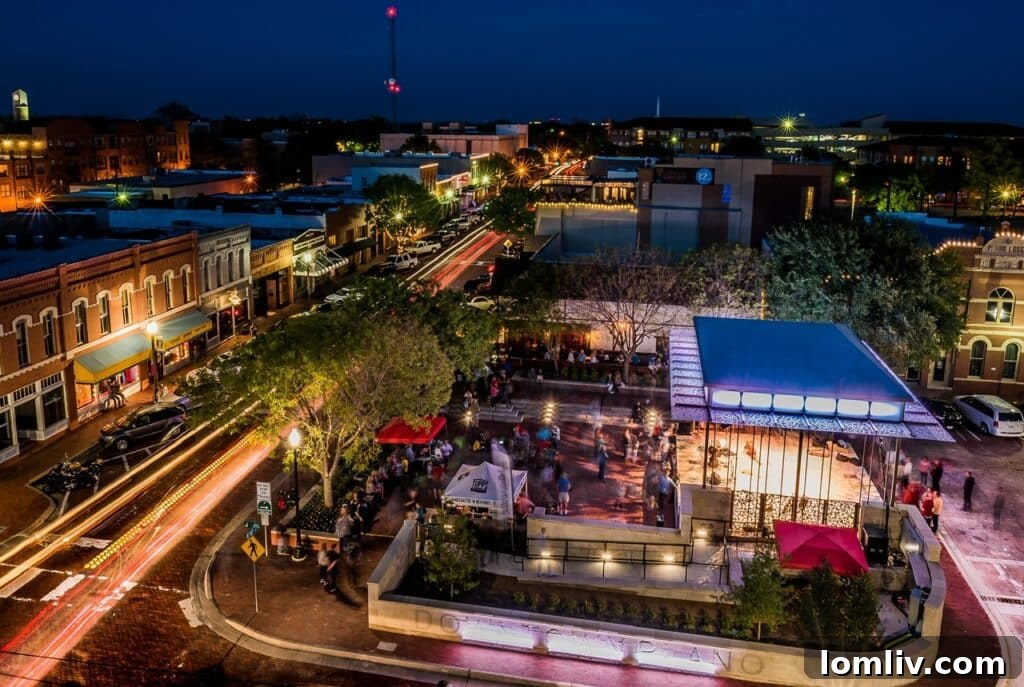
The Dallas Perspective: Charting a Distinct Regulatory Course
In stark contrast to Plano’s prompt implementation of a temporary ban, the issue of short-term rentals continues to be an equally pressing, highly complex, and intensely debated topic for its expansive metropolitan neighbor, the City of Dallas. The ongoing discourse in Dallas has been protracted and multifaceted, reflecting the city’s notably diverse urban fabric and the substantial, widespread presence of STRs across its myriad neighborhoods, each with its unique characteristics and resident concerns. Unlike Plano’s immediate and decisive temporary prohibition on new STRs, Dallas has been deliberately exploring a much broader array of long-term regulatory options, signaling a more deliberate and potentially drawn-out process to arrive at a definitive and comprehensive policy framework. This nuanced approach highlights the varying political landscapes and community priorities that shape municipal decision-making in the region.
A highly anticipated and critical briefing on short-term rentals is tentatively slated to be presented before the Dallas City Council on June 7. This forthcoming session is expected to be instrumental, providing a comprehensive overview of the various policy proposals, detailed findings, and expert recommendations meticulously compiled by city staff. This crucial presentation could potentially pave the way for a definitive vote on the contentious matter as early as the subsequent week. Such a timeline strongly indicates that Dallas is poised at the precipice of enacting significant and potentially transformative policy decisions that could fundamentally reshape its short-term rental market for many years into the future, impacting both property owners and the broader community.
In preparation for this critical juncture, Dallas city staff members have been tirelessly engaged in gathering exhaustive and comprehensive information across several vitally important domains. Their extensive efforts encompass an in-depth analysis of existing zoning ordinances to understand current limitations and potential areas for modification, a thorough and critical review of various potential enforcement mechanisms to ensure compliance and address violations effectively, robust data analytics to quantify and understand the multifaceted economic and social impacts of STRs on local communities, and meticulous considerations regarding certificates of occupancy and their specific relevance to STR operations. The wealth of information meticulously collected and synthesized aims to equip the City Council with an exceptionally holistic and well-rounded perspective, enabling them to fully grasp the complex challenges and potential opportunities presented by short-term rentals within Dallas.
Among the diverse array of solutions that have been actively discussed and considered in Dallas are the controversial prospect of an outright residential ban on short-term rentals, which would effectively prohibit STRs in areas exclusively zoned for single-family homes. Another option under serious consideration is the implementation of a sophisticated zoning overlay strategy, designed to regulate STRs specifically within certain designated areas, thereby offering more flexibility than an outright ban. Intriguingly, the concept of a temporary, year-long ban on new STRs, precisely mirroring the proactive approach taken by the City of Plano, has not been a primary or significant consideration in Dallas’s deliberations thus far. This marked divergence in strategic approaches between the two prominent North Texas cities vividly underscores the varying methodologies municipalities often employ to tackle complex urban challenges. These differing paths are frequently shaped by unique local political dynamics, distinct patterns of community feedback, and differing interpretations of fundamental property rights versus the broader public welfare.
Wider Implications: The National and Global Conversation on STRs
The decisive actions undertaken by Plano and the ongoing, intricate discussions in Dallas are not isolated incidents; rather, they are highly indicative of a broader national and indeed global trend where municipalities across diverse geographical and economic landscapes are grappling with the formidable challenge of effectively regulating the rapidly expanding short-term rental industry. Cities throughout the United States, ranging from bustling metropolises like New York and San Francisco to charming, tourism-dependent towns, are confronting remarkably similar, core issues. These include how to judiciously manage the profound impact of STRs on housing affordability for permanent residents, how to preserve the unique character and stability of established neighborhoods, how to ensure consistent community safety, and how to assess and balance the benefits and drawbacks to local economies. The ubiquitous rise of sophisticated digital platforms such as Airbnb and Vrbo has undeniably democratized travel accommodation options, providing unprecedented flexibility for travelers, but concurrently, it has introduced an entirely new layer of complex challenges for traditional urban planning and governance structures.
In response to these evolving challenges, many cities worldwide have proactively adopted an eclectic array of regulatory models, each tailored to their specific circumstances. Some have implemented stringent licensing and permitting systems, making it mandatory for STR operators to formally register with the city, scrupulously adhere to established safety and health standards, and pay relevant transient occupancy taxes, similar to hotels. Others have opted for more restrictive measures, limiting STRs exclusively to primary residences or imposing strict caps on the maximum number of days a property can be rented out on an annual basis. A select few, mirroring the temporary exploratory path Plano is now embarking upon, have considered outright bans in specific zoning classifications or enacted temporary moratoriums. These moratoriums serve as critical breathing room, allowing for the careful, deliberative development of comprehensive and sustainable policies. This wide diversity in approaches vividly underscores the undeniable truth that there is no singular, one-size-fits-all solution, highlighting the imperative need for locally tailored strategies that thoughtfully consider unique community dynamics, economic realities, and existing legal frameworks.
The economic impact generated by STRs is undeniably a double-edged sword, presenting both substantial benefits and significant drawbacks. Proponents of STRs ardently argue that they serve as powerful catalysts for local economies, primarily by attracting a steady stream of tourists who, in turn, inject capital into local businesses, including restaurants, shops, and attractions. Furthermore, they highlight the job creation aspect, benefiting individuals employed as cleaners, property managers, and maintenance staff. STRs also offer property owners a valuable additional income stream, which can potentially assist them in affording their homes, offsetting mortgage costs, or investing in crucial property improvements, thereby enhancing the overall housing stock. Critics, conversely, contend that STRs can severely exacerbate existing housing shortages by systematically converting properties traditionally designated as long-term rental units into more lucrative short-term options. This conversion drives up both rents and overall housing prices for permanent residents, creating affordability crises. This displacement effect, where long-term residents are priced out, can be particularly acute and damaging in highly desirable urban neighborhoods, contributing significantly to gentrification and actively eroding the rich social fabric of established communities, leading to a loss of local identity.
The Path Forward: Navigating a Complex and Evolving Future
As the City of Plano embarks on its comprehensive year-long temporary ban, and Dallas progressively moves closer to finalizing its own critical regulatory decisions, the ultimate future trajectory of short-term rentals across the entire North Texas region remains inherently dynamic, complex, and perpetually subject to ongoing evolution. The deliberately temporary nature of Plano’s ban is a clear indication that the city is not pursuing a permanent prohibition without first undertaking a period of thorough and rigorous consideration. Instead, this strategic pause offers a crucial and invaluable window for the City Council to deeply engage with empirical data, meticulously collected community input, and expert legal counsel. The overarching objective during this period is to thoughtfully craft a sustainable, enforceable, and equitable regulatory framework that effectively addresses the core concerns consistently raised by its residents, while simultaneously acknowledging and carefully considering the legitimate interests of property owners who participate in the STR market.
Regardless of the specific policies ultimately adopted, effective enforcement will undeniably emerge as a significant and persistent challenge. Successful regulation necessitates dedicated resources allocated for the continuous monitoring of STR activity, a streamlined and efficient process for responding promptly to community complaints, and robust mechanisms to ensure consistent compliance from all operators. Cities frequently encounter substantial difficulties in managing the sheer volume of STR listings available across various online platforms and the often anonymous or semi-anonymous nature of some online bookings, which can complicate efforts to identify and appropriately penalize non-compliant operators. Collaborative efforts, fostered through constructive dialogue and partnerships between city governments and major STR platforms, hold the potential to significantly streamline enforcement processes. However, challenges related to data sharing, privacy concerns, and the willingness of platforms to cooperate often remain persistent sticking points, requiring careful negotiation.
The fundamental underlying tension between property rights – encompassing the inherent right of a homeowner to utilize their property as they deem fit, within legal limits – and community welfare – representing the collective right of residents to reside in peaceful, stable, and secure neighborhoods – will undoubtedly continue to define and drive the core of the STR debate for the foreseeable future. Achieving a harmonious, equitable, and sustainable balance between these often-conflicting principles is the ultimate and ambitious goal for forward-thinking cities such as Plano and Dallas. Their forthcoming decisions, whether temporary or permanent, will not only profoundly shape the regional real estate market and the vibrant tourism industry in North Texas but will also establish important precedents and provide valuable case studies for how other burgeoning communities might effectively address similar multifaceted challenges in the dynamic years to come.
Ultimately, the journey towards establishing effective, fair, and sustainable short-term rental regulation is unequivocally a marathon, demanding sustained effort, rather than a rapid sprint. It requires an inherent adaptability from municipal governments, a steadfast commitment to transparency in policy-making, and an unwavering dedication to fostering vibrant, safe, inclusive, and equitable urban environments for all residents and visitors alike. Both Plano and Dallas currently stand at critical junctures in their respective approaches to this complex issue. Their distinct and differing methodologies will undoubtedly provide invaluable real-world case studies, offering profound insights into how diverse municipalities can successfully navigate the intricate, multifaceted, and ever-evolving world of short-term rentals in the 21st century.