Dallas Renter Satisfaction Soars: A Comprehensive Look at What Makes the Big D a Top Choice for Residents
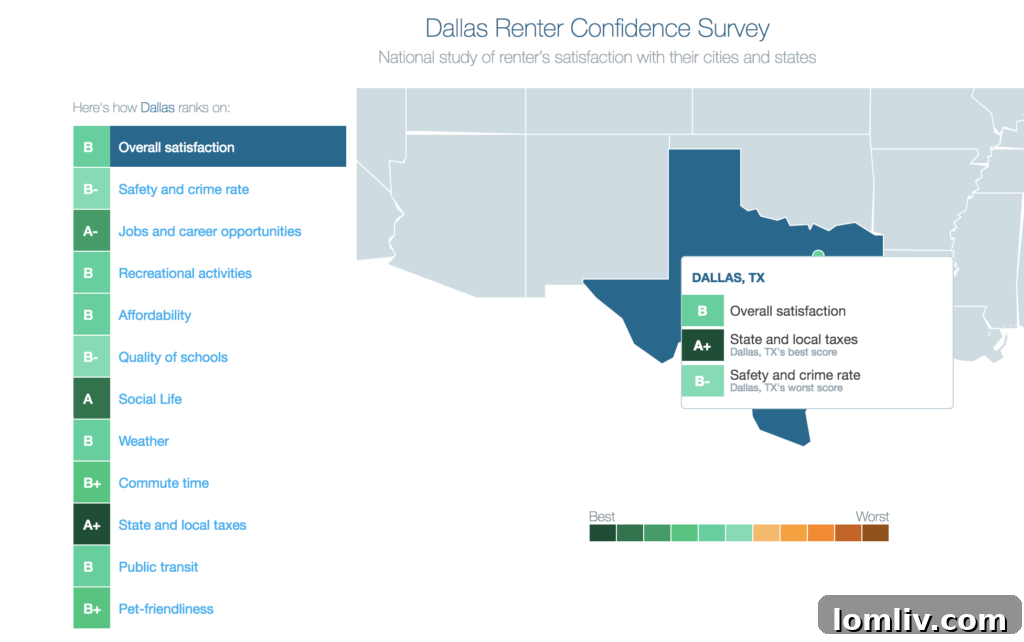
The urban landscape of Dallas is dynamic, characterized by rapid growth, a thriving economy, and a competitive housing market. For current and prospective residents, understanding the pulse of renter satisfaction is crucial. A recent comprehensive survey conducted by Apartment List sheds significant light on this very topic, revealing an encouraging trend for the city. Dallas renters have collectively awarded their city a commendable B grade in the latest Apartment List annual renter survey. This marks a notable improvement from the previous year’s C+ grade, signaling positive shifts in residents’ experiences and perceptions of the city’s living conditions.
This upward trajectory in satisfaction positions Dallas favorably among major U.S. cities. Out of the top 50 cities evaluated for renter satisfaction, Dallas proudly secured the 23rd spot. This ranking places it ahead of several prominent metropolitan areas, including Phoenix, Los Angeles, and Chicago, demonstrating Dallas’s growing appeal and ability to meet the diverse needs of its rental population. Delving deeper into the demographics, the survey highlighted particularly strong approval from renters with children, who bestowed an impressive A- grade upon Dallas. This indicates that families find the city’s amenities, schools, and community environment highly conducive to raising children. Conversely, Millennial renters, while still generally satisfied, offered a slightly lower B- grade, perhaps reflecting different priorities or expectations regarding factors such as affordability or specific urban amenities.
Beyond Dallas proper, Apartment List’s extensive research also provided insights into renter satisfaction across numerous other vibrant communities within the wider Texas region. Several Dallas-Fort Worth metroplex cities received exceptional grades, underscoring the overall strength of the region as a desirable place to live. These included Plano (earning an outstanding A+), Garland (A), Carrollton (A), Euless (A-), Denton (B+), Lewisville (B+), Arlington (B+), Irving (B), and Fort Worth (B). Such high marks across various suburbs indicate a diverse range of attractive living options for renters across different preferences and budgets within North Texas.
Understanding the Data: Survey Methodology and Broader Trends
The robust findings regarding renter satisfaction are grounded in extensive data. The grades are meticulously calculated based on over 45,000 responses collected through the Apartment List renter survey, spanning a period from October 1, 2016, to December 6, 2017. This broad participation ensures a comprehensive and statistically significant representation of renter sentiment. Nationally, the top-rated cities for renters across the U.S. include Scottsdale, Arizona; Plano, Texas; Huntington Beach, California; and Cambridge, Massachusetts. A revealing general trend observed in the survey is that smaller and mid-sized cities often garnered better ratings. Approximately 38 percent of these cities received an A- or higher, a significantly higher proportion compared to only 24 percent of large cities. This suggests that the perceived benefits of less congestion, potentially lower costs of living, and a stronger sense of community in smaller urban environments often translate into higher renter satisfaction.
Dallas’s Performance on Key Factors: Strengths and Areas for Growth
The survey didn’t just assign an overall grade; it also provided a detailed breakdown of how renters rated their cities across 11 distinct factors. These factors covered crucial aspects of urban living, including safety, affordability, public transit, and more. Dallas demonstrated a remarkably consistent performance, achieving strong grades across the board without receiving any C, D, or F grades, which speaks volumes about the city’s overall quality of life. The highest accolades for Dallas were reserved for state and local taxes, where it earned a stellar A+ grade. This is a significant draw for residents, as favorable tax policies directly impact disposable income and the overall cost of living.
Furthermore, Dallas received an impressive A grade for its social life, underscoring its vibrant cultural scene, diverse entertainment options, and active community engagement opportunities. The city’s robust economy and expanding job market were also highly praised, earning an A- for jobs and career opportunities. This indicates that Dallas is perceived as a place where residents can find ample professional growth and stability. However, like any major metropolitan area, Dallas does have areas for improvement. Renters expressed moderate concerns regarding safety and the crime rate, both of which received B- grades. Similarly, the quality of local schools also earned a B-, suggesting that while adequate, these areas could benefit from further investment and focus to enhance overall resident satisfaction.
A Comparative Look: Dallas vs. Its Neighbors and Other Texas Metros
While Dallas renters were largely content with the city’s social life, giving it an A, some surrounding suburbs presented a different picture. For instance, renters in Euless awarded their city an F for social life, while Carrollton and Lewisville received D grades in the same category. This disparity highlights the unique character and amenities of each community, indicating that what appeals to renters in one area might not be as strong a draw in another. When it came to safety, Plano and Carrollton stood out, both earning exceptional A+ scores. This contrasts with Dallas-proper, which received a B- for safety, suggesting that residents seeking a higher perceived level of security might gravitate towards these particular suburbs.
Affordability is another critical factor for renters, and here Garland and Denton excelled, both achieving impressive A+ scores. Interestingly, Carrollton, despite its high safety rating, is considered one of the pricier Dallas suburbs, with a median two-bedroom rent of $1,350. Yet, its renters were notably satisfied with affordability, suggesting a potential demographic trend where higher-income renters choose Carrollton for its quality of life, finding the cost of living acceptable within their financial means. This “Carrollton paradox” illustrates how affordability can be a subjective experience, often tied to income levels and perceived value.
Expanding the scope beyond the immediate metroplex, Dallas’s performance was also compared against other major Texas metros. While Dallas earned higher grades than many large U.S. cities, other significant Texas urban centers like Austin (A-), San Antonio (A-), and Houston (B+) generally earned higher overall grades. Austin, despite its superior overall ranking, faced challenges in specific areas, receiving poor marks for affordability (C), commute time (D), and public transit (D). These lower scores in crucial areas reveal the trade-offs often associated with living in highly desirable, rapidly growing cities. Houston, on the other hand, received the lowest marks for weather among all Texas cities surveyed, with a C grade in that category, suggesting that its climate might be a point of concern for some renters.
Texas: A Top State for Renters
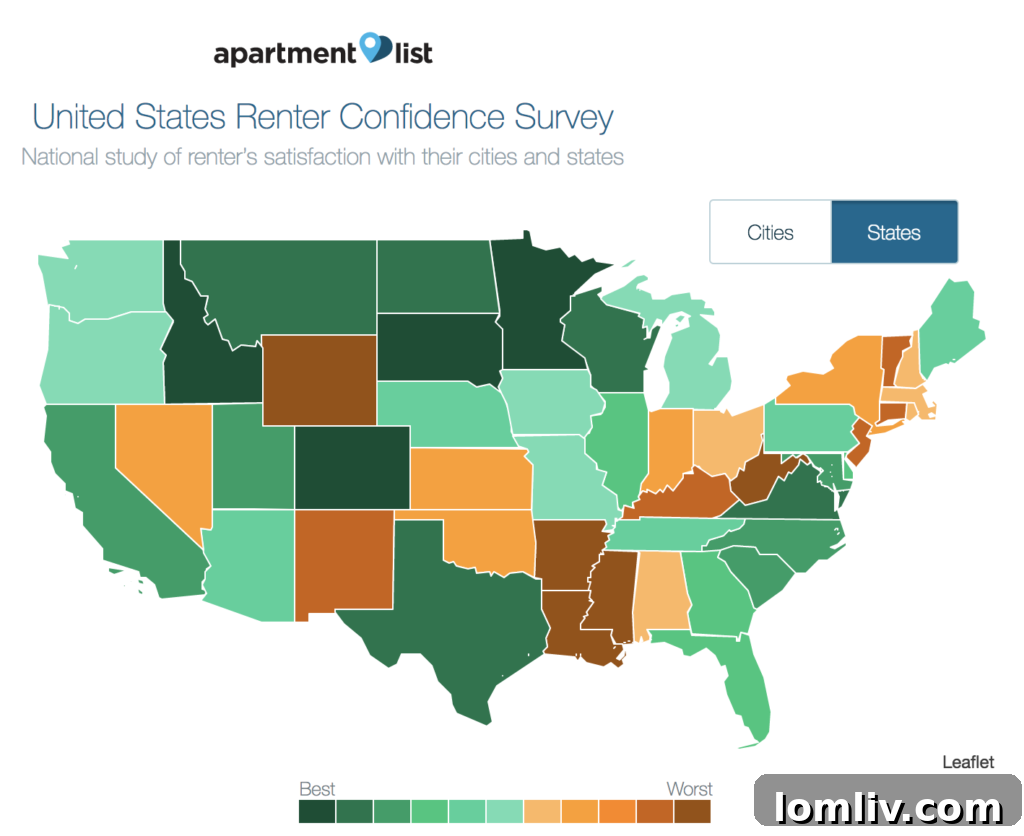
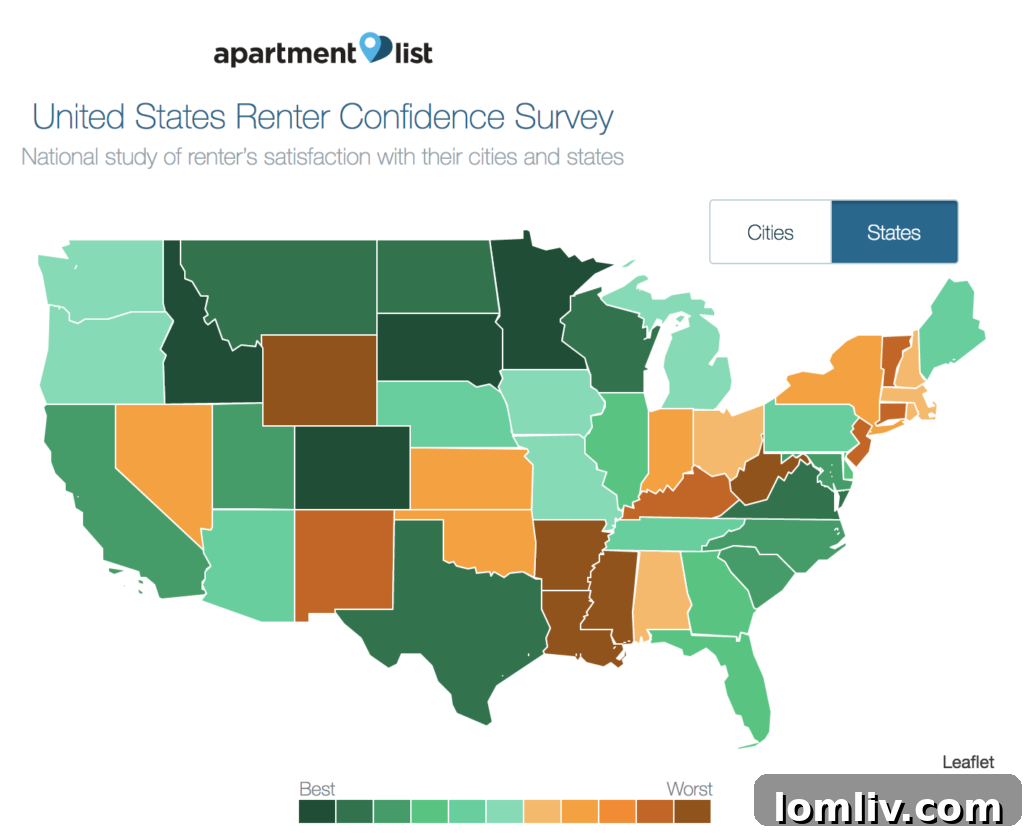
Looking at the broader state level, Texas as a whole proved to be an incredibly renter-friendly state, securing an impressive A grade and ranking 8th out of the 50 states nationally. This strong performance at the state level underpins the desirability of living and renting within Texas. Remarkably, Texas earned the highest score from renters with kids across all states, followed by Kansas, Minnesota, and Maryland. This speaks volumes about the state’s family-friendly environment, educational opportunities, and recreational facilities that cater to households with children. In terms of specific factors, Texas received an A+ for jobs and career opportunities, reflecting its booming economy and diverse industries. Affordability also received a strong B+ grade, indicating that despite rapid growth, the cost of living remains relatively attractive compared to many other states. However, similar to some of its major cities, commute time (C+) and public transit (B-) were identified as areas of most concern to Texas renters, highlighting the need for continued infrastructure development to support its expanding population.
Implications for Renters and Urban Development
The findings of the Apartment List survey offer valuable insights for both prospective renters and city planners. For individuals considering a move, Dallas presents a compelling package: a dynamic job market, a vibrant social scene, and favorable tax policies. While specific areas like safety and school quality warrant attention, the overall positive trend indicates a city that is responsive to its residents’ needs and continuously evolving. The varied performance of Dallas’s suburbs also underscores the importance of researching specific neighborhoods to find the perfect fit based on individual priorities for affordability, safety, social life, and family-friendliness.
For city officials and urban developers, these grades serve as a clear roadmap. The high marks in taxes, social life, and job opportunities should be celebrated and leveraged in marketing and development strategies. Simultaneously, the B- grades for safety and schools indicate areas where targeted investments and policy changes could significantly enhance resident satisfaction and attract even more diverse demographics. Addressing these concerns could further elevate Dallas’s standing and ensure its sustained growth as a top-tier metropolitan area. The comparison with other Texas cities also provides a competitive benchmark, fostering a healthy drive for continuous improvement across the state.
Conclusion
In summary, Dallas renters are largely satisfied with the quality of life the city offers, as evidenced by its improved B grade in the latest Apartment List survey. The city truly shines in providing abundant job opportunities and a bustling social scene, earning top marks in these critical categories. While Dallas has made significant strides and outperforms many major U.S. cities, there remain clear areas for continued improvement, particularly concerning safety and the quality of local schools. By addressing these factors proactively, Dallas has the potential to further solidify its reputation as an exceptionally desirable place to live, work, and thrive for a diverse array of renters.