Preston Hollow’s “Pink Wall” Battle: Luxury Development Ignites Community Uproar
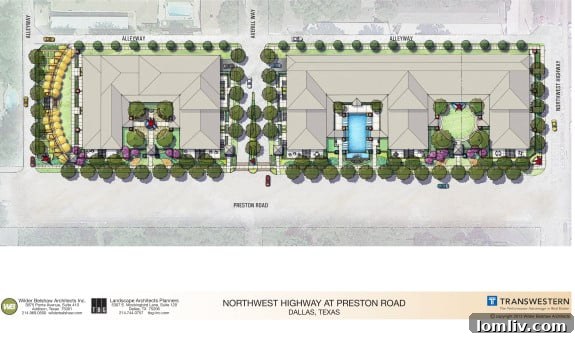
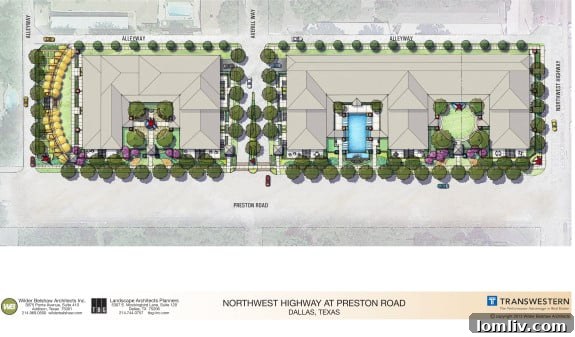
A contentious debate is rapidly escalating in the heart of Dallas, specifically within the prestigious Preston Hollow neighborhood. At the epicenter of this dispute is a prime three-acre site, strategically located at the bustling intersection of Preston Road and Northwest Highway, an area affectionately and sometimes controversially known as “Behind The Pink Wall.” Here, national real estate giant Transwestern proposes a significant re-development that promises luxury living but threatens to fundamentally alter the established character of this cherished community.
The proposed multi-million dollar Transwestern project, estimated to cost between $80 to $100 million, has galvanized local residents. The Preston Hollow East Home Owner’s Association (PHEHA) has taken a leading role in opposing the plan, launching a Change.org petition that quickly garnered widespread support, indicating the depth of community concern. With hundreds of signatures already collected, the HOA aims to reach 1,000 by the weekend, a clear demonstration of collective resolve. This petition will serve as a powerful testament to community sentiment when presented to the Dallas Planning Commission and, subsequently, the Dallas City Council.
Beyond digital activism, the community is also planning a physical demonstration of its discontent. A public rally is scheduled for 2:00 p.m. on February 22nd, at the local Preston Hollow Park, where residents intend to voice their objections directly and emphatically. This unified front underscores the profound anxieties among homeowners living in single-family residences directly adjacent to the existing multi-family zoned stretch, fearing the increased density and associated impacts this upscale development could unleash on their serene neighborhood.
Traffic Gridlock: The Core of Community Opposition
One of the most pressing concerns for residents revolves around the inevitable increase in traffic congestion. Steve Collins, a prominent real estate agent with Dave Perry Miller and a vocal community spokesperson, articulates this fear concisely: “Traffic is like water – it takes the path of least resistance.” Collins and his neighbors anticipate that vehicles exiting the new development will face significant challenges turning south onto Preston Road during peak hours, forcing them to seek alternative routes. This redirection, they predict, will channel a flood of additional traffic onto quieter, residential streets such as Northwood and Deloache, which are already struggling with existing volumes.
Residents recount alarming instances that highlight the current traffic issues. “It’s already bad. One of my neighbors on DeLoach has picked up 2 dead dogs out of the street,” Collins states, emphasizing the very real dangers posed by excessive speed and volume on their leafy, family-oriented roads. The potential for an influx of hundreds of new vehicles, some driven recklessly, turning these residential arteries into perilous thoroughfares is a fundamental element of the community’s staunch opposition. For these homeowners, traffic isn’t merely an inconvenience; it’s a direct threat to the safety and tranquility of their daily lives.
Navigating the Political Landscape: Advocacy Challenges
The political dimension of this development battle has added another layer of complexity and frustration for the homeowners. Many residents were strong supporters of District 13 Dallas City Councilwoman Jennifer Staubach Gates. However, Councilwoman Gates has recused herself from the entire re-development issue due to a potential conflict of interest: her husband, John Gates, serves as president of national real estate services for Jones Lang LaSalle, the company brokering the deal for Transwestern. While residents express understanding for Gates’ difficult position, the absence of their direct advocate on the Dallas City Council has left a noticeable void in their representation.
Stepping into this representational gap is District 11 City Councilman Lee Kleinman, who is now tasked with addressing the homeowners’ interests. However, residents are finding it challenging to gauge his true stance on the matter. Ashley Parks, president of the PHEHA, whose home on Del Norte at Preston Road is directly behind the proposed development, shares her experience: “They (the PHEHA) asked Lee Kleinman if he would support their position, he would not give a straight answer. He keeps saying, you have to find a middle ground. There is no middle ground. Show us plans within the current zoning, that’s middle ground. We will have one thousand signatures behind us.” This sentiment highlights the community’s desire for a clear commitment to preserving the existing zoning rather than negotiating for concessions within a framework they fundamentally oppose.
Prominent Voices and the “Pandora’s Box” Effect
The opposition to Transwestern’s plan is not limited to everyday residents; it includes some of Dallas’s most influential figures. Among the heavy-duty signatures on the petition are names like Howard Rachofsky, Gabrielle and Anne Barbier-Mueller, EyeMart Express founder H. Doug Barnes (who owns a sprawling 21,000 square foot mega-mansion off Douglas), Baxter Brinkman (owner of two estates), John Houston, Roger Horchow, and most recently, Fred Baron’s widow, Lisa Blue. These prominent individuals, whose properties range from the 1950s ranches on Northwood to the tree-canopied and creek-lined estates of the Old Preston Hollow “honeypot,” are united by a common fear.
The PHEHA’s reach extends from Hillcrest all the way to the Dallas North Tollway, encompassing a diverse array of homes. The underlying concern is that if this particular zoning change is approved, it could open a “Pandora’s Box” for future multi-family or even mixed-use developments directly behind their homes and mansions. This precedent, they worry, could erode the fundamental character of Preston Hollow, transforming it from a predominantly single-family residential area into a denser, more urbanized landscape. The potential for a domino effect of re-zoning applications is a significant driver of their vigorous opposition.
Transwestern’s Vision: Luxury Living and Market Demand
Transwestern, a reputable national real estate developer, specializes in industrial, retail, multi-family, and healthcare properties. Their portfolio includes notable projects such as the Villa Rosa on Cedar Springs and Vitruvian Park, a sprawling 120-acre apartment community in Addison. Mark M. Cullwell, Jr., Managing Director of Development at Transwestern, emphasizes a collaborative approach: “This is a collaborative process. We want to learn what the neighborhood concerns are first.”
Cullwell firmly believes in the robust market demand for luxury apartment living precisely at the Preston Road and Northwest Highway intersection. The proposed Transwestern development aims to deliver approximately 300 high-quality units, boasting condo-grade features designed to attract discerning renters. These amenities include elegant stone courtyards, sophisticated granite countertops, 42-inch custom cabinetry, high-end stainless steel appliances, ceramic tile bathrooms, rich hardwood floors, premium plumbing fixtures, and spacious free-standing showers. Rents are projected to start at $2,000 per month for the smallest units and can escalate up to $5,000, reflecting the developer’s commitment to larger-than-average apartment layouts. A key design element addressing density concerns is the provision of one underground parking space per bedroom, with no street parking anticipated. Cullwell assures that the portion of the project closest to existing single-family homes will adhere to a three-story height, which falls within the current MF1 zoning. However, the structure will rise to four stories and then eight stories at the corner of Northwest Highway and Preston Road, replacing an existing two-story, 24-unit apartment building—a structure that has long been considered an eyesore by many homeowners “Behind The Pink Wall.” This corner is where Transwestern envisions establishing its premium “luxury vertical living.”
Cullwell explains the rationale behind the high-end approach: “The apartment world has changed in the last ten years; the economics simply demand a higher end finish.” He also challenges conventional real estate wisdom regarding homeownership versus renting. While some believe renting is “throwing away equity,” Cullwell suggests his target demographic sees it differently: “They think we are throwing away freedom by owning.” This perspective underscores a broader shift in lifestyle preferences, where flexibility and high-end amenities without ownership responsibilities appeal to a specific market segment.
Clashing Visions: Preservation vs. Progress
As homeowners behind The Pink Wall brace for a protracted battle, Steve Collins articulates their core objection: “We recognize it might be time for something else to appear on the landscape. But their desire for 296 units is wildly excessive, the height is wildly excessive, and the traffic they will create by adding 500 cars into our current traffic mix is completely exorbitant.” The homeowners are not against development per se, but they staunchly oppose any project that deviates from the current MF1 zoning, which restricts multi-family structures to three stories.
Collins points to The Edgemere on the Parkway, located at the northwest corner of Edgemere and Northwest Highway, as an exemplary model for what could be achieved within the three-acre Town House Row parcel. These units, valued between $500,000 and $750,000, were originally built as owner-occupied condos. While the recession led to some being filled by tenants, they are now quickly returning to their intended owner-occupied status, with one unit recently selling in a single day. “The Edgemere is an attractive owner-occupied building,” Steve states, highlighting the preference for developments where residents have a vested interest in the community. The homeowners express grave concerns over the “tenant aspect” of Transwestern’s proposed development, echoing a more traditional real estate perspective that suggests tenants, due to their desire for mobility, may not cultivate the same level of long-term care and investment in the surrounding neighborhood as homeowners. “We have families, children, pets and people who like to walk (and run) these quiet streets,” Collins adds, emphasizing that the potential influx of traffic generated by a large-scale rental development would be “completely unbearable.”
A Divided Community and the Allure of Profit
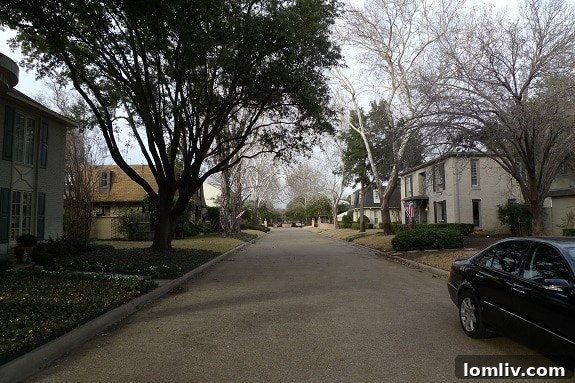
While a significant portion of the community stands in opposition, not everyone shares the same view. Pamela Smith, for instance, believes Transwestern offers the best proposal, arguing that an alternative developer might construct an “ugly” building. Critically, the owners of the 12 townhouses comprising the Town House Row Townhomes, currently valued at approximately $350,000, are decidedly in favor of the development. Of these 12 units, three are rentals, with the remainder being owner-occupied. Additionally, it appears the owners of the existing 24-unit apartment building are ready to sell. These townhomes rarely come onto the market, but two sales occurred around the same time last year: one 2306-square-foot unit closed on February 5, 2013, for $325,000, and another 2300-square-foot unit sold for $348,500 on January 7, 2013. It is evident that some homeowners “Behind The Pink Wall” are motivated by the considerable profit potential that a re-zoning could unlock. The question looms: what if other existing complexes are targeted for high-rise multi-family developments? As disclosed, some property owners, like the author of this piece, might see this as an opportunity to divest inherited assets for a substantial sum, enabling them to pursue other real estate dreams, such as investing in a second home beach condo. This illustrates a fundamental tension within the community, where individual financial interests can diverge from broader neighborhood preservation goals.
Adding another intriguing layer to the local real estate landscape, Mark Cuban owns property on Northwest Highway, situated between Ebby Halliday Realtors and the Northwest Bible Church, underscoring the high-value nature of this corridor.
Homeowners have also expressed concerns about Transwestern’s long-term strategy. They believe the developer’s mission is to construct a stunning new complex, lease it successfully, and then sell it off for profit. Ultimately, such a prime asset could end up in a Real Estate Investment Trust (REIT) or as part of a pension fund portfolio, such as that of the Dallas Police and Fireman’s fund. However, the likelihood of such ownership remaining local is slim to none. This realization further fuels anxiety about the loss of local control and the potential for a more transient, corporate ownership model for a significant piece of their neighborhood. This dynamic, homeowners recognize, is simply “the way the real estate game is played.”
The Future of Preston Hollow: A Defining Moment
“We don’t want the view from our backyards to ultimately be high-rise apartments,” asserts Ashley Parks, encapsulating the sentiment of many. “This is not just about property values… and it’s not that we don’t want change. I have received more than 600 emails against this. You can’t build a McMansion in the M Streets — I see this as the very same principle here in Preston Hollow.” Parks’ analogy resonates deeply, highlighting the desire to protect the established character and zoning integrity of Preston Hollow, just as other Dallas neighborhoods strive to maintain their unique identities. The battle over the “Pink Wall” development is more than just a dispute over a parcel of land; it is a defining moment for Preston Hollow, testing the community’s ability to balance desirable urban growth with the preservation of its distinctive suburban charm and quality of life.