Preston Hollow’s Redevelopment Dilemma: The Stalled Future of Imperial House
In the heart of North Dallas, a quiet battle is unfolding over the future of iconic properties. Has the fervent community resistance against high-density redevelopment in Preston Hollow effectively extinguished the prospects for revitalizing Imperial House? This question looms large over one of Dallas’s most distinctive neighborhoods, where the charm of the past collides with the pressures of urban growth and the desire for modernization.
Understanding “Behind The Pink Wall”: Preston Hollow’s Unique Enclave
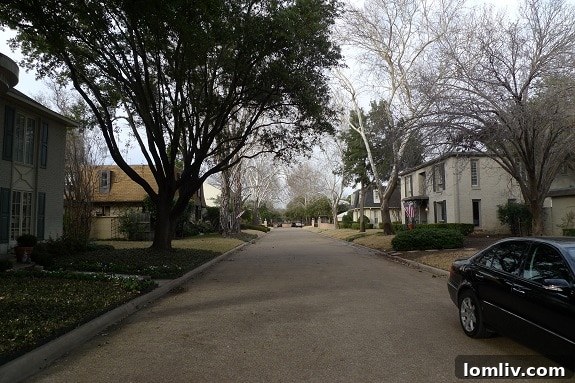
We’ve extensively chronicled the story of “Behind The Pink Wall,” a community unlike any other in Dallas. This intriguing, high-density pocket within Preston Hollow’s prestigious Gold Coast is nestled at the northeast intersection of Northwest Highway and Preston Road. Legend has it that the area received its evocative name from none other than Ebby Halliday herself, the revered Dallas real estate icon, who once resided in the uber-cool Jaguar Apartments – a testament to the area’s enduring mid-century modern appeal. These units, though older, exude a timeless grace, many converted into condos and featuring classic kidney-shaped pools, home to a diverse mix of retirees, divorcees, and widows.
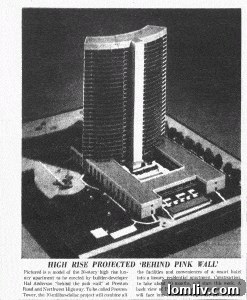
The architectural landscape of “Behind The Pink Wall” is a fascinating blend, featuring two prominent high-rises—The Athena and Preston Towers—alongside several mid-rise buildings and numerous condo complexes dating back to the 1950s and 60s. The genesis of this unique community dates to 1954 when Hal Anderson, a pivotal developer in the area, constructed his first apartment project on the north side of Northwest Highway. It was Anderson who installed a distinctive section of curvy pink-bricked wall at the forefront. Residents of these rental units would proudly declare, “we live at Preston and Northwest Highway, ‘behind the pink wall’,” using the landmark to precisely delineate their coveted location. This catchy identifier resonated, and as often happens with successful developments, others soon followed. Hal Anderson continued to shape North Dallas’s upscale living landscape by developing the high-rise Athena and Preston Tower apartments in the 1960s, introducing an unprecedented level of luxury and sophistication to the region.
The allure of this area has long attracted notable residents. Steve Wolens, the respected husband of former Mayor Laura Miller, owns a unit at The Athena, underscoring the enduring prestige of these addresses. Mary Frances Burleson, CEO of Ebby Halliday Realtors, Dallas’ largest residential sales firm, once remarked on the community’s standing: “It was a very big deal and very prestigious… It was very glamorous to live there.” This sentiment perfectly captures the historical charm and desirability that define “Behind The Pink Wall,” making any discussion of its future redevelopment particularly complex.
The Battle for Density: Transwestern’s Failed Endeavor
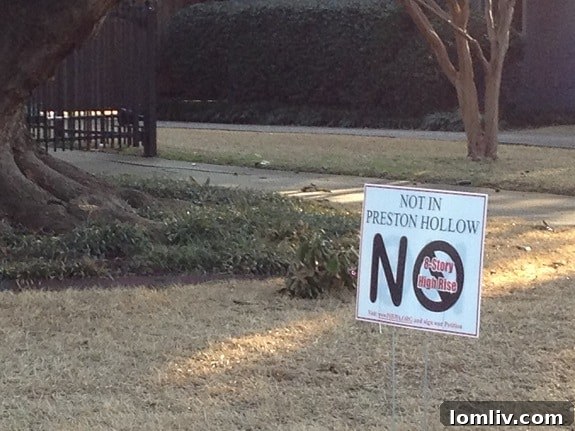
The challenges facing redevelopment in Preston Hollow are not new, nor are they isolated to Imperial House. We have previously detailed the intense community opposition and Transwestern’s ambitious attempts to acquire properties in the “Behind The Pink Wall” area. Starting early in the year, Transwestern sought to purchase 12 vintage 1950s townhomes situated at the entrance to The Pink Wall, just off Preston Road, along with 24 rental units within an apartment complex located precisely at the corner of Northwest Highway and Preston. This proposed deal, which would have consolidated 3.5 acres, sparked a formidable “Not in Preston Hollow” campaign.
The resistance was well-organized, financed, and vocal, effectively thwarting Transwestern’s plans. This precedent set a chilling tone for future redevelopment prospects in the area, demonstrating the power of a united community in preserving its perceived character. Developers, who rely on a certain level of density to make large-scale projects financially viable, found themselves in a difficult position. The Transwestern deal, initially valued at $18 million for the owners of the Preston Center Apartments and Town House Row, would have seen individual Town House Row owners clear approximately $1.6 million per house, a significant return considering current DCAD values averaged around $450,000. Such a transaction would also have generated substantial tax revenue for the city, highlighting the complex trade-offs involved in these development debates.
Imperial House: A Redevelopment Opportunity Stalled
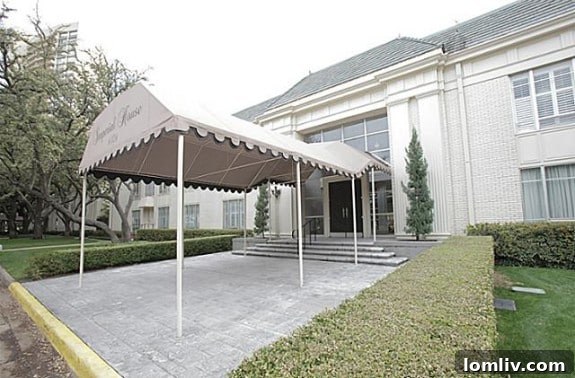
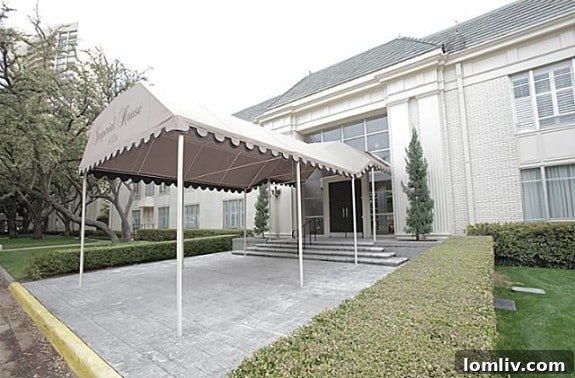
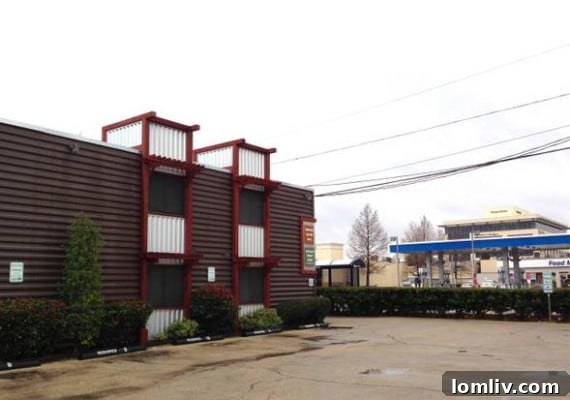
While the Transwestern saga unfolded, a parallel, yet equally challenging, redevelopment initiative was taking shape concerning Imperial House. For over a year, a number of owners within Imperial House, an elegant and imposing white brick complex featuring long awnings and designed by internationally acclaimed Dallas architect George Dahl, had been exploring a potential $20 million sale to developers. Dahl, celebrated for his work on the 1936 Texas Centennial buildings at Fair Park, and his firm were the architects and contractors behind the East building of Imperial House, constructed in 1962. These two-story luxury multifamily homes gracefully face Averill Way and back directly onto Northwest Highway, occupying a prime piece of Dallas real estate.
In July of last year, real estate expert Peter Livingston initiated conversations with Imperial House condominium owners about the possibility of a collective sale to a developer. Having previously brokered several individual units within the complex, Livingston observed a prevailing reluctance among owners to invest in significant updates or renovations for their aging units. Recognizing the prime location of Imperial House, just west of Preston Tower on Northwest Highway, Livingston approached the Imperial House HOA President to gauge interest in a holistic sale. Receiving a positive initial response, Livingston was encouraged to present his vision to the owners, speaking at three HOA board meetings and the annual meeting in October. He also engaged with owners personally, through emails, and letters, building a consensus. By the close of 2013, while a few owners expressed disinterest or requested him to cease his efforts, a clear majority indicated their willingness to consider a sale.
Livingston’s efforts gained momentum when, shortly after his engagement with Imperial House, the Town House Row owners collectively listed their property for sale. In October, Transwestern Company further complicated the landscape by contracting an adjacent 3.5-acre site, located less than 300 feet from Imperial House’s western boundary. Over several months, Livingston collaborated with an attorney, an architect, and a planning expert to comprehensively assess not only the Imperial House site but also the surrounding properties. Confident in the opportunity, Livingston met with numerous “big-name developers,” presenting compelling sales scenarios that yielded positive initial feedback.
By late December 2013, Livingston was able to present the Imperial House owners with letters of intent from two prominent firms: Crow Residential and Lincoln Properties. These offers represented an exceptionally high, if not the highest, price ever proposed for Dallas multifamily land. Crucially, both offers were contingent on a rezoning approval that would permit the construction of an 8-story tower. Given that the adjacent Preston Tower stands at 29 stories and the proposed development would be well-buffered from existing single-family homes, the concept appeared entirely realistic and financially attractive to developers seeking density.
As requested, once these promising offers were secured, Livingston transferred them to the HOA for further processing. The Imperial House HOA subsequently established a steering committee, tasked with presenting the opportunity to the entire ownership for a decisive vote. However, the process diverged; the steering committee opted to interview other brokers, and Livingston’s communication with them diminished, culminating in an invitation to merely apply for the job of representing the owners, should they decide to sell.
The Cold Reality Check: Neighborhood Resistance Freezes Development
The hopes for Imperial House’s redevelopment recently received a significant reality check. Last Thursday night, sources at a steering committee meeting revealed a stark assessment from the commercial broker they had eventually hired, Newt Walker. Walker, present for only about 30 minutes, delivered a blunt message that effectively poured “a big huge ice bucket of cold water on any selling aspirations.” According to those present, his counsel was unequivocal: forget any redevelopment in this specific area, at least for the foreseeable future. Walker underscored that the prevailing neighborhood sentiment and political climate have rendered such projects almost entirely unattractive to developers.
Walker further elaborated on this sobering assessment: “Prior to the Transwestern deal, I had interest from ‘big name’ developers. They were thinking of an 8-story luxury project with underground parking, which would have been plausible if Transwestern had not just gotten clobbered.” This statement directly links the Imperial House’s stalled fate to the powerful “Not in Preston Hollow” movement that successfully defeated Transwestern’s earlier efforts. The well-financed and meticulously orchestrated opposition has had a chilling effect, akin to an ALS ice bath, on any aspirations for new, higher-density developments “Behind The Pink Wall.”
Developers fundamentally require density to make large-scale projects financially viable. Without the ability to build higher or accommodate more units, the economics of acquiring expensive land, undertaking complex construction, and navigating intricate regulatory processes simply do not align with profit margins. The lucrative nature of the initial Transwestern deal, which would have offered significant returns to current property owners and generated substantial tax revenue, underscores the missed financial opportunities when such projects are derailed. Moreover, the uncertainty created by public discussions surrounding Mark Cuban’s land on the other side of Preston Road and its potential development further contributes to developer apprehension, making the area less predictable for long-term investments.
Walker emphasizes that successful large-scale sales and redevelopments demand consensus among property owners and a receptive political environment, neither of which currently exists “Behind The Pink Wall.” He advised his clients, the Imperial House owners, “to be calm and wait for a better environment in which to explore a sale.”
The Looming Consequences of Stagnation
The current impasse carries significant implications for the “Behind The Pink Wall” community. As luxury development opportunities are consistently thwarted by neighborhood opposition, the existing structures in this historically rich area continue to age. Many properties are increasingly in need of substantial renovation, a financial burden that numerous HOAs are ill-equipped to bear. This creates a challenging situation where properties depreciate, and the overall aesthetic and functional quality of the neighborhood could decline. It’s a personal concern for many, including this author, who openly discloses ownership of a unit across the street at The Seville, witnessing firsthand the aging infrastructure.
Newt Walker also offered a stark warning about the potential long-term consequences of continuously rejecting higher-density luxury developments. He suggested that if the current resistance persists, a scenario could arise where non-profit organizations might step in, acquiring a few units to operate halfway houses or similar community services. In such an outcome, current homeowners might lament their earlier inflexibility and wish they had been more receptive to the economic and modernization benefits that higher-density, upscale living could have brought to their cherished community.
The saga of Imperial House and the broader “Behind The Pink Wall” community in Preston Hollow encapsulates a universal urban development challenge: balancing community preservation with the pressures of growth and the economic realities of a vibrant city. For now, the future of Imperial House remains in limbo, a testament to the powerful influence of local resistance and the complex dynamics shaping Dallas’s real estate landscape.