The Shifting Landscape: Preston and Northwest Highway, Dallas’s Premier Intersection
The intersection of Preston Road and Northwest Highway in Dallas is more than just a crossroads; it’s a vibrant nexus, an undeniable landmark that real estate mogul Steve Brown aptly dubbed the “highest-profile intersection in all of North Dallas.” This isn’t merely a statement of geography but a testament to its unparalleled significance as a focal point for commerce, community, and luxury living. For decades, this corner has represented the very essence of prestige and opportunity within Dallas’s affluent northern corridor. However, the serene stability of this iconic locale now finds itself at the precipice of a dramatic transformation, poised to become the battleground for a Texas-sized real estate debate that will undoubtedly redefine its future.
Indeed, if Dallas possesses a central vortex, a pulsating heart where its diverse energies converge, this intersection is undoubtedly it. Driving south on Preston, one can sometimes even catch a glimpse of the distant downtown skyline, a subtle reminder of the city’s broader embrace. Beyond its visual prominence, this corner also holds the distinction of being arguably the highest-valued intersection in the entire region. On its western flank stands the legendary Ebby Halliday’s Little White House, a historical gem that once served as the town hall for the charming Village of Preston Hollow. This cherished structure is not merely a piece of history but a symbol, a beacon of the enduring legacy of one of Dallas’s most influential real estate figures, Ebby Halliday herself, who famously resided right next door. This particular quadrant of Preston Hollow is distinguished by its expansive, leafy acreages, magnificent mansions, and serene ponds, representing some of the most highly-priced and sought-after real estate in the city. It was, for instance, home to the late billionaire Harold Simmons and his esteemed family, underscoring the area’s deep-rooted appeal to Dallas’s elite.
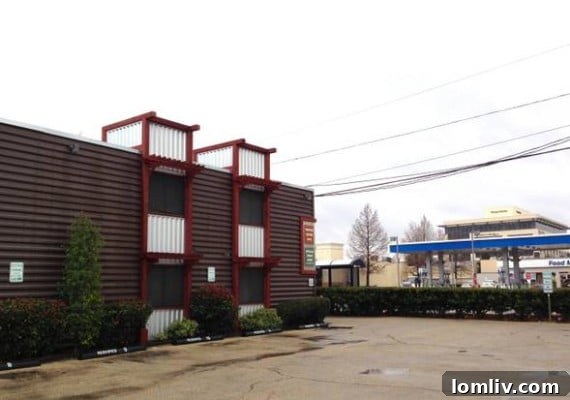
In stark contrast, the east side of this celebrated intersection presents a dramatically different tableau. Here, a somewhat unappealing, brown, metal-sided complex, now over 35 years old, stands conspicuously out of sync with the refined aesthetic of the surrounding neighborhood. Its utilitarian appearance feels more akin to the Chevron gas station directly across the street than to the luxurious residences nearby. Yet, just a short stroll along the two blocks bordering Preston Road to the east, north of Northwest Highway, reveals a captivating row of charming stone and brick townhomes, architectural relics from circa 1960. These properties hint at a different era of development, one characterized by understated elegance and a strong sense of community.
The Enduring Legacy of “The Pink Wall”
This distinct area, stretching east from Preston Road, is affectionately known as The Pink Wall. The evocative name, as legend has it, was coined by none other than Ebby Halliday herself, who reputedly once called the uber-cool Jaguar Apartments in this very locale her home. The Pink Wall area is a tapestry of residential history, featuring older yet graceful apartment buildings that have since been converted into condominiums. These complexes often boast unique architectural features, such as kidney-shaped swimming pools, and historically served as a cherished haven for a diverse community of retirees, divorcees, and widows seeking a comfortable, well-located lifestyle. The skyline of this area is punctuated by two iconic high-rises, the Athena and Preston Towers, alongside several mid-rise buildings and numerous other condo complexes dating back to the 1950s and 60s, each telling a story of Dallas’s post-war expansion and evolving residential preferences.
The allure of living within this community during its heyday was profound. Mary Frances Burleson, the esteemed CEO of Ebby Halliday Realtors, Dallas’s largest residential sales firm, eloquently articulated its appeal, likely in conversation with Steve Brown: “It was a very big deal and very prestigious. It was very glamorous to live there.” This sentiment perfectly captures the spirit of an era when these modern apartment and condo developments offered a sophisticated, urban lifestyle that was both aspirational and highly sought after. The area’s undeniable cachet is further highlighted by its notable residents, including Gennifer Flowers, who famously lived on Bandera in the mid-1990s as the first paramour of former President Bill Clinton to go public, adding a touch of national intrigue to its local charm.
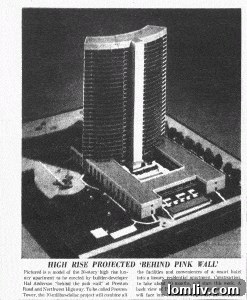
The genesis of The Pink Wall’s distinctive character can be traced back to 1954, when Hal Anderson, a prominent developer of the era, embarked on his inaugural apartment project on the north side of Northwest Highway. To visually distinguish his innovative new development, Anderson incorporated a section of curvilinear pink-bricked wall at its frontage. This architectural flourish quickly became a landmark, leading residents of the rental units to charmingly describe their address as “Preston and Northwest Highway, behind the pink wall,” a simple phrase that effectively conveyed their location and lent an air of exclusivity. This catchy identifier resonated deeply within the community, proving that a unique identity can drive success. As is often the case in thriving urban centers, one successful development tends to spark a cascade of others. Hal Anderson continued to shape the area, developing the sophisticated high-rise Athena and Preston Tower apartments in the 1960s, further elevating the standard for upscale living in what was affectionately known as the “Honeypot.” Other developers, observing Anderson’s success, soon followed suit, cementing the area’s reputation as a premier residential destination.
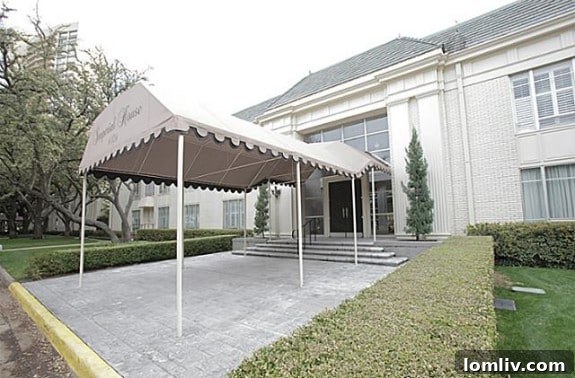
While Hal Anderson’s influence is undeniable, the question naturally arises about other key contributors to this vibrant residential landscape. Was Curtis Dahl also instrumental in developing some of these iconic units, perhaps structures like the Imperial House? The collaborative spirit of development during that transformative period often saw multiple visionaries contributing to the fabric of a growing city, each leaving their distinctive mark on Dallas’s architectural heritage.
A Glimpse into the Past: The Charm of Pink Wall Condos
Despite their age, many of the condominiums behind The Pink Wall possess an inherent charm and a distinct character that sets them apart from contemporary builds. These units often feature generously proportioned rooms and surprisingly spacious closets, a testament to a design philosophy that prioritized comfort and storage. In contrast, their kitchens are typically smaller, reflecting a historical era when domestic staff might have handled culinary duties, or when dining out was a more frequent pastime for the affluent. Intriguingly, many units originally included a servant’s entrance or an external area designated for laundry, hinting at a bygone era of household assistance. While not all units have been updated with in-unit laundry facilities, the majority have been meticulously maintained, preserving their original grandeur and structural integrity. These condos became a favored destination for retirees from the opulent Park Cities and Preston Hollow neighborhoods, offering an attractive option for those looking to downsize from large estates without sacrificing the prestige of their location, especially as newer developments began to emerge further east towards Edgemere. This demographic trend playfully led some to refer to the area as “God’s waiting room,” a humorous nod to its senior population, and an acknowledgment that “once behind the Pink Wall, you are closer to Sparkman Hillcrest,” a well-known local cemetery, adding a touch of dark humor to its unique appeal.
The Transwestern Vision: A New Era of Luxury Development
The tranquil rhythm of The Pink Wall, however, now faces an imminent challenge. A prominent real estate firm, Transwestern, has unveiled ambitious plans to completely redevelop the unsightly brown building currently occupying the prime corner, along with the adjacent charming townhomes. In their place, Transwestern proposes to construct a state-of-the-art, luxury rental community comprising more than 290 high-end rental homes, a monumental project carrying an estimated price tag of $100 million. The cheapest rents for these proposed units are projected to start at $2,000 per month, reflecting the premium nature of the development. The developers emphasize that these new residences will offer significantly larger units compared to what one might typically find in Dallas’s bustling Uptown district, signaling a deliberate strategy to attract a discerning clientele seeking expansive living spaces within a prestigious address.
“We are not trying to create something from Uptown at all,” affirmed Mark Culwell, Transwestern’s managing director spearheading this significant deal. “We think this is more of a Turtle Creek type project. We are going to have larger home sizes than typical.” Culwell’s statement underscores a strategic vision: to emulate the sophisticated, spacious, and often owner-occupied luxury of areas like Turtle Creek, rather than the more compact, often high-rise intensive developments characteristic of Uptown. This positioning aims to resonate with the existing affluent demographic of Preston Hollow and its environs.
To bring this ambitious vision to fruition, Transwestern must navigate the complex process of securing new zoning approvals for the proposed eight-story high-rise slated for the corner. Addison-based Wilder Belshaw Architects Inc. has been tasked with drafting the blueprints, which include provisions for two expansive, meticulously landscaped courtyards that will gracefully face Preston Road, enhancing the aesthetic appeal of the development. All parking for the complex is planned to be conveniently located underground, addressing potential concerns about visual clutter and space utilization. The northern section of the project, currently occupied by the charming townhomes, will feature three-story units, designed to transition smoothly into the existing architectural context. Furthermore, a small, thoughtfully designed park is planned to create a natural buffer, separating the new luxury apartments from the established condominiums along Averill Way and Bandera, an effort to foster harmony between the old and the new.
“We are trying to blend into the neighborhood,” Culwell reiterated, acknowledging the importance of community integration. “We want to treat this respectfully and get the input of the neighborhood and find out what their fears and concerns are.” This commitment to dialogue and community engagement is crucial for a project of this scale, recognizing the deeply vested interests of the long-standing residents.
Should all the necessary approvals fall into place and community concerns be adequately addressed, construction for this transformative project is optimistically slated to commence later this year, promising to reshape a significant corner of North Dallas.
Community Concerns and the Path Forward
While developers envision a gleaming new chapter for the area, local homeowners harbor significant apprehensions. The majority of the larger complexes situated just east of this proposed development are owner-occupied condominiums, and these residents express two primary fears: the introduction of more apartment buildings and an influx of transient tenants. They firmly believe that owner-occupancy fosters a greater sense of responsibility, maintains property quality, and contributes to the long-term stability and character of the community. The prospect of an eight-story building is viewed by many as excessively high, a towering structure that would fundamentally alter the neighborhood’s established, lower-density aesthetic. Moreover, the proposed density of 290 new units raises serious concerns about exacerbating an already notorious traffic problem.
The intersection of Northwest Highway and Preston Road is, lamentably, an infamous vortex of some of Dallas’s worst traffic jams. Come five p.m. on any given weekday, navigating this intersection can easily consume 35 minutes of a driver’s time, a frustrating daily reality for thousands. The addition of hundreds of new residents and vehicles would undoubtedly intensify this existing gridlock, making comprehensive traffic studies not just necessary, but absolutely critical, to assess and mitigate the potential impact. Furthermore, a significant proportion of the current residents in this area are retirees, making road safety an even more paramount concern. The joke that “you have to have eyes in back of your head while driving” here underscores the cautious driving habits required in an area with a higher population of senior citizens.
Adding another layer of complexity to the development debate are whispers of a potential affiliation between the developer and the area’s new city councilwoman, Jennifer Staubach Gates. Such rumors, whether substantiated or not, can fuel public mistrust and raise questions about transparency and fairness in the zoning and approval processes, making open communication and ethical conduct even more vital.
Full disclosure: As the author of this piece, I wish to openly state that I own property on Averill Way, a street directly impacted by the proposed development. This personal stake underscores my vested interest in ensuring that the real estate values and the cherished character of this community remain sound and are thoughtfully preserved amidst the currents of development. The unfolding story of Preston and Northwest Highway is far from over; stay tuned as this significant real estate saga continues to develop.
An Example of Existing Charm: The Seville
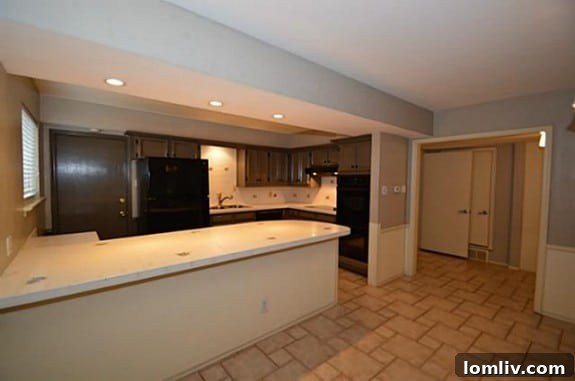
To provide a tangible sense of the existing housing stock that contributes to the unique fabric of The Pink Wall community, consider this listing in The Seville: a two-bedroom, two-bath first-floor unit encompassing 1415 square feet, offered at $185,000. This unit, featuring some tasteful updates, exemplifies the type of comfortable, well-located residence that has long appealed to those seeking an established lifestyle in this sought-after Dallas neighborhood. Such properties highlight the enduring value and potential that characterize the current market, even as new development proposals reshape the surrounding landscape.