Unpacking the Preston Hollow Development Debate: A Call for Rational Dialogue and Data-Driven Decisions
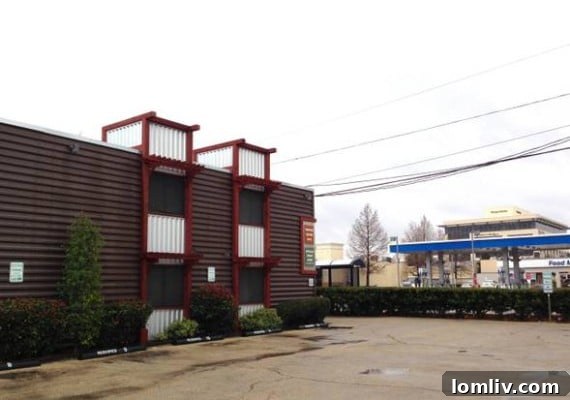
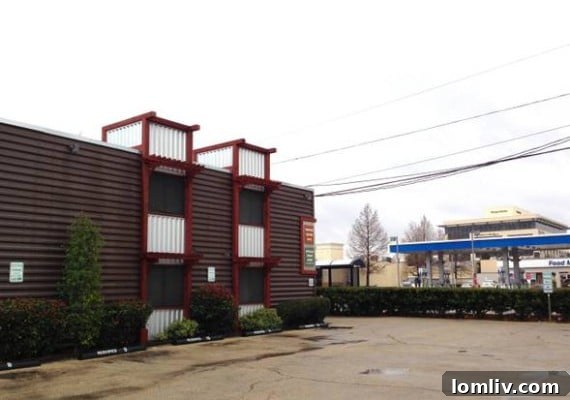
In the heart of North Dallas, a proposed multi-family development by Transwestern at the highly visible intersection of Preston Road and Northwest Highway has ignited a passionate debate within the prestigious Preston Hollow neighborhood. While many residents have adopted an unequivocal “No” stance, one long-time local, Charles Sartain, offers a refreshing, nuanced perspective, advocating for objective discussion over emotional appeals.
The Epicenter of Contention: Preston Hollow’s Future
Charles Sartain, a resident of Northwood since 1988, lives mere moments from the proposed Transwestern development. His proximity grants him a front-row seat to the unfolding saga, yet his views diverge sharply from the ubiquitous “No” signs that pepper the local landscape. Sartain, a seasoned litigator, believes the conversation surrounding the project demands a more measured and informed approach. He publicly articulated this in a Letter to the Editor of The Dallas Morning News, asserting a legitimate need for upscale, luxury apartments in the area and emphasizing the critical importance of a comprehensive traffic study and additional information before any definitive conclusions are drawn.
Sartain challenges the prevailing narrative that suggests “no negotiations” are the universal sentiment across the diverse Preston Hollow neighborhood. This expansive community stretches from Hillcrest Avenue all the way to the Dallas North Tollway, encompassing everything from the charming 1950s ranches on Northwood to the sprawling, tree-canopied estates and creek-lined properties characteristic of Old Preston Hollow. He suggests that the vocal opposition, while undeniable, does not necessarily represent the entirety of community opinion.

A Voice for Reason: Charles Sartain’s Perspective
In a recent conversation, Sartain reiterated his deep affection for his neighborhood and his unwavering desire to protect its inherent value and his own property investment. However, his insights offered a stark contrast to the emotional rhetoric that has largely dominated public discourse. “The people opposed to this project are very much into hyperbole,” Sartain observed. “They make many emotional statements that really don’t help a rational debate.”
He calls for a return to rational debate, questioning the widespread opposition in the absence of complete information. “Why are we saying no,” he asks, “when we don’t even know what we are saying ‘no’ to?” Sartain perceives an undercurrent of intimidation directed at Transwestern, suggesting that some neighbors are attempting to pressure the developer into abandoning the project entirely.
Sartain, though not present at a local park rally, did attend the initial meeting hosted by Transwestern at The Black Eyed Pea. This gathering was intended as the developer’s first attempt to engage in a constructive dialogue and explain the proposed development to the community. His account of the meeting paints a picture of immediate hostility. “There were three or four in the audience who were openly hostile,” he recalled. “One lady accused the developer of not telling the truth before the developer even said anything.” Such encounters, he implies, hinder productive conversation and prevent a clear understanding of the project’s merits and drawbacks.
He expressed satisfaction with the Preston Hollow East HOA’s decision to hire attorney Mike Jung, whom he considers smart and reasonable. Sartain sees this as an opportunity for more structured inquiry rather than outright confrontation. “I’m in a question asking mode,” Sartain explains, “Not a fighting mode. And I can think of three or four others here who also just want to have questions answered.” This sentiment highlights a desire for information and clarity that, he believes, is shared by many quietly observing residents.
Key Questions Driving the Debate
Sartain’s “question asking mode” centers on several critical areas that demand thorough investigation before the community can make an informed decision:
1. Traffic Impact: A Legitimate Concern
The foremost question revolves around the true impact of the development on neighborhood traffic, particularly given the already notorious congestion along Northwest Highway. Existing traffic studies, some over a decade old, estimate daily vehicle counts ranging from 23,000 to 57,000. However, more recent anecdotal evidence and expert observations suggest these figures could now be upwards of 80,000 cars per day. The proposed addition of 400 to 600 vehicles from the new development raises a crucial question: Will this be a negligible “drop in the bucket,” or will it exacerbate an already strained infrastructure, impacting daily commutes and quality of life for current residents?
Transwestern suggests that tenants of these luxury apartments might frequently be away at second homes, thereby mitigating their daily traffic contribution. Sartain rightly questions this assumption, emphasizing the need for concrete data. “Traffic is a legitimate concern,” he states unequivocally. “Show me a traffic study, then I might be able to make up my mind.” This call for empirical evidence underscores his commitment to data-driven decision-making. It is widely anticipated that both Transwestern and the neighborhood association will commission their own independent traffic studies, setting the stage for a comparative analysis of their findings.
2. Property Values and the City’s Tax Base
A common apprehension among homeowners regarding new developments is the potential for a decline in property values. Sartain, however, presents an alternative perspective, suggesting that an increase in real estate value within the area, spurred by high-quality development, could actually stabilize or even lower his property taxes. His logic is rooted in the broader economic picture:
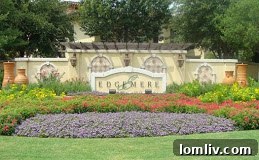
“With a greater value in the real estate here, I think it’s more likely my taxes won’t go up,” he posits. He speculates that the City of Dallas stands to gain significant tax revenue from such a development, potentially alleviating the need to raise tax rates on existing properties. He challenges those who fear devaluation, drawing a parallel to the development of The Edgemere, a luxury senior living community. “They said the same thing when the Edgemere was built — didn’t happen. My property values have gone up over the last ten years, not down.” This historical context serves as a powerful argument against immediate, fear-driven assumptions about market impact.
3. The “Pandora’s Box” of Zoning Changes
Another significant concern among residents is the potential for a “Pandora’s Box” scenario: if Transwestern secures a zoning change, will it set a precedent, opening the floodgates for other developers to target existing garden-style apartments “Behind the Pink Wall” for similar high-density luxury conversions? Reports have circulated, for instance, that Trammell Crow, a firm that previously outbid Transwestern for Townhouse Row, is now pursuing a deal to acquire The Imperial House, with at least one owner expressing openness to an offer.
Sartain, while not a city planner, dismisses the domino effect theory based on information he has received from urban planning professionals. “I’m no city planner,” he stated, “but I’ve been told that zoning cases are considered one by one, there is no domino effect. Every parcel is looked at on its own.” This perspective suggests that each zoning request is evaluated on its individual merits and conformity with the city’s overall development plan, rather than automatically paving the way for similar projects.
A Broader Vision for Dallas
Beyond the immediate neighborhood concerns, Charles Sartain urges a broader consideration of the proposed development’s implications for the City of Dallas as a whole. He firmly believes that the Planning Commission and City Councilman Lee Kleinman bear a fundamental obligation to not only maintain but actively improve the city’s tax base. This involves ensuring the “highest and best use” of strategically located properties, particularly those at major intersections like Preston and Northwest Highway.
Sartain points out that Dallas is home to myriad constituents whose interests extend beyond the several dozen homeowners north of Northwest Highway displaying “No” signs. He saw nothing inherently offensive or inappropriate in the developer’s initial brochure, suggesting that the initial negative reactions might be more reflexive than reflective.
As Dallas continues its relentless growth, evolving into an even larger metropolitan hub, Sartain prompts a crucial re-evaluation of existing zoning regulations, particularly in areas like “Behind the Pink Wall.” He questions whether these established zoning codes are truly serving the city’s contemporary needs or if they have become outmoded. “Dallas is getting bigger and bigger,” he notes, “maybe it’s time to ask ourselves if the zoning Behind the Pink Wall is outmoded and NOT good for the city as it is?” This provocative question challenges residents and city officials alike to consider the long-term, city-wide implications of development decisions rather than solely focusing on localized impacts.