

The long July Fourth weekend brought exciting news for my Penthouse Plunge at The Claridge: two distinct offers. This pivotal moment marked a significant milestone in a challenging yet ultimately rewarding real estate journey. One offer, notably conservative, reflected prospective buyers’ palpable uncertainty in the high-rise market, a sentiment amplified by the global COVID-19 pandemic. The second, a substantially higher cash offer, came with a caveat: a desire for specific customizations to the unit. After careful consideration, even when the initial low-ball offer was increased, the allure of a cash deal and a streamlined path forward proved decisive. Given that the unit was still undergoing construction, and accommodating the buyer’s custom requests required intricate coordination, finalizing the contract was a meticulous process that took a full week to iron out.
This transaction is more than just a sale; it’s the culmination of a high-stakes real estate venture that began with an ambitious vision and navigated numerous financial, logistical, and emotional hurdles. For anyone contemplating a similar journey into the world of property flipping, particularly in the luxury high-rise sector, my experience offers a candid look at the realities often hidden behind the glamorous façade presented on television. It underscores that successful property investment demands not only financial acumen but also immense patience, resilience, and a tolerance for significant risk.
Embarking on a High-Stakes Penthouse Renovation
Let’s rewind and truly understand the magnitude of this undertaking. Regular readers of this blog will recall my ambitious acquisition of a sprawling 5,311-square-foot double penthouse at The Claridge in September 2019. My strategic intent was clear: to separate these two distinct units, meticulously renovate and then sell the larger A-unit, while retaining and ultimately residing in the more modest B-side. This combined penthouse had languished on the market for a staggering four years, enduring over $1 million in price reductions before I successfully negotiated a deal at $1.5 million.
It’s crucial to establish context here: while I’ve undertaken significant renovations on every home I’ve ever owned, transforming them into spaces tailored to my tastes and needs, I had never before ventured into the high-pressure world of flipping a home for profit. My exposure to home flipping was largely confined to popular HGTV shows, which, I can now definitively state, present an exceedingly unrealistic and often sugar-coated portrayal of the financial and logistical complexities involved. The actual numbers, timeframes, and unforeseen challenges in real-world flipping projects diverge dramatically from television narratives, often underestimating costs and overstating potential profits.
This particular deal presented an extraordinary challenge for all parties involved, especially for Sharon Quist of Dave Perry-Miller, who expertly represented both myself and the seller. The primary reason for its complexity stemmed from my own financial position; truthfully, spending $1.5 million on a property was an unprecedented and somewhat audacious move for me. Prior to this landmark transaction, the most I had ever invested in a home was a mere $235,000. This stark contrast highlights the colossal leap of faith I was taking.
However, this was not a decision made lightly or impulsively. I meticulously crunched the numbers, analyzing every conceivable financial scenario and potential outcome. I examined the investment from every angle, calculating risks and potential returns with a thoroughness that bordered on obsession. Armed with this comprehensive analysis, I moved forward with the unwavering confidence of someone who possessed enough knowledge to be dangerous – a blend of calculated risk-taking and conviction in my strategic vision.

Unpacking the Financial Mechanics: A Deep Dive into the Deal
The intricate deal I ultimately struck with the previous owner was a masterclass in creative financing, reflective of the scale of the investment and my personal financial capacity at the time. It commenced with a significant $100,000 down payment, followed by a commitment to a three-year, $1.4 million interest-only wraparound loan facilitated through his bank. For those unfamiliar, a wraparound loan essentially means the seller keeps their existing mortgage and I, as the buyer, make payments to them, which then covers their original mortgage while also providing additional financing. This structure allowed for greater flexibility but also carried unique risks. Critically, interest on this substantial loan was only due upon the successful sale of unit-A. This clause was vital, as my income at the time simply could not accommodate both a hefty mortgage payment and the substantial double HOA dues associated with the combined units.
To further secure the deal and provide additional equity, a $300,000 lien was placed on my condominium in Hawaii. This meant every liquid asset and every major property I owned was leveraged, leaving me financially stretched to my absolute limit. I was, in essence, “tapped.”
The legal complexities surrounding this unique financing arrangement were considerable. Lawyers representing the seller worked in tandem with my legal teams in both Dallas and Honolulu. All parties engaged in an extensive and often painstaking “tango” with the title company, ensuring every clause, every condition, and every protection for my interests was meticulously drafted and correctly executed. What was initially projected to close by the end of June 2019 ultimately didn’t finalize until early September, a testament to the intricate nature of the transaction and the legal safeguards required.
The personal risk I assumed was nothing short of enormous. The gravity of the situation was ever-present: if circumstances spiraled out of control, the repercussions could range from personal bankruptcy to the forced sale of my Hawaii property to satisfy the penthouse mortgage. For someone less than a decade away from retirement, operating on my income, this was an exceptionally high-stakes gamble. However, I continuously rationalized this immense financial exposure by focusing on the tangible, highly marketable asset I was creating: a beautifully renovated penthouse situated in the prestigious Turtle Creek area of Dallas, a property with inherent value and strong resale potential.
One profound justification I employed to navigate this risk was a reflection on my life’s financial philosophy. I had always, without exception, played it safe. My financial decisions were characterized by prudence; I never purchased what I couldn’t comfortably afford, and I maintained stringent control over my monthly expenses. In all my prior real estate endeavors, I deliberately “bit off less than I could chew,” often looking back with a tinge of regret for not being bolder. This time, I resolved to change that narrative. With a deep breath and a leap of faith, I shut my eyes and committed, embracing a level of risk previously uncharted.

The Renovation’s True Cost: Beyond the Sale Price
Texas operates as a non-disclosure state, a policy I personally believe warrants reconsideration for greater market transparency. Consequently, I am unable to publicly divulge the precise selling price of the A-unit. However, those with access to the Multiple Listing Service (MLS) will undoubtedly uncover the details. My initial, most optimistic financial plan hinged on selling the A-unit for a sum sufficient not only to cover its renovation costs but also to leave the B-unit with a manageable mortgage, ideally covering only a portion, or even all, of its necessary renovations. This ambitious goal, however, did not materialize as perfectly as envisioned.
The reason wasn’t a disappointing sale price for the A-unit. Instead, it was the relentless and often unforeseen escalation of renovation costs. As is often the case with extensive property transformations, especially in high-rise environments, expenses tend to balloon beyond initial projections, consuming a significant portion of the anticipated profit margin. In the end, after factoring in all expenditures, I essentially broke even on the A-unit flip. What this “break-even” means in practical terms is that the modest, new mortgage I now carry on my B-unit is roughly equivalent to what I would have incurred had I been able to purchase the B-unit as a standalone property and simply moved in. The financial profit, while present, was largely absorbed by the extensive work required to bring the A-unit to market standard and to initiate crucial improvements on the B-side.
My Current Reality: A Work in Progress
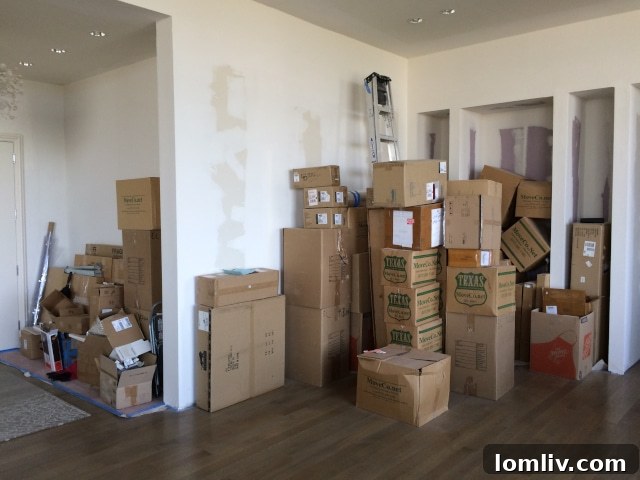
While I technically “broke even” in a financial sense, the B-side of the penthouse, my new home, is far from its final, polished state. The narrative of simply “moving in” doesn’t quite capture the ongoing reality. Significant progress has been made: the B-side floors are beautifully finished, a crucial step undertaken before moving in to minimize disruption. The master bathroom, however, has been entirely demolished, a blank canvas awaiting its transformation. What was once described as a “chapel” (a unique and somewhat unconventional space) has been thoughtfully repurposed and returned to its functional origins as a much-needed laundry room. So, while the outdated white shag carpeting is thankfully gone, and I now enjoy the convenience of clean clothes, I am currently living without a functioning master bathroom. The remainder of the B-unit largely retains its original 1984-chic aesthetic, a charming relic awaiting its modern refresh.
The Toll of Uncertainty: Living in Stressful Limbo
Beyond the financial intricacies, the true cost of this endeavor can be measured in a year of my life spent under the immense psychological weight of a $1.4 million interest-only mortgage. From March 2020 onward, this already considerable pressure was compounded by the unforeseen arrival of a global pandemic. COVID-19 not only instigated work stoppages in high-rise constructions across Dallas but also cast a looming shadow of uncertainty over the entire real estate market. This period fueled my almost obsessive interest in tracking market trends, leading to a series of analytical columns (here, here, here, here, here). These analyses served not only as a mechanism for me to manage my own burgeoning stress but, judging by reader comments, also provided valuable insights and reassurance to others navigating similar anxieties within the volatile market.
On a more personal note regarding quality of life, my journey into this “limbo” began long before the pandemic. I vacated my previous home at The Athena in June 2019, transitioning into an Extended Stay America on I-35 and Inwood Road. I resided there for five months, enduring the transient lifestyle, before I could finally move into the partially completed B-unit. As someone who genuinely enjoys cooking, the past year has been a culinary desert, with meals limited exclusively to what could be prepared in a toaster or microwave oven. Even now, with a functional albeit rudimentary kitchen in the B-unit, I’ve unpacked very little. This decision was a strategic one, aimed at minimizing the inevitable repacking effort when the more intensive construction phase for my personal living space finally commences. It seemed like a sensible precaution at the time, but the prolonged wait has certainly tested my patience and redefined my concept of “normal living.” In many significant ways, my routine and quality of life were fundamentally altered the day I moved out of The Athena in June 2019, long preceding the global disruption of COVID-19.
On a brighter financial note, the sale of the A-unit should ideally shield me from any significant capital gains taxes. The amount for which the A-unit sold above its allocated purchase price was almost entirely consumed by the extensive renovation costs, effectively creating a wash in terms of taxable profit. This aspect provided a much-needed layer of financial relief amidst the overall stress.

The Buyer’s Perspective: Vision vs. Reality
Almost from the very inception of this project, prospective buyers, either directly or through their agents, began expressing keen interest in viewing the A-unit. This consistent pattern served to underscore a critical observation I’ve made in the real estate market: many individuals struggle with the imaginative leap required to envision the finished potential of a property still undergoing extensive renovation. The most frequent comment I encountered during these showings was a clear desire to “see it when it’s done,” highlighting the challenge of selling an unfinished vision.
One particular couple exemplifies this struggle. They visited the A-unit multiple times, even making the effort to tour my cabinetmaker’s showroom to better understand the proposed finishes and quality. Being professionals with backgrounds in construction, they possessed the unique ability to accurately interpret blueprints and visualize the future space. Following a promising meeting, we left with the distinct understanding that our respective attorneys would be in contact the very next day to begin drafting a contract. However, just hours later, they unexpectedly withdrew, stating they might make an offer later if the unit remained unsold. The emotional rollercoaster this produced was significant, generating both frustration and disappointment. In hindsight, however, I am genuinely relieved that circumstances unfolded differently. My new neighbor is arriving with a clean slate, free from the complexities and emotional residue of a protracted negotiation process, ensuring a more harmonious start.
Beyond Profit: The Intangible Rewards of Restoration
While the financial outcome of this project didn’t align perfectly with my most optimistic projections, the venture yielded significant intangible upsides that are equally, if not more, valuable. There is a profound sense of satisfaction in knowing I successfully restored two distinct homes to their intended, functional configurations. The original decision to combine these units was, in retrospect, an architectural misstep; the merged floor plan never truly worked cohesively or efficiently. This project genuinely needed someone like me – someone with the vision, the drive, and the willingness to tackle a complex renovation – to rectify that initial error. For four years prior to my involvement, the entire, combined unit languished on the market, unwanted. Similarly, no single buyer was willing to undertake the daunting prospect of purchasing the combined units and then enduring the immense challenge of a double renovation.
This entire experience represented a colossal personal risk, a magnitude of risk I had never previously undertaken in my life. The same can be said for embarking on a home flip. I strongly doubt I would ever attempt either again; the emotional and financial toll was simply too high. However, I did it once, and I saw it through. While the financial payoff wasn’t as substantial as I had initially hoped, I now find myself as the proud, albeit “poorest,” owner of a penthouse on Turtle Creek – a residence that, despite its grandeur, still possesses “lots of potential,” which is often a polite euphemism for “it’s still pretty dumpy” in many areas. Yet, it is mine, and the journey to get here has been transformative.

Reflection and Resilience: Tired, Yet Good
This detailed account is intended to offer an honest and unvarnished examination of the arduous journey that led me to this point. My hope is that it doesn’t convey any sense of regret, because truly, I have none – save for the unfortunate reality that COVID-19 prevented me from hosting a celebratory Daltxrealestate.com party before handing over the keys to the A-unit. That small disappointment aside, the overwhelming sentiment is one of accomplishment and resilience.
Undeniably, the project demanded far more time and incurred significantly greater costs than I could have ever possibly imagined. Yet, as anyone who has undertaken substantial renovations will attest, this is often the universal truth of such endeavors. Despite these challenges, the overall outcome represents a remarkable upgrade. I successfully parlayed the profit from the sale of my 1,899-square-foot home at The Athena into a spacious 2,541-square-foot penthouse on the coveted Turtle Creek, all for a comparatively modest $60,000 increase in my mortgage. Even my credit score, which at one point plummeted by 62 points due to the intricate financing, has made a robust rebound, a tangible testament to overcoming the financial turbulence.
I ventured into uncharted territory, took substantial risks, and against considerable odds, I not only survived but thrived. I emerged from this complex undertaking with valuable experience and a profound understanding of the high-stakes world of luxury real estate renovation. I have no immediate plans to tempt fate twice by embarking on another such project, though a close friend has already approached me for assistance with her own renovation, proving that the lessons learned are always in demand.