As the holiday season draws near, it’s an opportune moment to unveil developments that have been unfolding behind the scenes regarding urban planning and community dynamics. A significant meeting took place on November 1st at Dallas City Hall, bringing together Council Member Jennifer Gates, Plan Commissioner Margot Murphy, and a formidable coalition of opposition groups. Their focus: the proposed Authorized Hearing within Planned Development District 15 (PD-15), an area famously known as being “behind the Pink Wall” in the heart of Preston Center.
This opposition to future development within PD-15 wasn’t just a collection of familiar faces; it also featured some surprising additions. The groups can be broadly categorized as follows:
Group One: Influential Former Officials and Allies
- Former Mayor Laura Miller
- Former State Representative Steve Wolens (Miller’s husband)
- Former Texas Senator John Carona
- Former State Representative Will Hartnett
- Former District 13 Council Member Sid Stahl
- Former District 13 Council Member Donna Blumer
- Former District 13 Council Member Mitchell Rasansky
Group Two: Tower Representatives and Local Activists
- Preston Tower Authorized Hearing Committee Members: Tatiana Frierson and Bob Bowling
- Athena Authorized Hearing Committee Members: Barbara Dewberry and Margaret Darden
- Roger Albright: Legal counsel representing both Athena and Preston Tower
- John Pritchett: President of the Preston Hollow South Neighborhood Association, a Preston Tower resident, and a representative on the initial, ill-fated PD-15 task force
- Steve Dawson: Representative for Zone 4 of the Northwest Highway and Preston Road Area Plan, and a neighborhood representative for the first PD-15 task force. Notably, Dawson’s family owns a small apartment building inside the Pink Wall, though he resides in the Park Cities.
A closer look at Group One immediately raises questions about their profound interest in this particular issue. It’s difficult to recall any of these former officials actively participating in a single Authorized Hearing committee meeting. One might reasonably expect such a level of engagement as a prerequisite for forming opinions strong enough to sign letters and demand meetings with current council members, especially when those opinions carry significant political weight.
Furthermore, it appears that few in this group have a significant personal stake in the outcome of the PD-15 development debate. Laura Miller and Steve Wolens, for instance, reside in a stunning, multi-million dollar home across the Dallas Tollway, far removed from the immediate vicinity of the Pink Wall, though they do rent Wolens’ mother’s former Athena unit. John Carona owns two properties listed in DCAD, both approximately two miles from the Pink Wall. Donna Blumer’s residence is over six miles away, Will Hartnett about three miles, and Mitchell Rasansky three and a half miles. Octogenarian Sid Stahl is a leasing tenant at the Athena, which means he holds no voting rights in any potential HOA decisions. This geographical and financial distance brings into question the direct impact any increased density or development within PD-15 would have on their daily lives or property values.
Indeed, it’s reasonable to conclude that this group, with the potential exception of Sid Stahl, would suffer no adverse consequences from increased density within PD-15. Any marginal financial impact on the value of Miller and Wolens’ former Athena unit is unlikely to cause them significant hardship. In fact, some argue that their staunch opposition, if successful in halting development, could paradoxically decrease their condo’s value by stifling market vitality. Thus, for most of Group One, there are negligible personal financial or aesthetic consequences related to development behind the Pink Wall, nor is there a substantial real-world concern about increased traffic within its specific boundaries. Beyond personal friendships with Miller and Wolens, their deep involvement remains perplexing to many observers.
The presence of Stahl, Blumer, and Rasansky—three of the four former District 13 City Council Members—also raises eyebrows. Is it not, some might argue, the height of political impropriety for former officeholders to adopt an uninformed stance and publicly criticize the current District 13 representative? It would be an entirely different scenario if Council Member Gates had solicited their input; however, that does not appear to be the case. One can only imagine how these former council members would have reacted during their own tenures if predecessors who left office decades prior had attempted to dictate their responsibilities and decisions.
Moreover, while these individuals present themselves as concerned citizens advocating for the community, their understanding of what area residents genuinely desire is debatable—a challenge faced by many in such complex urban planning scenarios. Yet, they position themselves as champions of the “oppressed.” Those with long memories will recall that much of this same group rallied behind Laura Miller in opposing various developments, including Transwestern’s The Laurel, protesting Highland House (a type of development that Miller’s own Preston Center Plan had previously advocated for), and the controversial Preston Center Sky Bridge. Her current list of “hobbies” prominently features opposing anything proposed in PD-15 and the St. Michael’s redevelopment. For almost every significant development project near Preston Center in recent years, Miller has consistently been the outspoken voice of opposition, earning her the moniker “the no-to gal.”
The remaining members of the opposition are primarily representatives of the existing towers and local development agitators. Steve Dawson, who, like many in Group One, does not actually reside in the immediate area, could arguably fit into both categories, further highlighting the disconnect between some opponents and the daily realities of the residents they claim to represent.
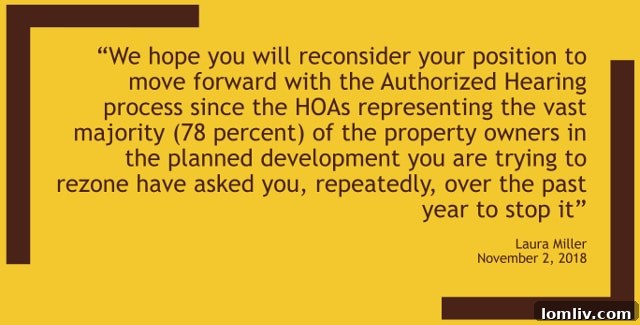
It is rather ironic that these groups assert they represent 78 percent of PD-15 residents. However, a closer examination reveals a significant flaw in this claim. In zoning cases, the City of Dallas typically does not permit individual owner voting within multi-family housing complexes unless the specific Homeowners Association (HOA) rules explicitly allow it. Whether dealing with a handful of townhouses or a sprawling complex of a thousand units, the city often consolidates the collective voice into a single vote. Complexes can circumvent this somewhat “dictatorial” voting structure by embedding language in their HOA documents that facilitates individual owner voting. Neither Preston Tower nor Athena, the two primary complexes whose residents are being counted, possess such provisions in their governing documents. This omission is critical.
Many HOA documents are remarkably unprepared for issues of this magnitude, meaning HOA boards often aren’t even obliged to poll their co-owners for guidance. Consequently, an HOA board can simply cast a vote based on the personal desires or biases of its members. It is solely on the authority of these two HOA boards that the sweeping claim of 78 percent resident representation is made. No developer has formally presented plans directly to the residents at large, no comprehensive debate has genuinely occurred among the broader community, and no actual resident-wide vote has been conducted. The original task force meetings and the current authorized hearing meetings have seen extremely sparse attendance from tower residents, essentially enabling this “asleep-at-the-wheel” hijacking of resident sentiment by a select few.
When tower representatives declare they are acting in accordance with residents’ wishes, it often boils down to informal conversations with acquaintances in their daily lives or chance encounters in the elevator. This is hardly a truly representative sample. Similarly, when Laura Miller asserts she speaks for 78 percent of residents, she is, in reality, referring solely to her engagement with these HOA boards. For the purpose of inflating support for her position, the collective voice and varied opinions of the remaining residents appear to be disregarded.
The November 1st Meeting: A Closer Look at the Confrontation
Emails obtained through an open records request (available here and here) illuminate the intricate maneuvers preceding the November 1st meeting. They reveal Laura Miller’s concerted efforts to orchestrate a meeting between her “Group One” of former officials and Council Member Gates. The primary topic was a letter Miller had authored and which the group had signed nearly six months prior, in May—significantly, before the Authorized Hearing committee members had even been announced. In what appeared to be an old-school display of political power, the group initially insisted on meeting Gates on their own turf, specifically at John Carona’s Associa offices (Associa being a prominent nationwide HOA property management company). This choice of venue suggested an attempt to establish dominance and set the terms of engagement.
One cannot help but wonder: “What specific developments in October prompted Miller to revive a months-old letter as her entree to a crucial meeting with Council Member Gates?” This suggests a strategic timing, perhaps in response to perceived progress or shifts in the development debate.
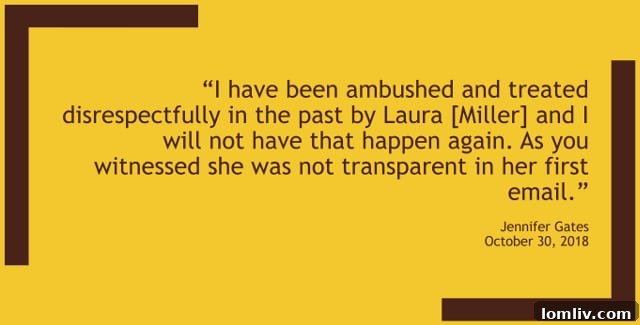
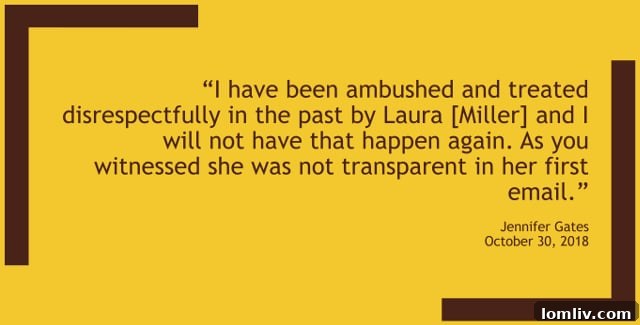
Initially, Gates agreed to the meeting, but firmly stipulated that it would take place at City Hall, not at Carona’s offices. Miller then expanded the attendee list, adding “Group Two” representatives from the towers. Council Member Gates expressed her dissatisfaction with the unwieldy size of the combined group, preferring to meet with them separately. Her rationale, later conveyed to John Carona, was stark: “I have been ambushed and treated disrespectfully in the past by Laura [Miller], and I will not have that happen again.” This sentiment was underscored by an incident during the meeting itself; a city staffer passing outside reportedly overheard Miller’s voice loudly screaming at one point, “This is your fault!” This anecdote undoubtedly reinforced Gates’s considerable wariness of Miller’s confrontational style.
From an observational standpoint, it would have been insightful for Gates to witness how the “puppets” might perform without their “master” present, allowing for a more unvarnished discussion. Ultimately, Miller’s persistence prevailed, and all 15 individuals were invited to the meeting. However, it seems Blumer, Rasansky, and Carona subsequently bowed out, citing confusion and scheduling conflicts as their reasons. Their absence, especially given their initial strong support for Miller’s letter, was notable.
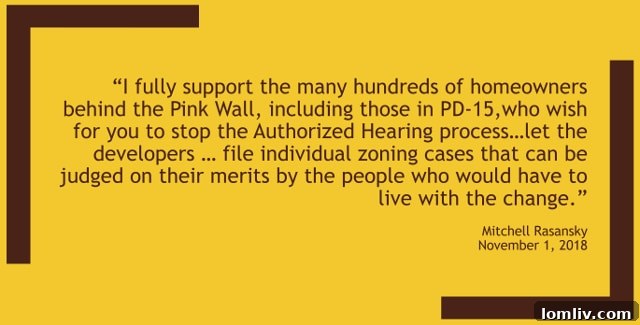
Mitchell Rasansky, in his explanation to Gates for his absence, stated, “I know zoning. The developers should file their own zoning cases, as is the norm.” Had Rasansky been diligently following the intricate details of this specific process, he would have been aware that, unlike typical zoning cases, PD-15 operates under a strict cap on the total number of dwelling units within the Planned Development District. This crucial regulation makes it practically impossible for individual developers to file conventional zoning cases, except for a minuscule surplus of approximately 65 units that are a shared resource across six parcels spread over roughly 13 acres. As Council Member Gates herself articulated just last week, such a piecemeal case would be “DOA” (Dead On Arrival) at City Hall. To allow any significant development cases to proceed, the dwelling unit cap would, at a bare minimum, need to be substantially raised or removed.
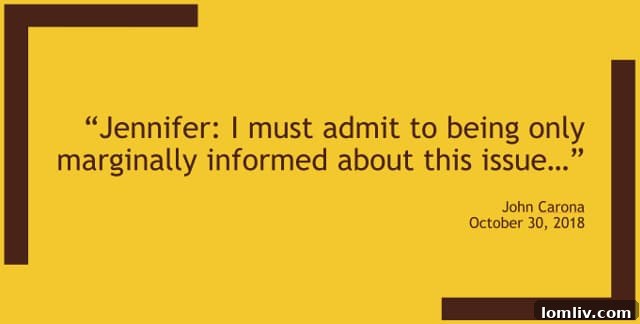
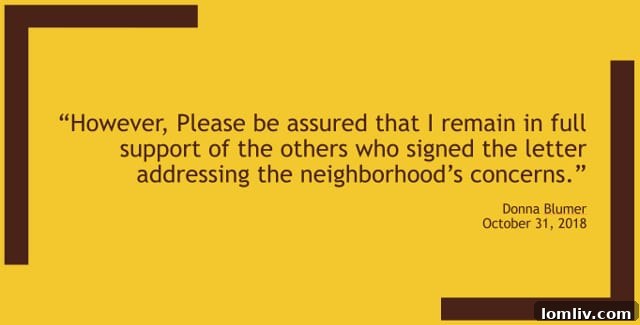
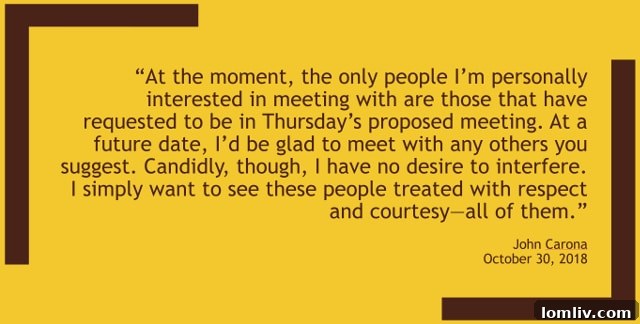
Donna Blumer’s regrets conveyed her continued, unwavering support: “However, please be assured that I remain in full support of the others who signed the letter addressing the neighborhood’s concerns.” This statement of support is particularly telling, as it backs a letter signed by a mere handful of HOA representatives, crucially, without any verified input or widespread support from the actual residents they claim to represent. John Carona initially expressed a willingness to meet with “residents of the low rises,” only to contradict himself later by stating, “At the moment, the only people I’m personally interested in meeting with are those that have requested to be in Thursday’s proposed meeting.” He then confusingly added, “Candidly, I have no desire to interfere.” (This prompts the obvious question: if you have no desire to interfere, why are you so actively involved in this opposition?) In essence, these three former local and state lawmakers appear to have readily immersed themselves in an issue about which they possessed limited knowledge, without first seeking a balanced perspective. Making decisions or forming strong opinions based on incomplete information and listening to only one side is not an ideal approach, and it is especially concerning coming from individuals with a background in lawmaking and public service.
Post-Meeting Developments: The Recap
The aftermath of the November 1st meeting saw Laura Miller continuing her campaign. She dispatched a “thank you, but…” letter to Council Member Gates, a communication that further revealed the inconsistencies in her position. In this letter, she once again twisted the narrative, asserting that “the two developers who are driving this process” are to blame. This assertion is particularly ironic, given that for months prior, the prevailing trope from the opposition was that developers would deliberately bypass neighborhood input. Now that developers have engaged and presented their plans through official channels, they are suddenly accused of “driving the process.” It’s a classic “have you stopped sleeping with hookers?” no-win argument, where any action taken by developers is framed negatively, regardless of its intent or adherence to protocol.
Miller’s letter also controversially states, “The traffic levels in and around Preston Center are completely unacceptable.” This claim directly contradicts findings from the very Preston Center task force that Miller herself spearheaded. That task force reported that traffic levels along both major roads have actually been steadily decreasing for nearly two decades. Therefore, it would be far more accurate to assert that traffic around Preston Center is, in fact, becoming less unacceptable with each passing day. Despite city staff having reiterated this external research multiple times in recent months, Miller quotes Elizabeth Mow, Assistant Executive Director for NTTA, as saying, “It’s gridlock all the time.” As a long-time local resident, I can attest that outside of peak rush hours, it is rarely “gridlock,” even most of the time. If Mow’s statement was indeed referring to the Dallas North Tollway (which is more probable given her position at NTTA), there is little that local PD-15 development can do to significantly alter Tollway traffic patterns, nor would it have a noticeable effect on the wider regional issue.
Further discussions included the idea of implementing a Texas U-Turn on Northwest Highway at the Tollway. As I previously highlighted nearly three years ago, there simply isn’t the physical space to construct such a turn that would effectively alleviate turn-around traffic at Lomo Alto and the Tollway. This demonstrates a recurring pattern of advocating for solutions that are either misinformed or impractical.
The Ongoing Campaign: Alarm and Misinformation
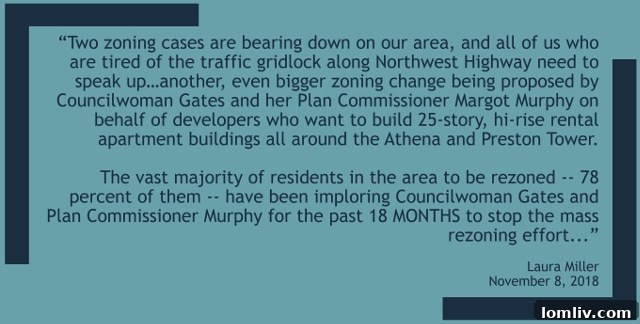
On November 8th, Miller escalated her campaign by distributing an alarming email accompanied by a petition. This email vehemently encouraged residents to protest not only the PD-15 development but also the separate St. Michael’s project. Predictably, Miller deployed her characteristic charged and unsubstantiated language. She reiterated her baseless claim of representing 78 percent of PD-15 residents and exaggerated traffic concerns. Additionally, she inserted an entirely unfounded assertion that developers aspire to build 25-story high-rises all around Athena and Preston Tower. It’s crucial to note that no plans for four such high-rises have ever been formally presented or requested, except, it seems, in the speculative “dreams” of Miller and, coincidentally, the tower representatives who align with her views.
Miller’s fervent opposition to the St. Michael’s redevelopment is particularly bewildering and, frankly, amusing. The official press release concerning this proposed development explicitly details how the project adheres to her own “Preston Center Plan” no fewer than eight times within a single page. Despite this clear alignment with her previous vision for the area, Miller remains adamantly opposed. One can’t help but wonder if nine or ten genuflections to her plan might have somehow swayed her opinion. Ironically, one of her primary complaints regarding the PD-15 development is that it supposedly goes against the very Preston Center Plan she champions.
The consistent pattern of former Mayor Miller inserting herself into virtually every aspect of Preston Center development continues to puzzle many observers. Her actions often evoke the image of a seven-time Academy Award winner who, having long left the silver screen, now hosts a game show, breathlessly clinging to the fleeting spotlight—in this particular case, the comparatively small “kiddie pool” of neighborhood development debates. Her legacy could be that of an advocate for truly thoughtful, well-planned urban growth, but instead, she increasingly appears to be defined by a blanket opposition to almost any new project, regardless of its merits or its alignment with past community goals.

Remember: My focus lies at the intersection of high-rise development, Homeowners Associations (HOAs), and renovation trends. However, I also possess a deep appreciation for modern and historical architecture, always seeking to balance preservation with the forward-thinking principles of the YIMBY (Yes In My Backyard) movement, which advocates for more housing and thoughtful urban growth. My commitment to insightful real estate commentary has been recognized by the National Association of Real Estate Editors, who honored my writing with three Bronze awards in 2016, 2017, and 2018, alongside two Silver awards in 2016 and 2017. If you have a compelling story to share, or perhaps even a marriage proposal to make (one never knows!), feel free to reach out via email at [email protected]. While I encourage you to look for me on Facebook and Twitter, be advised: you likely won’t find me, but your effort is certainly appreciated!