
Real estate markets are dynamic entities, rarely defined by their initial perceptions. Instead, they evolve significantly as cities grow, infrastructure expands, and demographic patterns shift. Over time, a location once primarily recognized for transient tourism can gradually mature and transform into a robust, stable residential market, attracting long-term residents and fostering genuine communities.
Across global real estate markets, a pivotal factor driving sustained housing demand is the increasing phenomenon of lifestyle migration. Buyers are progressively prioritizing a holistic quality of life over mere proximity to work. This means factors such as climate, comprehensive healthcare access, the overall cost of living, quality education systems, and general livability now weigh heavily in their relocation decisions, reshaping urban landscapes and influencing investment patterns worldwide.
In the vibrant heart of Southeast Asia, Pattaya, Thailand, stands as a compelling illustration of this profound transformation. While traditionally viewed through the lens of a bustling vacation destination, the city has been quietly but diligently developing the essential housing infrastructure and diverse amenities that cater specifically to the desires and needs of permanent, year-round residents.

Pattaya’s Evolution: From Tourist Hub to Thriving Year-Round Community
For several decades, Pattaya’s identity was almost exclusively synonymous with its vibrant tourism industry. Its reputation as a global holiday hotspot overshadowed its potential as a permanent residential locale. However, a series of strategic infrastructure upgrades and the organic emergence of diverse local industries are steadily reshaping this perception. This significant transformation is being propelled by several interconnected structural changes, fundamentally altering the city’s demographic and economic fabric:
- Enhanced Highway Connectivity to Bangkok: Significant improvements to the highway network, including the expansion of motorways and expressways, have drastically reduced travel times between Pattaya and the capital city, Bangkok. This improved accessibility not only boosts tourism by making weekend trips easier but, more importantly, facilitates daily commuting for professionals, integrates Pattaya more deeply into the national economic grid, and allows for efficient logistics and supply chains.
- The Growth and Impact of Thailand’s Eastern Economic Corridor (EEC): Pattaya is strategically located within the EEC, a flagship government initiative designed to transform Thailand’s eastern provinces into a leading economic zone. This ambitious project focuses on developing high-tech industries, advanced manufacturing, next-generation automotive, digital, medical, and aviation sectors. The EEC’s growth directly translates into the creation of numerous high-value jobs, attracting a skilled workforce, entrepreneurs, and their families to the region.
- Expansion of Private Healthcare Services and International Schools: The increasing demand from expats, retirees, and affluent Thai families has led to a significant upgrade and expansion of private healthcare facilities in Pattaya. State-of-the-art hospitals and clinics offering international standards of care are now readily available. Parallel to this, the proliferation of high-quality international schools offering various curricula (British, American, IB) has made Pattaya an attractive option for families seeking world-class education for their children, signifying a commitment to long-term residency.
- Development of International Schools and Educational Institutions: Beyond just the number, the quality and variety of international schools have seen substantial investment. These institutions are critical magnets for expat families and upper-middle-class Thai families who seek a global education without leaving the country. Their presence is a strong indicator of a stable, family-oriented community taking root, as families rarely relocate for short-term stays, planning instead for years or even decades.
- Increase in Gated Housing Communities: The rise of purpose-built, secure, and amenity-rich gated housing communities directly addresses the needs of long-term residents. These developments often feature extensive communal facilities such as swimming pools, fitness centers, parks, and 24/7 security, offering a sense of community, privacy, and safety that is highly valued by families and retirees looking to settle down.
With significantly enhanced connectivity to major economic centers and a rapidly expanding array of local job opportunities, Pattaya is now actively attracting a diverse demographic. This includes retirees seeking a peaceful yet engaging coastal lifestyle, expat professionals relocating for career opportunities within the EEC, and families eager to establish roots in a city that offers a high quality of life. This fundamental shift towards fostering a permanent, year-round community is profoundly important, as it generates rental and ownership patterns that are distinctly different from those driven solely by short-term tourist stays. It signifies a maturation of the market, moving towards stability and sustainable growth.
The Surging Demand for Single-Family Homes in Pattaya
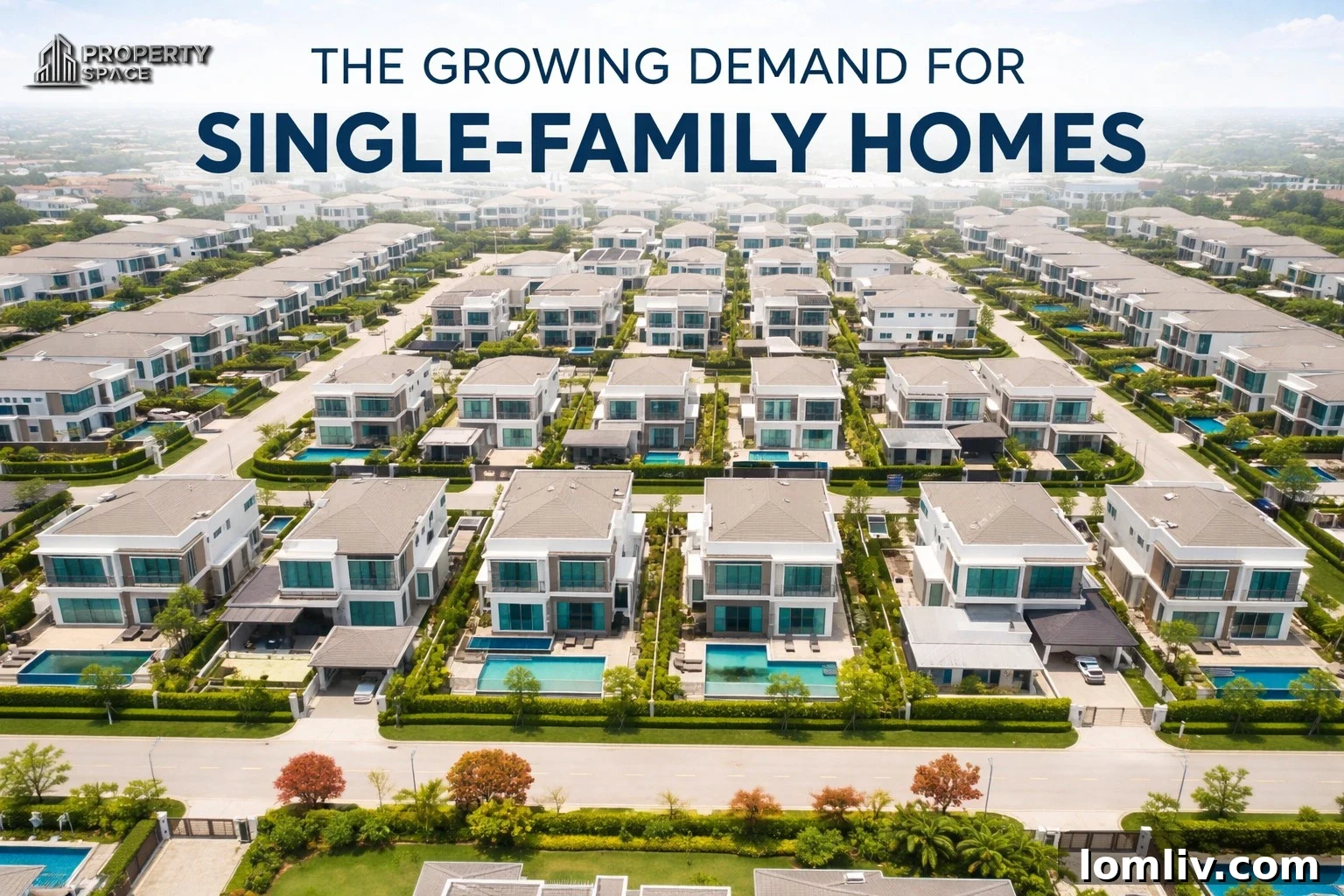
One of the most profound and noticeable transformations occurring within Pattaya’s evolving real estate landscape has been the significant and sustained growth in demand for single-family homes. This trend marks a clear departure from the historical dominance of condominium developments, primarily catering to short-term visitors or buy-to-let investors.
Individuals and families choosing to relocate for lifestyle reasons typically seek out a specific set of features and amenities that support their long-term living objectives. These preferences are distinctly different from those of short-term tourists or investors focused on quick rental yields.
They are actively seeking properties that offer:
- Ample Space and Privacy: Long-term residents, especially families, desire more living space than a typical condominium can offer. This includes larger indoor areas, private gardens, and outdoor recreational spaces, providing a sense of seclusion and personal freedom often missing in denser urban settings.
- Multi-Bedroom Layouts: Homes with two, three, or even four bedrooms are essential for families with children or individuals who require dedicated home offices, guest rooms, or hobby spaces. This directly contrasts with the efficiency-focused studio or one-bedroom units favored by short-term renters.
- Access to Gated Communities: As highlighted earlier, the appeal of gated communities extends beyond security. They often provide a secure, family-friendly environment with shared amenities like parks, playgrounds, clubhouses, and swimming pools, fostering a sense of community among residents.
- Proximity to Quality Schools: For families, access to reputable international schools is often a non-negotiable factor. Homes situated within a reasonable commuting distance to these educational institutions are highly sought after, influencing purchasing decisions and property values in surrounding neighborhoods.
- Long-Term Livability and Sustainability: Buyers are looking for homes that are not just aesthetically pleasing but also functional and sustainable for years to come. This includes considerations for build quality, maintenance ease, and integration into a stable, well-serviced neighborhood.
In stark contrast to the short-term rental market, which traditionally focuses on compact apartments situated close to bustling nightlife or tourist attractions, individuals and families making a permanent move to Pattaya exhibit a strong preference for spacious housing communities located in quieter, more suburban districts. These areas offer a more serene environment, greater safety, and better access to amenities relevant to daily life rather than just entertainment.
Savvy investors who are keenly observing the long-term trends within the Pattaya residential housing market are noting a significant surge in interest for established neighborhoods. These are areas that have been thoughtfully developed with families and retirees in mind, offering a stable and community-oriented environment, rather than fleeting attractions for passing tourists. This pivotal shift does not, by any means, signal the demise of condominium demand; instead, it strategically broadens the spectrum of housing types that people are actively seeking to purchase, diversifying the market and making it more resilient.
Infrastructure and the Eastern Economic Corridor: Catalysts for Growth
Pattaya’s strategic geographical positioning within Thailand’s Eastern Seaboard provides a fundamental explanation for its burgeoning growth and increasing appeal as a residential hub. The overarching Eastern Economic Corridor (EEC) initiative has acted as a powerful catalyst, concentrating extensive efforts and investments into upgrading and modernizing local infrastructure, thereby laying a robust foundation for sustainable development.
This comprehensive infrastructure development includes several key components:
- Industrial Modernization and Innovation Hubs: The EEC’s mandate includes transforming existing industrial zones and establishing new ones focused on high-value, technology-driven industries. This creates a powerful magnet for skilled labor, research and development centers, and foreign direct investment, generating stable, well-paying jobs that attract long-term residents.
- Advanced Transportation Networks: Beyond just highways, the EEC is investing in an integrated multimodal transportation system. This encompasses high-speed rail links connecting Bangkok to the EEC and further to regional airports, as well as extensive road networks designed to facilitate efficient movement of people and goods. These upgrades dramatically improve connectivity, making daily commutes easier and enhancing regional integration.
- Port Expansion and Logistics Enhancement: The deep-sea ports of Laem Chabang and Map Ta Phut, critical components of the EEC, are undergoing significant expansion and modernization. This enhances Thailand’s capabilities as a regional logistics and trade hub, supporting industrial growth and creating more employment opportunities in related sectors like shipping, warehousing, and trade services.
- Airport Development and Connectivity: The U-Tapao International Airport, located near Pattaya, is being upgraded into a major international aviation hub, serving both commercial and cargo flights. This expansion significantly boosts air travel accessibility for residents, tourists, and businesses, further integrating Pattaya into global networks and making it easier for expats to connect with their home countries.
As these crucial job hubs within the EEC continue to expand and diversify, a natural migration pattern emerges. People increasingly look for homes in nearby cities that not only offer convenient access to their workplaces but also boast an enhanced quality of life. Pattaya perfectly embodies this balance, benefiting immensely from its strategic accessibility to the EEC’s industrial and business centers while simultaneously offering a highly desirable coastal lifestyle, complete with beaches, recreational activities, and a pleasant climate. This unique combination makes it an irresistible choice for professionals and their families seeking equilibrium between career and well-being.
This dynamic strikingly mirrors patterns observed in mature real estate markets, particularly in the U.S., where housing demand frequently expands and shifts along major highways, transit lines, and infrastructure corridors. Investors in burgeoning metropolitan areas like Dallas and Fort Worth have witnessed remarkably similar dynamics, where significant transportation access and infrastructure development have served as primary drivers for robust suburban growth and increased residential property values over extended periods. This global parallel underscores the fundamental principles driving real estate appreciation and demand, regardless of geographical location.
Education as a Crucial Long-Term Market Indicator
The consistent growth and proliferation of quality educational institutions often serve as one of the most reliable and forward-looking indicators of a stabilizing and maturing housing market. The significant expansion of international schools across the Pattaya region has been instrumental in making the city an increasingly viable and attractive destination for international and affluent local families. Unlike transient tourists, families rarely undertake a major relocation for short-term stays; their decisions are invariably predicated on plans for residing in a location for many years, often through the entire duration of their children’s schooling.
When international education infrastructure expands robustly within a city, it typically ushers in a cascade of positive long-term trends for the housing market:
- Increased Demand for Larger, Family-Sized Homes: With families comes the inherent need for more space. This translates into a heightened demand for properties with multiple bedrooms, larger living areas, private gardens, and often, access to community amenities suitable for children. This directly fuels the single-family home market and larger condominium units.
- Stability in Rental Contracts and Longer Lease Terms: Families moving for educational purposes are not looking for short-term leases. They typically seek long-term rental agreements, often spanning multiple years, which provide landlords with predictable income streams and reduce tenant turnover costs. This stability makes residential properties particularly appealing to investors seeking consistent returns.
- Development of Community-Oriented Neighborhoods: The presence of schools acts as a natural anchor for community development. Neighborhoods surrounding international schools often evolve into vibrant, family-friendly enclaves, complete with local businesses, recreational facilities, and a strong sense of belonging among residents. This organic community growth further enhances desirability and property values.
Consequently, housing markets that are significantly driven by the needs and aspirations of families tend to exhibit fundamentally different behaviors and characteristics compared to those influenced predominantly by speculative investors or the fluctuating demands of short-term renters. Family-centric markets are typically more resilient, experience less volatility, and demonstrate more consistent, long-term appreciation, making them attractive for investors seeking stability and sustainable growth.
Affordability and Global Market Comparison
Beyond its evolving infrastructure and educational offerings, Pattaya’s relative affordability has also played a substantial role in amplifying its appeal to a global audience. When juxtaposed against numerous established coastal cities in highly developed regions such as North America, Australia, or even parts of Western Europe, the entry prices for detached homes and quality condominiums in Pattaya remain remarkably lower. For many international buyers, this presents a compelling and often unique opportunity to invest in overseas property, securing a substantial asset while simultaneously indulging in the highly coveted beach lifestyle that Thailand is famous for, often at a fraction of the cost found elsewhere.
However, it is crucial for prospective investors to understand that affordability, while a powerful draw, does not singularly guarantee robust long-term performance or a sound investment. A comprehensive due diligence process is indispensable. Investors must meticulously evaluate several critical factors before committing capital:
- Construction Quality and Standards: The longevity and value retention of a property are heavily dependent on the quality of its construction. Investors should assess the materials used, adherence to building codes, and the overall craftsmanship to ensure structural integrity and durability.
- Developer Track Record and Reputation: Researching the developer’s past projects, financial stability, and reputation for delivering on promises is paramount. A reputable developer with a history of successful projects offers greater assurance regarding quality and timely completion.
- Location-Specific Infrastructure and Amenities: Beyond the broader city infrastructure, the immediate neighborhood’s specific amenities are vital. This includes access to local roads, utilities, internet connectivity, waste management, and proximity to shops, restaurants, and medical facilities.
- Neighborhood Maturity and Future Development Plans: Understanding whether a neighborhood is established, rapidly developing, or still in its nascent stages can inform investment decisions. Insights into future zoning, planned developments, and potential growth areas can highlight opportunities or risks.
- Supply Pipeline for New Homes and Market Saturation: An oversupply of new properties can depress prices and rental yields. Investors should analyze the current and projected supply of new homes in their target area to gauge market saturation and potential future competition.
As is the case with any emerging or rapidly developing market, the investment outcomes and property performance can vary significantly from one neighborhood to another within Pattaya. Detailed, localized research and professional advice are therefore indispensable for making informed and successful investment decisions.
Key Risk Considerations for International Investors in Thailand
Purchasing property overseas inherently necessitates a scrupulous and extensive research process. International investors considering the Pattaya market, or indeed any foreign real estate market, must delve deeply into a range of specific risk considerations to mitigate potential pitfalls and ensure a secure investment. Prospective buyers should meticulously investigate:
- Legal Ownership Structures for Foreigners: Thailand’s land ownership laws restrict direct freehold land ownership for foreigners. While condominiums can be purchased freehold by foreigners (up to 49% of the building’s total area), land and detached homes are typically acquired through long-term leasehold agreements (often 30 years, renewable) or through Thai companies, each with its own complexities and legal nuances. Understanding these structures is vital.
- Land Title Verification and Due Diligence: Thorough verification of land titles is absolutely essential. This involves ensuring that the seller has clear, unencumbered ownership and that the property does not have any undisclosed liens, encumbrances, or boundary disputes. Engaging a trusted local lawyer specializing in property law is critical for this due diligence.
- Currency Exposure and Exchange Rate Fluctuations: International investors are exposed to currency risk. Fluctuations in exchange rates between their home currency and the Thai Baht can impact the actual cost of purchase, future rental income, and the ultimate proceeds from a sale. A long-term perspective and potentially hedging strategies may be considered.
- Tax Implications for Foreign Property Owners: Understanding the local tax regime is paramount. This includes property taxes (which are generally low in Thailand), income tax on rental earnings, capital gains tax on property sales, and potential inheritance taxes. Tax laws can be complex and are subject to change, requiring expert advice.
- Local Financing Accessibility and Conditions: While some international banks may offer financing for foreign property buyers in Thailand, options are often limited, and conditions can be stringent compared to domestic lending. Most foreign buyers will need to fund their purchase either through cash or by securing financing in their home country.
Unlike purely speculative markets that are primarily driven by short-term price movements and quick profits, lifestyle-driven housing demand, such as that increasingly seen in Pattaya, tends to be firmly rooted in the fundamental need for an actual place to live, whether for retirement, family relocation, or professional residency. This underlying demand often provides a more stable foundation for the market. Still, diligently conducting comprehensive homework and securing professional advice is unequivocally essential to navigating the complexities of foreign property investment successfully.
Investors are strongly advised to approach foreign housing markets with a foundation of solid, independent research and expert legal counsel specifically familiar with Thai property law before committing any financial resources. This proactive approach significantly minimizes risks and safeguards their investment.
Striking Parallels for U.S. Investors: Lessons from Texas
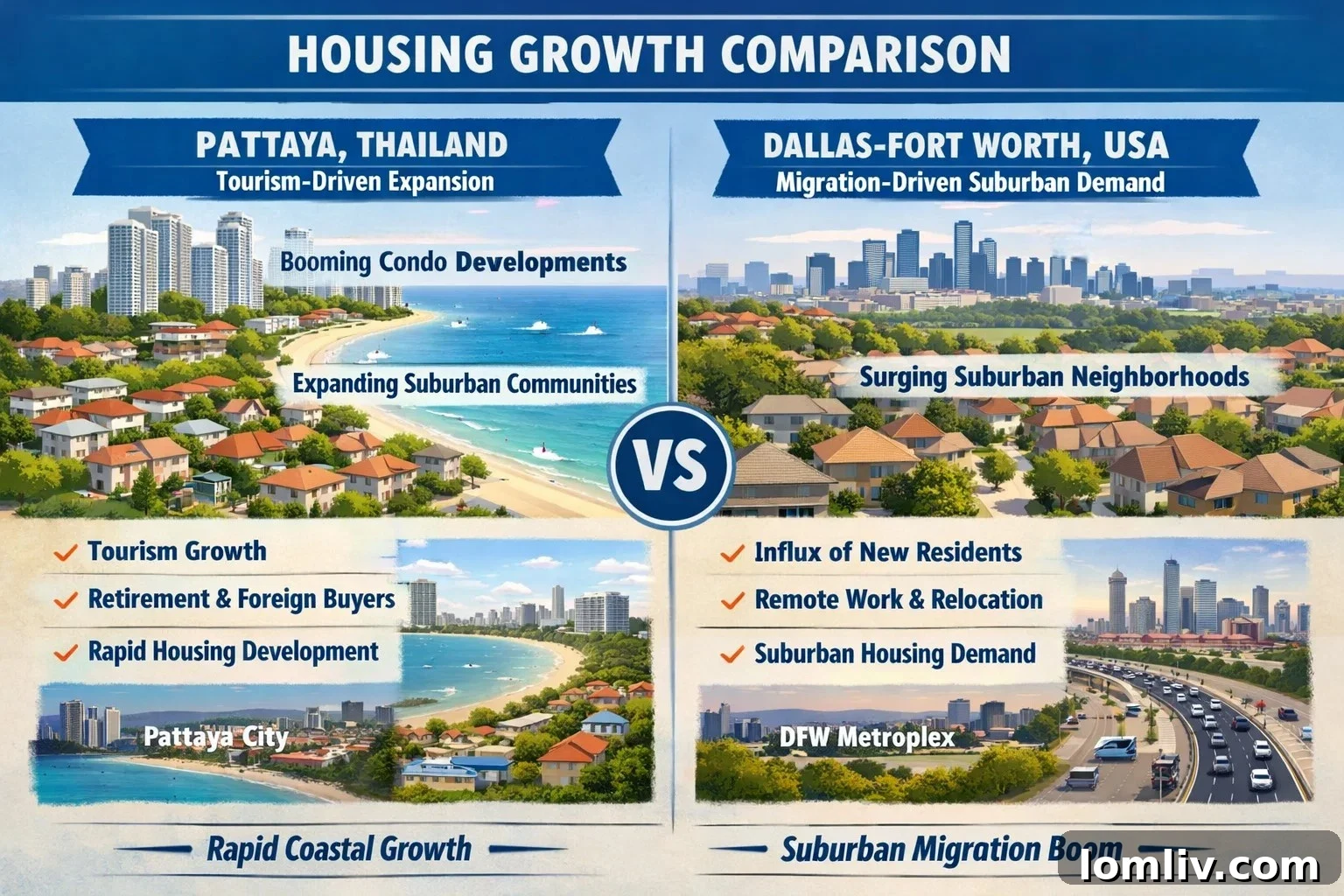
While the intricacies of property laws and regulatory frameworks undoubtedly differ between Thailand and, for instance, the state of Texas, the core principles that govern successful real estate investment and market dynamics remain remarkably consistent across continents. The fundamental rules of investing, when viewed through the lens of human behavior and urban development, are truly universal.
Key among these universal principles are:
- Migration Patterns Shape Housing Demand: Whether it’s international expats moving to Pattaya or domestic migrants flocking to Texas for job opportunities, sustained population movement is the primary engine of housing demand. Where people choose to live and work dictates where housing is needed.
- Infrastructure Supports Expansion and Growth: Just as Thailand’s EEC drives development in Pattaya, significant investments in transportation (highways, public transit), utilities, and public services are crucial for enabling urban and suburban expansion in U.S. markets like Dallas-Fort Worth.
- Education Strengthens Community Formation and Stability: The presence and growth of quality schools, both international in Pattaya and public/private in the U.S., serve as anchors for family settlement. They foster community bonds, attract long-term residents, and contribute significantly to property value stability and appreciation.
- Long-Term Residency Stabilizes Markets: Markets driven by individuals and families seeking permanent homes tend to be far more stable and resilient than those dominated by short-term speculation. Long-term residents invest in their communities, support local businesses, and contribute to a healthier, more predictable real estate environment.
The burgeoning metropolitan areas of Dallas and Fort Worth, for example, have experienced their own profound and dynamic migration-driven demand cycles over the past few decades. Fueled by corporate relocations, job growth, and a generally robust economy, these Texan cities have seen massive influxes of new residents. During periods characterized by tight housing supply and soaring demand, buyers in DFW have often encountered intense competition, bidding wars, and rapid price appreciation—trends quite similar to the highly competitive environments explored in the thought-provoking article “Buyers: Will Someone Please Sell Me a Home?”. This serves as a powerful reminder that while locations differ, human motivations and market responses often follow predictable patterns.
Ultimately, the broader lesson that resonates across all real estate markets, regardless of their specific geographic location or cultural context, is profoundly universal. It is the sustained movement of populations—the tangible decisions of individuals and families to relocate and establish new lives—rather than ephemeral market sentiment or speculative whims, that genuinely drives long-term housing performance and shapes the enduring value of real estate assets over time.
The Bottom Line: A Resilient Future for Pattaya Real Estate
Pattaya’s remarkable evolution provides a compelling case study, vividly illustrating how a city can transcend its initial economic identity, gradually shifting from an economy almost exclusively reliant on transient tourism toward a more diversified and robust residential market, firmly underpinned by the growing presence and needs of long-term residents. This transformation is not accidental; it is the culmination of strategic planning and organic growth.
A confluence of critical factors has synergistically contributed to the strengthening and maturation of Pattaya’s local housing market: sustained infrastructure expansion, significant investment in educational development (particularly international schools), the dynamic growth of new industrial sectors within the EEC, and its persistent relative affordability compared to other global coastal destinations. While no investment market is entirely devoid of risk, markets that are predominantly influenced by lifestyle migration often develop demand patterns that are inherently more stable and predictable than those found in regions driven purely by speculative investments. These markets tend to be more resilient to economic fluctuations, sustained by genuine resident needs.
For discerning investors, whether they are analyzing opportunities in the fast-paced markets of Texas or exploring the vibrant emerging economies of Southeast Asia, a fundamental principle remains one of the most reliable indicators of long-term housing demand: understanding precisely where people are choosing to live permanently, and critically, comprehending the underlying reasons for those choices. This insight into demographic movement and lifestyle preferences is paramount.
Ultimately, sustained real estate performance is inextricably linked to demographic movement. The powerful global trend of lifestyle-driven migration continues to fundamentally reshape housing markets around the world, creating new opportunities for growth and investment in cities like Pattaya that are strategically positioned to capitalize on these shifts.
We strongly encourage prospective investors to explore additional comprehensive market insights and detailed residential housing analysis, specifically tailored to their investment goals, before making any significant cross-border investment decisions. Informed decisions are the cornerstone of successful international real estate ventures.