Compass Navigates Economic Headwinds: Layoffs, Salary Cuts, and a Vision for Recovery Amid Global Crisis
In a significant move reflecting the immediate and profound economic fallout from the global COVID-19 pandemic, real estate giant Compass initiated substantial company-wide layoffs and implemented executive salary reductions. This decisive action, reported by The Real Deal, saw approximately 15 percent of its workforce impacted, signaling a proactive strategy to safeguard the company’s long-term stability.
At the forefront of these measures, CEO Robert Reffkin announced his decision to forgo his salary entirely, a powerful gesture of leadership in challenging times. Additionally, the executive leadership team collectively agreed to a 25 percent reduction in their salaries. These measures underscore a broader trend observed across numerous industries and companies nationwide, as leaders grapple with unprecedented economic uncertainty.
In a candid communication to his network of agents, Reffkin articulated the severe financial projections facing the SoftBank-backed company. He projected an anticipated 50 percent decline in revenue over the subsequent six months, a stark indicator of the pandemic’s expected impact on the real estate market. “We aren’t just facing an economic recession, we are facing an economic standstill,” Reffkin wrote, capturing the unique nature of the crisis. He expressed a cautious hope for a “V-shaped recovery,” which would denote a rapid rebound, in contrast to a more protracted and damaging extended recession.
Strategic Retraction: Scaling Back Programs and Investor Challenges
Preceding the layoff announcement, Compass had already begun to implement strategic adjustments to its operational framework. Just the week before, the firm disclosed plans to scale back its popular concierge and lending programs. These services, designed to provide comprehensive support to Compass clients, assisted with home remodelings and other preparations before property closings, enhancing the client experience and facilitating smoother transactions. The decision to reduce these programs highlighted an early recognition of the need for cost optimization and resource reallocation.
The financial backdrop to Compass’s challenges was further complicated by developments at its primary investor, Japan’s SoftBank Group Corp. SoftBank, a pivotal financial backer, had contributed over a third of the impressive $1.5 billion raised by Reffkin for Compass. However, SoftBank itself faced significant pressures. As reported by the Wall Street Journal, the conglomerate announced its intention to sell billions of dollars in assets. This aggressive divestment strategy aimed to bolster plummeting stock prices and strengthen its debt-laden balance sheet, particularly in the face of a looming ratings downgrade. This period marked a critical juncture for SoftBank, which, until recently, had been renowned as one of the most audacious providers of capital to the world’s burgeoning “billion-dollar unicorns,” including high-profile ventures like the office-sharing company WeWork and ride-hailing giant Uber Technologies. The difficulties faced by its key investor added another layer of complexity to Compass’s financial calculus.
Agent Perspectives: Understanding and Adapting to Corporate Shifts
Upon news of these significant organizational changes, the Dallas Compass office was contacted for an immediate comment. Haley Bookout, Compass Public Relations, responded concisely, stating, “We don’t have anything beyond what has been shared in The Real Deal to share at this time.” This indicated a coordinated communication strategy from the corporate level.
A company-wide teleconference call was scheduled for all Compass agents with CEO Robert Reffkin, providing a direct channel for communication and clarification regarding the future direction of the company. Feedback from various agents indicated a prevailing understanding and even approval of Reffkin’s decisive actions. Many agents view Reffkin as a shrewd business leader and recognized the necessity of reining in expenses during a period characterized by an abundance of unknowns, especially concerning the stability of the high-end real estate market, a segment where Compass frequently operates.
It is crucial to understand that real estate agents typically operate as independent contractors, running their own businesses and earning income through commissions. Consequently, many agents anticipated being largely insulated from the direct impact of corporate-level cuts. The primary areas where they might feel an effect would be through any temporary reductions in branding and marketing financial assistance that the company might implement. This distinction highlights the unique symbiotic relationship between a brokerage like Compass and its network of independent agents, where corporate stability indirectly supports agent success, even if direct employment ties are limited.
Robert Reffkin’s Message: Reality, Vision, and the Path Forward
In a comprehensive letter circulated to agents, a copy of which was obtained by Inman News, Robert Reffkin offered a transparent and detailed account of the situation, outlining his leadership philosophy grounded in reality, vision, and a clear path to achievement.
Grounding in the Current Reality
Reffkin commenced by acknowledging the unprecedented challenges posed by the Coronavirus pandemic, describing it as “one of the most challenging and uncertain moments in our lifetimes.” He underscored the swift and far-reaching economic repercussions, noting that the stock market’s 30% drop in just 22 days was faster than any decline in the Great Depression, wiping out trillions in wealth. For Compass, early data already revealed a significant impact, with a more-than-60% decrease in showings. With the widespread adoption of “shelter in place” policies, a much larger decrease was anticipated, leading to the forecast of a 50% revenue decline over six months. He cited China’s experience, where transactions plummeted by 80-90% at the peak of their outbreak under more restrictive social distancing measures, as a potential indicator of what could transpire.
Reffkin reiterated that the situation transcended a mere economic recession, characterizing it instead as an “economic standstill,” where substantial parts of the economy would remain dormant for months. This, he predicted, would lead to an unprecedented surge in unemployment, potentially exceeding 10% in a single month. While hoping for a swift “V-shaped recovery,” he emphasized that “hope” alone was not a viable strategy, necessitating a robust plan.
Proactive Measures and Difficult Decisions
In response to this grim reality, Compass had already taken significant steps to mitigate costs. These included an 80% scaling back of the Compass Concierge program, a complete shift to virtual service delivery, a halt to corporate marketing expenditures, substantial reductions in general corporate expenses and office costs, and the pausing of all non-essential projects. Reffkin’s personal decision to reduce his salary to zero and the executive team’s 25% salary cut further solidified the company’s commitment to shared sacrifice.
However, Reffkin conveyed the painful necessity of making an even more difficult decision. Acknowledging the need for caution and foresight, even while hoping for the best, he stated, “we need to prepare for the worst.” This led to the “heartbreaking decision” to lay off approximately 15% of Compass employees. He praised those departing as “passionate, talented professionals” who were leaving “through no fault of their own.” Compass committed to supporting these individuals with enhanced severance packages, COBRA health insurance, the retention of company laptops, and access to premium tools, training, and networking opportunities to assist them in securing new employment, even within a challenging market. Reffkin also expressed a desire to rehire as many of them as possible once normalcy returned.
A Resilient Vision for the Future
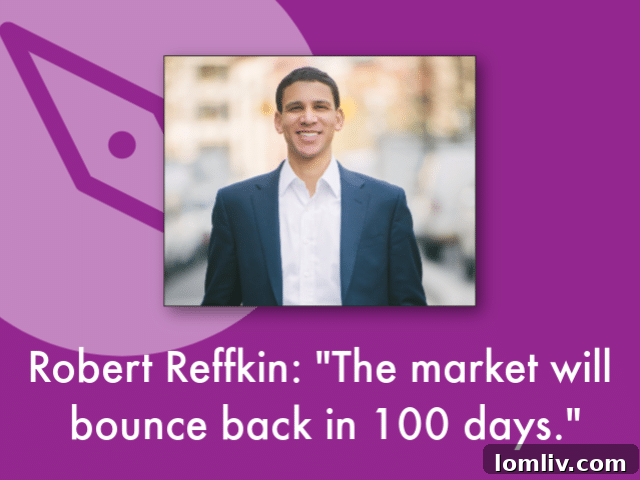
Despite the current upheavals, Reffkin affirmed that Compass’s core vision remained steadfast: “creating the single platform for real estate to empower agents to realize their dreams and best serve their buyers and sellers. Helping everyone find their place in the world — no matter how our world changes.” He maintained a guarded optimism, believing that “in 100 days the real estate market will bounce back and our customers, company and country will be climbing its way out of a recession.”
Strategy for Recovery and Long-Term Strength
Reffkin articulated a clear strategy for navigating the crisis, assuring that the difficult decisions made today would secure the company’s future. He highlighted Compass’s strong financial position, emphasizing its “strong cash position, $0 of debt and a proven business model.” This financial fortitude instilled confidence in the company’s ability to “weather this storm and bounce back stronger,” positioning Compass not just to survive but to “thrive as the economy rebounds.”
He underscored that Compass’s seven years of strategic investments, particularly in its technological platform, innovative tools, solutions-driven approach, and a culture centered on empowering customers, had uniquely prepared it for an environment like this. In the preceding weeks, Compass had seamlessly transitioned to virtual sales meetings for thousands of agents, hosted national agent calls with leading economists and bankers, and rapidly launched new video-based training programs. These initiatives were designed to empower agents to sustain and even grow their businesses despite market slowdowns. The company also boasted real-time, chat-based support, extensive IT support, online tools for scheduling with Agent Experience Managers, remote desktop access, and streamlined online payment and onboarding processes.
Reffkin asserted that while many brokerages would likely cease new development during the crisis, Compass, with its industry-leading technology team, would continue to enhance its platform daily. This commitment ensures that Compass would deliver unparalleled value to its customers, distinguishing itself from competitors both during and beyond the crisis.
A Broader Perspective and Message of Hope
Concluding his powerful message, Reffkin placed Compass’s challenges within the larger context of a world being tested. He reminded everyone of the paramount importance of health and loved ones. Yet, he conveyed an unwavering belief in resilience, recalling humanity’s triumphs over past recessions, depressions, natural disasters, world wars, and global pandemics. Drawing inspiration from China’s apparent success in curbing the Coronavirus spread and restarting its economy, he expressed hope for a similar blueprint for the future. He also found encouragement in the collective spirit and actions of people within Compass and across society stepping up during this challenging period.
Reffkin ended by urging continued self-care, support for families, loved ones, and communities, and extended an open invitation for any employee needing support to reach out to their people & culture partner, manager, or directly to him.