The Battle for White Rock Lake: Public Space, Development, and Community Voices in Dallas
The proposed restaurant at Boy Scout Hill has ignited a fervent debate, drawing passionate arguments from all corners of Dallas. While you may have already delved into numerous post-mortems of the infamous town hall meeting that took place last month, a recent column by Eric Celeste in D Magazine offers a crucial external perspective. Titled “Whose Lake is it Anyway?”, Celeste’s piece is essential reading for residents of Old Lake Highlands and other neighborhoods adjacent to White Rock Lake. It provides a mirror, reflecting how this contentious issue is perceived by those looking in from the broader Dallas community, offering valuable insight into the city’s complex relationship with its cherished public spaces.
At its core, the controversy highlights a stark contrast in vision for one of Dallas’s most treasured natural assets. Developers Lyle Burgin and Richard Knopf envisioned a contemporary restaurant atop what they perceived as an underutilized segment of White Rock Lake Park, aiming to introduce a new amenity that could enhance visitor experience and potentially generate revenue. However, for local residents, particularly those in the immediate vicinity, this proposal wasn’t just development; it was seen as an “abominable incursion” on a cherished public space. They viewed it as a perilous “slippery slope” towards commercialization, fearing it would transform the “Crown Jewel of Dallas” into a privately-managed amusement park rather than preserving its natural, communal appeal.
Clashing Perspectives: An Outsider’s View vs. Local Residents’ Outcry
Eric Celeste, a downtown Dallas resident, offers a perspective shaped by distance but rooted in a deep love for the city’s landmarks and public amenities. He articulates a common sentiment among many Dallasites who might have initially welcomed such a restaurant, viewing it as a potentially beneficial addition to the lake’s offerings – perhaps a scenic dining spot or a new community gathering place. Celeste expresses palpable frustration with what he perceived as the “torch-bearing homeowners” from the adjacent neighborhoods dictating terms, questioning their exclusive right to decide the lake’s future. His initial reaction was one of skepticism towards the residents’ motives, emphasizing that White Rock Lake, as a public asset, belongs to all Dallas citizens, not solely to those living nearby.
” … I believe many Dallasites would have welcomed the restaurant. And my initial thought was that these torch-bearing homeowners don’t speak for me and aren’t interested in hearing answers to their questions, so why do they get to decide? They don’t own the lake.
Sure, their house values are directly tied to what happens in and around the lake. They have a greater stake in its day-to-day activity than I do. But they don’t have exclusive rights to it, no more than I have exclusive rights to Klyde Warren Park just because I live within walking distance. So, as a longtime Dallasite who loves the lake (objectively, it’s a crap lake, but it’s our crap lake), I was appalled by the vitriol and closed-mindedness on display.”
[Emphasis added.]
Celeste’s acknowledgement of residents’ “greater stake” due to their property values is a pivotal point, recognizing the legitimate financial and lifestyle investments made by those living in the lake’s proximity. Yet, he firmly draws a line at the assertion of exclusive rights. He skillfully uses the analogy of Klyde Warren Park, a popular downtown green space, to illustrate his point: just as living near a public park does not grant one exclusive decision-making power, so too should proximity to White Rock Lake not equate to sole ownership. His account paints a vivid picture of a town hall characterized by “vitriol and closed-mindedness,” highlighting the intense emotional charge and deep-seated disagreements that defined the public discourse surrounding the proposal.
The Undeniable Link Between White Rock Lake and Property Values
Indeed, Celeste’s observation about property values strikes a profound chord, resonating with the economic realities of Dallas real estate. The allure of White Rock Lake undeniably contributes significantly to the desirability and market value of homes in surrounding neighborhoods. For many, the decision to purchase a home in areas such as Lake Park Estates, Eastwood, Old Lake Highlands, Emerald Isle, Forest Hills, and Little Forest Hills is inextricably linked to the added prestige, recreational opportunities, and enhanced lifestyle benefits of a lake-area address. A quick scan of real estate listings in these communities often reveals “close to White Rock Lake!” prominently featured in the summary, serving as a powerful and enticing selling point that commands a premium.
This proximity is not merely a convenience; it’s a premium feature that homeowners invest in, and naturally, they develop a heightened sense of stewardship and protectiveness over the lake. Thus, while residents may not have exclusive legal ownership, their profound connection to White Rock Lake is multifaceted. It’s about the daily enjoyment of its trails, the recreational opportunities for sailing, kayaking, and fishing, and the intrinsic value it adds to their lives and financial investments. Protecting the lake and maintaining its pristine condition isn’t just an abstract ideal; it’s a tangible concern that impacts their immediate environment, community identity, and financial well-being. This perspective underscores why any proposed development, especially one that risks altering the lake’s character or accessibility, is met with such intense scrutiny and passionate opposition from the local populace.
Greg Brown’s Rebuttal: Beyond Property Values, Towards Public Preservation
However, the narrative that residents’ opposition is primarily driven by property value concerns is staunchly challenged by articulate local advocates like Greg Brown from Old Lake Highlands. Brown, whose insightful statements resonated across various media outlets, emphasizes a more profound motivation: the preservation and enjoyment of a vital public resource for all Dallas citizens, not just a select few, for generations to come. When directly asked if he was concerned about development at the lake affecting the value of his Old Lake Highlands home, Brown’s response was unequivocal, pushing back against the notion that financial self-interest was the primary driver of the community’s resistance.
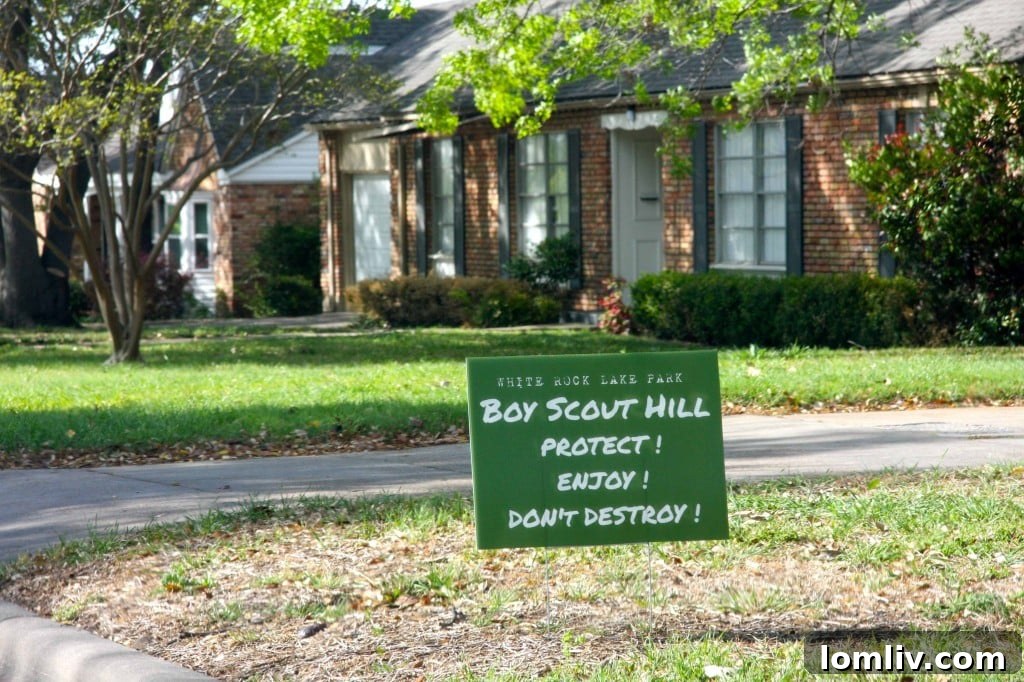
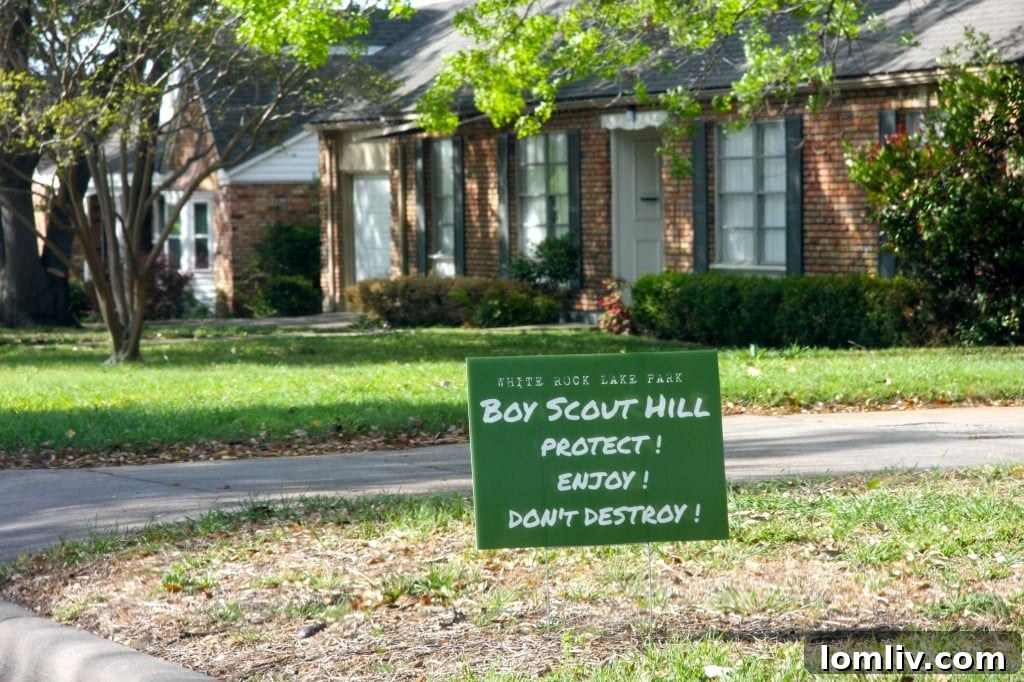
This is not about my property values. I would not even know where to begin to understand how it would affect that. This really confused the developers who thought our issue would be money and PV’s. This is not about money. It is about protection and enjoyment of a public park and keeping it protected so that all citizens of Dallas can enjoy it in the future. It is about placing an additional burden on a lake that is already overcrowded on a nice day with walkers, runners, cyclists, picnickers, fishers, and doggists. I count myself within three of those avocations.
This is not NIMBY. This about all of the citizens of Dallas being able to use the Lake. However, our neighborhood is close to the lake and therefore we have an obligation to look after it. I imagine the property owners around Lake Fork and other lakes do the same thing. I don’t go to Lake Fork that often but I sure hope that there is an association that advocates for its care and sustainable use. Don’t you?
Unlike our concerns, the concerns of the developers are about one thing: the easiest way to make money. And I admire them for their audacity on this one. 1) Build a restaurant on the condition that you get the overwhelming proceeds, but throw out a little to some local groups to display your generosity 2) Let the city own and operate it (Do we want our city in the restaurant business now?) 3) Let the money roll in with no risk or real work on the part of the developers. 4) If the restaurant goes under, the developers suffer nothing, the city is saddled with a defunct property, and the citizens of Dallas pay for it. The result is three acres of green space are taken away from the citizens of Dallas, and the most beautiful view of the lake and downtown now has to be paid for to be enjoyed along with some greasy nachos and overpriced margarita
Now you get why there were jeers and sneers? This is the Old, Old Dallas way of doing things. The presenters had no idea of the dynamics of our neighborhood or the passion we have for the lake. It is obvious that they have been so engaged in group think that they were thrown for a loop when people actually questioned their ideas and motives. The meeting was about as civil as one could expect when presented with such a vague yet ludicrous proposal. Anyone who expects a black and white 50’s movie civil discourse is living in a dream world. This is how you convince your elected officials that you mean business. Do you think Sheffie’s mind would have registered anything else? Do you think the developers would have been able to spin it to a “rousing support by the community” had the mention of passionate incivility not been there? People are getting fed up with the fait accompli of rich old white men. Social networking makes it easier to rally and assemble resistance (just ask the entire Middle East). I will no longer settle for the status quo of under the table dealings. I will hold our elected representatives accountable. Now is not a good time to try to get an under the table deal done in this neighborhood.
Back to your original question. I do not care about my property values related to the proposed restaurant. PV’s are going up in OLH because the neighborhood is changing, the old wave is leaving and the new wave is coming in. And they are more connected and more passionate about their neighborhoods than ever before.
Debunking the “NIMBY” Label: A Call for Collective Stewardship of White Rock Lake
Brown directly confronts the “Not In My Backyard” (NIMBY) accusation, arguing forcefully that the residents’ concerns extend far beyond their immediate vicinity. He frames their role as guardians of a vital public resource, fulfilling an “obligation to look after” the lake precisely because of their proximity, much like communities around other cherished natural assets. This isn’t about exclusive use or selfish interests, but about ensuring equitable access and sustainable enjoyment for everyone in Dallas. His thoughtful comparison to Lake Fork, where he hopes associations advocate for its care, highlights a universal desire for responsible stewardship and community-led preservation of public resources across Texas.
Unveiling Developer Motives: A Critique of the Business Model
Brown then pivots to a scathing critique of the developers’ perceived business model for the White Rock Lake restaurant, dissecting it into a four-point plan he characterizes as audacious and overtly self-serving. He suggests the proposal was designed to yield “overwhelming proceeds” for developers with minimal personal risk, while strategically offloading significant operational burdens onto the city and potential financial risk onto Dallas taxpayers. The potential outcome, as he vividly envisions it, is the irreversible loss of precious green space and the commercialization of a priceless natural view, effectively turning a public enjoyment into a paid experience associated with “greasy nachos and overpriced margaritas.” This vivid and somewhat provocative imagery powerfully captures the essence of the residents’ deepest fear: the erosion of public commons for the exclusive benefit of private commercial gain.
The Passionate Discourse: A Necessary “Shout Fest” for Civic Engagement?
The “jeers and sneers” that conspicuously characterized the infamous town hall meeting are, in Brown’s compelling view, a direct and understandable consequence of a deeply flawed proposal and a perceived disconnect from the intricate dynamics and profound passion of the local community. He dismisses the expectation of a “black and white 50’s movie civil discourse” as utterly unrealistic, especially when citizens are confronted with what he describes as a “vague yet ludicrous” plan that threatens a beloved public asset. For Brown, the intensity of the residents’ reaction was not merely undirected anger; it was a deliberate, strategic, and necessary display of conviction designed to signal unequivocally to elected officials that the community “mean[s] business.” He posits that without such passionate “incivility,” the developers might have successfully spun the meeting as having garnered “rousing support by the community,” thereby undermining legitimate concerns. This perspective underscores a fundamental, albeit sometimes uncomfortable, aspect of grassroots activism: sometimes, a certain level of disruption is necessary to ensure that voices are heard and concerns are genuinely registered by those in power.
The Power of Community and Accountability in Modern Dallas
Brown’s insightful analysis extends to the broader sociopolitical landscape of modern Dallas. He identifies a growing frustration among citizens with a perceived “fait accompli of rich old white men” and an awakening spurred by the ubiquitous reach of modern social networking, which significantly facilitates collective resistance and rapid community mobilization. His unwavering commitment to holding “elected representatives accountable” reflects a palpable shift in civic engagement, where citizens are increasingly less willing to accept “under the table dealings” and challenge the prevailing status quo. This newfound connectivity and heightened passion, he argues, is fundamentally reshaping neighborhoods like Old Lake Highlands, bringing in a “new wave” of residents who are “more connected and more passionate about their neighborhoods than ever before.” This dynamic new wave, according to Brown, is independently driving property values upwards due to inherent neighborhood desirability and revitalization, further reinforcing his core assertion that the fight for White Rock Lake transcends mere personal financial gain and is deeply rooted in public interest.
The Future of White Rock Lake: A Dialogue on Values and Vision for Dallas
The debate over the proposed development at Boy Scout Hill on White Rock Lake transcends a simple restaurant proposal. It embodies a larger, more profound conflict over the very identity, character, and future of Dallas’s most beloved “Crown Jewel.” It pits the imperatives of economic development against the principles of environmental preservation, the ambitions of private enterprise against the fundamental right to public access, and differing visions of civic responsibility. As Dallas continues its rapid growth and urban evolution, how it chooses to manage its most cherished public spaces, particularly one as iconic and historically significant as White Rock Lake, will undoubtedly define its character for generations to come. The passionate and often divergent voices from both sides of this debate serve as a powerful and enduring reminder of the deep emotional, historical, ecological, and practical significance of these shared treasures. The critical question remains: what path forward will best serve the diverse needs and aspirations of all Dallasites, ensuring White Rock Lake remains a truly public amenity, accessible and enjoyable for everyone, while responsibly balancing progress with preservation?