Opendoor Exclusives: Revolutionizing Home Transactions with a Peer-to-Peer Marketplace
In an era defined by digital disruption, the real estate industry stands on the precipice of profound change. Just as Craigslist once shook the foundations of traditional newspaper classifieds, offering a free, peer-to-peer platform that redefined buying and selling, Opendoor is now poised to challenge the long-established Multiple Listing Service (MLS). The recent expansion of Opendoor Exclusives into a comprehensive peer-to-peer managed marketplace signals a bold new direction for the iBuyer giant, aiming to fundamentally reshape how homes are bought and sold across the nation. This move sparks critical questions about the future of traditional real estate models and the role of intermediaries in what is often the largest transaction of a person’s life.
Opendoor, a leading innovator in the iBuyer space, officially announced the significant broadening of its Opendoor Exclusives program. This initiative, which initially offered pre-market listings directly owned by the company, now empowers a wider ecosystem of sellers and buyers. The announcement comes at a pivotal and challenging time for Opendoor, following substantial workforce reductions. Less than 24 hours prior to unveiling the expanded Exclusives platform, the company revealed an 18 percent cut in its workforce, impacting approximately 550 employees. This follows an earlier round of layoffs in 2022, which saw 830 workers depart. These strategic, albeit difficult, decisions precede the company’s crucial third-quarter earnings call, highlighting a period of intense restructuring and adaptation.

Addressing these organizational changes, Opendoor co-founder and CEO Eric Wu shared insights into the company’s rationale. In a heartfelt blog post, Wu stated, “We did not make the decision to downsize the team today lightly but did so to ensure we can accomplish our mission for years to come. And while we may be navigating a once-in-forty-year market transition, it doesn’t take away the difficulty, frustration, and sadness downsizing brings.” These words underscore the significant economic headwinds the company, and indeed the broader housing market, has been facing, making the strategic pivot to a managed marketplace even more remarkable.
Opendoor Exclusives: Pioneering an “Amazon-Like” Experience in Real Estate
Despite the recent workforce adjustments, Opendoor champions the expansion of its Opendoor Exclusives program as a revolutionary step forward. The company’s vision is clear: to deliver an “Amazon-like, modern way to buy and sell a home,” transforming what has traditionally been perceived as a complex, often cumbersome process akin to navigating outdated classifieds. According to Opendoor, this platform is designed to “avoid the hassle of the traditional real estate model” and create a seamless, efficient buying and selling experience.
The core innovation lies in the platform’s ability to empower sellers with unprecedented choice and control. Sellers can now receive and evaluate offers not only from Opendoor directly but also from a diverse network of investors and retail buyers. This multi-offer approach significantly broadens a seller’s options, moving beyond the traditional single-agent, single-listing model. Wu elaborated on these benefits, emphasizing, “Homeowners can request an offer from our network of buyers, on top of an Opendoor offer, and sell in minutes without the need for repairs, extensive home prep, or months of open houses or listings. The experience end-to-end is designed to put home sellers in control, with no upfront commitment, flexibility to close early, and certainty of close.” This promise of speed, convenience, and certainty directly addresses many of the pain points associated with conventional home sales, such as the anxiety of showings, the costs of staging and repairs, and the unpredictable timeline to closing.
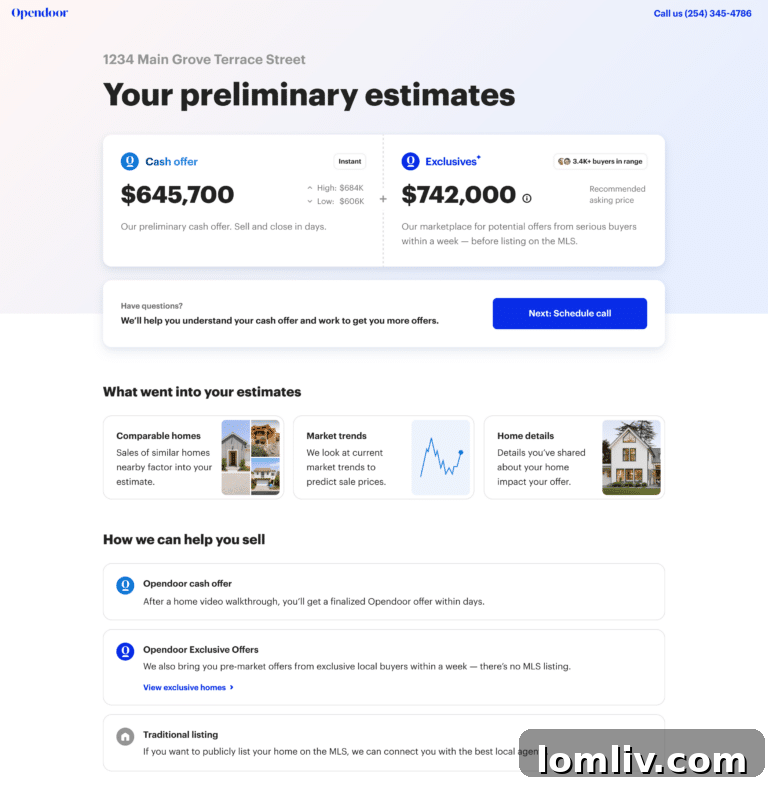
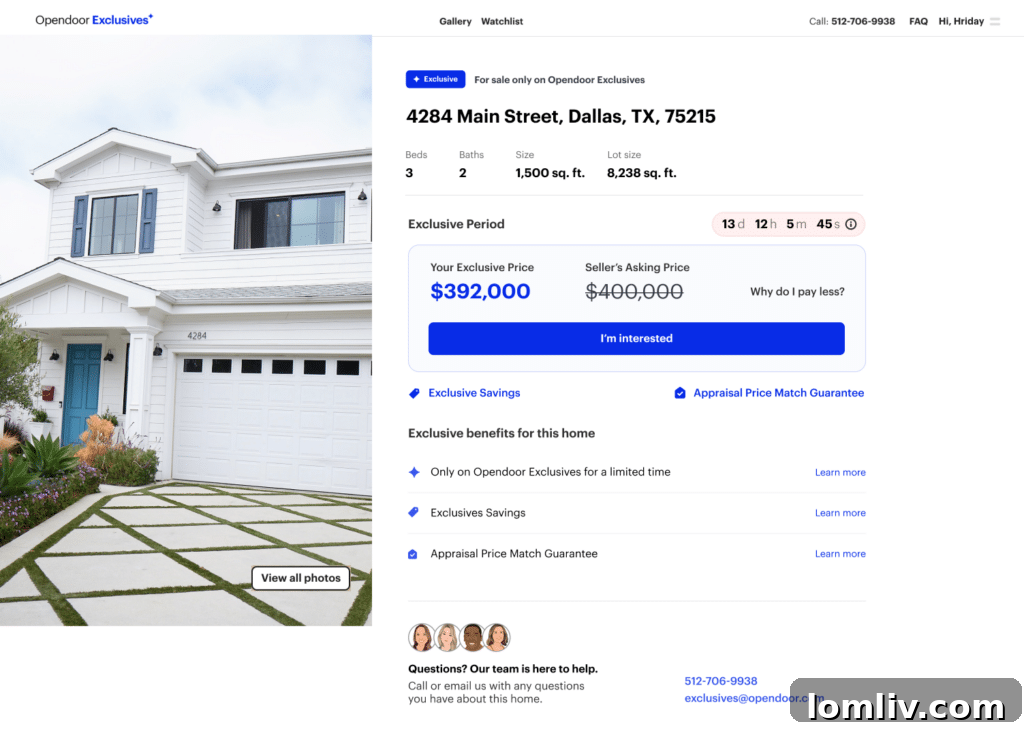
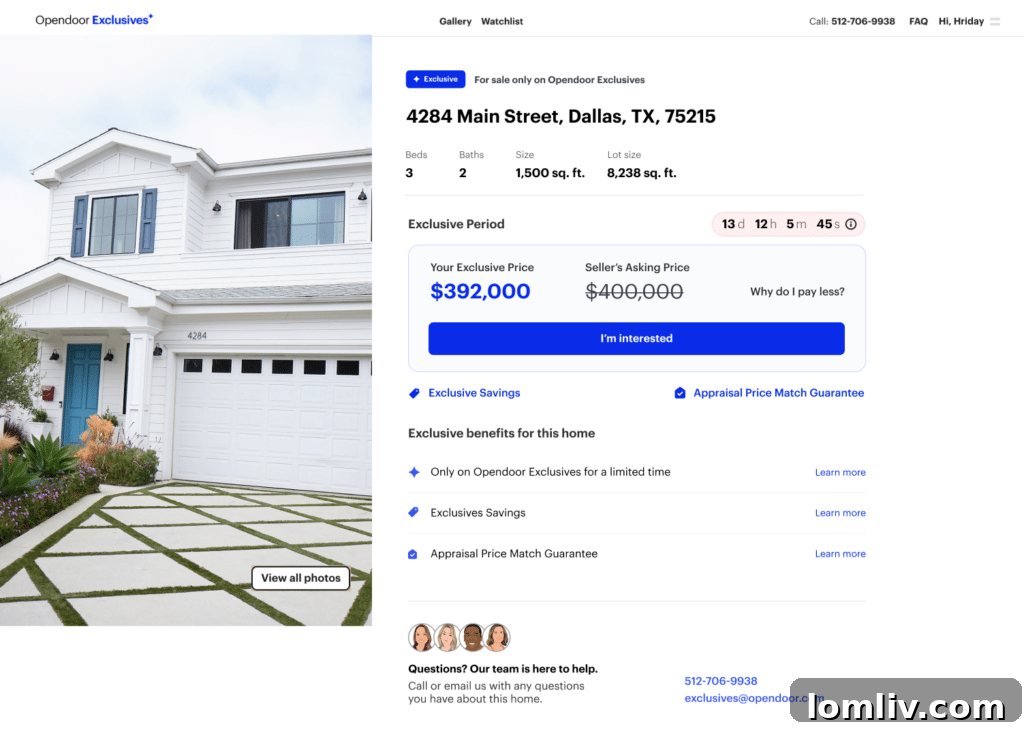
For buyers, the Opendoor Exclusives platform offers a distinct advantage: early access to properties. Users gain the ability to browse and consider Opendoor Exclusives before these listings even appear on the Multiple Listing Service. For properties directly owned by Opendoor, the process is streamlined further, allowing buyers to reserve their desired home directly within the app. In cases where the property is seller-owned, buyers can submit their offers through the platform, giving sellers the opportunity to evaluate and select the most suitable bid. This digital-first approach transforms the often opaque and lengthy property search into a more transparent and immediate experience.
A crucial element enhancing buyer confidence on the platform is Opendoor’s Appraisal Price Match Guarantee. This policy addresses a common concern in real estate transactions: what happens if the agreed-upon purchase price exceeds the property’s appraised value? Opendoor’s commitment provides a safety net:
“If you are financing the purchase of an Opendoor-Owned Exclusive and the appraised price of the property is lower than the purchase price, we will reduce the purchase price to the appraised price, up to a maximum purchase price reduction of $50,000, so long as: (a) your lender is a duly licensed residential mortgage lender, (b) you provide us with an appraisal for the property from your lender that is dated no earlier than the executed date of the purchase contract, and (c) your lender used an independent, licensed appraiser retained through an appraisal management company to generate the appraisal.”
This robust price match policy, applicable to all aspects of the purchase except financing agent commissions, significantly mitigates the financial risk for buyers, especially in a fluctuating market. It underscores Opendoor’s effort to instill trust and predictability in its direct-to-consumer model, aiming to make homeownership more accessible and less daunting.
Is Opendoor Exclusives Signaling the End of the MLS?
The introduction of this peer-to-peer managed marketplace represents a radical departure from the long-standing norms of the traditional real estate market. For decades, the Multiple Listing Service (MLS) has been the undisputed cornerstone of home marketing, primarily accessed and managed by licensed real estate professionals. The MLS facilitates cooperation among agents, provides comprehensive property data, and ensures broad market exposure. However, Opendoor’s iBuyer model, now aggressively expanding into a full marketplace, aims to bypass this established system entirely, posing a direct challenge to its foundational role.
Opendoor’s leadership firmly believes in the transformative power of their new approach. Eric Wu articulated this vision, stating, “Our belief is that by building a better, more efficient, and more transparent system, we can improve the outcomes for both buyers and sellers. Marketplaces have the unique ability to layer in more trust, simplify the process, and eliminate much of the complexity, opacity, and cost. We intend to do just that for real estate.” This vision points to a future where real estate transactions are characterized by directness, speed, and reduced friction, potentially cutting out layers of traditional costs and intermediaries.

However, this streamlined model also raises significant questions regarding consumer protection and professional representation. While Opendoor focuses on convenience and efficiency, critics argue whether this approach truly serves the best interests of individuals making what is often the largest financial transaction of their lives. This is precisely where the value of licensed real estate professionals has traditionally been undeniable. Realtors guide clients through complex negotiations, navigate legal intricacies, provide invaluable market insights, and act as trusted advocates, ensuring their clients’ best interests are paramount.
Kevin Caskey, a respected leader in the Dallas-Fort Worth real estate community and with Halo Group Realty, voiced these concerns directly. “Avoiding the ‘hassle of the traditional real estate model’ leaves buyers and sellers unrepresented by real estate professionals that ensure their best interest,” Caskey warned. His perspective highlights a critical tension: the trade-off between the undeniable convenience of a tech-driven platform and the personalized expertise and fiduciary duty offered by a seasoned agent. In a market where a buyer or seller might lack deep understanding of property values, legal contracts, or negotiation tactics, professional representation can be invaluable, potentially preventing costly mistakes or ensuring a more favorable outcome.
Market Momentum, Ambitious Targets, and Financial Realities
Opendoor’s decision to expand the Exclusives program into a full marketplace is largely fueled by its impressive initial success in key markets. The press release proudly highlighted the program’s strong performance in Dallas-Fort Worth and Austin, where it has facilitated over $100 million in real estate transactions. Furthermore, approximately 20 percent of all offers on homes in these regions have been made through the Opendoor Exclusives platform, demonstrating significant user adoption and market penetration. These statistics underscore the appetite among consumers for alternative, more direct ways to engage with the real estate market.
Buoyed by this regional success, Opendoor harbors ambitious aspirations for its new venture. Wu articulated these goals with confidence: “While our offices aren’t above a loud Irish pub anymore and though we’ve just launched, we are being bold with our ambition – aiming for over 30 percent of our total transactions via our Exclusives marketplace by the end of 2023 and be on the path to helping the next 250,000 customers. More importantly, we are aiming to change how the entire real estate system works for the better.” These targets reflect not just a desire for market share, but a deeper commitment to fundamentally re-engineer the real estate experience for a quarter-million more customers, driving systemic change across the industry.
However, the path to revolutionizing real estate is rarely smooth, and Opendoor has faced significant financial hurdles. An important update from Inmanreports revealed a substantial financial setback for the company. During its third-quarter 2022 earnings call, Opendoor announced a staggering loss, signaling the volatile nature of the iBuyer model in a shifting market.
In total, Opendoor suffered a net loss of $928 million between July and September, the company’s earnings report shows. That’s up from a loss of just $57 million during the third quarter of 2021. However, Opendoor’s revenue did jump 48 percent year over year, from about $2.3 billion in the third quarter of 2021 to about $3.4 billion this year.
In a shareholder letter, Opendoor attributed $573 million of its net loss to “inventory valuation adjustments,” or in other words the reduced value of the homes Opendoor has in inventory. The letter states that excluding this forward-looking adjustment, adjusted net loss was $328 million, compared to $18 million a year ago.
Inman
This nearly $1 billion net loss, significantly higher than the previous year, underscores the immense challenges faced by iBuyers in a rapidly cooling housing market. The term “inventory valuation adjustments” is crucial here, referring to the depreciation in value of homes that Opendoor had purchased and held in its inventory. As interest rates rose and buyer demand softened, the market value of these properties declined, forcing Opendoor to mark down their worth. This highlights a fundamental risk of the iBuyer model: while it offers liquidity to sellers, it also exposes the iBuyer to significant market fluctuations and inventory risk. Despite this substantial loss, the accompanying revenue jump of 48 percent year-over-year indicates that Opendoor was still facilitating a high volume of transactions, even if many were at a reduced profit margin or a loss due to market conditions. This complex financial picture reinforces the narrative of a company navigating a “once-in-forty-year market transition,” strategically adapting its business model while absorbing significant costs.
The Future of Home Transactions: Convenience vs. Traditional Protection
Opendoor’s expansion of its Exclusives program into a comprehensive peer-to-peer marketplace marks a watershed moment for the real estate industry. By offering a direct, streamlined, and tech-enabled pathway to buying and selling homes, Opendoor is not just innovating; it’s actively challenging the established order of the MLS and the traditional role of real estate agents. The appeal of speed, convenience, and direct control for consumers is undeniable, especially in a world accustomed to instant gratification and seamless digital experiences.
However, this evolution also sparks vital debate about the enduring value of human expertise and professional representation in high-stakes transactions. While the “hassle” of traditional real estate can be frustrating, the guidance and advocacy of an agent often provide crucial protection and peace of mind. The financial realities, as evidenced by Opendoor’s recent losses, also highlight the inherent risks and complexities of real estate, even for tech-driven giants.
Ultimately, the success of Opendoor Exclusives and similar platforms will likely hinge on their ability to consistently deliver transparency, fairness, and trust, while addressing consumer needs in an ever-evolving housing market. Whether this peer-to-peer model completely supplants the MLS or leads to a more integrated, hybrid approach remains to be seen. What is clear, however, is that the real estate landscape is in a dynamic state of transformation, with consumers at the forefront of choosing how they navigate the exciting, yet challenging, journey of homeownership.