Opendoor’s Bold Vision: Reshaping the Real Estate Landscape with iBuying and Unprecedented Guarantees
The real estate industry stands at the precipice of a monumental transformation, redefining how homes are bought, sold, and marketed, and fundamentally altering the compensation structures for real estate professionals. This dynamic shift is largely driven by innovative companies leveraging technology to streamline processes and empower consumers with unprecedented control and flexibility. Among these pioneers, Opendoor is leading the charge, not just by offering a faster way to sell a home, but by fundamentally rethinking the entire transaction experience, from purchase to post-sale support.
While various players are contributing to this disruption – for instance, flat-fee brokerage models like Door, founded by Alex Doubet, have garnered significant attention for challenging traditional commission structures – Opendoor distinguishes itself with an ambitious, technology-centric approach that promises a comprehensive overhaul of real estate transactions. The industry, often perceived as resistant to change, is now experiencing an accelerating pace of innovation, far surpassing the evolutionary changes seen in sectors like the automotive market.
Opendoor’s Revolutionary iBuying Model: A Silicon Valley Powerhouse
Opendoor, a boldly conceived Silicon Valley startup, has been a central figure in this real estate revolution. Heavily funded by prominent Bay Area venture capital firms, including its largest shareholder, the formidable Khosla Ventures, Opendoor has amassed approximately $110 million from investors to fuel its expansion. The company’s core strategy, known as iBuying, involves using advanced technology to directly purchase homes from sellers, make necessary improvements, and then re-list them for sale. This model aims to eliminate the traditional uncertainties and extended timelines associated with selling a home on the open market, offering sellers a quick, cash offer and a streamlined closing process.
A distinctive aspect of Opendoor’s operation is its staffing model. Unlike traditional brokerages relying solely on commission-based agents, Opendoor employs salaried listing agents to market the properties it acquires. Furthermore, to incentivize external collaboration and expand its reach, the company offers a competitive 3% commission to buyer’s agents who introduce a buyer through the Multiple Listing Service (MLS), effectively bridging the gap between its tech-driven approach and the established real estate ecosystem. Opendoor’s aggressive marketing campaigns, visible across major metropolitan areas, are directly aimed at consumers, underscoring its direct-to-customer business philosophy.
Unprecedented Guarantees: The 30-Day Buy-Back Policy and Extended Warranty
In a move that further underscores its disruptive intent, Opendoor, as reported by TechCrunch, has introduced a groundbreaking buyer assurance program: a buy-back guarantee coupled with a 30-day refund policy. This audacious offer allows new homeowners to return a purchased property within 30 days if they are unsatisfied for any reason, a level of customer-centricity that remarkably surpasses even the famously lenient return policies of retailers like Nordstrom.
Starting today, it’s making two more bold promises. First, it will buy back a home if the new owner is unhappy with it. Specifically, if someone changes his or her mind for any reason, that person has 30 days to receive a full refund. More, Opendoor will provide each new buyer with a 180-point inspection report on the condition of their new home; if anything breaks in the first two years, it will fix it.
“We stand behind our homes,” says Eric Wu, CEO and co-founder of Opendoor. “Unlike a typical seller who is trying to hide information from [the buyer], we’re fully transparent because we want our customers to be happy.”
This initiative not only instills unparalleled confidence in buyers but also highlights Opendoor’s commitment to transparency and quality. Every Opendoor home comes with a comprehensive 180-point inspection report, detailing its condition. Beyond the initial guarantee, the company pledges to fix any structural or functional issues that arise within the first two years of ownership, effectively providing a robust, long-term home warranty. CEO Eric Wu emphasizes this transparency, positioning Opendoor as a trustworthy counterpoint to traditional sellers who might be perceived as less forthcoming with property information. This buyer-focused guarantee is a game-changer, significantly reducing the perceived risks associated with homeownership and setting a new benchmark for customer service in real estate.
Strategic Market Expansion: Phoenix and Dallas as iBuying Hubs
Opendoor has strategically concentrated its early efforts in markets such as Phoenix and Dallas-Fort Worth. This focus is driven by several factors, including the robust market strength, steady growth, and the comparatively more affordable housing options in these regions compared to its Silicon Valley home base. Dallas, in particular, has proven to be a fertile ground for Opendoor’s model, with the company establishing a significant presence over several months. CEO Eric Wu noted to TechCrunch that Opendoor is experiencing considerable success in the Dallas market, indicating a strong reception for its innovative approach.
The company’s operational hub in Dallas is located at 2901 North Dallas Tollway in Plano, staffed by dedicated professionals overseeing its local operations. Key figures like Anthony Kastler and head broker Carol Ussery are instrumental in managing transactions. Opendoor also strategically relocated David Berens from Phoenix to spearhead the Dallas expansion, signaling its commitment to building a strong local team. The company is actively interviewing and recruiting real estate agents, potentially on a salary model, to further support its rapid growth and operational needs, demonstrating a hybrid approach to agent engagement.
The iBuying Mechanism: How Opendoor Acquires and Resells Homes
At its core, Opendoor’s business model revolves around directly purchasing homes from sellers. The offers made to sellers are typically one to three percentage points below what a property might fetch on the open market, factoring in the average time (roughly three months in the U.S.) required to sell a home through traditional channels. This slight discount is compensated by the speed, certainty, and convenience offered to sellers, eliminating the hassles of showings, repairs, and prolonged negotiations. Opendoor utilizes advanced Automated Valuation Models (AVMs), similar to those employed by platforms like Zillow, to generate fair and competitive cash offers swiftly.
Opendoor’s purchasing criteria are specific, targeting homes built after 1960 and falling within a price range of $100,000 to $600,000. This demographic, according to TechCrunch, encompasses approximately 90% of homes in the U.S., allowing Opendoor to address a significant segment of the market. Its age restriction, however, means a considerable portion of older, established neighborhoods, particularly in cities like Dallas, would fall outside its purview, keeping its focus primarily on newer developments, often north of the LBJ Freeway. Sellers pay a service fee to Opendoor, which is typically less than 10% of the home’s value. This fee covers the operational costs, including inspections, minor renovations, and the holding costs associated with the property before its resale. Critically, Opendoor conducts a thorough inspection of every home after an online offer is accepted but before the final purchase, ensuring the property meets its quality standards.
Financial Backbone and Operational Insights
Supporting its aggressive growth and inventory model, Opendoor has secured substantial funding beyond initial equity investments. CEO Eric Wu has indicated that the company has raised “hundreds of millions of dollars” in debt financing. This debt capital is crucial for carrying the inventory of homes on its balance sheet while they are being prepared and marketed for resale, a testament to the capital-intensive nature of the iBuying business. The structure of this debt, particularly how the risk is shared with investors, remains a point of keen interest for industry observers.
While specific aggregate figures regarding the total number of homes bought or sold through the platform have not been fully disclosed, Wu did confirm that Opendoor consistently buys an average of 10 homes per day across its two active markets, Phoenix and Dallas. This daily acquisition rate highlights the company’s significant operational scale and its continuous demand for properties that fit its criteria. The strategic decision to operate in multiple robust markets simultaneously allows Opendoor to optimize its buying and selling cycles and maintain a healthy pipeline of inventory.
Disrupting Showings: The 24/7 Tech-Enabled Open House
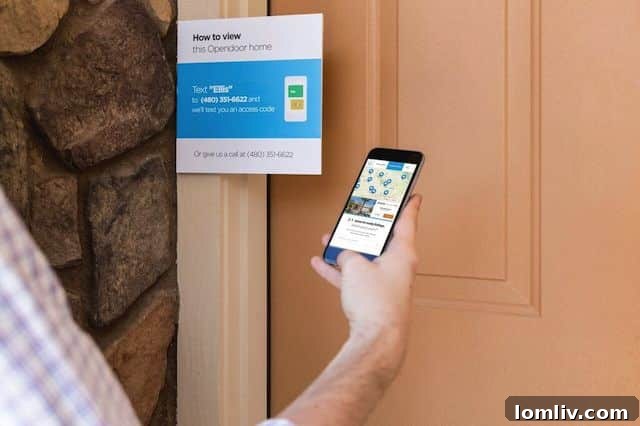
One of Opendoor’s most innovative features, particularly noticeable in its more established markets, is its reimagining of the traditional open house. Embracing its namesake, Opendoor facilitates a “24/7 open house” experience, entirely eliminating the need for a real estate agent or homeowner to be present during showings. This is achieved through sophisticated technology that allows prospective buyers to text a number to receive a unique code, granting them access to unlock the door of a listed property at their convenience.
“24/7 open house” technology, which enables prospective buyers to text a number for a code to unlock the doors of its listings, boosts foot traffic to the properties it’s selling. The startup says its average listing receives 50 visits.
The entire house is monitored 24/7 using integrated cameras and security systems, effectively addressing concerns about theft or vandalism. This radical approach significantly boosts foot traffic to properties, with Opendoor reporting an impressive average of 50 visits per listing. It offers buyers an unparalleled level of freedom to explore homes at their leisure, without feeling rushed or pressured by an agent. This innovation perfectly exemplifies how technology is increasingly taking over various aspects of the real estate process, automating tasks and enhancing the consumer experience, thereby challenging long-held industry norms.
Building a Comprehensive Real Estate Ecosystem
Opendoor’s vision extends far beyond simply buying and selling homes. The company is actively constructing an end-to-end ecosystem of real estate services, aiming to bundle products and services that buyers traditionally source independently or with the assistance of their real estate agents. This includes vital components like financing options and robust home warranties, creating a seamless and integrated experience for the customer.
Furthermore, Opendoor is proactively engaging with a network of local vendors in markets like Phoenix and Dallas, integrating them into its software platform. For example, when a customer purchases a home through Opendoor, landscaping companies or other service providers can be directly introduced to the new homeowners, offering their services. This strategic integration has the potential to expand into a vast array of home-related services, encompassing contractors, appliance providers, furniture retailers, and even local support services like babysitters, creating a comprehensive “kit and caboodle” for new residents. This holistic approach fosters a “virtuous circle,” where a satisfied customer’s ongoing needs are met within the Opendoor ecosystem.
In fact, Wu says Opendoor is “already seeing a lot of [demand] coming from both buyers and sellers,” which is slowly creating a kind of virtuous circle. We call [the transactions] trade-ins. In the automotive industry, 60 percent are cars are traded in for new models; we’re starting to see that behavior on Opendoor, too.”
Opendoor’s research indicates that roughly half of all homebuyers must sell their existing home before they can acquire a new one, primarily due to lending requirements. This insight underscores another critical area where Opendoor provides significant value: facilitating “trade-in” transactions. By offering to buy a seller’s current home, Opendoor eliminates the contingency of a sale, allowing buyers to proceed confidently with their next purchase, much like trading in a car at a dealership. This strategy effectively removes a major barrier to homeownership for many, truly opening new doors in the real estate market.
The Future of Real Estate: Opendoor’s Lasting Impact
Opendoor represents a powerful force in the ongoing evolution of the real estate industry. Its innovative iBuying model, combined with unparalleled customer guarantees like the 30-day buy-back policy and a robust 2-year warranty, is setting new standards for transparency, convenience, and buyer confidence. The company’s embrace of technology, from AVMs for pricing to 24/7 tech-enabled open houses, is disrupting traditional agent roles and streamlining the entire transaction process. Moreover, by building a comprehensive ecosystem that bundles essential home services and facilitates “trade-in” transactions, Opendoor is redefining the scope of what a real estate company can offer.
As Opendoor continues to expand its reach and refine its offerings, its impact on the housing market and the roles of traditional real estate professionals will undoubtedly deepen. The future of real estate appears increasingly agile, data-driven, and consumer-centric, with companies like Opendoor leading the charge towards a more efficient, transparent, and user-friendly experience for everyone involved in buying and selling homes. The industry is watching closely as Opendoor continues to innovate, demonstrating how bold ideas and technological prowess can fundamentally reshape one of life’s most significant transactions.