For those entrenched in the dynamic North Texas real estate market, the challenges are typically as varied as the landscape itself. From navigating unpredictable weather phenomena like tornadoes to adapting to geological shifts such as earthquakes, the profession demands constant vigilance and adaptability. However, a significant legislative change has introduced a new layer of complexity, prompting some to even ponder if bulletproof vests might become a pragmatic addition to their daily attire. Having experienced the weight and restrictiveness of such gear, it’s clear this concern is not merely hyperbolic, but a reflection of evolving anxieties in a state where personal freedom and public safety are frequently debated.
Texas’ Shifting Landscape: Understanding the Open Carry Law
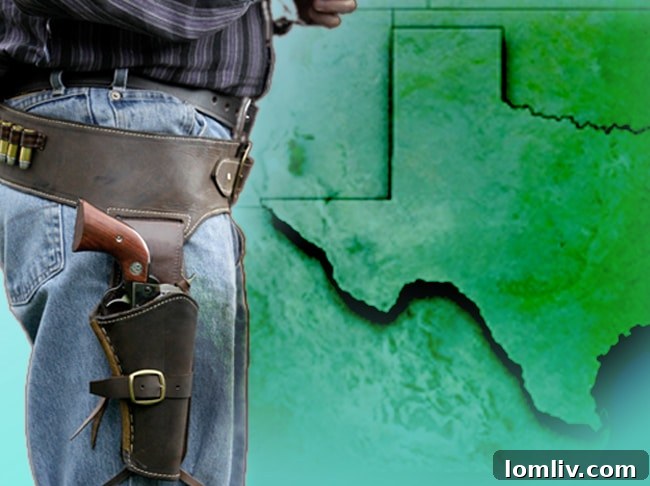
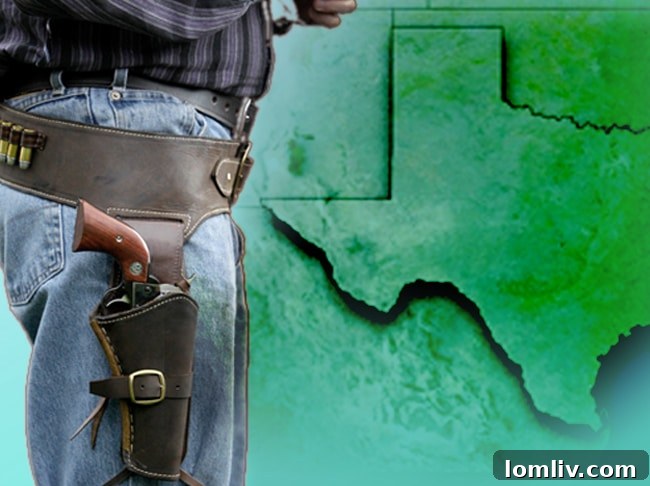
North Texas business owners, alongside residents from every corner of the Lone Star State, are grappling with what represents the most profound overhaul of Texas’ gun laws in two decades. This monumental legislative shift, which took effect on January 1st, effectively ushered in a new era for individuals holding Concealed Handgun Licenses (CHL). No longer are these license holders mandated to keep their firearms out of sight, tucked away in pockets, bags, or purses. Instead, they are now permitted to openly carry handguns in plain view, typically displayed in belt or shoulder holsters, reminiscent of a bygone “wild west” era or, as some might suggest, an “Elliot Ness” style of policing.
From Concealed to Conspicuous: The New Era of CHL
The transition from concealed carry to open carry marks a significant departure from previous state regulations. While Texans have long had the right to own firearms, the manner in which they could be carried in public has been subject to strict interpretation. The argument for open carry often centers on constitutional rights and the belief that visible firearms can act as a deterrent to crime. However, the practical implementation of such a law introduces a myriad of considerations, particularly regarding public perception, law enforcement interaction, and the everyday functioning of businesses and communities across the state. This dramatic change impacts everything from a casual stroll down a city street to formal business transactions, raising questions about decorum, safety, and individual responsibility.
Navigating the Maze: Where Can You Openly Carry in Texas?
Despite the seemingly straightforward nature of the open carry law, its application is far from simple. A significant concern among citizens and professionals alike is the inherent confusion surrounding where exactly one can and cannot openly carry a firearm. This ambiguity has led to widespread anxiety, not least of which is the potential for increased firearm theft. When patrons discover they cannot bring their openly carried firearm into certain establishments, the likely response will be to secure it in their vehicle. This practice, while intended to be responsible, inadvertently creates an attractive target for thieves, potentially leading to a surge in stolen weapons from cars and trucks across the region.
Designated Gun-Free Zones: A Crucial Overview
While CHL holders generally enjoy the privilege of open carry on property owned or leased by the state or local governments, there are numerous critical exceptions and designated gun-free zones that must be strictly adhered to. Ignoring these restrictions can lead to severe legal consequences and undermine the very intent of responsible firearm ownership. Understanding these prohibited areas is paramount for any CHL holder:
- Educational Institutions: Guns are unequivocally banned at all public and private primary and secondary schools, as well as on college campuses and at school-sponsored events.
- Legal and Correctional Facilities: Courthouses and jails remain strict gun-free environments, ensuring the safety and integrity of the justice system.
- Governmental Meetings: Public government meetings can be designated as gun-free zones, provided proper notice is clearly given to the public. This allows local authorities to maintain order and focus during civic discourse.
- Healthcare Facilities: Hospitals, including both public and private institutions, are generally off-limits for firearms. This regulation aims to maintain a healing environment and prevent potential crises in sensitive situations.
- Places of Entertainment and Public Gathering: The law specifically prohibits firearms in bars, polling places during elections, and sanctioned sporting events. The rationale behind these restrictions is clear: alcohol and potential rowdiness do not mix safely with bullets, and maintaining order at democratic processes and public gatherings is essential.
These specific restrictions underscore the nuanced approach of Texas law, attempting to balance individual rights with public safety concerns in various community settings. The emphasis on clear signage and public notification in certain zones is a testament to the legislature’s effort to provide guidance, though the complexity still presents a challenge for many.
The Right to Choose: Private Businesses and Open Carry
In contrast to the state-mandated gun-free zones, private businesses in Texas possess a distinct right to determine their own policies regarding firearms on their premises. This allows them to either permit or prohibit open carry, or even concealed carry, by displaying specific “no guns” signs. These signs, particularly the Texas Penal Code Section 30.06 for concealed handguns and 30.07 for openly carried handguns, hold the force of law. Businesses can exercise this right at a wide array of private establishments, including:
- Restaurants and cafes
- Grocery stores and supermarkets
- Churches and other places of worship
- Private museums and art galleries
- Any property that is not publicly owned, which naturally extends to private homes and, significantly, real estate offices.
The divergent responses from prominent retailers highlight this business-level autonomy. Whole Foods, a grocery chain with deep roots in Texas, publicly declared its stance against open carry, choosing to maintain a policy that prohibits firearms on its property. Conversely, other major retailers like Kroger opted to allow open carry, signaling a different approach to customer experience and security. This divergence creates a patchwork of policies across the retail landscape, requiring consumers to remain vigilant and observant of posted signage, and for businesses to carefully consider their brand image and safety protocols.
Industry Response and Employee Preparedness
The decision by large retailers such as Kroger, Home Depot, and Bass Pro Shops to permit open carry within their Texas stores reflects a broader acceptance, or at least an accommodation, of the new law. These companies already allowed concealed carry and have extended that policy to include open carry. Spokespersons for these businesses often point to their experiences in other states where open carry laws have been in effect for some time. “We’ve not seen any significant issues,” noted Kroger spokesman Gary Huddleston, indicating a level of confidence derived from previous implementations.
However, this decision is not made without forethought. These businesses are committed to providing their employees with extra training to navigate the new environment. This training typically covers de-escalation techniques, customer service protocols when encountering openly carried firearms, and procedures for identifying and reporting suspicious behavior. The goal is to empower employees to maintain a safe and welcoming environment for all patrons, while also respecting the rights of CHL holders. This proactive approach underscores a recognition that while issues may not be “significant,” the presence of visible firearms fundamentally alters the dynamics of public spaces, requiring thoughtful preparation and ongoing vigilance.
The National Context: Texas Joins the Majority
For some, the Texas open carry law may seem revolutionary, but it is important to place it within a national context. The truth is, some form of open carry of handguns is already permitted in 44 other states across the United States. This indicates that Texas is not venturing into entirely uncharted territory but rather aligning itself with the majority of states. However, it’s crucial to note that the specifics vary widely. Many of these other states require permits or licenses similar to Texas’s CHL. Others impose significant restrictions on the times or specific places where open carry is allowed, providing a more granular approach to regulation.
Only a handful of jurisdictions still maintain outright bans on open carry, specifically California, Florida, Illinois, New York, South Carolina, and Washington, D.C. This broader national perspective suggests that while Texas’s move is locally dramatic, it reflects a growing trend across the country to expand firearm carrying rights, albeit with varying degrees of oversight and restriction. The debates surrounding these laws, both in Texas and elsewhere, often center on the balance between Second Amendment rights and public safety concerns, creating a complex and ever-evolving legal landscape.
Public Opinion vs. Legislative Action: A Deep Dive
Despite the legislative push for open carry, public opinion in Texas reveals a nuanced and divided sentiment. Interestingly, the percentage of Texas citizens who own a gun, at approximately 35.9 percent, is actually below the national median of roughly 40 percent. This statistic provides important context for understanding the state’s internal debate on gun laws. Furthermore, Texas voters’ opinions on open carry are overtly split, with only a minority expressing outright support.
A joint University of Texas-Texas Tribune poll released in February further illuminated this division. The survey revealed that a substantial majority of Texan voters—77 percent—believe individuals should have the ability to carry handguns in public in some form. However, when asked specifically about open carry, only 32 percent expressed support. A larger contingent, 45 percent, favored allowing licensed individuals to carry a concealed handgun, but not openly. This data clearly demonstrates a preference among Texans for concealed carry over visible display, suggesting a comfort level with the idea of self-defense that doesn’t necessarily extend to a public show of firearms. The fact that only a minority of Texans explicitly support open carry has inevitably led to charges from gun control advocates that the State Legislature is disproportionately influenced by powerful pro-gun interests, rather than reflecting the broader sentiment of the electorate.
Law Enforcement’s Dilemma: Challenges on the Front Lines
Perhaps one of the most compelling and frequently voiced concerns regarding the open carry law comes from the very individuals tasked with upholding public safety: law enforcement officials. Many in the law enforcement community have openly expressed their apprehension, and frankly, their lack of support for the law. Their primary worry centers on the practical difficulties it introduces during critical incidents. When officers arrive at the scene of a crime, or a situation involving a firearm, how are they to quickly and accurately distinguish a genuine threat—a “nutcase with a gun”—from a law-abiding, cool-headed CHL holder who might simply be attempting to render aid or is merely present? The visible presence of multiple firearms in a chaotic situation creates an immediate and dangerous dilemma for first responders, who must make split-second decisions with potentially life-or-death consequences.
This fundamental challenge highlights a critical need: CHL education in Texas should extend beyond basic firearm proficiency and safety. It must explicitly include comprehensive training on how licensed individuals should react when law enforcement officers arrive on a scene. The emphasis should be on clear, non-threatening communication and actions that help, rather than hinder, officers in assessing and securing a situation. Without such clear guidelines and mandatory training, the fear that scenes could quickly devolve into “the wild west” becomes a palpable concern for both the public and the brave men and women in uniform.
Impact on Real Estate Professionals: A New Set of Considerations
For real estate professionals in North Texas, the implications of the open carry law introduce a new and complex layer to an already demanding career. The initial, somewhat facetious thought of donning a bullet-proof vest touches upon a very real underlying anxiety about personal safety and professional decorum in an environment where visible firearms are becoming more common. This is not just about personal preference but about navigating client relationships, maintaining professionalism, and ensuring safety in diverse property settings.
Client Interactions and Property Showings
Real estate agents frequently interact with a wide array of clients, each with their own comfort levels and perspectives on firearms. The presence of an openly carried gun, whether by the agent, a client, or even a property owner, can significantly impact the dynamic of a showing or meeting. Agents must consider:
- Client Comfort: How might a client, particularly one from out of state or with different cultural views on firearms, react to an openly carried weapon? Could it create discomfort, anxiety, or even lead them to reconsider working with an agent or purchasing a property?
- Professional Image: Does openly carrying a firearm align with the professional image an agent wishes to project? In a service-oriented industry, perceived neutrality and a focus on client needs are often paramount.
- Safety Perceptions: While some might feel safer with a firearm present, others might feel more exposed to risk. Managing these contrasting perceptions is a delicate balance.
Furthermore, agents often find themselves in unfamiliar properties, sometimes alone, with new clients. The question of personal safety is always present, and the open carry law adds another dimension to how agents might choose to protect themselves, or conversely, how they might be perceived by others.
Open Houses in an Open Carry State
Open houses are unique events, characterized by free access for the public and a largely uncontrolled environment. The open carry law presents specific challenges for real estate agents hosting these events:
- Agent Safety: How does an agent ensure their personal safety when potentially dozens of strangers, some of whom may be openly carrying firearms, are walking through a property? The ability to screen attendees is limited.
- Managing Visible Firearms: If attendees arrive openly carrying, how should an agent react? Should there be a policy for the open house? What if other attendees feel uncomfortable?
- Property Security: With the increased risk of theft from vehicles, as mentioned earlier, agents might also worry about the security of the property itself, especially if valuable items are present.
These scenarios force agents to consider new protocols and risk assessments for what were once relatively straightforward aspects of their job. The focus shifts from merely showcasing a home to actively managing a potentially sensitive public environment.
Navigating Personal Safety and Professional Responsibilities
The core question for many real estate professionals becomes a personal one: Do you get a CHL to “pack heat” at open houses or during showings? This is not just a decision about personal rights but about professional responsibilities and the potential impact on one’s business. While some agents may feel empowered and safer with a firearm, others may worry about alienating clients or escalating already tense situations. The market for discreet, yet effective, personal safety solutions might see an uptick, or perhaps the demand for professional security at high-value open houses could increase.
The industry, as a whole, will need to adapt. This could mean new training programs for agents on conflict de-escalation, specific guidelines for managing open houses, or even discussions on professional liability in a state with more pervasive visible firearm presence. The question “Does St. Johns design bullet-proof vests?” becomes a poignant, if rhetorical, query about the lengths to which professionals might feel compelled to go to ensure their safety and peace of mind in this new Texas reality.
Conclusion: Adapting to the New Texas Reality
The implementation of Texas’ open carry law represents a profound shift in the state’s social and professional landscape. For real estate professionals, business owners, law enforcement, and the general public, it introduces a complex web of considerations, from navigating ambiguous regulations to addressing deep-seated concerns about safety, public perception, and the very fabric of community interaction. While the law aims to uphold individual rights, its practical application has highlighted significant challenges, particularly the need for clearer guidelines, enhanced public education, and continued dialogue between all stakeholders.
The “wild west” analogy, while perhaps an exaggeration, effectively captures the sense of uncertainty and the call for responsible adaptation. As Texas moves forward, the ongoing challenge will be to find a balance where individual freedoms are respected, public safety is prioritized, and all citizens can navigate their daily lives with clarity and confidence. This means constant vigilance, thoughtful policy adjustments, and a commitment to understanding the multifaceted impact of a state where handguns can now be carried in plain view.