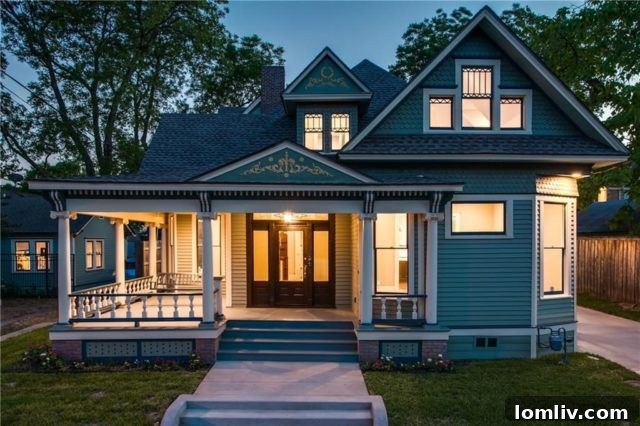
Welcome to an inspiring journey through Dallas’s rich architectural heritage, where the past is not just preserved but beautifully reimagined for modern living. Nestled within the esteemed Peak Suburban Addition Historic District, a magnificent 1902 Queen Anne Victorian home stands as a testament to dedicated craftsmanship and a profound respect for history. This isn’t just a house; it’s a living piece of Dallas’s story, meticulously brought back to life by the visionary efforts of orthodontist Patricia Simon and her husband, Kyle.
Bethany, an admirer of historical properties, observed the listing for this particular residence and immediately sensed a captivating narrative within its walls. Upon meeting Patricia Simon, the passionate restorer, Bethany discovered a treasure trove of information that interwoven the home’s history with the vibrant tapestry of Dallas itself. What truly fascinated her was the harmonious blend achieved between period-specific architectural elements and contemporary desires, making this Victorian gem not only historically significant but also perfectly suited for twenty-first-century life.
Beyond her profession of straightening teeth for Lakewood residents, Patricia Simon possesses a remarkable talent and passion for restoring Dallas’s historic homes. Her own residence in the Peak Suburban Addition Historic District, which she lovingly revitalized with Kyle, serves as a testament to their expertise. It was after completing their own home that their attention turned to the aging Victorian on Moreland Avenue – a structure that had suffered years of deferred maintenance and the inevitable march of time.
“It’s truly one of the few original Victorians left in this cherished neighborhood,” Patricia remarked one Sunday, surveying the breathtaking results of their extensive work. She elaborated, “While other old Victorians exist here, many were relocated from other areas. This one, however, has always stood on this ground, making its preservation even more critical to the district’s integrity.”
The monumental task began with an intricate architectural detective mission: discerning the home’s original floor plan. Over its long history, the house had undergone several additions and significant alterations. When Patricia and Kyle acquired it, it functioned as a single-family dwelling, yet it still bore the distinct marks of its past as multi-family housing, a common transformation during periods of housing shortages.
Patricia explained the historical context, “In the thirties and forties, Dallas, like many cities, experienced a pressing housing shortage. This particular property was, at one point, divided into four separate apartments, and surprisingly, many of those structural changes remained evident. It was likely operated as a boarding house, accommodating numerous individuals under one roof.” Reversing these changes while honoring the home’s original grandeur became a central challenge and a defining aspect of their restoration philosophy.
The restoration was a delicate balance of preservation and adaptation. Patricia and Kyle meticulously assessed what historical elements could be saved and what needed thoughtful replacement or sensitive recreation. “Our approach was always to nod to the past, to respect the home’s heritage, but we also profoundly understood that a house must be livable in the present,” Patricia articulated. This philosophy guided every decision, ensuring the home retained its historical soul while gaining modern functionality and comfort.
The Art of Sourcing and Restoration: Bringing History to Life
One of the most remarkable aspects of the Simon’s restoration was their dedication to sourcing period-appropriate elements, particularly for the original front portion of the home. “What we didn’t have, we diligently found,” Patricia stated, describing their extensive search. Lighting fixtures, for instance, were carefully chosen from antique dealers and specialists in Fort Worth and Alabama, ensuring they perfectly complemented the home’s 1902 aesthetic. Discovering the original track for elegant pocket doors, which had previously been replaced by French doors, prompted them to source a set that was not only historically accurate but also beautifully functional, sliding effortlessly to connect or separate spaces.
The living room’s magnificent mantelpiece tells another story of discovery and meticulous restoration. Found tucked away in the attic, it bore the scars of a past fire. From this salvaged piece, combined with expertly crafted recreations of missing elements, the historic fireplace was resurrected. Patricia recalled a particular challenge: “The original fireplace surround featured a distinct green tile. I scoured countless sources, trying to find an exact match, but ultimately, it proved impossible. We instead chose a tile that harmonized beautifully with the period, paying homage to the original while ensuring a cohesive, elegant finish.”
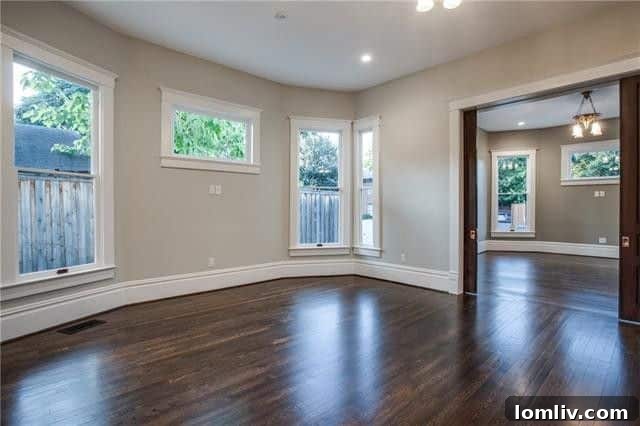
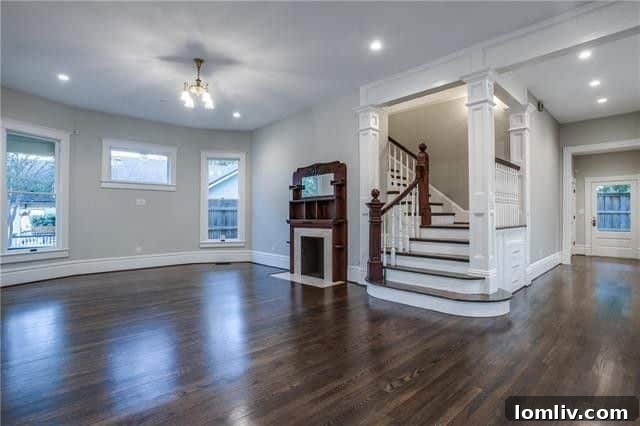
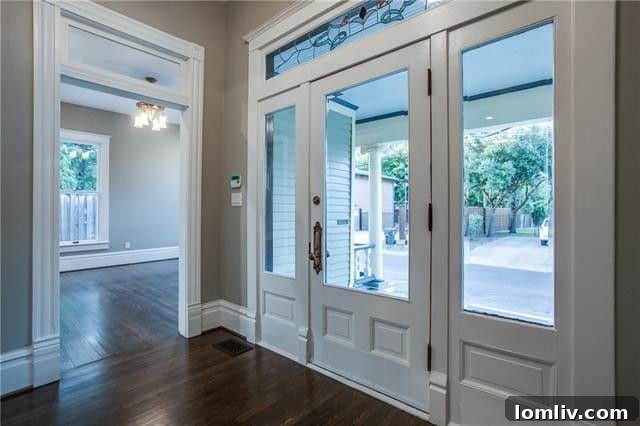
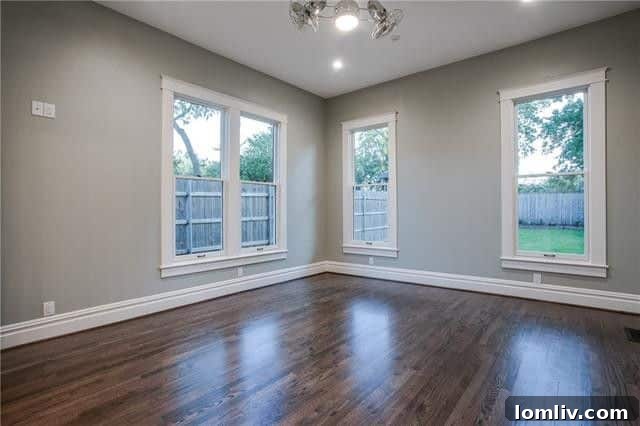
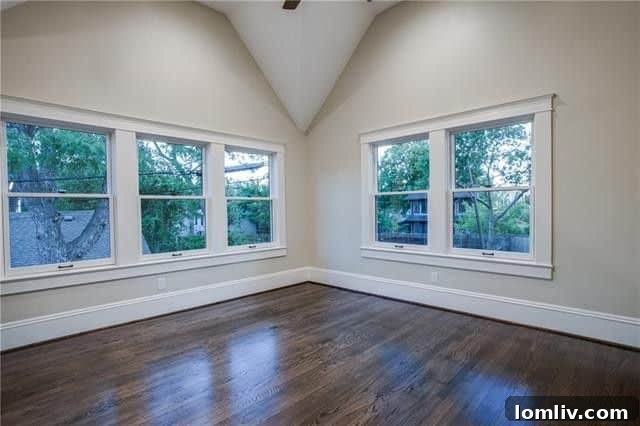
The home’s foundation and floors offered their own layer of history. Beneath oak floors, installed sometime in the 1920s, lay the original pine floors. The Simons chose to lovingly restore the oak floors, which now gleam, reflecting the abundant natural light streaming in through the grand windows. These windows, remarkably, still open and shut with their original, intricately designed hardware, offering a tangible connection to the home’s earliest days. Throughout the original part of the house, delicate stained glass panels, once dulled by time, were also painstakingly restored, their vibrant colors now captivatingly brilliant. Similarly, the original wooden trim, a hallmark of Victorian craftsmanship, received a careful, hand-finished restoration, bringing back its former glory and intricate detailing.
Transformative Grandeur: Reimagining Key Spaces
Perhaps some of the most surprising, yet impactful, changes occurred with the home’s grand staircase. The magnificent entryway feature that now greets all who enter was not original to the house. Patricia revealed, “The original staircase was incredibly narrow, a practical but modest feature of its time. I genuinely doubted you could even maneuver a full-sized mattress up those stairs, making it impractical for modern living.”
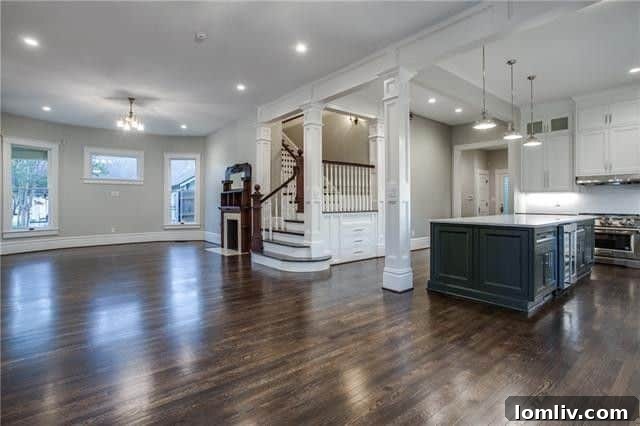
In a bold move that dramatically enhanced the home’s functionality and aesthetic appeal, the Simons pivoted the staircase’s entry point from its original location to the living room, effectively widening it and repositioning the newel posts. This transformation created a more inviting and spacious entrance. When one newel post, after this significant shift, no longer aligned with the home’s historical integrity, their skilled contractor masterfully created a custom piece that flawlessly matched the existing original, a testament to the level of detail invested in this project.
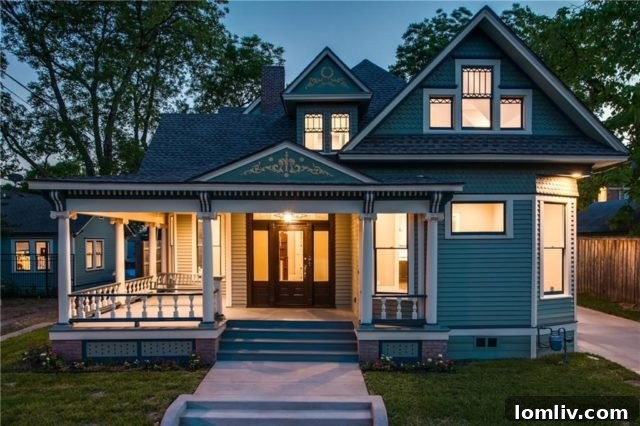
The years of haphazard additions had also left the home with a somewhat chaotic roofline – a jumble of peaks and pitches that was both aesthetically displeasing and challenging to maintain. Patricia and Kyle seized the opportunity to address this structural issue. Taking off the old roof and reframing the entire structure allowed them to create a more cohesive, visually pleasing, and easily maintainable configuration, significantly improving the home’s curb appeal and longevity.
Modern Comforts Meet Historic Charm: Family-Friendly Design
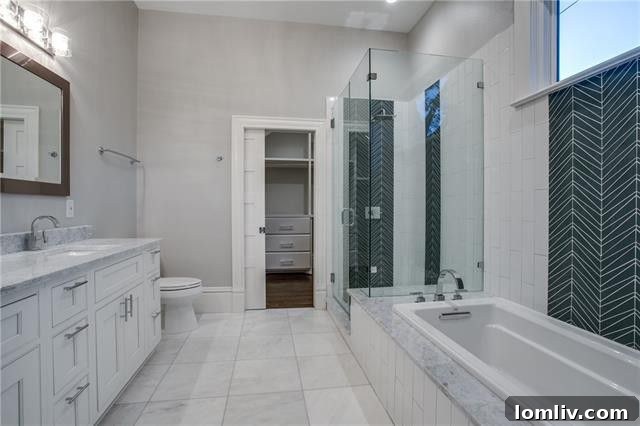
Beyond structural integrity and historical accuracy, the Simons’ restoration also focused on making the home exceptionally family-friendly and adaptable to various modern needs. Downstairs, a spacious master suite was thoughtfully designed with versatility in mind, easily capable of serving as a comfortable mother-in-law suite, providing privacy and independence for extended family members.
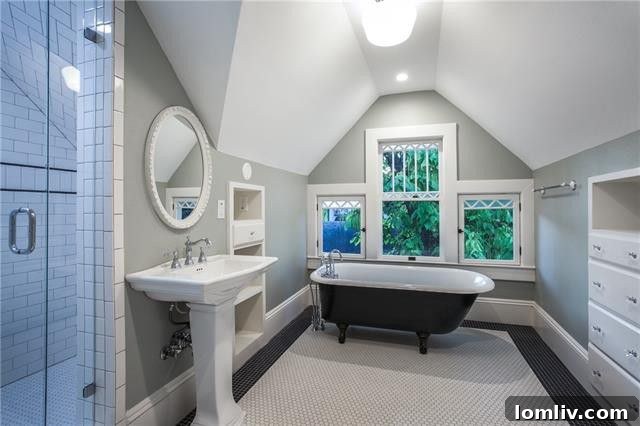
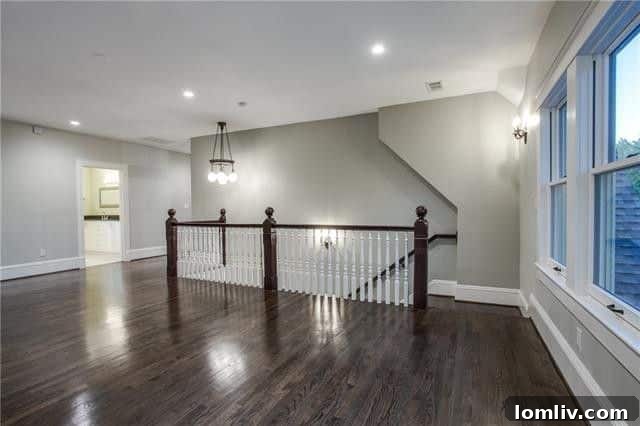
Ascending to the second floor, a large, open landing immediately commands attention. This versatile space has been envisioned as an ideal playroom for children or a comfortable TV room, offering a dedicated area for relaxation and entertainment. Tucked discreetly behind this landing is another master suite, providing a private sanctuary. Additional bedrooms and bathrooms elegantly line the perimeter of the landing, ensuring ample space and comfort for all residents and guests, meticulously blending historic character with contemporary family living needs.
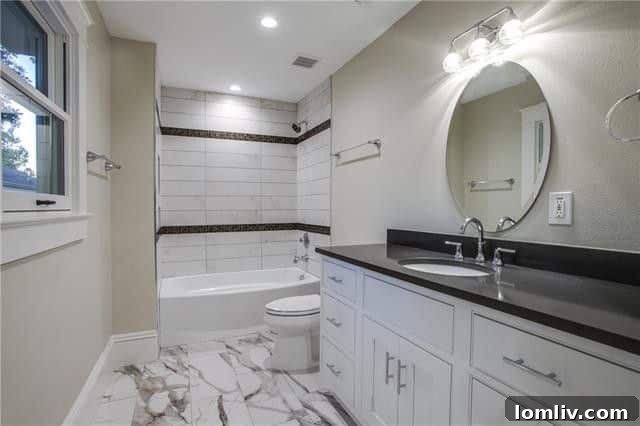
Understanding the demands of a busy household, the Simons incorporated two laundry facilities into the home’s design. A large, fully equipped laundry room is conveniently located upstairs, serving the majority of the household’s needs. Additionally, a smaller laundry hookup has been thoughtfully placed within the huge pantry adjacent to the kitchen. This ingenious placement ensures that kitchen linens and the laundry from the downstairs master suite dwellers can be managed efficiently, eliminating the need to haul items up and down the stairs.
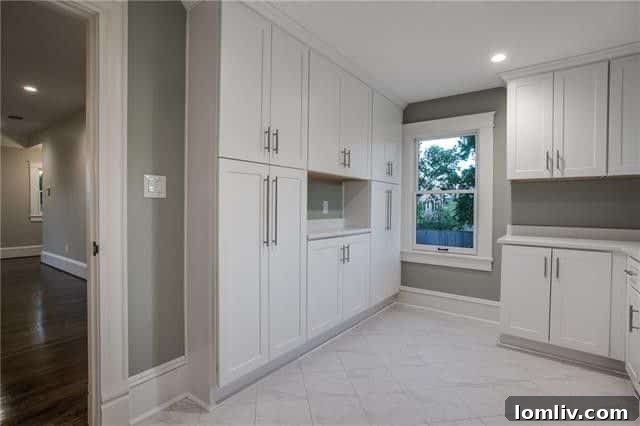
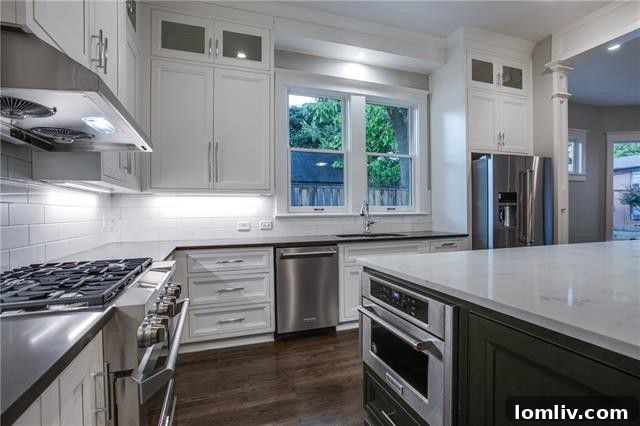
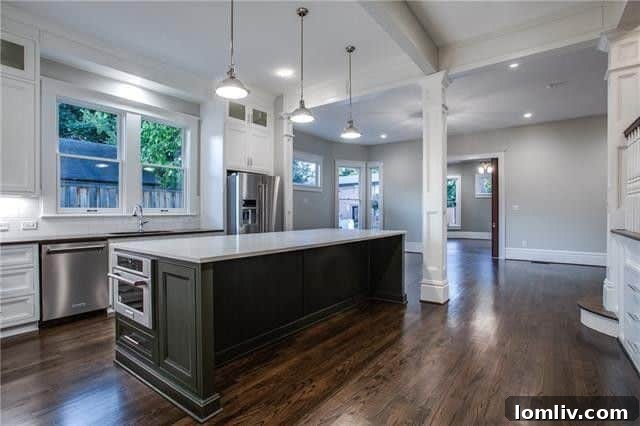
The chef’s kitchen is a triumph of modern design within a historic shell, boasting elegant quartz countertops, custom cabinetry providing ample storage, and high-end stainless steel appliances that cater to every culinary need. With plenty of room for both preparation and casual dining, this kitchen is perfectly appointed for entertaining, allowing hosts to effortlessly connect with guests while showcasing their culinary skills. It serves as a true heart of the home, bridging the gap between historical elegance and contemporary functionality.
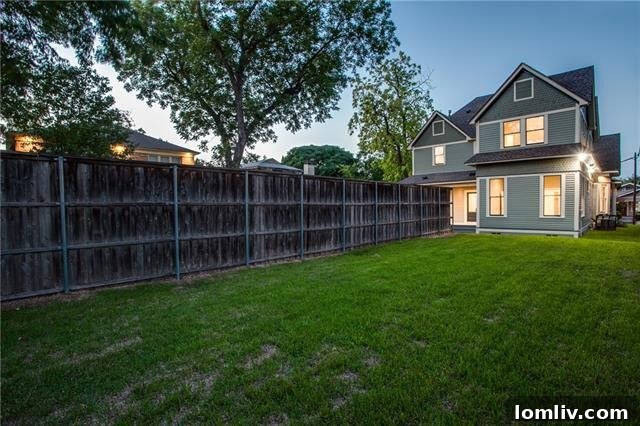
Stepping outside, a inviting back porch offers a serene vantage point overlooking an expansive yard. This generous outdoor space not only provides a perfect setting for relaxation and al fresco dining but also features ample room for a future swimming pool, promising endless opportunities for outdoor enjoyment and enhancing the property’s overall appeal and value.
Unearthing the Victorian’s Hidden History on Moreland Avenue
Patricia Simon’s dedication extended far beyond the physical restoration of the house; she embarked on a meticulous historical investigation, determined to learn about the lives of the people who called this address home over a century ago. Her research uncovered fascinating details, including the revelation that her 1007 Moreland Avenue home didn’t always bear that address. At one point in its earliest history, the grand Victorian actually faced Swiss Avenue, one of Dallas’s most prestigious boulevards.
The home was originally constructed in 1902 by Harrison Self. By 1904, it was sold to Jacob “Jake” Ullman, a German immigrant, and his wife, Nettie. It was within these very walls that the Ullmans raised their two daughters, Berniece and Selma. Tragically, Jacob Ullman passed away in 1913. Years later, as their daughters approached high school graduation, the family made a significant decision. The house was literally picked up and moved to what was essentially the back of their substantial property, then rotated to face Moreland Avenue, transforming its entire orientation within the neighborhood. Patricia’s research suggests that Nettie and her daughters moved away around 1920, perhaps to be closer to the girls’ boarding school, with Nettie likely renting homes nearby.
“Around 1924-1925, the house was physically pivoted from its original Swiss Avenue alignment to face Moreland,” Patricia explained. This relocation was part of a larger trend in Dallas during that era, where grand estates were often subdivided, and existing structures were sometimes moved to make way for new development or to reconfigure property lines. The original Ullman property stretched significantly further than the current lot, but various parcels were sold off over time, leading to the house’s new positioning.
The changing urban landscape also led to the home’s conversion into multiple residences. As early as 1923, city directories indicate that numerous unrelated individuals were living in the home, predating its official appearance as four separate apartments. Further modifications continued into the 1950s, with additional entrances being added to the southeast side and the rear of the house, dramatically altering the roofline. “In fact, a hipped roof was actually added and sat directly on top of the original roof in some areas, creating a complex and somewhat inefficient structure,” Patricia noted. Another set of stairs was also introduced at some point, further complicating the internal layout.
When Patricia and Kyle Simon commenced their ambitious restoration project in 2015, the historic Queen Anne Victorian was indeed suffering from many decades of neglect and insensitive modifications. However, through their unwavering vision, meticulous planning, and tireless work, the house has been utterly transformed. It is now a magnificent, vibrant home, perfectly suited for a modern family, ready to embrace its next chapter. This stunning residence is currently listed for $999,999 by Robert Blackman, offering a unique opportunity to own a piece of Dallas history, beautifully restored for today’s discerning buyer.
Want to witness the incredible scope of this restoration? We’ve curated a special slideshow featuring compelling before-and-after shots, courtesy of Patricia Simon, highlighting the dramatic transformation of this Dallas gem.