Dallas, a vibrant metropolis, faces the ongoing challenge of homelessness. In a determined effort to address this critical issue, the Dallas Office of Homeless Solutions has been actively exploring innovative partnerships to provide crucial support and housing for its most vulnerable residents. A significant initiative recently brought to the forefront involves a collaboration with the AIDS Healthcare Foundation (AHF), aiming to establish permanent supportive housing units within City Council District 6.
Initially, a proposal in September outlined a pilot program with the AHF that projected a cost of approximately $3 million to the city. This initial plan sought to leverage an existing AHF-selected and already operational housing development in District 6. While city staff advocated for partnering on this immediate opportunity, city council members expressed considerable reluctance. Their skepticism stemmed from concerns over the stagnation of other city-owned homeless housing projects, which had yet to yield promised results. The council’s hesitation highlighted a broader desire for more accountability and demonstrated success before committing additional city funds to new ventures.
This initial proposal, met with considerable reservation, prompted a strategic re-evaluation.
For more context on the initial skepticism, read: Housing Committee is Skeptical of Pilot Project Homeless Facility in District 6
Responding to the City Council’s concerns, Christine Crossley, Director of the Dallas Office of Homeless Solutions, meticulously revamped the original plan. She presented a new, refined proposal during a pivotal Housing and Homelessness Solutions Committee meeting on November 14. A key differentiator of this revised plan was its immediate financial independence, emphasizing that no direct city funding would be required at the current stage.
Crossley explained the long-term vision, stating, “Future funding opportunities could be utilized to help subsidize the creation of additional permanent supportive housing units or additional programming at the property as units fill in and programming needs expand.” This forward-thinking approach aimed to build momentum and demonstrate tangible results before requesting substantial financial commitments from the city. The immediate impact of this strategy was already visible, with two individuals successfully connected to on-site housing through referrals from the Dallas Office of Community Care. The permanent supportive housing units, currently undergoing renovation, are anticipated to become fully operational and available within the coming month, marking a critical step forward in addressing the city’s housing crisis.
Strategic Partnership: Funding Permanent Supportive Housing in Dallas
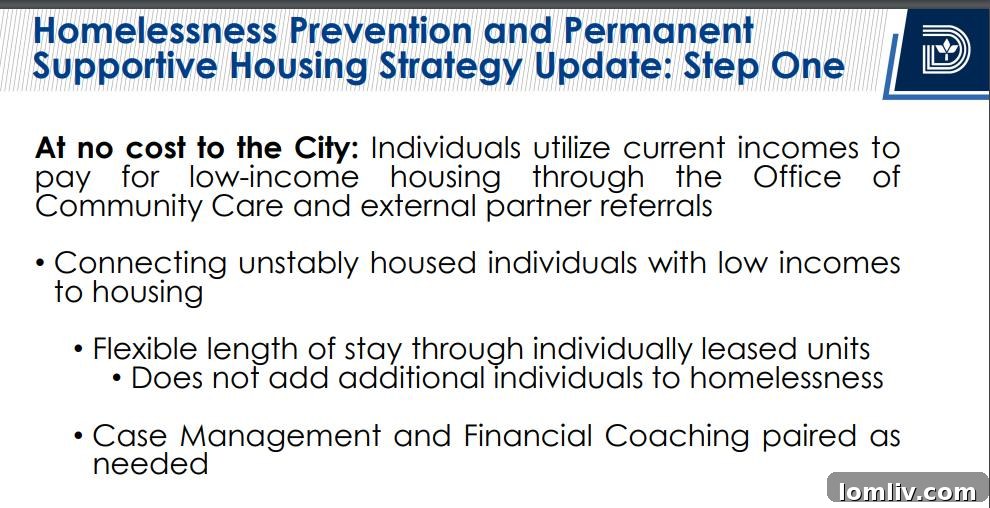
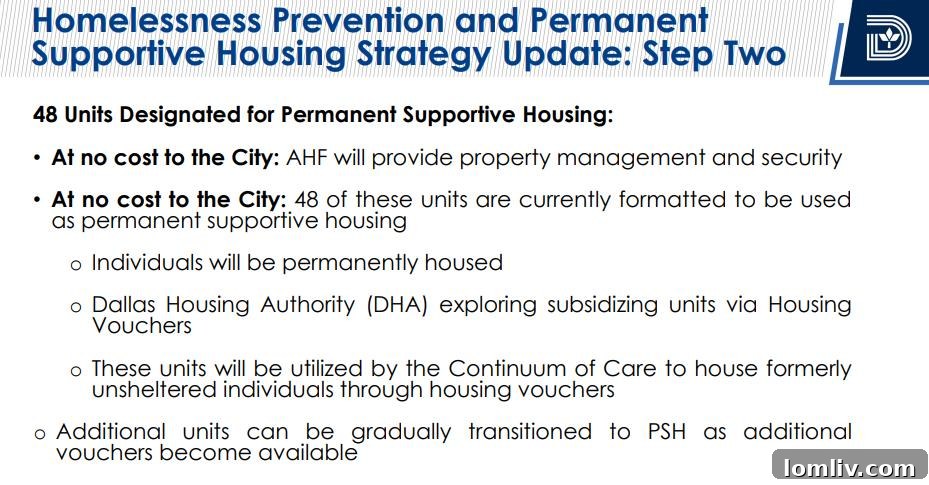
The collaborative framework with the AIDS Healthcare Foundation is structured around a comprehensive three-step plan designed to provide robust support and housing stability for low-income and unhoused individuals in Dallas:
- **Step One: Immediate Connections and Support.** This initial phase focuses on connecting “unstably housed” low-income individuals to essential resources. Beyond just housing, it includes critical case management services, offering personalized guidance and support to navigate various challenges, and financial coaching, which empowers residents with the tools and knowledge to achieve greater economic stability and self-sufficiency.
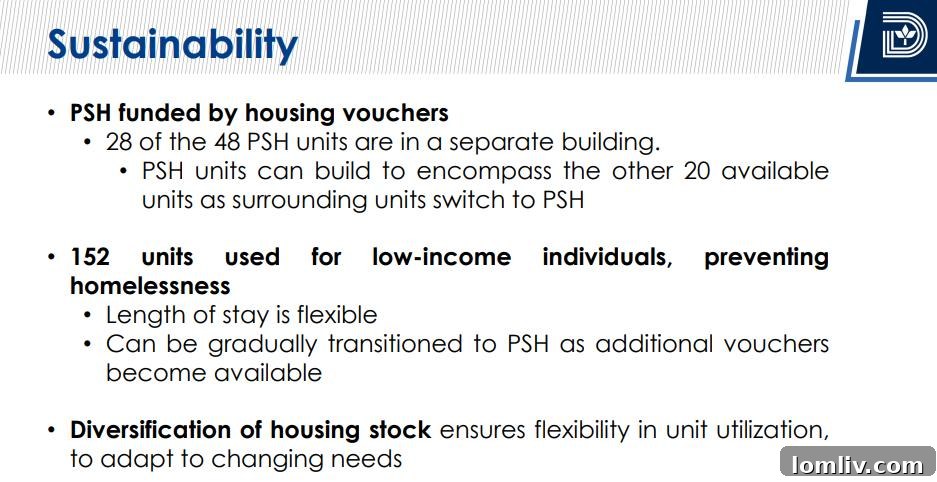
- **Step Two: Dedicated Permanent Supportive Housing.** A significant component involves designating 48 units specifically for permanent supportive housing. These units are being meticulously renovated to provide safe, comfortable, and dignified living spaces. Crucially, these units come with comprehensive wraparound services, ensuring residents receive continuous support tailored to their specific needs. These services can include mental health support, substance abuse counseling, employment assistance, and life skills training, all vital for long-term stability. The funding for these particular units will be secured through Dallas Housing Authority vouchers, strategically leveraging existing resources.
- **Step Three: Homelessness Prevention through Affordable Housing.** The third step allocates 152 units for low-income individuals. This proactive measure is designed not just to house the homeless but to prevent homelessness by offering affordable housing options to those on the brink, thus addressing the root causes of housing insecurity and fostering community resilience.
To ensure the long-term sustainability and effectiveness of this vital partnership, city staff have proposed a future contribution of approximately $1 million. This funding would primarily serve to subsidize rent for low-income tenants residing in the permanent supportive housing units, making these crucial homes genuinely accessible and affordable over time. This proposed investment reflects a commitment to nurturing the program beyond its initial no-cost phase, securing its impact for years to come.
-

Visualizing the impact of integrated housing solutions. -
A community approach to tackling homelessness. -
The multifaceted support provided by AHF and city partners.
Addressing the potential future funding, Director Crossley noted, “I think $1 million is probably a good place to start, knowing that it would be one-off funding and then see where it goes from there. But in the meantime, we didn’t want to keep this housing away from people who need it.” This statement underscores the urgency of providing housing while acknowledging the need for careful financial planning. Deputy City Manager Kimberly Bizor Tolbert further clarified that the exact amount needed in the future remains flexible and contingent upon available funding sources.
Tolbert articulated the city’s current financial reality, stating, “We don’t have a pot of money sitting over to the side for any type of subsidies. We don’t have a dollar amount at this point or a specific number, but I think as we go through this first step, the second step, and the third step, we would be able to come back and be able to speak to that more.” This transparent communication highlights the city’s commitment to evaluating the program’s success and specific needs before allocating further resources, ensuring responsible stewardship of public funds.
However, the prospect of utilizing general funds for permanent supportive housing has met with staunch opposition from some council members. Councilwoman Cara Mendelsohn expressed her firm stance, declaring, “I am completely opposed to funding permanent supportive housing with general funds. That’s not what general funds are for, and I am not in favor of that.” Her remarks reflect a common debate within city governance regarding the appropriate allocation of unrestricted funds, particularly for social service programs that could potentially draw from alternative funding streams or specialized grants.
The AIDS Healthcare Foundation: A Beacon of Support in Dallas
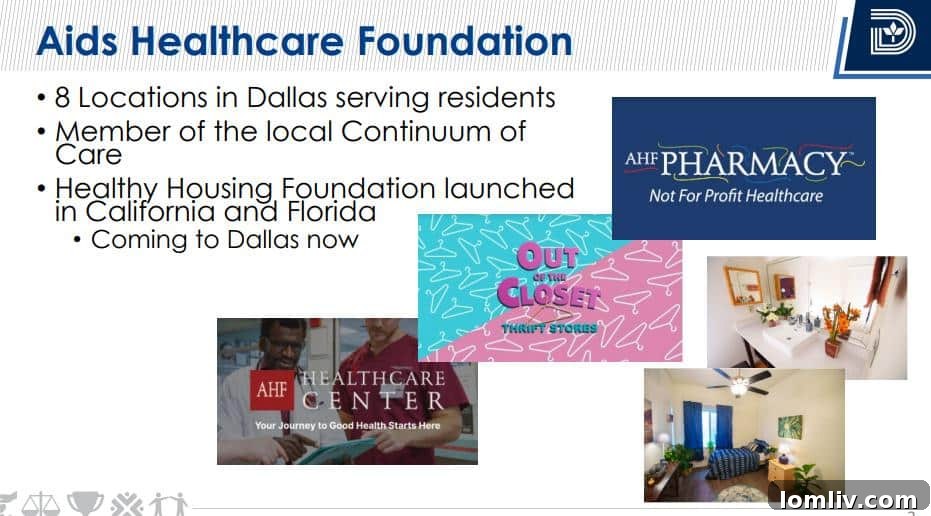
The AIDS Healthcare Foundation (AHF) is a well-established and highly respected organization with a significant presence in Dallas. AHF operates eight service locations across the city, providing a diverse range of support, including pharmacies and thrift shops, in addition to its burgeoning housing initiatives. As an integral part of the local Continuum of Care, AHF plays a crucial role in the coordinated effort to provide a full spectrum of services for individuals experiencing or at risk of homelessness, as explained by Christine Crossley.
Crossley further clarified a crucial point regarding the housing program’s beneficiaries: “This is not for HIV or AIDS-specific individuals. Their mission is to build or acquire units and make them available for those who are at or below 50 percent area median income, to refurbish units, and to really make sure that this model is scaled in all of their locations to give affordable housing to those who need it.” This clarification is vital, as it broadens the scope of the program, making it accessible to a wider demographic of low-income individuals and families, reinforcing AHF’s overarching mission to combat housing insecurity more broadly.
Councilwoman Gay Donnell Willis extended her gratitude to the AHF, acknowledging their proactive engagement in Dallas by “coming to Dallas and taking this on.” She also highlighted a previous misunderstanding, noting that during the September presentation, council members were under the impression that the plans primarily called for temporary shelter rather than the more stable and comprehensive permanent supportive housing now being proposed. This evolution in the program’s design reflects a responsive adaptation to both community needs and council feedback.
Crossley explained that the partnership has been a dynamic and evolving process. “When we looked at it originally, we looked at a pilot that would utilize all of the 152 units for temporary housing,” she stated. “The funding load for us would have been very heavy. And so we were looking at it and said, ‘Well, how could we utilize the existing need and connect it to these units?’ And so what we came back with is, if we do no-cost, then this still fills an immediate need.” This strategic shift from a temporary housing model to permanent supportive housing, particularly with no immediate city funding, significantly reduced the city’s financial burden while still addressing urgent housing needs. This flexibility demonstrates the adaptability and commitment of both the Office of Homeless Solutions and AHF to finding pragmatic solutions.
This does not, however, preclude future partnerships, Crossley added. The AHF is actively engaged in discussions not only with the Office of Community Care but also with the county and other potential partners who have expressed a need for similar housing spaces. “I think there’s still plenty of room for some of those units to be utilized in that fashion if the committee decides that’s something they want to do, but we didn’t want to bring that forward as the one and only possibility,” she concluded, indicating a robust pipeline of potential collaborations and program expansions.
Councilman Jesse Moreno, who chairs the vital Housing and Homelessness Solutions Committee, strongly advocated for a thorough vetting process for such significant initiatives. He encouraged staff to present these matters before the Dallas Homeless Commission for a “deep-dive” review before they reach the full City Council. This pre-council review process ensures that programs are rigorously examined by experts and stakeholders, enhancing transparency and improving the likelihood of successful implementation.
Moreno also emphasized the importance of clear communication between the committee and city staff. “I also want this committee to be straightforward and let staff know what direction we would like to move in,” he asserted. “I know that I’ve heard around this horseshoe multiple times that we do want to look at more single-room occupants and more temporary housing. And so with that, I just want to make sure that we’re being heard when we’re around this horseshoe, in the direction that we would like to move forward.” This clear directive from the committee chair highlights a collective desire to explore a diverse range of housing solutions, including temporary and single-room occupancy options, to effectively tackle the multifaceted challenges of homelessness in Dallas. The collaborative spirit, combined with strategic planning and a commitment to responsive governance, positions Dallas to make significant strides in providing stable and supportive housing for its most vulnerable residents.