“Double, double toil and trouble; fire burn, and caldron bubble.”
The Battle for Oak Lawn: Unpacking the Downzoning Debate in PD-193
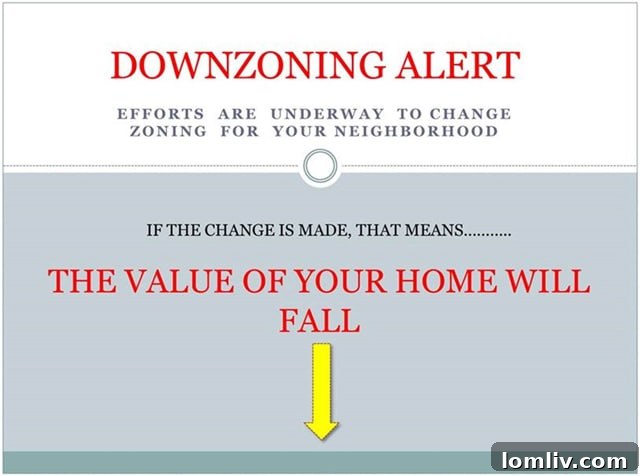
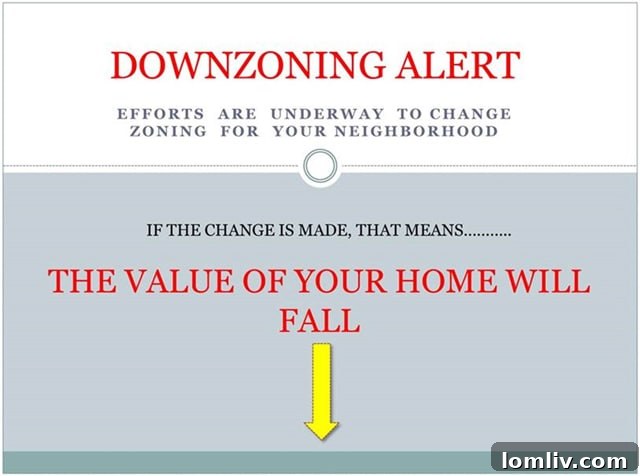
The evocative lines from Shakespeare’s Macbeth, where witches weave spells of multiplying woes, resonate with a peculiar aptness in the ongoing saga of urban development in Dallas’s vibrant Oak Lawn neighborhood. Here, a significant segment of residents is actively campaigning to “downzone” specific parcels of land within Planned Development District No. 193 (PD-193). This movement, if successful, could significantly reshape the future of development in one of Dallas’s most dynamic areas, potentially intensifying the challenges faced by prominent developers like Toll Brothers and Teixeria Duarte, who have proposed multi-family projects in this highly coveted district. This unfolding narrative has been a subject of keen interest, and I’ve previously explored its intricacies here, here, and here.
Oak Lawn Downzoning: Understanding the Controversy
At the core of this simmering dispute are proposals for new developments designed to revitalize key intersections and properties within Oak Lawn. One such project is the planned Toll Brothers apartment building, earmarked for several lots near the southwest corner of Welborn and Congress. These particular parcels, currently occupied by aging three-story structures, are strategically nestled within an area increasingly characterized by modern townhouses, many of which were constructed in the 1990s or more recently. The genesis of this current wave of contention dates back to April 2016, when emails and petitions began circulating among residents, spearheaded by a townhome owner situated diagonally across from the proposed Toll Brothers site. These communications, often brimming with passionate arguments and activist rhetoric, embody the typical characteristics of protest movements, though they frequently contain assertions that are actively disputed by developers and city planning officials.
The drive to downzone is a classic illustration of the tension often found in rapidly evolving urban centers. On one side, there’s a heartfelt desire from long-term residents to preserve what they perceive as the existing “neighborhood character” and to manage concerns related to increased density, traffic, and infrastructure strain. On the other side, there’s the undeniable pressure of urban growth, fueled by economic forces that often necessitate higher-density development to meet housing demand and maximize land value. Downzoning itself is a planning tool where a property’s zoning classification is altered to permit less intensive development than previously allowed. This could manifest as restrictions on building height, a reduction in the number of residential units per acre, or even a reclassification from multi-family to single-family residential. While proponents champion downzoning as a means to protect quality of life and neighborhood aesthetics, critics frequently argue that it can stifle economic growth, artificially depress property values, and exacerbate housing shortages by limiting development potential in prime urban locations.
Deconstructing the Arguments of Downzoning Advocates
A closer examination of the various arguments put forth by those advocating for downzoning reveals a mix of legitimate concerns intertwined with what appears to be a degree of factual inaccuracy or rhetorical exaggeration. Even to a casual observer, some of the claims made by down-zoners seem designed to inflame rather than inform. Let’s delve into a few prominent examples that highlight this dynamic:
The Misconception of Toll Brothers’ Connection to Dallas
One notable piece of misinformation circulated was the assertion that Toll Brothers, the reputable developer behind one of the proposed projects, had no real connection or association with Dallas. This claim, however, is easily debunked with even a superficial review of their corporate footprint. Toll Brothers is a well-established and highly respected national homebuilder with a significant and long-standing presence throughout the North Texas region. They have actively developed numerous thriving communities in prominent suburbs such as Flower Mound, Coppell, Fairview, Southlake, Colleyville, and Plano, in addition to a substantial portfolio in Frisco. While it is accurate that this specific apartment project would represent Toll Brothers’ first multi-family development within Dallas County – a venture they reportedly intend to retain ownership of – to suggest they are unfamiliar or unconnected to the broader Dallas-Fort Worth metropolitan area is fundamentally misleading. This is not the work of an inexperienced, opportunistic developer; Toll Brothers is a publicly traded company with a proven track record, having projected building approximately 6,000 homes in 2016 and generating over $3.31 billion in revenues during the first nine months of that year alone, based on an average home price exceeding $845,000. Such impressive figures speak volumes about their financial stability, robust experience, and unwavering commitment to delivering quality, far from the “heebie jeebies” some might imply. Their strategic entry into the Oak Lawn multi-family market signifies a calculated expansion within a region they understand intimately, rather than a speculative, uninformed undertaking.
The Shifting Narrative: From High-Rise to Adaptive Design
Another point of contention that has been largely resolved concerns the scale of the proposed development. Initial communications from opponents frequently played on fears of an imposing “high-rise,” going so far as to suggest the necessity of FAA (Federal Aviation Administration) intervention due to perceived height concerns. However, in response to valuable community feedback and subsequent design modifications, the current iteration of the proposed development is no longer classified as a high-rise. This significant design adaptation showcases a developer’s genuine willingness to engage with and respond to legitimate community anxieties, thereby rendering previous calls for federal aviation oversight entirely moot and unnecessary. The evolution towards a more context-sensitive design should, in principle, alleviate some of the initial apprehension regarding the project’s visual impact and overall scale within the neighborhood.
Exposing NIMBYism and Prejudicial Stereotypes in Oak Lawn
Perhaps the most troubling aspect of some of the opposition’s rhetoric is the thinly veiled “NIMBY” (Not In My Backyard) sentiment, often unfortunately coupled with problematic social stereotyping. Statements such as, “This isn’t San Francisco… do you think those renters care if they live on Welborn or Shelby? If I was one of those people I’d rather live closer to the bars,” betray a disturbing and exclusionary undertone. Such remarks not only devalue potential future residents but also propagate a narrow, prejudiced image of the diverse individuals who choose to make a modern apartment community in Oak Lawn their home. Oak Lawn is justly celebrated for its rich diversity, vibrant culture, and sophisticated urban lifestyle, attracting a broad spectrum of residents, from thriving young professionals to empty nesters seeking a walkable, amenity-rich, and dynamic environment. To imply that potential renters are a homogenous group, primarily driven by proximity to nightlife, and somehow less invested in their address or quality of life, is a reductive and deeply offensive stereotype. Toll Brothers aims to construct high-quality apartments in a premium, highly desirable market, catering to a wide demographic, not, as the original statement sarcastically suggests, a “halfway house for fallen Betty Ford dropouts of the
The Paradox of Personal History and Current Opposition
Adding yet another layer of complexity to this debate is the apparent hypocrisy displayed by an individual identified as a key orchestrator of the downzoning campaign. His confident assertions, “They know me and what I have managed to stop in this area before, so I think I can get a good hearing,” underscore his self-perceived influence and past successes. However, this same individual resides in a substantial 2,344-square-foot townhome, constructed in 2000 – coincidentally, the very same year The Plaza, a prominent high-rise development, was built just a block away. This stark juxtaposition prompts a critical question: Where was this individual’s fervent indignation and righteous opposition when the developer of his own complex cleared similar “tumbledown structures” to pave the way for his modern townhome? His argument appears to selectively justify his own development while condemning newer proposals, conveniently overlooking the passage of nearly two decades and the profound shifts in land values and desirability within Oak Lawn. The underlying land value in this area has escalated dramatically, making it economically unfeasible to support only townhouses. It’s also plausible that he remained unaware of the long-standing zoning regulations for these properties – including his own, which have been in place since the 1980s – when he acquired his townhome in 2004, despite the unmistakable presence of The Plaza high-rises serving as a clear indicator of the area’s development trajectory. This selective memory and inconsistent application of development standards strongly suggest a self-serving agenda, rather than a coherent or principled urban planning philosophy.
A Pivotal Decision: The Dallas City Plan Commission Intervenes
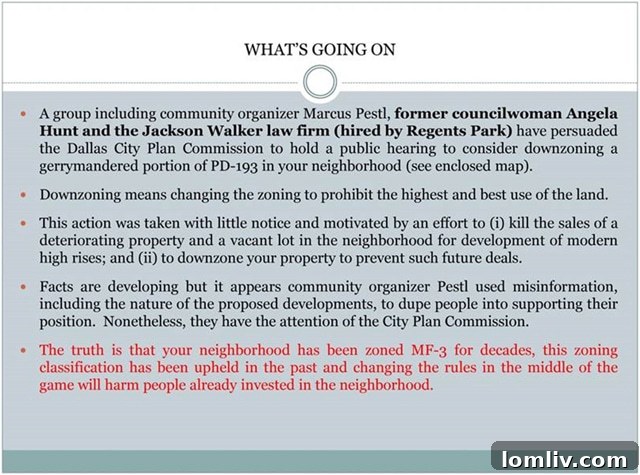
The intensity of the development debate reached a critical juncture by August 2016, culminating in a significant action by the Dallas City Plan Commission. On August 18, the commission rendered a unanimous decision, voting 12 to zero, “…to authorize a public hearing to determine the proper zoning on property zoned an MF-3 Multifamily Subdistrict and an O-2 Office Subdistrict within Planned Development District No. 193, the Oak Lawn Special Purpose District in an area generally bounded by both sides of Welborn Street on the northwest, Cedar Springs Road on the northeast, Sale Street and Enid Street on the southeast, and Fairmount Street on the southwest.”
It is crucial to note that while the official language within the City Plan Commission’s meeting minutes and pronouncements meticulously avoids the explicit term “downzoning,” the underlying intent is strongly inferable. When a public hearing is called to “determine the proper zoning” in an area where residents have actively petitioned for reduced development density, it almost invariably signals an intention to consider a decrease in allowable density, rather than to merely maintain the existing zoning status quo or to advocate for upzoning (which would permit increased density).
The Far-Reaching Implications of a Downzoning Decision
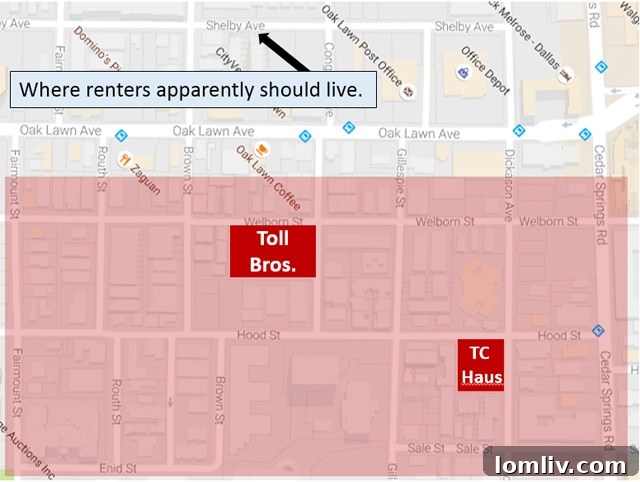
The accompanying map vividly illustrates the expansive scope and potential impact of this proposed downzoning initiative. It extends beyond merely targeting new construction; both the proposed Toll Brothers project and Teixeria Duarte’s Turtle Creek Haus, located at Hood Street and Dickason Avenue, are fully encompassed within this petitioned area. Significantly, the proposed downzoning also includes existing, established structures such as The Plaza high-rise buildings. The very presence of The Plaza, which has stood as a beacon of forward-thinking urban development for 16 years, serves as a powerful testament to the long-term vision and evolving destiny of this district. While the perspectives of its residents are undoubtedly important, it would strike many as deeply hypocritical for those residing in The Plaza to advocate for restricting the development rights of their neighbors, particularly given that they themselves have benefited immensely from the very kind of high-density construction they might now oppose.
For those who advocate for maintaining the current zoning and champion intelligent, progressive urban growth, the existing landscape of Oak Lawn provides compelling evidence of its potential and trajectory. Prominent landmarks and thriving commercial and residential developments such as Renaissance, Melrose, the headquarters of Heritage Auctions, Centrum, and the eagerly anticipated 16-story Hillwood/Perot building, collectively stand as powerful exemplars of this district’s ongoing and natural transformation. These significant developments represent substantial investments, contribute immensely to the economic vitality of the city, and underscore the architectural dynamism that defines modern Oak Lawn as a premier urban destination.
Economic Realities: The Viability of Townhouses vs. Urban Density
The proponents of downzoning, many of whom reside in relatively newer townhouses themselves, frequently contend that the construction of more townhouses represents the ideal future for the neighborhood. However, this viewpoint often fails to acknowledge the fundamental economic realities of the contemporary Dallas real estate market. It has become increasingly evident that new townhouse developments are simply no longer financially viable in this prime area of Oak Lawn. The cost of acquiring valuable urban land has appreciated to such an extent that only higher-density, multi-family projects can realistically justify the substantial investment required. One might ask: how many years have passed since a significant new townhouse complex broke ground in this specific district? The only plausible scenario that would enable a return to that bygone era of widespread townhouse construction would involve artificially depressing the market value of neighboring properties and assets. This effectively undermines their inherent development potential and viability, thereby making townhouse construction financially attractive again. From both an economic and ethical standpoint, this attempt to downzone, while superficially framed as preserving neighborhood character, can be viewed as a sophisticated form of economic “theft.” It risks stripping property owners of the highest and best use of their land and diminishing the intrinsic value their properties command in a highly competitive and desirable urban market.
Looking Forward: Navigating Oak Lawn’s Development Path
Despite the initial intensity and passionate rhetoric surrounding the downzoning debate, there are encouraging signs pointing towards a more balanced and rational resolution. Notably, at the most recent Oak Lawn Committee (OLC) meeting, the contentious issue of downzoning was conspicuously absent from the discussions. The OLC, a highly respected and influential community organization, holds considerable sway with the Dallas City Plan Commission. Their current focus, or rather their lack of direct engagement with this specific issue, could signal a potential shift in momentum or a broader recognition of the multifaceted implications involved. This suggests that while individual property rights and the preservation of neighborhood aesthetics are undeniably important considerations, they must be carefully balanced against the pressing needs of a growing metropolitan area and the overarching principles of sensible, forward-looking urban planning.
Ultimately, as is often the case in complex land use disputes, the only parties who are virtually guaranteed to benefit are the legal professionals involved. However, the larger community of Oak Lawn and the city of Dallas as a whole possess a profound vested interest in ensuring that critical development decisions are made with the utmost transparency, grounded in accurate facts, informed by economic realities, and guided by a clear, sustainable vision for urban growth. Such decisions should prioritize long-term community benefit and property rights over emotional appeals or outdated perceptions of what a thriving urban neighborhood can, or should, be. The outcome of this debate will undoubtedly set a precedent for future development in Dallas, underscoring the critical need for thoughtful, evidence-based urban planning.
My professional focus consistently revolves around the dynamic interplay of high-rises, homeowners associations (HOAs), and innovative renovation trends. I also hold a deep appreciation for how modern and historical architecture can harmoniously coexist, contributing to and complementing the YIMBY (Yes In My Backyard) movement, which advocates for thoughtful, responsible urban development. Should you be interested in hosting a Candysdirt.com Staff Meeting event or simply wish to engage in a discussion about Dallas real estate, please consider me your go-to resource. In 2016, my contributions to real estate journalism were honored with both Bronze and Silver awards from the National Association of Real Estate Editors, reflecting our commitment to insightful and quality reporting. Do you have a compelling story to share, a crucial question, or perhaps even a unique marriage proposal to make? Feel free to connect with me directly via email at [email protected].