The recent Oak Lawn Committee meeting served as a crucial forum for evaluating prospective urban developments, offering insights into the evolving landscape of Dallas. Attendees witnessed the deliberation of three distinct projects, each presenting unique challenges and opportunities for the city. From a straightforward landscaping adjustment to a monumental tower poised to redefine the urban skyline, and finally, a contentious development sparking significant debate over zoning integrity, the meeting underscored the complexities of modern urban planning. This detailed review aims to shed light on these proposals, examining their potential impact on Dallas’s cherished neighborhoods and public spaces.
Among the projects discussed, one stood out for its simplicity and common-sense approach, earning it the label “the ‘duh’ project.” This involved a minor yet meaningful landscaping request for the Lenox Maplewood development at 5490 Denton Drive Cut-off, a project previously reviewed by the committee in December. The developers sought permission to install a slightly narrower sidewalk immediately adjacent to the street, rather than adhering to the standard five-foot setback. The compelling reason behind this request was to preserve five magnificent, mature live oak trees situated on one corner of the property. In an urban environment where green space and natural heritage are increasingly valued, the committee’s decision was an obvious one: the preservation of such significant natural assets clearly outweighed the minimal alteration to sidewalk dimensions. This instance highlighted the committee’s role in balancing development needs with environmental stewardship, showcasing a pragmatic approach to urban design that prioritizes ecological benefits without hindering progress.
KDC’s Klyde Warren-Adjacent Tower: A Model of Urban Development
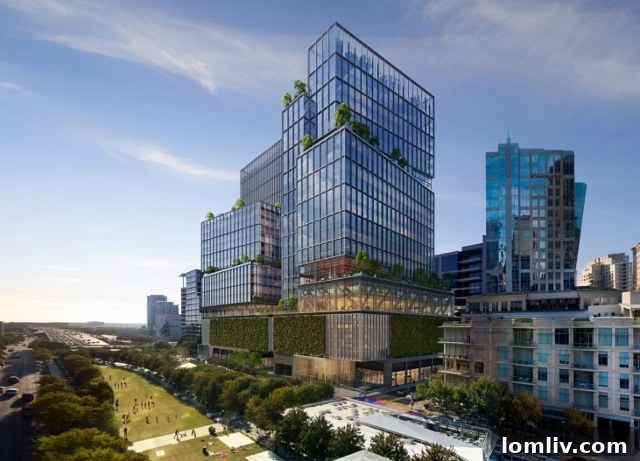
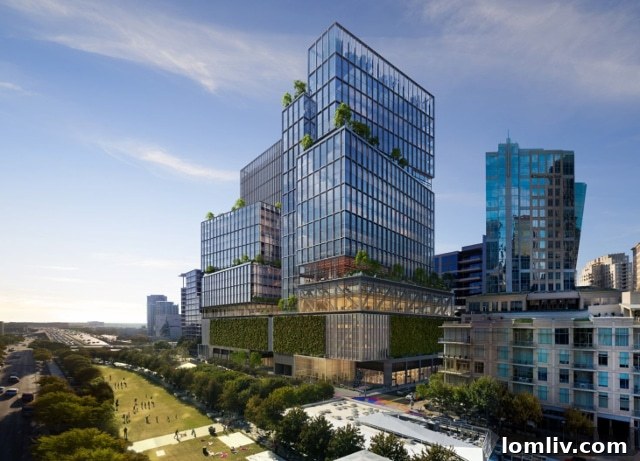
Shifting to the “good” column, the Oak Lawn Committee welcomed back KDC’s impressive proposed project situated at Harwood and Woodall Rogers, directly adjacent to the iconic Klyde Warren Park. This multi-faceted tower, initially presented the previous month, returned to the committee with a renewed focus on addressing specific queries and concerns raised during its initial review. Its strategic location promises to significantly enhance the vibrant interface between Uptown and the downtown central business district, adding architectural prominence and economic vitality to a key area of Dallas.
KDC’s return to the committee was notable not just for the project itself, but for the exemplary manner in which their presentation was conducted. The development team adopted a highly effective, question-and-answer format, systematically addressing each point of inquiry with clarity and precision. This approach, where specific questions were explicitly stated and followed by direct, comprehensive answers, stood in stark contrast to the typical presentations that often rehash entire proposals, leaving attendees to decipher which questions were addressed and how. This commitment to transparency and efficiency earned significant praise, setting a new benchmark for developer engagement with community committees. It minimized ambiguity, maximized understanding, and fostered a more productive dialogue, a methodology that should ideally be emulated by others navigating the complex landscape of urban development approvals.
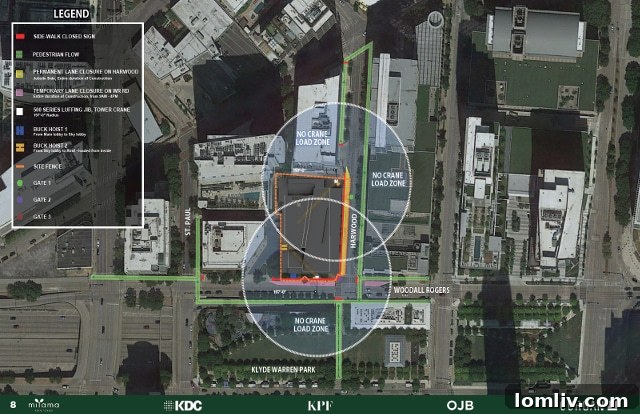
The initial set of questions, specifically questions one and two, delved into the critical aspects of ground-level conditions during the construction phase. These inquiries covered a range of logistical challenges inherent in large-scale urban developments, including temporary sidewalk closures, management of public rights-of-way, strategic placement and operation of construction cranes, necessary lane closures for public safety, and effective parking solutions for construction workers. For pedestrians, the proposed rerouting paths, indicated by green lines in the presentation, highlighted potential inconveniences. The plan suggested that pedestrians would largely need to cross the street to bypass the construction zone, which, while a standard safety measure, can create longer routes and, in some cases, encourage risky jaywalking behavior due to perceived inconvenience. This underscores the need for continuous innovation in construction logistics to minimize disruption and enhance safety for all urban dwellers, perhaps exploring temporary mid-block pedestrian crossings or more accessible alternative routes.
Concerns regarding crane swings, however, were generally viewed with less apprehension. While urban crane operations always carry inherent risks, the tragic crane collapse in Deep Ellum last year was recognized as an unfortunate anomaly rather than indicative of systemic safety failures. Developers are typically held to stringent safety standards and protocols, minimizing the likelihood of such incidents and ensuring the overall integrity of the construction process. The focus remained on ensuring best practices are consistently applied to safeguard both workers and the public.
Question three addressed the environmental impact of the proposed tower, specifically concerning the additional shade it might cast upon Klyde Warren Park. Given the project’s strategic location on the bustling border of Uptown and the central business district, the area already experiences a considerable degree of shading from existing high-rise structures. Detailed analyses presented by KDC demonstrated that the project’s contribution to new shade on the park would be remarkably minimal. This finding, coupled with an endorsement from the prestigious Nasher Sculpture Center – a prominent cultural institution adjacent to the park and sensitive to light conditions – served to largely alleviate any lingering concerns. The careful consideration given to preserving the park’s ambient light conditions reinforces KDC’s commitment to respecting and enhancing public amenities.
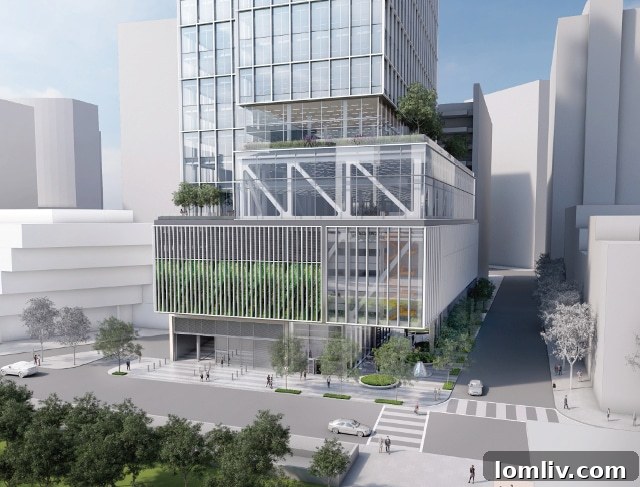
The aesthetic and functional aspects of the building were explored in question four, which focused on the distinctive glass corner feature at Harwood and Woodall Rogers. Committee members sought clarification on whether the parking garage situated behind this architectural element would be visible through the glass. KDC confidently confirmed that the design ingeniously ensures privacy and aesthetic appeal. The glass corner is conceived as a deliberate design feature, elegantly signaling the building’s main entrance. Far from revealing the mundane sight of bumpers and headlights, it will showcase a striking signature staircase, transforming a potentially utilitarian space into a dynamic and inviting visual spectacle. This attention to detail underscores a commitment to architectural excellence that will contribute positively to the streetscape.
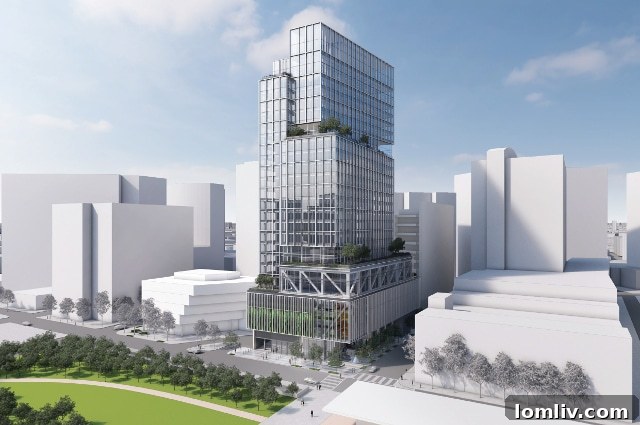
Question five addressed the project’s multi-phase development plan, specifically requesting a visual representation of what Phase One would look like as a standalone structure, given that Phase Two’s construction might be many years in the future. While this might seem a slightly academic exercise in the long run, its value lies in ensuring architectural integrity and aesthetic completeness. The presentation demonstrated that Phase One is designed to be architecturally self-sufficient and aesthetically pleasing on its own. This foresight ensures that the initial phase will not appear incomplete or temporary, offering a sense of permanence and quality from its inception. Indeed, the design suggests that once Phase Two eventually comes to fruition, its integration might even be perceived as an enhancement to Phase One’s initially harmonious solitude, a testament to thoughtful master planning.
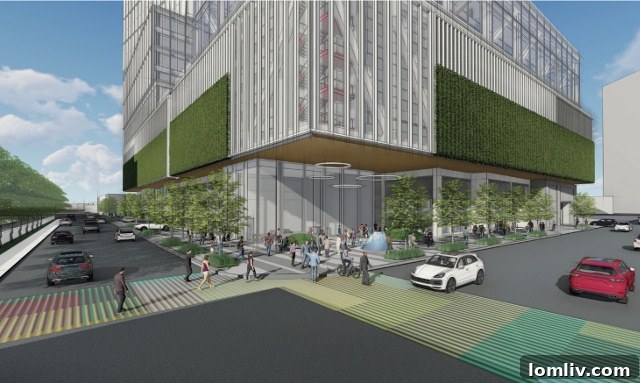
Finally, question six delved into the intricate details of the proposed sidewalk designs, for which KDC provided extensive documentation. The plans revealed generously wide sidewalks, emphasizing a commitment to pedestrian comfort and accessibility. However, a specific suggestion arose from the discussion: the importance of connecting the various planter and tree areas. This thoughtful recommendation aims to create continuous, protected pedestrian pathways, effectively discouraging individuals from cutting across busy blocks, especially along the Woodall Rogers feeder frontage road. By integrating these landscape elements, not only is pedestrian safety enhanced by creating clear boundaries, but the overall urban fabric is also enriched, promoting a more cohesive and user-friendly public realm. This detail highlights the collaborative effort between developers and urban planners to create safer and more enjoyable urban environments.
Novel Turtle Creek – Crescent Communities: A Contentious Challenge to Zoning Integrity
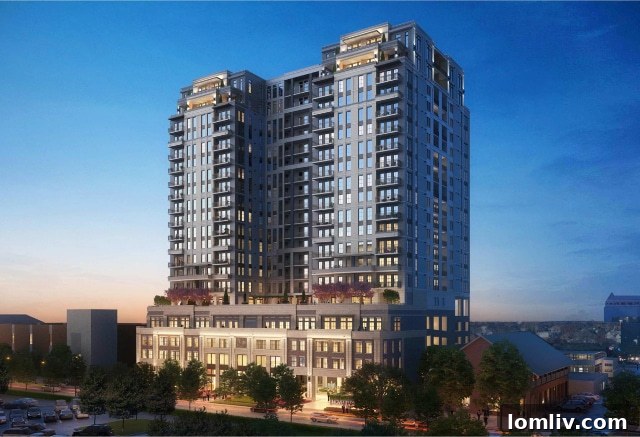
In stark contrast to the KDC project, the proposed “Novel Turtle Creek” by Crescent Communities ignited considerable concern and, frankly, frustration among committee members and observers. This 20-story building development claimed to be “built by-right,” meaning it supposedly complied with existing zoning regulations and therefore did not require a zoning variance. Consequently, its presentation to the Oak Lawn Committee was framed merely as a “courtesy visit.” However, a closer examination of the facts quickly exposed this claim as deeply misleading, if not entirely disingenuous.
The scant materials provided for the project reveal a significant discrepancy between the proposed scale and the allowable zoning. The building, which reportedly broke ground just last week, is slated to feature 206 apartments, each averaging a spacious 1,272 square feet. This equates to an approximate total of 262,000 square feet dedicated solely to residential use. When factoring in an additional 20 percent for essential elements such as hallways, communal public spaces, and various amenities, the total square footage escalates to roughly 330,000 square feet, and this figure excludes the substantial parking garage. The property itself spans 0.9336 acres, or 40,668 square feet. Crucially, it is zoned O-2, which permits a maximum Floor Area Ratio (FAR) of 4:1. This means the total allowable construction square footage on the lot should be no more than four times the land area, equating to a maximum of 162,670 square feet. The proposed building’s footprint, at approximately 330,000 square feet, is nearly double this allowable limit. Such a glaring disparity unequivocally invalidates any claim of “by-right” development and raises serious questions about the project’s adherence to established zoning ordinances.
The supposed solution to this significant FAR deficit lies in a controversial mechanism: the acquisition of “density rights” from an adjacent parcel owned by AT&T. For decades, this AT&T property has housed vital central office switching equipment, and now, AT&T is reportedly selling its unused development density to Crescent Communities, effectively doubling the permissible size of Crescent’s building without acquiring the land itself. This practice, involving transferable development rights (TDRs), is designed to allow density to be shifted from one parcel (the donor site) to another (the recipient site), often to preserve historic structures or open spaces at the donor site. However, the integrity of the TDR system hinges on a fundamental principle: the transferred rights must be permanently extinguished on the donor site. If these rights are not permanently removed, the donor site retains its original development potential, leading to the possibility of “double-dipping” – where the same development rights are effectively used twice, contributing to unchecked density creep and undermining the very purpose of zoning regulations.
This situation is profoundly frustrating because it exposes a systemic failure within the city’s oversight mechanisms. Despite TDRs being a widely used urban planning tool across the nation, and even in parts of Texas, Dallas city staff and council members appear to lack the necessary experience and, perhaps, the will to properly implement and enforce them. This perceived “laziness” or lack of expertise means that the crucial step of permanently extinguishing transferred rights on the donor site is often overlooked or poorly managed. The consequence is alarming: a landowner who has “sold” their development rights could, at a later date, simply file a new zoning case and potentially have those rights restored, especially if the city is forgetful or lenient. Not only could they regain their original rights, but they might even be granted density matching or exceeding the now-expanded property to which they initially transferred their rights. In the case of AT&T, the rights sold to Crescent Communities today could theoretically be restored and resold or used for future redevelopment of their remaining property, creating an untenable scenario of escalating density without proper public review or infrastructure planning. This astonishing negligence carries real, detrimental consequences for the surrounding neighborhoods, impacting infrastructure, traffic, and overall quality of life, a problem that has already been highlighted and critically examined in major urban centers like New York.
Thus, the claim of a “by-right” development and the attempt to circumvent a full, public zoning process are highly problematic. Crescent Communities’ approach, characterized by “discussions with the head of the Oak Lawn Committee” that reportedly began last November, avoids the transparent scrutiny that a significant zoning change rightly demands. A development of this magnitude and controversy should necessitate a comprehensive public airing before the full Oak Lawn Committee, followed by thorough review by the Plan Commission and ultimately, the City Council. Avoiding this process suggests a reluctance to face critical questions and potential public opposition.
One key reason for a developer to sidestep a full-blown zoning case might relate to specific design elements that could face intense scrutiny. For instance, the Novel Turtle Creek project incorporates a single level of underground parking beneath four levels of above-ground parking podium. Such a design, particularly for a high-value residential building in a dense urban area like Turtle Creek, would likely draw significant objections from the OLC, which typically advocates for more subterranean parking to minimize visual impact and maximize green space. The OLC would almost certainly demand additional underground parking to gain its support, a costly proposition developers often seek to avoid. This strategic sidestepping of public review is not only concerning but deeply frustrating to those committed to equitable and responsible urban development.
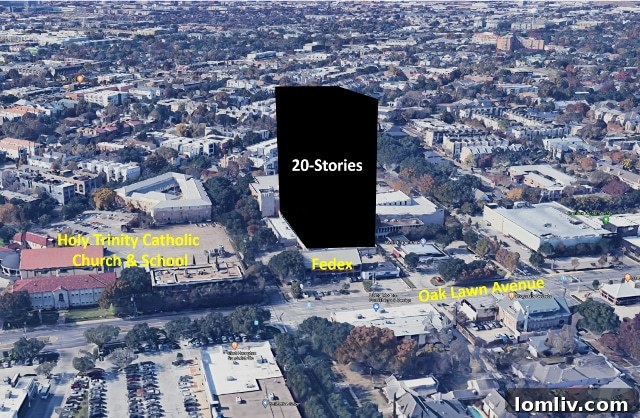
The building’s characteristics further amplify these concerns. A high-rise apartment building featuring units averaging a generous 1,272 square feet almost explicitly signals a future condominium conversion, catering to an affluent demographic. The combination of spacious units and a prime location suggests a highly expensive product. Such a premium offering inherently demands premium amenities, including fully underground parking, particularly given its location. The project’s “tubby” four-story podium, hosting above-ground parking, is conspicuously situated off the main thoroughfare of Oak Lawn Avenue, nestled within a predominantly residential area characterized by three-story townhouses. This visually impactful structure stands in jarring contrast to its immediate neighbors; for instance, the two-story FedEx location directly on Oak Lawn Avenue would appear diminutive, almost like a “Chihuahua’s doghouse,” next to this imposing development. This incongruity underscores a fundamental lack of sensitivity to the existing neighborhood fabric and a missed opportunity for design excellence. Ultimately, this presentation felt less like a genuine “courtesy visit” and more like a superficial “drive-by,” offering minimal engagement while pushing through a contentious plan.
While Oak Lawn and Uptown are undeniably significant growth corridors for Dallas, attracting substantial density, this current approach of passively enabling backdoor upzoning and allowing for “double-dipping” on development rights is unsustainable and must be urgently rectified. For any transfer of development rights (TDRs) to be permissible, the city must implement stringent mechanisms to ensure that these rights are irrevocably and permanently extinguished on the donor site. Furthermore, the entire process surrounding TDRs and significant zoning changes must be conducted with absolute transparency and within the full public view, involving all relevant committees and public forums. This commitment to permanent extinguishment and public accountability is paramount to preserving the integrity of Dallas’s zoning framework, protecting neighborhood character, and ensuring that urban growth serves the best interests of all residents.