Dallas’s urban landscape is continually evolving, driven by visionary projects that reshape the city’s identity. Recently, the influential Oak Lawn Committee convened to review two significant development proposals, one of which promises to become a landmark in the city’s ongoing transformation. While one case involved a minor zoning adjustment, the other introduced a monumental, long-term mixed-use development poised to redefine a key downtown area. We’ll first address the smaller, more straightforward zoning matter before delving into the ambitious project that has captured the attention of urban planners and architecture enthusiasts alike.
The first presentation revisited a zoning request concerning a vintage single-family home situated at the intersection of Knight Street and Rawlins. Back in September, the property owners initially proposed a substantial upzoning from Multi-Family-2 (MF-2) to Office-2 (O-2). This drastic leap in zoning classification, which allows for more intensive commercial use, raised eyebrows within the community and the Oak Lawn Committee. The rationale behind such an ambitious reclassification appeared to stem from the property’s stagnant market performance, as the long-time owners struggled to sell the house at their desired price point. The committee questioned the appropriateness of such a significant change for a property seemingly driven by individual sales challenges rather than broader urban planning objectives.
In a subsequent and more pragmatic move, the property owners returned to the Oak Lawn Committee with a revised proposal that aligned more closely with the area’s existing character and the committee’s development philosophy. Their updated request sought to retain the current MF-2 zoning designation while incorporating an allowance for live-work use, permitting the house to be occupied in full or in part by an office. This sensible compromise reflects a growing trend in urban areas, mirroring successful adaptations seen in older homes near the Quadrangle that have seamlessly transitioned into office spaces. Furthermore, the proposal ensures that should the existing structure eventually be redeveloped – a likely scenario given the area’s growth – the property would revert to its pure MF-2 zoning, suitable for the construction of multi-family residences such as the popular trio of townhouses common in similar Dallas neighborhoods. This resolution provides a flexible, market-responsive solution without drastically altering the area’s established zoning framework, making it a pragmatic outcome for all parties involved.
Introducing The North End: A Transformative Dallas Mixed-Use Development
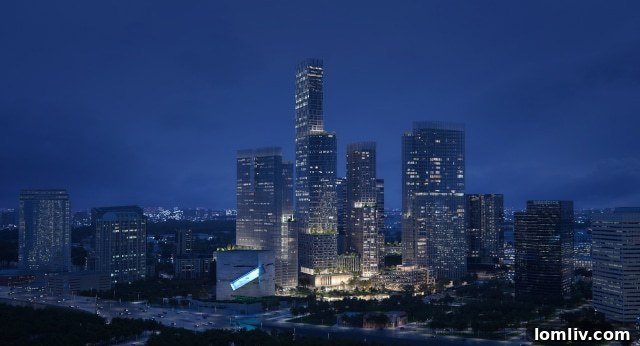
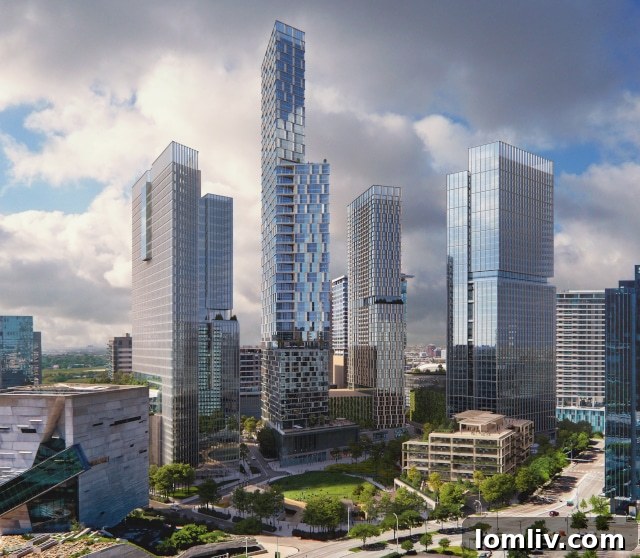
Shifting our focus to the main event, the Oak Lawn Committee was presented with a truly ambitious long-term project: “The North End.” This expansive mixed-use development, envisioned by a stellar team comprising Hunt Realty, KPF Architects, and Hoerr Schaudt for landscape architecture, is set to introduce a new paradigm of urban living and commerce in Dallas. While some new developments might obscure views with less inspiring designs, The North End promises architecture of equivalent quality, ensuring that any new visual presence enhances the cityscape. It’s worth noting, however, that despite its impressive stature, the project’s tallest tower will not claim the title of Dallas’s highest, falling 32 feet short of the iconic Bank of America Plaza’s 921-foot record, a title held for over 35 years. One can’t help but wish for a bolder reach to truly etch its name in the Dallas skyline.
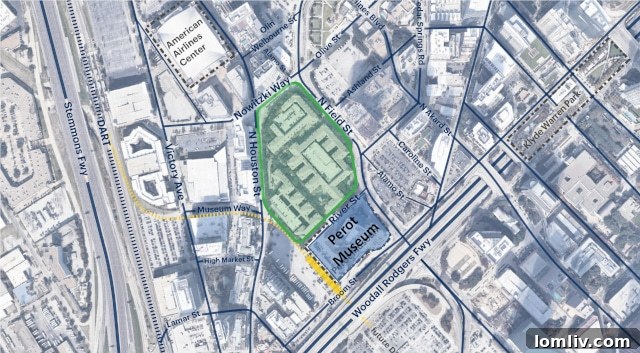
Curiosity naturally turns to the location of this significant 11-acre parcel within the bustling city. The North End site is strategically positioned just north of the renowned Perot Museum of Nature and Science and directly across Houston Street from the elegant W Hotel and Residences. This prime location is currently occupied by the Northend Apartments, marked prominently in green on development maps. For public transit advocates and DART users, the project boasts an even more exciting prospect: it is adjacent to the proposed Museum stop for the D2 underground DART line, visually represented as a yellow “finger” on city plans. This connectivity underscores the project’s commitment to integrated urban living.
A crucial aspect of The North End’s appeal lies in its location within PD-193 and under the thoughtful jurisdiction of the Oak Lawn Committee. This oversight is a relief to many, as it guarantees a level of architectural and planning scrutiny that might be absent in other districts, such as Victory Park, where development has sometimes lacked cohesive integration. This long-term mixed-use initiative is poised to be a pivotal connector, effectively “knitting” the currently underdeveloped or “dead zones” of Victory Park with the vibrant energy of Uptown and downtown Dallas. However, one architectural element echoes a common concern found in Victory Park: the prevalence of above-ground parking. Among the project’s four distinct buildings, only the smallest is designed with exclusively underground parking facilities. The remaining structures incorporate a mix of nine to eleven stories of above-ground parking alongside just three subterranean levels, a design choice that warrants further discussion regarding its urban impact and aesthetic implications.
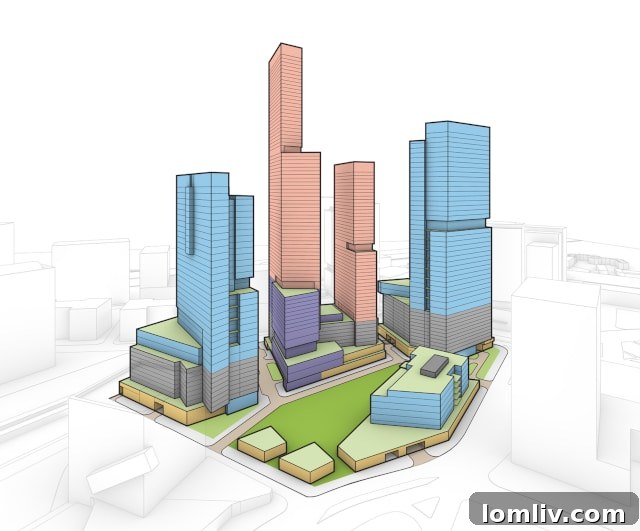
Peeling back the glossy renderings reveals the intricate layout of The North End. The development is fundamentally comprised of four primary buildings. The smallest of these, visible in the right-foreground of the conceptual drawings, is a standout for its innovative design, which we will explore in more detail shortly. However, a preliminary observation concerns a podium structure that extends southward from this particular building. While the building itself is undeniably appealing, its placement atop a stilt-like podium raises a design question. Eliminating this podium could not only enhance the building’s ground-level presence but also create a more expansive and welcoming entrance to the project’s central green space, fostering a more fluid connection between the urban fabric and the natural elements.
The Heart of The North End: 1.5 Acres of Urban Green Space
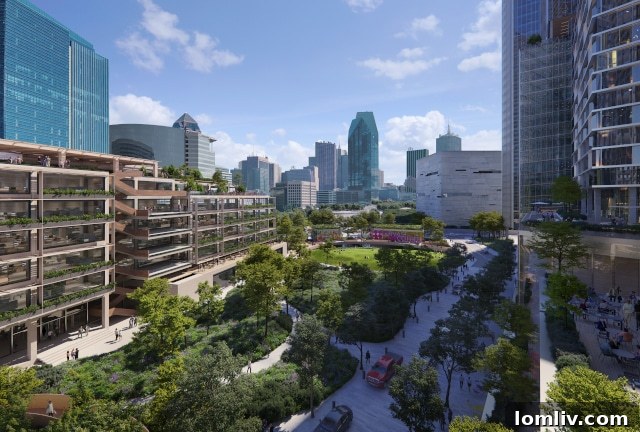
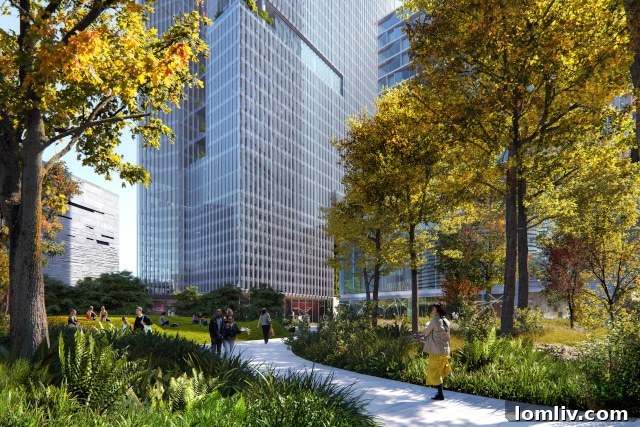
At the core of The North End vision is a magnificent 1.5-acre central green space, an urban oasis designed to offer continuous tranquility and respite—a feature Dallas desperately needs more of. This expansive park serves multiple crucial functions for the development and the wider community. Firstly, it acts as a central hub, elegantly connecting the surrounding high-rise structures like spokes to a wheel. This thoughtful design creates an inspiring “stadium seating” effect, offering residents and visitors unparalleled, unobstructed views of the dynamic downtown Dallas skyline. Beyond its aesthetic appeal, the green space provides invaluable recreational opportunities for office workers and residents alike, offering a much-needed venue for relaxation, exercise, and social interaction – a critical amenity in today’s fast-paced urban environment. Strategically, this green expanse also serves a practical purpose from the city’s perspective, artfully concealing some of the less integrated aspects of Victory Park from direct view.
The architectural plans reveal a diverse array of structures: the striking blue-hued buildings positioned at the ends of the complex are dedicated office spaces, while the central pair of towers are designed for true mixed-use, integrating residential units, a luxury hotel, and vibrant ground-floor retail and restaurant establishments. This combination sparks exciting speculation, with whispers of high-end brands, perhaps even a Mandarin Oriental, finally finding a home in Dallas. However, a significant portion of the site, delineated in gray on the development plans, is allocated to above-ground parking. This aspect raises considerable concerns. For a project of such monumental scale and ambition, particularly one aiming for a premium urban experience, a disproportionate reliance on above-ground parking is a notable drawback. The current proposal indicates a two-to-one ratio of above-ground to underground parking, which feels incongruous with contemporary urban planning best practices that prioritize pedestrian-friendly environments and minimize visual clutter.
Pioneering Sustainable Architecture: The Wooden ‘Ply-Rise’ Building
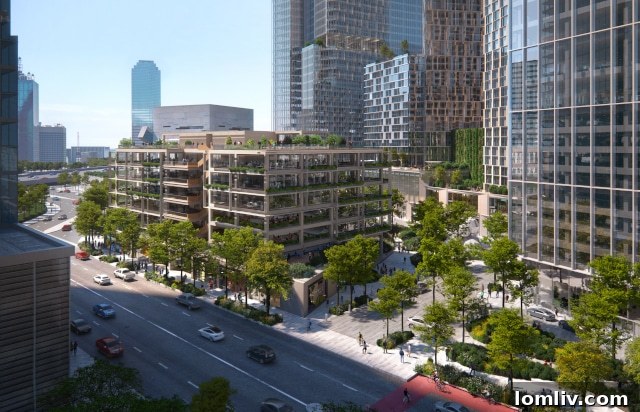
Among The North End’s architectural highlights is its smallest building, an innovative 85-foot “ply-rise” structure crafted predominantly from wood. This particular building stands out not only for its unique material choice but also as the only one in the development to feature exclusively underground parking. Its current height is constrained to 85 feet, a limitation imposed by existing Dallas building codes, which have yet to fully integrate advancements in high-tech wood construction prevalent in other progressive cities. Beyond its structural innovation, the wooden ply-rise is designed with a strong emphasis on sustainability and biophilic design, incorporating lush greenery across its numerous balconies and rooftops. Its inner courtyard offers direct, seamless access to the central green space, entirely free from vehicular roads, fostering a harmonious connection with nature.
It is a compelling example of sustainable architecture, and one cannot help but express a desire for even greater ambition in its design. Ideally, this innovative wooden structure would have been the tallest building within the complex, rather than the shortest. Such a move would send a powerful message about Dallas’s commitment to daring engineering, renewable resources, and cutting-edge sustainable practices, truly setting a precedent for future urban developments.
A Dynamic Urban Park: Hills, Forests, and Community Programming
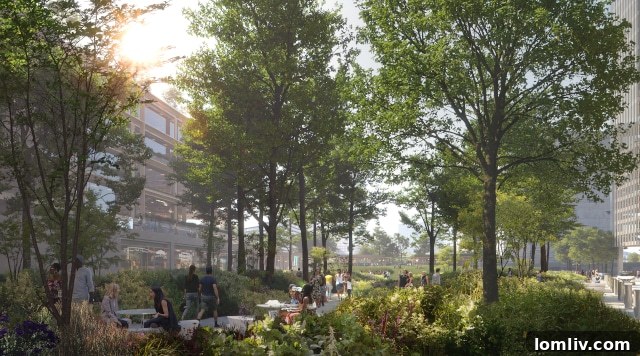
The central green space at The North End is conceived as a dynamic urban park, offering a diverse array of experiences. Its design thoughtfully incorporates varied topography, moving beyond a flat expanse to feature rolling hills and natural contours. This deliberate choice creates distinct zones within the park, including a verdant forest area, open lawn spaces ideal for relaxation, and intricately designed walkways that invite exploration. The park is envisioned as a vibrant hub for community engagement, with plans to program it with special events, concerts, and public gatherings. An accessible road along one side of the park is designated for popular food truck events, drawing parallels to the successful model seen at Klyde Warren Park, further enhancing its appeal as a public destination. A particular highlight is the commitment to planting more mature trees, rather than the typical young saplings often seen in new developments. When specifically questioned about the long-term impact on the tree canopy and views for future generations, the development team confirmed that while transplanting century-old trees isn’t feasible, they will utilize a mix of mature specimens alongside smaller ones, ensuring an immediate and lasting green presence.
Culinary Delights and Public Access: Pop-Up Restaurants and Urban Management
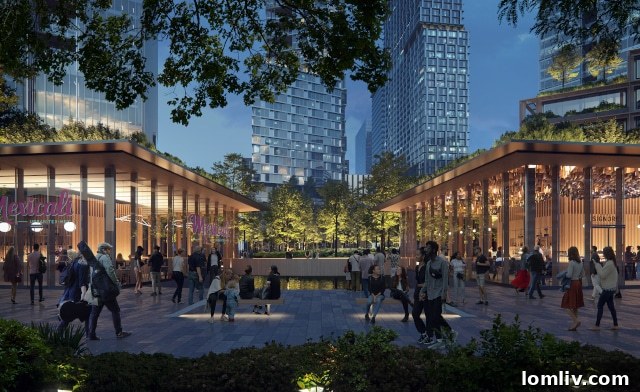
Enhancing the public realm, The North End will feature several single-story restaurant pavilions strategically positioned along the outer edge of the central green space, directly facing the iconic Perot Museum. These eateries are poised to emulate the success and vibrant atmosphere of the renowned restaurants that line Klyde Warren Park, and given their proximity, are expected to attract a similar discerning clientele. For local residents and visitors, this promises an exciting new culinary destination that integrates seamlessly with the surrounding cultural institutions. The writer, already a frequent pedestrian in the area, anticipates becoming a regular patron of these future establishments, highlighting their potential to invigorate the street-level experience.
During the Oak Lawn Committee meeting, a pertinent question was raised by a new member regarding the persistent issue of scooter proliferation in Victory Park. Events in Victory often result in hundreds of scooters being abandoned across the area, creating unsightly clutter once attendees depart via ride-sharing services. The development team addressed this concern by clarifying that while The North End’s central park will be publicly accessible, the land itself remains private property. This crucial distinction means that the management of scooter-related issues, including their prevention and removal, will fall under the purview of private patrols rather than relying on city enforcement. This proactive approach aims to maintain the park’s pristine condition and ensure a pleasant experience for all visitors, distinguishing The North End from adjacent public spaces.
Zoning Requests and Urban Planning Implications for The North End
From an elevated perspective, particularly looking back from the Perot Museum, the meticulously planned building layout of The North End creates a captivating view corridor that frames the downtown Dallas skyline. This strategic arrangement evokes the impression of a miniature Central Park, gracefully surrounded by an array of taller buildings, with the distinct wooden ply-rise structure subtly integrated on the left side of the complex. The project’s developers have submitted zoning requests that are remarkably modest given the scope and ambition of the undertaking, reflecting a thoughtful approach to urban integration.
The 11-acre site is currently zoned as Multi-Family-3 (MF-3), permitting high-rise residential development with a Floor Area Ratio (FAR) of 4:1 and no specific height limitations. The core requests from the developers include doubling the FAR to 8:1 and crucially, allowing for mixed-use development rather than being restricted to purely residential use. Additionally, they propose increasing the lot coverage from the existing 60 percent to 75 percent. While an increase in lot coverage typically raises concerns among urban planners, this particular instance warrants a different perspective. Firstly, the sheer size of the 11-acre site ensures that even with higher coverage, a substantial amount of contiguous open space will be preserved and enhanced. Secondly, the current Northend Apartments, which occupy the site, are inwardly focused, offering no public access and lacking significant green areas. The North End project fundamentally transforms this dynamic, opening up a considerable portion of this privately-held land to public access for the first time in decades, a significant benefit to the community.
As with any large-scale urban development in Dallas, questions surrounding affordable housing are paramount and require comprehensive discussions with the city. Unlike some projects that mitigate their affordable housing contributions by adding residential components to previously non-residential lots, The North End represents a complete replacement of an existing residential complex. This distinction necessitates a rigorous review of its compliance with current and future city statutes on affordable housing. It is imperative that the development includes provisions that ensure adherence to the city’s affordable housing requirements, potentially through specific wording in the zoning agreement that mandates compliance with regulations in effect at the time of construction.
A final, critical consideration for a project of this magnitude is its extended timeline. The North End is projected to be built incrementally over a period of 10 to 20 years, allowing Dallas’s market to absorb its various residential, commercial, and hospitality components organically. This phased approach, while sensible, raises important questions about the construction cadence and the interim appearance and utility of the plot. While it is unlikely that the site will remain a barren, dust-filled construction zone for two decades, clarity is needed on how the undeveloped portions will be utilized. Creative interim solutions, such as temporary pop-up restaurants, expanded lawn spaces for public use, or other dynamic community activations, could bridge the gap, ensuring the land remains a vibrant part of the urban fabric even during the development process.
This extended development horizon also presents a unique challenge for urban planning: the concept of “ghost zoning.” When the city grants zoning approvals today for projects that will unfold over a decade or more, how are these future entitlements accounted for when evaluating subsequent, smaller zoning requests in adjacent areas? Maintaining an accurate and accessible record of these long-term “ghost zonings” is essential for cohesive urban development, ensuring that new proposals are assessed within the broader context of approved, yet-to-be-built projects, thereby preventing unintended conflicts or missed opportunities for harmonious growth. The North End stands as a testament to Dallas’s dynamic future, a complex interplay of architectural vision, urban planning, and community needs, promising to enrich the city’s skyline and public realm for generations to come.