The Oak Farms Dairy Site: A New Flashpoint in Oak Cliff’s Redevelopment Battle
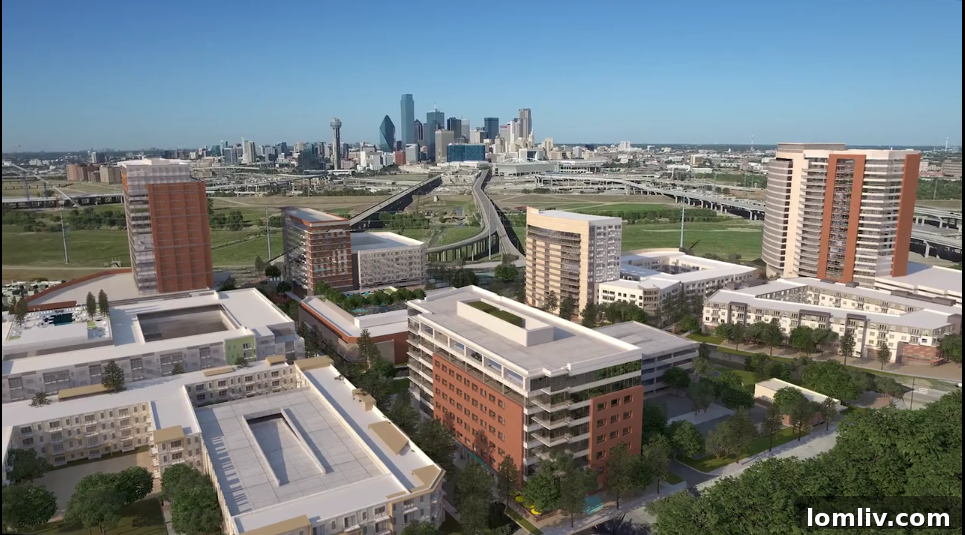
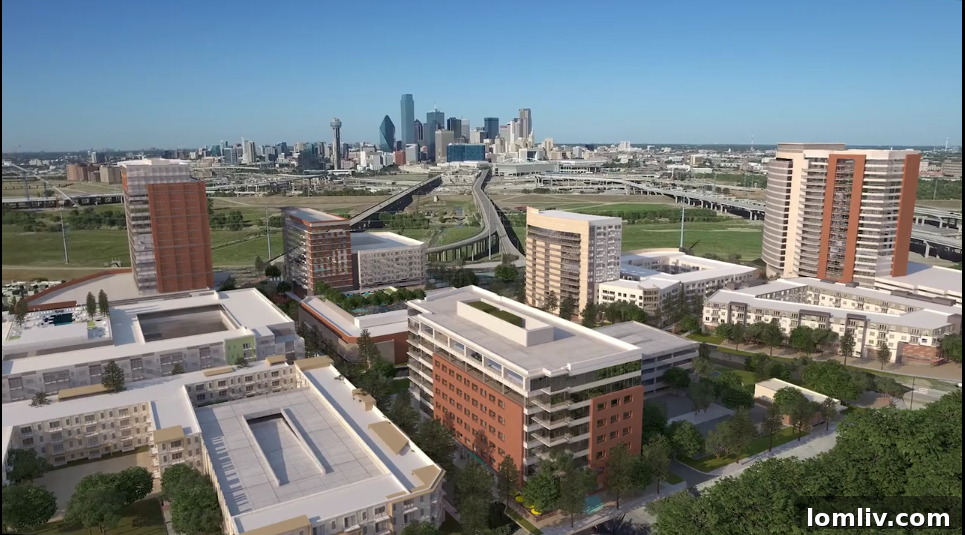
The eagerly awaited redevelopment of the prominent Oak Farms Dairy site has officially commenced what many residents are already dubbing “round two” in the ongoing saga over the visual identity and community feel of the Oak Cliff Gateway. Good Fulton & Farrell (GFF), the architectural firm entrusted with shaping the future of this pivotal Dallas location, recently released a promotional video showcasing their preliminary designs. Situated at a crucial entry point, the Oak Farms Dairy site is not merely another parcel of land; it is a visually dominant landmark, widely considered the quintessential gateway to the vibrant and historically rich community of Oak Cliff. However, in a telling turn of events, the firm quickly withdrew the video, a move that starkly highlights the immediate and overwhelmingly negative reaction from the community.
For long-standing residents, community activists, and local stakeholders, the initial glimpse into GFF’s vision proved dishearteningly familiar. It appears that the architects may have either failed to internalize or, perhaps, deliberately overlooked the extensive feedback and strong preferences consistently voiced by the community during previous development proposals across North Oak Cliff. The designs presented bore a striking resemblance to the “sterile, hospital-esque, red brick and stucco” aesthetics that have routinely met with fervent opposition. This recurring architectural motif, often criticized as generic and out of alignment with the neighborhood’s unique character, has once again galvanized the community into a defensive posture, resolute in their determination to safeguard the authentic spirit and architectural integrity of Oak Cliff.
Unlocking the Significance: Why the Oak Farms Dairy Site is Pivotal
The Oak Farms Dairy site commands an exceptional level of importance primarily due to its strategic location. For generations, this area has served as a critical welcome mat for individuals entering Oak Cliff, a neighborhood celebrated for its deep historical roots, its richly diverse community, and its distinctive architectural mosaic. Unlike many urban areas undergoing rapid gentrification, Oak Cliff has largely succeeded in preserving much of its original charm, evident in its array of historic homes, its collection of unique local businesses, and a palpable sense of community that residents ardently protect. Consequently, the visual identity of its gateway extends far beyond mere aesthetics; it is fundamentally about preserving the very essence of what makes Oak Cliff so special and appealing. Any development undertaken here possesses the profound capacity to either enhance this cherished identity or, conversely, irrevocably diminish it, thereby establishing a significant precedent for all future projects.
Residents universally acknowledge that urban development and progress are inevitable. However, they hold a firm belief that such progress must unfold harmoniously with the existing urban fabric. The site’s unparalleled prominence dictates that whatever structures emerge here will undeniably shape the inaugural impressions of visitors and significantly influence the daily experiences of those who proudly call Oak Cliff home. A thoughtfully conceived, context-sensitive design has the potential to celebrate the neighborhood’s rich heritage while seamlessly integrating modern functionality. Conversely, an insensitive or poorly executed design risks creating a jarring visual discontinuity, systematically eroding the deep-seated sense of place that has been meticulously cultivated and treasured over many decades.
Architectural Disconnect: Echoes of Persistent Community Frustrations
The community’s immediate and emphatic rejection of GFF’s proposed designs is far from an isolated incident; rather, it represents a continuation of deeply rooted and persistent grievances. Residents have consistently articulated a clear preference for developments that respectfully echo Oak Cliff’s eclectic, often historic, architectural styles. These styles encompass a vibrant blend of Craftsman, Tudor, Prairie, and mid-century modern influences, each contributing to the neighborhood’s unique visual narrative. The designs characterized as “sterile, hospital-esque, red brick and stucco” are widely perceived as antithetical to this cherished heritage. These styles frequently draw criticism for their conspicuous lack of distinctive character, their generic massing, and their discernible failure to incorporate design elements that resonate with the local history or the subtle cultural nuances that define the area.
When architectural firms propose uniform, uninspired structures that could, quite frankly, be transposed to any suburban landscape across America, it signals a fundamental misunderstanding, or perhaps even a disregard, of Oak Cliff’s unique identity. Such designs tend to manifest as monolithic blocks, presenting expansive, undifferentiated facades that actively deter pedestrian interaction and fail to integrate seamlessly with the existing, human-scaled character of the neighborhood. This approach stands in stark contrast to the community’s deeply held desire for buildings that are scaled to human proportions, inviting active street-level engagement, and incorporating a diverse material palette that thoughtfully echoes the varied textures and colors found throughout the historic district. The pervasive fear is that these types of developments will inevitably contribute to a homogenized urban landscape, systematically stripping away the very qualities and charm that initially attract people to Oak Cliff and foster its enduring appeal.
The Potency of Community Voice: “They Know How Our Community Feels”
The swift removal of GFF’s promotional video almost immediately after its initial public release stands as a powerful testament to the undeniable potency of community feedback, particularly amplified in the age of rapid digital communication and social media. The sentiment eloquently expressed by local advocate Amy Wallace Cowan, who reportedly declared that this situation was “even MORE frustrating than the Alamo Manhattan situation because GFF knows how our community feels about…,” perfectly encapsulates the profound depth of the community’s sustained frustration. This is not merely a novel conversation; it is a recurring articulation of deeply held values, fundamental expectations, and profound disappointments that residents have consistently communicated to developers and city planners on numerous occasions.
The explicit reference to the “Alamo Manhattan situation”—likely another contentious and publicly debated development project within the immediate vicinity—serves to underscore a discernible pattern of perceived disregard for community input. It strongly suggests that despite engaging in extensive dialogues, participating in numerous public forums, and organizing various forms of civic protest, developers and architects have, at times, proceeded with designs that appear to fundamentally ignore the core tenets of local preference and community consensus. This creates an exhausting and demoralizing cycle of mistrust and frustration for residents who increasingly feel that their voices are heard in a superficial manner, but not genuinely heeded or deeply understood. The community’s stance is unequivocally clear: they are not inherently opposed to development; rather, they are staunchly opposed to inappropriate development that demonstrably compromises their neighborhood’s intrinsic integrity for the sake of mere expediency, perceived cost-efficiency, or a lack of contextual imagination.
Beyond Backlash: Envisioning a Collaborative Future for the Oak Farms Dairy Site
While the immediate and visceral reaction to GFF’s initial redevelopment plans has undoubtedly been one of profound disappointment, this moment also presents a crucial and timely opportunity for significant recalibration. The prompt withdrawal of the video, though potentially an act of swift damage control, could also be constructively interpreted as an implicit acknowledgment of the pressing need for a fundamentally different approach. The residents of Oak Cliff are not simply opposing development in a blanket manner; rather, they are passionately advocating for thoughtful, context-sensitive urban planning that actively celebrates, rather than diminishes, their cherished and historically significant neighborhood.
So, what precisely would a truly successful and universally embraced redevelopment for the Oak Farms Dairy site genuinely entail? It must begin with authentic, transparent, and robust community engagement. This necessitates moving far beyond mere perfunctory presentations and instead embracing truly collaborative workshops where resident input is not only solicited but actively and meaningfully integrated into the design process from its very earliest conceptual stages. Key considerations that should guide this collaborative endeavor include:
- Contextual Architecture: The development of designs that draw profound inspiration from Oak Cliff’s rich and diverse existing architectural heritage, thoughtfully employing a varied range of materials, scales, and forms that harmonize seamlessly with the surrounding environment. This does not imply mere replication but rather a respectful and creative interpretation of the local vernacular.
- Mixed-Use Functionality: The creation of a development that actively promotes walkability and fosters vibrant street life by ingeniously integrating residential, retail, office, and ample green spaces. Ground-floor retail should be designed to be overtly inviting, highly accessible, and strategically positioned to foster the growth and success of local, independent businesses.
- Pedestrian-Friendly Design: A strong emphasis on expansive sidewalks, inviting public plazas, and clearly marked, safe crossings that unequivocally prioritize the safety and convenience of pedestrians and cyclists over vehicular traffic, thereby connecting the site seamlessly with adjacent neighborhoods and fostering a sense of community.
- Green Infrastructure: The conscientious incorporation of sustainable design principles, encompassing generous green spaces, an abundant tree canopy, sophisticated stormwater management systems, and highly energy-efficient building practices to minimize environmental impact.
- Preservation and Interpretation: Where architecturally or historically feasible, a respectful approach to preserving any significant historical elements of the original dairy site or incorporating artistic interpretations and public art that thoughtfully acknowledge and celebrate its rich industrial legacy.
The Oak Farms Dairy site offers an unparalleled, once-in-a-generation opportunity to create a landmark development that can serve as a shining model for future urban revitalization efforts. It represents a profound chance to conclusively demonstrate how thoughtful, modern development can coexist beautifully and productively with historic preservation and a strong, deeply ingrained community identity. This isn’t about halting progress; it is, fundamentally, about defining what meaningful and respectful progress truly means within a culturally rich and historically significant neighborhood such as Oak Cliff.
Conclusion: The Imperative for Thoughtful and Community-Centric Development in Oak Cliff
The initial unveiling of preliminary plans for the Oak Farms Dairy site has unequivocally underscored the critical and immediate need for developers and architects to genuinely understand, deeply respect, and authentically respond to the unique character and profound aspirations of the Oak Cliff community. The swift and robust public backlash, followed by the subsequent removal of GFF’s promotional video, serves as a powerful and unambiguous reminder that cookie-cutter, generic architectural designs will simply not be tolerated or accepted in a neighborhood so deeply invested in its distinct identity and historical narrative.
The Oak Cliff Gateway transcends its mere geographical designation; it stands as a potent symbol of the neighborhood’s resilience, its rich history, and its vibrant, forward-looking future. The “battle” over its appearance is a resounding testament to the community’s unwavering commitment to ensuring that all new developments contribute positively and harmoniously to its distinct urban fabric, rather than detracting from it or erasing its essence. For the redevelopment of the Oak Farms Dairy site to be truly successful, genuinely embraced, and ultimately celebrated by the community, it must fundamentally be a collaborative endeavor. This collaboration must be deeply rooted in active listening, profound understanding, mutual respect, and a shared vision for an Oak Cliff that is both modern and authentically itself. The path forward unequivocally demands transparency, flexibility, and an enduring, deep respect for the architectural heritage and the indomitable community spirit that collectively define this irreplaceable Dallas neighborhood.