The Evolving Landscape of Manhattan Retail: A Glimpse into the “Retail Apocalypse”
During a recent Mother’s Day weekend trip to New York City, I had the pleasure of strolling through the iconic avenues of Manhattan, specifically Madison and Fifth Avenues, extending up to approximately 80th Street. The city was, as always, a vibrant tapestry of activity. Broadway was buzzing with theatergoers, and Times Square lived up to its reputation as a wall-to-wall spectacle of humanity and dazzling lights. Yet, amidst this familiar hustle and bustle, a striking and somewhat unsettling phenomenon caught my eye: the retail landscape was undeniably transforming.
As I meandered past some of the world’s most coveted retail addresses, I couldn’t help but notice an alarming number of storefronts that were either shuttered, displaying “for rent” signs, or simply vacant, awaiting new tenants. This wasn’t just an isolated incident; it was a pervasive sight that began to raise serious questions in my mind. The sheer volume of empty spaces, particularly along the prestigious corridors of Fifth and Madison, was unexpected and quite stark. My observations prompted me to reach out to a trusted friend and esteemed real estate expert and appraiser, Jonathan Miller, whom I regrettably didn’t have the chance to meet in person during my visit.
An Email Exchange: Confirming the Unsettling Reality
In an email, I conveyed my astonishment: “But the empty retail spaces! Whoa, even along Fifth and Madison! I think I saw one or two every block, and we walked from 44th to 80th. What gives?” I wrote, hoping for some explanation or context for what I was witnessing.
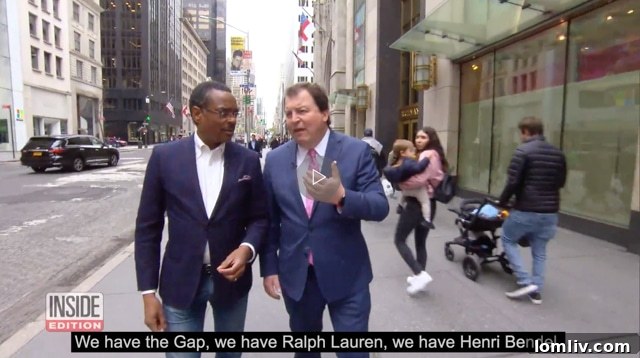
Jonathan’s response was both immediate and illuminating, confirming that my observations were far from isolated and, in fact, indicative of a larger trend that was already making headlines. His reply began: “It’s funny you mention the retail apocalypse – I am supposedly on ‘Inside Edition’ tonight to speak to this very issue!” This revelation immediately underscored the gravity of the situation. He further elaborated on his direct experience: “Strolled up and down Fifth with a camera crew last week to explain it for 90 minutes in a 3-minute segment. From 49th to 59th, 1 out of 4 stores are empty.” This staggering statistic, directly from an expert who had just conducted a thorough survey of the area, validated my initial concerns and painted an even more dire picture of the retail sector’s health in one of the world’s most iconic shopping districts.
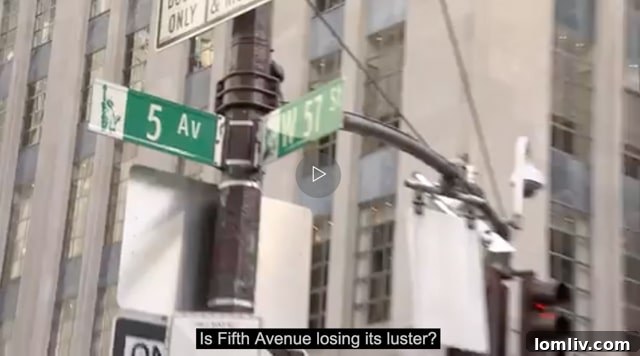
You can watch the segment onInside Editionhere to get an expert’s perspective on why Manhattan’s famous Fifth Avenue might be losing its luster.
Beyond Retail: A Glimpse at Manhattan’s Unique Dynamics and Security
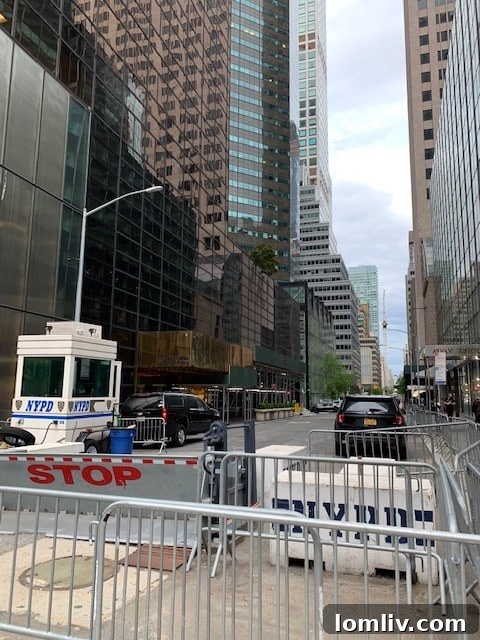
During my explorations, another striking observation, albeit unrelated to retail, offered a unique insight into Manhattan’s dynamic environment. It was quite interesting that Jonathan mentioned Trump Tower, as I had walked by the very place. I did a total double take when I encountered the formidable presence of armed guards. These were not your typical security personnel; I mean big, special ops-type police officers, clad in black, with large machine guns strapped across their chests, standing at full attention. I paused, genuinely surprised, almost gasping, until I fully registered that I was in front of Trump Tower. (The side of the building, which is also visible in the Inside Edition segment, is notably blocked off from Fifth to Madison). My New York friends later informed me that whenever President Trump visits the city, which is now less frequent, entire blocks surrounding Trump Tower are often cordoned off, a testament to the heightened security protocols associated with presidential movements.
I considered capturing a photograph of the officers, and one even caught my eye and offered a slight, almost imperceptible smile. I reached for my phone, then hesitated, ultimately deciding against it. The thought of potential complications, perhaps even a confrontation, simply wasn’t worth the risk for a mere social media post. This fleeting moment underscored the unique, often high-stakes atmosphere that can permeate certain areas of New York City, contrasting sharply with the retail observations but adding another layer to the city’s complex character.
The Core Culprits: Exorbitant Rents and the E-commerce Revolution
Jonathan’s insights delved deeper into the fundamental reasons behind the widespread retail vacancies. According to him, the primary drivers are a confluence of two powerful forces: astronomical rents and the relentless rise of internet shopping. He highlighted the staggering cost of operating a physical storefront in these prime locations, citing rents as high as $2800 per square foot in the area. To put this into perspective, Jonathan mentioned that for a larger space, such as 53,000 square feet, the monthly rent could skyrocket to an astonishing $1.5 million. The question then becomes existential: who, indeed, can afford such exorbitant costs in today’s evolving retail landscape?
My personal observation during my walk was that I didn’t necessarily see less foot traffic overall. What I perceived, instead, was a notable reduction in the number of active stores available for that traffic to enter and engage with. This distinction is crucial, suggesting that while people are still out and about in Manhattan, their destinations and shopping habits are undergoing a significant shift. The traditional model of brick-and-mortar retail, particularly for non-essential goods, is struggling to justify its existence when faced with such immense overheads.
The Unstoppable Force of Online Retail
The advent and exponential growth of e-commerce have fundamentally reshaped consumer expectations and purchasing behaviors. Shoppers now enjoy unparalleled convenience, vast selections, and competitive pricing from the comfort of their homes. This digital transformation has eroded the necessity of visiting physical stores for many items, especially those that can be easily compared and purchased online. For retailers, this means that physical stores must offer something more than just products – they must provide an experience, a unique service, or a tangible benefit that online platforms cannot replicate. Unfortunately, the cost of creating and maintaining such an experience in prime Manhattan locations often becomes prohibitive, pushing even established brands to reconsider their physical footprint.
The Security Factor: An Added Cost of Doing Business
Another striking observation contributing to the economics of retail in New York City is the pervasive presence of private security. It seemed almost every store I passed, even those that weren’t high-end luxury boutiques, had private security personnel stationed at the front door. While this offers a sense of safety and security, it represents yet another significant operational cost that retailers must absorb. When combined with sky-high rents, these additional expenses make it increasingly challenging for businesses to maintain profitability, further exacerbating the “retail apocalypse” phenomenon.
The Future of Manhattan Retail: A Shift Towards Services and Experiences
The implications of these trends are far-reaching, prompting major brands to fundamentally rethink their economic models. Many are now shunning vast retail square footage in favor of a stronger cyber presence, realizing substantial savings on both rent and security. Conversations with other friends who are intimately familiar with the New York real estate market reinforce a shared expectation: things are likely to worsen for traditional product-based retail before they get better. The consensus is that soon, the primary form of retail you will encounter in these high-rent districts will be services rather than goods. This includes businesses like nail salons, banks, various restaurants and cafes, and professional offices.
This paradigm shift makes logical sense. Services, by their very nature, often require a physical presence and an in-person interaction that e-commerce cannot fully replicate. While you can order food online, the experience of dining out remains distinct. Similarly, a manicure or a banking consultation typically necessitates a visit to a physical establishment. However, even within this service-oriented future, the question of affordability looms large. One can only imagine the cost of a simple manicure when the underlying rent for the space is $2800 per square foot!
Adapting to Change: Strategies for Survival and Evolution
For landlords and retailers alike, the current climate demands innovative strategies and a willingness to adapt. Landlords might need to consider more flexible lease terms, shorter commitments, or even explore different types of tenants beyond traditional retail. The rise of pop-up shops, experience-driven retail concepts, and showrooms (where customers can view products but purchase online) are all responses to these evolving market dynamics. Retailers, on the other hand, must prioritize creating unique, engaging, and memorable in-store experiences that provide value beyond mere transactions. This could involve integrating technology, hosting events, or offering highly personalized services that foster genuine connection with the customer.
The transformation of Manhattan’s retail avenues is not merely an economic story; it’s a reflection of broader societal shifts, technological advancements, and changing consumer priorities. While the sight of empty storefronts along Fifth and Madison Avenues might evoke a sense of nostalgia for a bygone era, it also signals an inevitable evolution. The iconic shopping districts of New York City are not disappearing, but rather reinventing themselves, striving to find a sustainable equilibrium in an increasingly digital and experience-focused world. The challenge lies in harmonizing the allure of a prime physical location with the demands of modern commerce, ensuring that these legendary streets continue to thrive, albeit in new and unexpected ways.