North Texas Tremors: Unraveling the Mystery of Recent Earthquakes and Their Aftermath
A series of unsettling seismic events recently rattled the North Texas region, prompting widespread concern and an urgent investigation into their origins. Residents across Dallas, Fort Worth, and especially Irving, experienced a day marked by unexpected ground tremors, leading to minor property damage and a significant disruption to public services. This article delves into the details of these recent earthquakes, explores the ongoing debate surrounding their causes, and examines the immediate and long-term implications for the community.
The events unfolded with a surprising intensity for a region not historically known for significant seismic activity. Today’s tremors, three distinct events in total, have reignited discussions about seismic safety and the potential for human activities to influence geological stability.
A Day of Shakes: Detailing the Recent Seismic Activity
The Dallas-Fort Worth Metroplex awoke to an unusual day of seismic unrest, beginning with a noticeable tremor that primarily affected Irving. This initial jolt served as a prelude to a more widespread and impactful sequence of events.
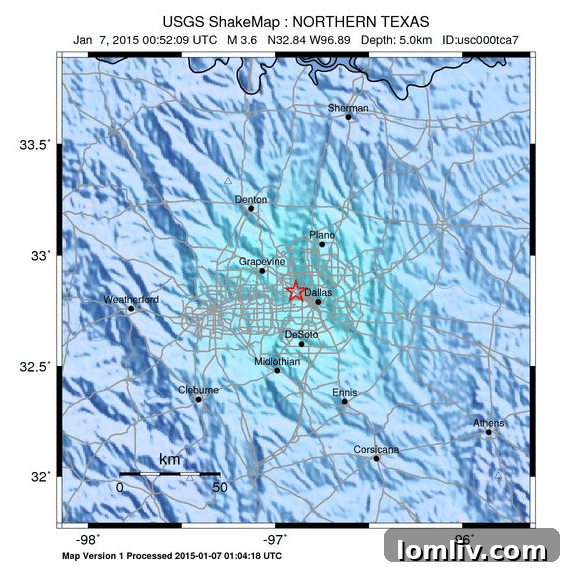
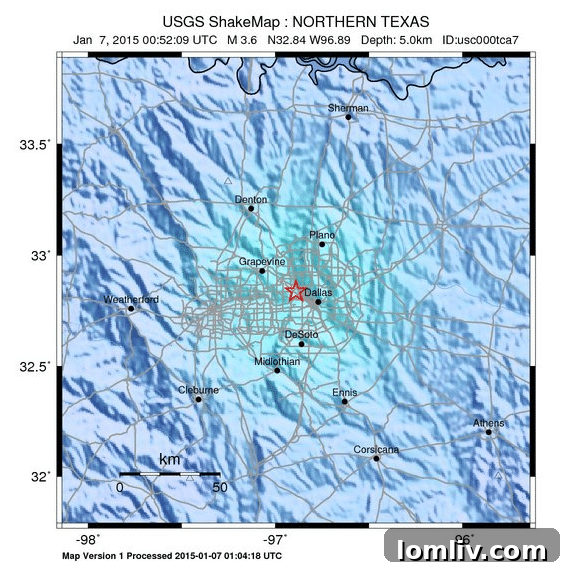
The second and most significant earthquake occurred around 3:10 p.m. and registered a magnitude of 3.6. Its epicenter was located near the former site of Texas Stadium, a historical landmark in Irving. This particular quake sent noticeable vibrations across a vast area, felt by residents from East Fort Worth all the way to East Dallas, highlighting its substantial reach and intensity. The tremors were strong enough to cause concern, prompting many to wonder about the stability of their homes and workplaces.
Later in the evening, at approximately 6:52 p.m., a third tremor, classified as a 3.6 magnitude aftershock, further underscored the seismic instability of the day. This aftershock had its epicenter just northeast of Irving, serving as a reminder that the earth beneath North Texas was still adjusting after the earlier, more powerful shakes.
These three events are part of a larger trend, with a striking 18 earthquakes reported in the Irving area alone since November 1st. This concentration of seismic activity in a specific locale has undeniably raised eyebrows and intensified the urgency for scientific inquiry.
Immediate Aftermath: Infrastructure Damage and Community Response
The impact of these tremors extended beyond mere unease, manifesting in tangible damage to both private property and public infrastructure. Homeowners across the affected areas began reporting minor but concerning signs of stress on their residences. Common complaints included fresh cracks appearing in drywall, a tell-tale sign of structural shifting, and gaps emerging in moulding around doors and windows. While these might seem like superficial issues, they hint at underlying movements that could, over time, lead to more significant structural concerns.
Perhaps the most immediate and disruptive consequence of the earthquakes was the widespread failure of the City of Dallas’s water infrastructure. A staggering 33 water mains were reported to have broken, sending torrents of water gushing into streets and causing significant disruption. One particularly notable incident occurred at the intersection of Hughes and Dykes Way, where a major water main break caused considerable flooding. A local resident, capturing the scene on video, confirmed that this particular break happened “right after the first earthquake,” suggesting a direct causal link rather than the delayed response previously communicated by city officials. Gas crews from Atmos Energy were dispatched alongside city water teams to address the ongoing leaks, underscoring the severity of the situation and the immediate need for repairs.
Another water main break was later identified near Preston and Churchill Road, further illustrating the widespread nature of the infrastructure damage. The sheer number of breaks posed a significant challenge for city services, diverting resources and manpower to manage emergency repairs and prevent further damage to roads and properties.
The sight of gushing water mains served as a stark, visible reminder of the powerful, unseen forces at play beneath the surface of North Texas.
See the Impact: Local Resident’s Footage
A video captured by a local resident vividly illustrates the immediate aftermath of the quakes, showing the relentless flow from a ruptured water main. This firsthand account offers crucial insight into the disruption faced by the community.
View the video footage of the water main break on Facebook (Post by Thor Johnson)
Unpacking the Causes: Natural or Human-Induced Seismicity?
The recurring tremors in North Texas have reignited a critical debate: are these natural geological events, or are they being triggered by human activities? Historically, North Texas has been considered seismically stable, far from major plate boundaries and with only infrequent, minor natural quakes. The recent swarm of activity, particularly centered around Irving, challenges this long-held perception.
The Balcones Fault: A Natural Suspect?
Some geological theories suggest that the earthquakes could be naturally occurring, attributing them to the region’s proximity to the Balcones Fault. The Balcones Fault Zone is a series of normal faults extending for several hundred miles across Texas. While it represents an ancient zone of weakness in the Earth’s crust, it has largely been considered inactive or dormant for millions of years. Natural earthquakes in Texas are typically rare and generally associated with ancient fault lines that occasionally reactivate. However, the sheer frequency and localized nature of the recent Irving quakes make a purely natural explanation seem less probable to a growing number of experts.
The Growing Evidence for Induced Seismicity
Increasingly, scientific consensus points towards human-induced changes to the Earth’s crust as a more likely culprit for the seismic shake-ups in North Texas. The focus often centers on activities related to oil and gas exploration, particularly hydraulic fracturing (fracking) and, more significantly, wastewater disposal wells.
Hydraulic Fracturing (Fracking) and Its Role
Hydraulic fracturing involves injecting high-pressure fluid deep into the ground to fracture shale rock formations, releasing natural gas or oil. While fracking directly involves fracturing rock, the process itself is rarely linked to significant earthquakes. The energy released by fracking is typically too small to cause widely felt tremors. However, fracking operations do produce vast quantities of wastewater – a byproduct of both the fracturing fluid and the naturally occurring brines brought up from deep underground. This leads us to the more prominent suspect: disposal wells.
Wastewater Disposal Wells: The Primary Concern
Wastewater disposal wells are designed to inject this salty, chemically complex wastewater into deep geological formations, often porous rock layers far below potable water sources. The concern arises when this injected wastewater increases pore pressure along pre-existing, dormant fault lines. The increased pressure can act as a lubricant, reducing the friction holding the fault together and allowing it to slip, thereby triggering an earthquake. Even small increases in fluid pressure over long periods can be enough to reactivate faults that have been stable for millennia.
We have previously discussed the potential links between shale gas exploration, disposal wells, and their impact on local real estate values, highlighting the ongoing debate and the economic implications for homeowners. The severity of today’s quakes intensifies the need to definitively determine if this phenomenon is a fleeting anomaly or a lasting geological shift.
The Search for Answers: SMU Researchers on the Ground
In a direct response to the escalating seismic activity, researchers from Southern Methodist University (SMU) have deployed an array of sophisticated sensors in Irving this week. This crucial scientific endeavor aims to precisely root out the cause of the frequent earthquakes plaguing the Dallas suburb. By strategically placing seismographs and other monitoring equipment, the team hopes to gather granular data on ground motion, wave propagation, and fault line behavior.
The SMU research is vital. By accurately mapping the epicenters and depths of these tremors, scientists can correlate seismic events with specific geological features or, more pertinently, with the locations of nearby oil and gas operations, particularly wastewater injection wells. This data-driven approach is essential for moving beyond conjecture and establishing a definitive scientific understanding of why Irving has become a hotspot for these recent quakes.
According to reports from local news outlets, the research comes at a critical time, with the recent cluster contributing to a total of 18 earthquakes recorded in the Irving area since November 1st. The findings from SMU’s ongoing study will be instrumental in informing public policy, regulatory decisions, and ultimately, ensuring the safety and stability of North Texas communities.
Homeowners’ Dilemma: Insurance Coverage for Man-Made Quakes
As residents contend with cracked drywall and disrupted lives, a pressing question arises: if these earthquakes are indeed found to be man-made, will homeowners’ insurance policies cover the resulting damage? This is a complex legal and financial landscape.
Standard Homeowner Policies and Earthquake Coverage
Standard homeowner insurance policies typically exclude damage caused by earthquakes. To be covered, homeowners usually need to purchase a separate earthquake insurance rider or a standalone earthquake policy. These policies often come with higher deductibles, sometimes ranging from 10% to 20% of the dwelling’s coverage amount, meaning homeowners bear a significant initial cost.
The ‘Man-Made’ vs. ‘Natural’ Distinction
The crux of the issue lies in the distinction between “natural” and “man-made” disasters. While earthquake policies are designed for natural seismic events, the legal framework for “induced seismicity” is still evolving. If an earthquake is proven to be caused by human activity, such as wastewater injection, it could potentially fall into a grey area of coverage. Some argue that damage from induced earthquakes might be covered under different policy provisions, like those for sudden and accidental damage, or even lead to liability claims against the responsible parties (e.g., oil and gas operators). However, insurance companies are generally reluctant to set precedents for new categories of claims.
This ambiguity places homeowners in a precarious position. For residents in areas like Casa Linda, who are now experiencing tremors with increasing regularity, the question of investing in additional earthquake coverage becomes highly relevant. The lack of clarity around induced seismicity and insurance coverage creates a critical need for policy review and potentially new legislative guidelines to protect affected communities.
Looking Ahead: Resilience and Regulatory Response
The recent earthquake swarm in North Texas serves as a critical wake-up call for a region accustomed to geological tranquility. The combination of immediate infrastructure failures, property damage, and the unsettling frequency of tremors demands a comprehensive response.
Beyond the immediate repairs and scientific investigations, the long-term implications of induced seismicity could shape future urban planning, infrastructure development, and regulatory frameworks for energy exploration. As SMU researchers continue their vital work, the findings will undoubtedly influence how Texas manages its valuable natural resources while ensuring the safety and peace of mind of its citizens.
The question of whether this phenomenon is a lasting one or a temporary aberration remains central. For now, North Texas communities are adjusting to a new seismic reality, hoping for clear answers and effective solutions to secure their future against the shifting ground beneath their feet.