Navigating the Shakes: Understanding Earthquake Safety for Homes in North Texas
For decades, residents of North Texas have primarily associated natural disasters with the dramatic spectacle of tornadoes and severe thunderstorms. The structural integrity of homes in the Dallas-Fort Worth (DFW) metroplex has traditionally been engineered with high wind loads in mind, a testament to the region’s notorious tornado alley reputation. However, a seismic shift, both literal and figurative, has introduced a new layer of concern: earthquakes. The unexpected increase in seismic activity, particularly in the mid-2010s, has left many homeowners pondering the resilience of their most valuable asset against an unfamiliar threat.
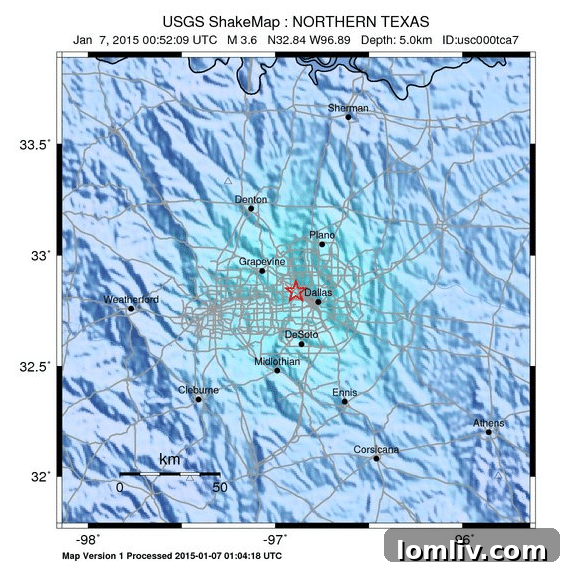
The identification by seismologists of a two-mile fault line near the Trinity River, central to much of this new activity, has amplified anxieties. While individual quakes in North Texas have typically registered in the relatively minor range—with the biggest tremors in January 2015 measured around 3.6 or 3.7 magnitude—the sheer frequency and the reactivation of ancient subsurface faults extending from Irving to West Dallas have raised pertinent questions. Can North Texas homes, traditionally built for wind, withstand these new, unpredictable tremors? What does this mean for current residents and future construction?
This comprehensive guide delves into these critical questions, offering insights from local engineering and foundation experts, examining current building codes, and exploring the future implications for homeowners in the DFW area. Our aim is to provide clarity, reassurance, and practical knowledge in the face of North Texas’s evolving geological landscape.
The Unexpected Tremors: A Closer Look at North Texas Seismic Activity
North Texas has historically been considered a region of low seismic risk. Yet, starting around 2008 and escalating significantly in the years that followed, the DFW metroplex began experiencing an unprecedented series of earthquakes. These weren’t isolated incidents but a pattern of tremors that puzzled residents and scientists alike. The focus of much of this activity has been concentrated in areas like Irving, Dallas, and near the Dallas/Fort Worth International Airport, leading to the identification of previously dormant fault lines being reactivated.
While some natural tectonic forces are always at play, a significant body of research points to the role of induced seismicity in the region. The practice of injecting wastewater deep underground from oil and gas operations has been linked to an increase in earthquakes in several parts of Texas. These injections can increase fluid pressure along existing fault lines, effectively lubricating them and making them more prone to slip. This understanding adds a complex layer to the discussion of seismic activity in a region not traditionally prepared for it, raising questions about environmental policies and their geological consequences.
Earthquakes measuring 3.5 to 3.7 on the Richter scale are generally considered minor. They are often felt by people, can cause objects to fall from shelves, and might lead to rattling or minor cracks in walls, but they rarely result in significant structural damage. However, the cumulative effect of frequent smaller quakes, combined with the uncertainty of whether larger events could occur, naturally leads to homeowner apprehension. This sustained activity has put the spotlight on the resilience of residential structures in a region designed for different types of natural forces.
Built for Resilience: How DFW Homes Stand Up to Shakes
To address homeowner concerns, we reached out to two leading experts in the DFW area: Alex Childress, the residential division manager of Childress Engineering Services, a Richardson-based engineering company, and James Fontaine, president of SlabTek, a company specializing in patented foundation systems. Their insights offer a reassuring perspective on the inherent strength of North Texas homes.
Engineering for Wind, Benefiting from Earthquakes
A critical revelation from these experts is that North Texas homes, while not explicitly designed for high-magnitude earthquakes, possess a surprising degree of resilience due to their construction for other severe weather events. “Primarily, what we have been addressing that most homeowners are not even aware of is that [their homes] are already engineered for much greater distress than what a 3.5 can do,” Childress explained. This robustness stems from the region’s stringent requirements for wind load engineering.
Foundations in Dallas-Fort Worth are designed to withstand significant lateral forces imposed by high winds, often up to 90 miles per hour or more. This engineering involves robust anchoring systems, reinforced slabs, and structural connections that resist uplifting and shearing forces. The very design principles that protect a home from being torn apart by a tornado inadvertently provide substantial resistance against the lateral shaking of an earthquake. The engineers confirm that the forces generated by a 3.5 to 3.7 magnitude earthquake are generally well within the safety margins established for wind resistance.
Fontaine echoed this sentiment, emphasizing the comprehensive nature of local construction. “All the homes [in DFW] are designed to withstand Zone Zero or One levels,” he stated. This refers to the seismic zone classifications that dictate building code requirements. Even without specific ‘earthquake-proof’ design, the robust construction standards in DFW, driven by the need to resist powerful winds, contribute significantly to a home’s ability to absorb and dissipate seismic energy, protecting its structural integrity from minor to moderate tremors.
Seismic Zones and Building Codes: A Evolving Landscape
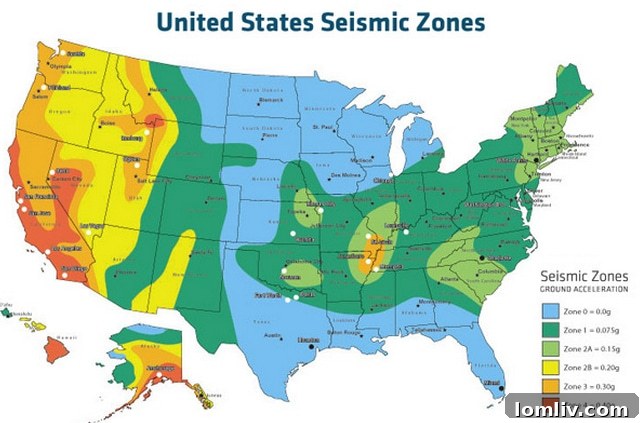
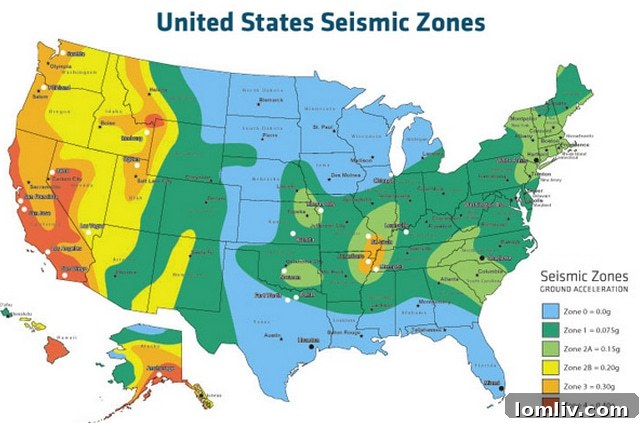
The concept of seismic zones and their influence on building codes is fundamental to understanding structural resilience. Seismic zone maps, first introduced in 1949, were developed to provide a generalized representation of likely earthquake levels and, consequently, the potential for building damage. While modern engineering utilizes more sophisticated methods and detailed contour maps for precise seismic hazard assessments, these older, generalized maps (like the one pictured above) still offer an accessible way to understand risk categories.
Most of the DFW area falls into Seismic Zone Zero, bordering on Zone One. Zone Zero indicates a very low probability of earthquake damage, requiring minimal specific seismic design provisions. Zone One suggests a slightly higher, but still low, probability, necessitating some basic seismic considerations. The challenge now is whether this classification accurately reflects the region’s current seismic reality. “With some of the new findings, we wonder, does that Zone One [seen just north of DFW] extend here or become Zone Two?” Fontaine posed. “These zones determine our building codes and requirements.”
The implications of revising North Texas’s seismic zone classification would be significant. An upgrade to Zone Two, for instance, would trigger more stringent building code requirements for new construction, potentially increasing costs due to the need for additional reinforcement, specialized foundations, and more robust connections. This would align Texas building practices more closely with regions historically prone to seismic activity, albeit on a much smaller scale. Dallas Mayor Mike Rawlings publicly addressed this possibility at a February City Hall press conference, indicating the city’s readiness to reevaluate building codes in light of the ongoing seismic events.
The Future of Construction Standards
Any revisions to building codes will primarily affect new construction projects. This means that future homes in North Texas might incorporate more explicit seismic design elements, such as improved shear wall systems, enhanced foundation-to-frame connections, and possibly even base isolation technologies for critical structures, although the latter is unlikely for typical residential builds. For existing homes, the focus remains on their inherent resilience and the reassuring consensus from experts that they are already equipped to handle the current level of seismic activity.
Your Home’s Immediate Safety: Practical Advice for Homeowners
So, for the North Texas homeowner asking, “Is my house safe now?” the answer, based on expert consensus, is largely a confident “yes.” “We are meeting or exceeding the residential codes to withstand these tremors or shakes we’ve had,” stated Childress. “If you’ve got something that can withstand what the zone requirement is here in Texas, you should be okay.”
While the structural integrity of homes is generally secure, homeowners should still be aware of potential minor, non-structural damage that can occur during an earthquake. This might include:
- Cracks in Walls: Superficial cracks in drywall or plaster are common, often appearing near doors and windows, and are typically cosmetic.
- Items Falling: Unsecured items on shelves, particularly tall furniture or decorative objects, can topple.
- Broken Windows: While less common for minor quakes, strong shaking can sometimes crack or break windows.
- Disrupted Utilities: While rare for small quakes, larger tremors could potentially disrupt gas, water, or electrical lines.
To enhance safety and minimize damage during any future tremors, homeowners can take a few proactive steps:
- Secure Heavy Objects: Anchor tall furniture like bookshelves and cabinets to walls. Use earthquake putty or museum wax to secure fragile items on shelves.
- Practice “Drop, Cover, and Hold On”: Familiarize yourself and your family with the recommended safety procedure during an earthquake.
- Inspect Post-Quake: After any significant tremor, visually inspect your home for new cracks, shifted foundations, or unusual changes. While minor cracks are expected, any significant structural concerns should prompt a professional inspection.
- Consider Earthquake Insurance: Standard homeowner insurance policies typically do not cover earthquake damage. Review your policy and consider supplemental earthquake insurance if you are concerned.
Looking Ahead: The Future of Seismic Preparedness in North Texas
The increased seismic activity in North Texas represents a dynamic and evolving challenge. As Childress remarked, “What I’ve read is that there have been 120 earthquakes since 2008 and 40 in the last month or so. I’ve been in Texas for over 20 years and I can’t remember when there’s been this much activity—there’s not a lot more that we can do now. You can only control so much and at some point, nature will have its way.” This sentiment underscores the unpredictable nature of geological events.
The future for North Texas will likely involve continued monitoring of seismic activity, ongoing research into the causes (both natural and induced), and a proactive reevaluation of building codes. While existing homes demonstrate commendable resilience, especially against the magnitudes experienced thus far, adapting future construction standards will be crucial for long-term preparedness. This forward-thinking approach will ensure that North Texas, known for its rapid growth and robust infrastructure, can continue to build homes that are not only beautiful and functional but also resilient against a broader spectrum of natural challenges.
In conclusion, while the emergence of earthquakes in North Texas has introduced an unexpected element of concern, homeowners can find reassurance in the inherent strength of their properties, engineered to withstand significant forces. Vigilance, informed decision-making, and an ongoing commitment to understanding and adapting to our dynamic environment will be key as North Texas navigates its new seismic reality.