Embarking on the journey to buy a home is an exciting venture, often filled with dreams of new beginnings and personal spaces. However, beneath the surface of fresh paint and inviting aesthetics lies the true essence of a property’s health: its structural integrity and mechanical systems. This is precisely where a professional home inspection becomes not just a recommendation, but an indispensable step in safeguarding your investment and ensuring peace of mind.
At Green Scene Home Inspections, we understand the profound importance of a thorough, detail-oriented assessment. Our commitment is to empower prospective homeowners with comprehensive knowledge, revealing the unseen aspects of a property that could translate into significant costs down the line. We meticulously examine every critical component, providing readers of Daltxrealestate.com an exclusive insight into what our experts uncover during their “Upon Closer Inspection” series.
Understanding the Pillars of Your Home Investment: Key Inspection Areas
When considering a property purchase, certain elements stand out as major financial considerations. These are the systems and structures that, if compromised, can lead to substantial repair expenses. We consistently advise our clients to pay paramount attention to five core areas during any home inspection: the roof, plumbing, electrical system, HVAC (Heating, Ventilation, and Air Conditioning), and critically, the foundation. Each of these components plays a vital role in the safety, functionality, and longevity of your home, and ignoring potential issues can have far-reaching consequences.
Let’s delve deeper into why these five areas demand meticulous scrutiny:
- The Roof: Your Home’s First Line of Defense
A healthy roof protects your entire home from the elements. Issues like missing shingles, degraded flashing, or inadequate drainage can lead to severe water damage, mold growth, and compromised structural components within the attic and walls. A professional inspection can identify its age, remaining lifespan, and any active leaks or vulnerabilities that might require immediate attention or future replacement planning. - Plumbing System: The Hidden Network
From fresh water supply lines to waste disposal, the plumbing system is a complex network that, when faulty, can cause extensive damage. Leaks, low water pressure, clogged drains, outdated piping materials (like polybutylene or galvanized pipes), or issues with water heaters can result in costly repairs, water damage, and even health hazards. An inspector checks for leaks, proper drainage, water heater function, and the overall condition of accessible plumbing components. - Electrical System: The Lifeline of Modern Living
A safe and efficient electrical system is non-negotiable. Outdated wiring, faulty outlets, overloaded circuits, or an insufficient electrical panel can pose serious fire hazards and limit your home’s ability to support modern appliances. Inspectors look for proper grounding, correct wiring, the condition of the service panel, and any code violations that could impact safety and insurance coverage. - HVAC System: Comfort and Air Quality
Your heating and air conditioning system is crucial for comfort and maintaining healthy indoor air quality. An inefficient or malfunctioning HVAC unit can lead to excessively high utility bills, inconsistent temperatures, and uncomfortable living conditions. Inspectors evaluate the system’s age, operational performance, filter condition, and overall state to identify potential issues that could affect efficiency or require costly repairs or replacement. - The Foundation: The Unsung Hero of Stability
Often overlooked because it’s out of sight, the foundation is arguably the most critical structural component of any home. It provides the essential support that holds the entire structure stable. Foundation issues, whether minor or severe, can cascade into problems throughout the entire house, affecting walls, floors, doors, windows, and even the roof. This is an area where early detection through a professional inspection can save you tens of thousands of dollars and immense stress.
Each of these “bigger ticket items” represents a significant potential expense if something is amiss. Investing in a thorough home inspection by certified professionals like Green Scene Home Inspections allows you to approach your purchase with confidence, equipped with a clear understanding of the property’s condition and any necessary repair estimates.
Navigating Foundation Challenges in North Texas Real Estate
For those considering a home purchase in the vibrant and growing region of North Texas, a particular emphasis must be placed on understanding foundation integrity. It’s an unfortunate reality that foundation issues in North Texas are almost a given, a pervasive challenge that every homeowner or prospective buyer in the area should be prepared to address at some point. This makes a deep dive into the foundation’s condition an absolutely critical step in your home shopping process.
The primary culprit behind the widespread foundation problems in North Texas is the unique composition of our local soil. We predominantly have expansive clay soils, which are highly susceptible to changes in moisture content. During dry spells, these soils shrink, causing foundations to settle and potentially crack. Conversely, when heavy rains occur, the clay absorbs water, expands, and pushes upwards, leading to heaving and uneven foundation movement. This constant cycle of expansion and contraction puts immense stress on home foundations, whether they are slab-on-grade or pier-and-beam constructions.
Furthermore, factors such as inadequate drainage around the home, mature trees with thirsty root systems near the foundation, and even prolonged drought conditions followed by heavy rainfall patterns exacerbate these natural tendencies. These environmental stressors, combined with the normal aging process of a home, contribute significantly to the prevalence of structural concerns in properties across Dallas-Fort Worth and surrounding areas.
Understanding this regional predisposition allows you to approach the home-buying process with a realistic outlook. While discovering foundation issues can be daunting, it’s not always a deal-breaker. Instead, it underscores the necessity of a meticulous inspection and strategic financial planning. By acknowledging that foundation repairs are a likely cost of North Texas homeownership, you can prepare accordingly, negotiate effectively, and ensure your investment is sound for years to come.
The Perils of a DIY Foundation Fix: A Risky Bet for Structural Integrity
When faced with structural concerns, particularly foundation problems, homeowners might be tempted to opt for quick, inexpensive, and often dangerous do-it-yourself solutions. While the allure of saving money is strong, attempting a DIY foundation fix is a critical error that can lead to catastrophic consequences and significantly higher costs in the long run. Professional foundation repair requires specialized knowledge, specific engineering principles, and durable materials, none of which can be replicated effectively by a makeshift approach.
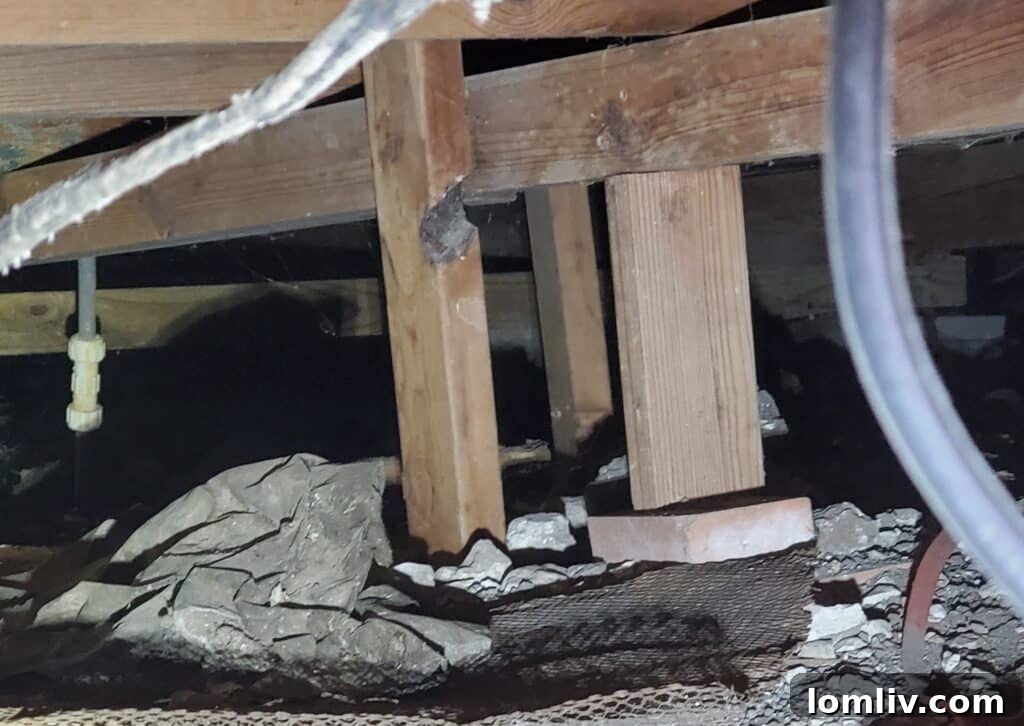
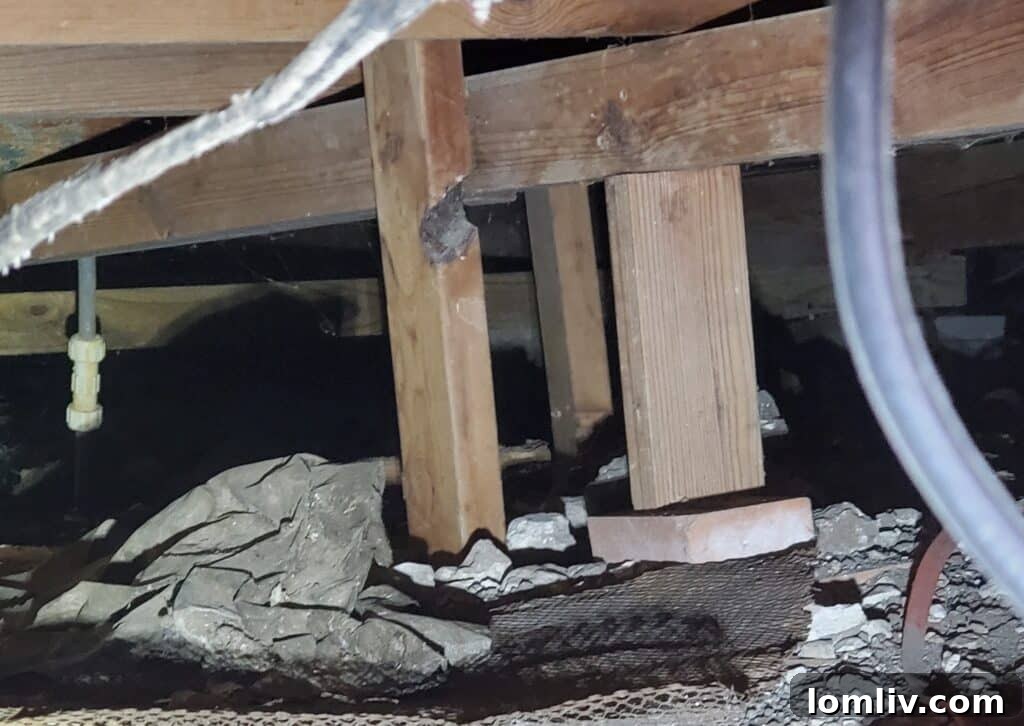
Consider the image above, captured by our Green Scene inspectors from the crawl space of a pier-and-beam foundation. This photograph vividly illustrates the dire outcomes of a misguided DIY effort. Here, the original, professionally installed pier – the vertical support column – has failed to adequately support the beam, which is the horizontal structural element bearing the weight of the floor above. Consequently, the beam is visibly sagging, suffering from a profound lack of proper structural support. The “fix” implemented by the homeowner is alarming: a simple board and a brick, precariously propped up against the beam. This setup is akin to trying to stabilize a wobbly table with an unattached, loose leg – it simply won’t work and is destined to fail, if it hasn’t already.
Such amateur repairs fail on multiple fronts. Firstly, they lack the load-bearing capacity and stability required for foundational support. A brick and a board, however well-intentioned, cannot withstand the immense, continuous pressure exerted by a home’s structure. Secondly, these temporary props do not address the root cause of the foundation issue, whether it’s soil instability, water damage, or a compromised original pier. Without correcting the underlying problem, any superficial “fix” is merely a band-aid that masks the true extent of the damage, allowing it to worsen undetected.
Moreover, attempting DIY foundation work can invalidate home insurance policies and warranties, making future professional repairs even more expensive. It also poses significant safety risks, as a compromised foundation can lead to further structural collapse, jeopardizing the safety of residents. For homeowners, it’s crucial to understand that foundation repair is a specialized field. It demands the expertise of structural engineers and experienced contractors who can accurately diagnose the problem, design an effective and lasting solution, and implement it with the correct tools and techniques. Never compromise on the integrity of your home’s foundation; always seek professional assessment and repair for these critical structural components.
Unraveling the Mystery of Foundation Movement
Foundation movement is a dynamic and often insidious process that can slowly but surely undermine the stability of an entire home. It refers to any shift, settlement, heave, or rotation in a building’s foundation, which ideally should remain perfectly stable. Understanding the causes and recognizing the signs of foundation movement are crucial for protecting your property investment, especially in regions prone to soil instability like North Texas.
As illustrated in the accompanying video, foundation movement can lead to some pretty major damage, particularly in pier-and-beam foundations where individual piers might settle unevenly. The video showcases visible distortion and stress, which are direct consequences of the foundation no longer providing uniform support to the structure above it. This uneven support translates into internal and external symptoms throughout the house that homeowners should never ignore.
Common Causes of Foundation Movement:
- Expansive Soils: As discussed, clay-rich soils expand when wet and contract when dry. This constant volume change directly impacts the foundation resting upon it.
- Poor Drainage: Inadequate grading, clogged gutters, or improper downspout extensions can allow water to pool around the foundation, leading to excessive saturation of the soil in some areas and dryness in others.
- Tree Roots: Large trees planted too close to the foundation can extract moisture from the soil, causing it to dry out and shrink, leading to localized settlement.
- Plumbing Leaks: Hidden leaks beneath the slab or in the crawl space can introduce excess moisture to the soil, causing localized heaving or erosion that undermines support.
- Poor Compaction: If the soil beneath the foundation was not properly compacted before construction, it can settle over time, leading to foundation movement.
- Erosion: Water runoff can erode soil from beneath the foundation, creating voids and unsupported sections.
Visible Signs of Foundation Movement:
The damage caused by foundation movement isn’t confined to the unseen crawl space or beneath the slab. You will likely find similar signs of stress and pulling on the walls and floors inside the house. These indicators are critical clues that warrant a professional inspection:
- Cracks in Walls: Especially diagonal cracks extending from door and window frames, or horizontal cracks in drywall or plaster.
- Uneven Floors: Sloping, sagging, or bowing floors can be a clear sign that the foundation is shifting or settling.
- Sticky Doors and Windows: Doors that suddenly stick or fail to latch, and windows that are difficult to open or close, indicate that their frames have become distorted due to foundation movement.
- Gaps Around Window and Door Frames: Visible spaces between the frames and the surrounding walls.
- Exterior Cracks: Cracks in the exterior brickwork, stucco, or siding, particularly stair-step cracks in masonry.
- Separation of Chimney or Porch from House: If these attached structures begin to pull away from the main house.
In cases like the one depicted in the video, where significant movement has occurred, the homeowner will typically need not only extensive foundation repair but also considerable cosmetic repairs to address the visible damage to walls, floors, and other interior elements. Addressing foundation movement promptly with professional intervention is key to restoring structural integrity and preventing further, more costly damage to your home.
Decoding Foundation Cracks: When to Say No!
Cracks in a home’s foundation are perhaps the most visually alarming signs of structural distress, and they come in various forms and severities. While some hairline cracks might be benign settlement cracks, merely a result of concrete curing, others are a stark warning of serious underlying issues that demand immediate professional attention. Our Public Service Announcement: just say NO to severe foundation cracks! Ignoring them is simply not an option, as they directly threaten the safety and value of your home.
The accompanying video powerfully illustrates this point by showcasing what we’ve dubbed a “ginormous” (that’s our technical term for truly problematic) crack. This isn’t just a surface blemish; this crack goes all the way through the foundation of what appears to be a beautiful new house. A crack of this magnitude indicates significant structural failure or ongoing severe stress that has compromised the integrity of the foundation. In a new construction, such a crack is particularly concerning, as it suggests fundamental issues with soil preparation, foundation design, or construction practices.
Types of Foundation Cracks and Their Significance:
- Hairline Cracks (Vertical or Diagonal): Often less than 1/16 inch wide, these can be common in concrete as it cures and settles. They usually don’t indicate structural problems but should still be monitored.
- Horizontal Cracks: These are almost always a serious concern, especially in basement walls or crawl space foundations. They often indicate hydrostatic pressure (water pressure) from the outside pushing against the foundation, which can lead to bowing walls and eventual collapse.
- Vertical Cracks (Wider): If a vertical crack is wider than a hairline and especially if it’s wider at the top or bottom, it could signal significant settlement or uplift.
- Diagonal/Stair-Step Cracks: Common in brick or block foundations, these cracks often indicate uneven settlement. The direction of the crack can tell an inspector which part of the foundation is sinking.
- Through-and-Through Cracks: As seen in the video, these cracks extend completely through the foundation wall, meaning the structural integrity is severely compromised. They often allow water intrusion and indicate major instability.
For homebuyers, especially those shopping for a home in North Texas, encountering foundation cracks is a strong possibility due to the region’s expansive clay soils. It’s crucial not to dismiss these indicators. A thorough home inspection by Green Scene Home Inspections will accurately assess the type, size, and severity of any cracks, helping you understand whether they are cosmetic, minor, or indicative of major structural failure. Our experts can differentiate between superficial damage and critical integrity issues, providing you with an objective assessment.
Unfortunately, if you’re shopping for a home in North Texas, you’re probably going to have to deal with foundation repairs at some point, even with new construction. You can prepare yourself by just accepting that this is a likely cost of homeownership and plan accordingly. Factor potential repair costs into your budget, use the inspection report for negotiation, and ensure that any issues are addressed by certified professionals to protect your investment for the long term. Remember, the cost of addressing a foundation crack early is almost always significantly less than the cost of repairing the cascading damage it can cause if left unaddressed.
The Unwavering Value of Professional Home Inspections
In a complex real estate market, particularly one like North Texas where specific structural challenges are prevalent, the value of a professional home inspection cannot be overstated. While the primary focus of this article has been on the critical area of foundation health, it’s vital to remember that a comprehensive inspection by Green Scene Home Inspections covers all major systems and components of a property. Our certified inspectors are trained to identify not just the obvious flaws but also the subtle indicators of deeper, more costly problems that an untrained eye would easily miss.
A professional home inspector acts as your unbiased advocate, providing an objective assessment of the property’s condition. We go beyond what’s visible on the surface, venturing into crawl spaces, attics, and utility rooms to uncover potential defects. Our detailed reports offer a clear picture of the home’s health, itemizing areas of concern, safety hazards, and elements requiring immediate repair or future maintenance. This invaluable information empowers you, the homebuyer, to make informed decisions, negotiate effectively, and avoid unexpected financial burdens post-purchase.
Think of a home inspection not as an expense, but as an essential investment in your future. It’s a small price to pay for the peace of mind that comes with knowing the true condition of your potential home. By identifying problems early, you gain leverage for negotiating repairs or a fairer purchase price, or even making the difficult decision to walk away from a property that poses too great a risk. In essence, a professional home inspection minimizes surprises, mitigates risks, and solidifies your confidence in one of the most significant financial decisions of your life.
Financial Foresight: Planning for Foundation Repairs
Given the propensity for foundation issues in North Texas, prudent financial planning for potential repairs is a smart strategy for any prospective homeowner in the region. Accepting that foundation repair might be a likely cost of homeownership allows you to budget accordingly and mitigate future financial stress. Here are some strategies:
- Factor it into Your Budget: When calculating your overall home purchase budget, set aside a contingency fund specifically for potential foundation work, especially if the inspection reveals minor or developing issues.
- Negotiation Leverage: A thorough inspection report from Green Scene Home Inspections detailing foundation concerns provides strong leverage during negotiations. You can request the seller to cover the repair costs, reduce the sales price, or place funds in escrow for repairs after closing.
- Get Multiple Bids: If repairs are needed, obtain quotes from several reputable foundation repair companies. Understand the scope of work, warranty information, and expected timelines.
- Long-Term Investment: View foundation repair as an investment in your home’s longevity and resale value. A well-maintained foundation protects the entire structure and is a significant selling point in the future.
Ultimately, buying a home in North Texas requires a realistic perspective on foundation maintenance. By partnering with experts like Green Scene Home Inspections, you’re not just getting an inspection; you’re gaining invaluable insight and a strategic advantage in a challenging market. Our detailed reports, combined with our commitment to transparency and education, ensure that you enter homeownership with your eyes wide open, prepared for any eventuality.
For more expert insights and essential home inspection tips, make sure to tune in regularly for “Upon Closer Inspection” brought to you by the dedicated team at Green Scene Home Inspections.