Dallas Confronts Global Tensions: Protests Over Arab-Israeli Conflict Erupt on Preston Road
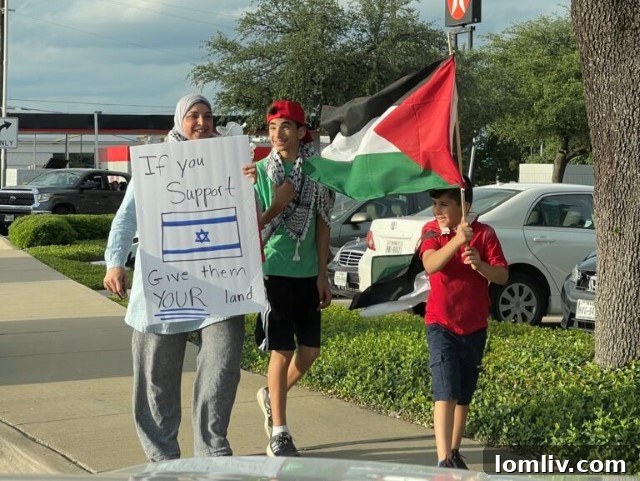
Typically, the closure of a major thoroughfare like southbound Preston Road at LBJ Freeway in Dallas is a response to a traffic accident, a common occurrence in any bustling metropolitan area. However, a recent Wednesday evening saw an unprecedented reason for this vital artery to be shut down: passionate street protests concerning the escalating Arab-Israeli conflict. This event marked a significant moment for the community, bringing a centuries-old international dispute directly to the streets of North Dallas. The striking image of a woman at the protest, accompanied by her two young sons, powerfully encapsulates the deeply personal and fundamental nature of this enduring conflict, reminding us that at its core, it is fundamentally a fight over land, territory, and real estate – a struggle for existence and belonging.
The historical tapestry of the Arab-Israeli conflict is woven with complex threads of competing claims to the same historic land, a contentious issue that has persisted since at least the 1920s. What began as localized tensions has, over decades, evolved into one of the world’s most intractable geopolitical challenges. When the conflict experienced a renewed and intense escalation in Gaza during a recent month, its reverberations were felt far beyond the Middle East. Waves of protest and solidarity movements swept across continents, from the sun-drenched coasts of California to the vibrant streets of New York, culminating in impactful demonstrations right here in Dallas over the weekend. These local gatherings underscore the profound global interconnectedness of the conflict, demonstrating how deeply it resonates with diverse communities worldwide, including those far removed geographically from the immediate hostilities.
A Divided Intersection: Dallas Residents Take a Stand
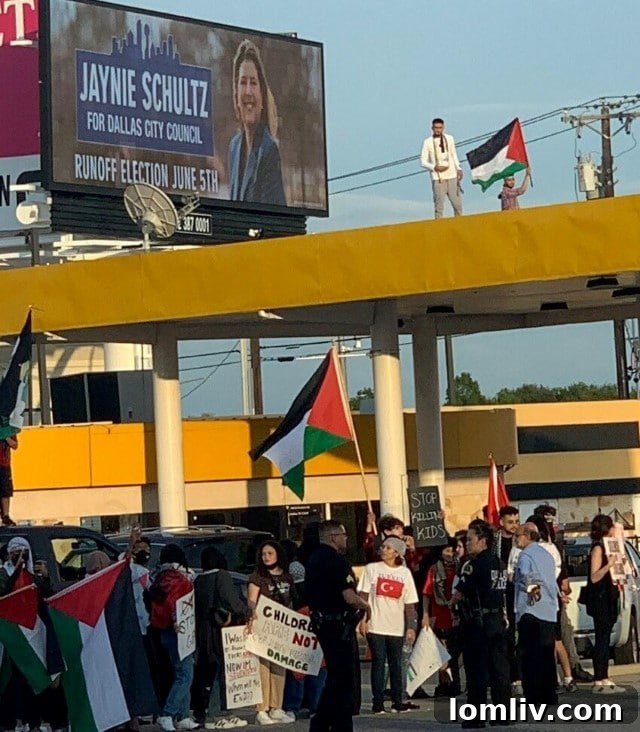
The scene at the busy intersection of Preston Road and LBJ Freeway during rush hour was a vivid illustration of the deep divisions stirred by the conflict. On the west side of the intersection, supporters of Israel gathered, creating a visible show of solidarity. Directly across, on the east side, advocates for Palestine formed their own impassioned contingent. The air crackled with energy as both groups waved their respective flags, hoisted an array of signs bearing messages of peace, justice, and defiance, and chanted slogans that echoed through the urban landscape. At times, the intensity of their emotions spilled over into visible gestures, with “fingers” being pointed across the bustling intersection, signifying the deep chasm of disagreement between the two sides. The palpable tension eventually escalated, culminating in the throwing of water bottles from one side to the other, a stark reminder of the fragile line between passionate advocacy and outright confrontation.
In anticipation of potential unrest and to maintain public order, an impressive contingent of law enforcement was deployed. Approximately a dozen police cars, alongside dozens of uniformed officers, formed a clear barrier down the middle of Preston Road. This strategic demarcation was critical, as the road itself had been blocked off just north of the LBJ Freeway at Alpha Road, creating a temporary pedestrian zone for the protesters while simultaneously containing the two opposing factions. Despite the heavy police presence, some protesters, driven by an eagerness to be seen and heard, ascended the rooftops of nearby buildings, including a car wash situated at the northeast corner of the intersection. Police officers were then tasked with the delicate job of urging these individuals down, ensuring their safety and preventing further escalation. Fortunately, the majority of protesters dispersed peacefully as the evening wore on, with most of the crowd having cleared by 9 p.m., bringing an end to a tense but largely contained demonstration.
Voices of Advocacy: Organizing the Dallas Demonstrations
The convergence of these two powerful narratives in Dallas was largely the result of organized efforts by local community leaders. Benji Gershon, a prominent figure and president of The Dallas Jewish Conservatives, took the initiative to organize a significant event titled “Texas Stands with Israel.” This rally was strategically held at the northwest corner of LBJ and Preston Road, a highly visible and accessible location. Gershon’s event drew considerable attention and featured several influential speakers, notably including Allen West, the then-chairman of the state Republican Party. West, a vocal proponent, expressed his belief that there had been an insufficient number of local pro-Israel demonstrations, highlighting a perceived need for more visible support within the community. Gershon, reflecting on the success and safety of the gathering, conveyed his gratitude for the robust security measures in place, as reported to the Dallas Morning News. This meticulous planning underscored the importance of providing a secure environment for participants to express their solidarity and concerns without fear.
On the opposing side of this complex dialogue, Narmeen Dakak, a key organizer for the Dallas Palestine Coalition’s demonstration, articulated her group’s primary objective: to advocate for an immediate cease-fire in the escalating conflict. Her organization’s decision to stage a counter-demonstration was a direct response to learning about the planned pro-Israel rally. This strategic move was not merely about opposition, but about ensuring that the Palestinian perspective and calls for peace were equally heard and recognized within the local discourse. Ms. Dakak emphasized the importance of visibility and making their voices resonate. “We knew the only way to get heard was to be at their rally and counter-protest them,” she candidly told the News, underscoring the necessity of a direct engagement to amplify their message. She also highlighted that pro-Palestine rallies had already taken place over the weekend, indicating a sustained and organized effort to keep the issue at the forefront of public consciousness.
Beyond the Divide: Personal Encounters and Shared Humanity
Amidst the palpable tension and stark ideological divisions, moments of unexpected human connection can sometimes emerge. Barel Maayan, originally from Israel and participating in the pro-Israel rally, recounted a poignant experience. He shared that he had “a lovely encounter” with a group of individuals from the Palestinian coalition who had, at one point, crossed sides. This brief interaction, however seemingly small, offered a glimpse into the possibility of dialogue and understanding even amidst profound disagreement. Maayan’s presence at the protest was driven by a deep sense of patriotism; he had learned about the pro-Palestine rallies occurring in downtown Dallas over the weekend and felt compelled to show support for his homeland. His desire to participate stemmed from a fundamental human need for his community’s voice to be acknowledged. “We felt like our voice should be heard as well, just like theirs should be heard,” Maayan passionately conveyed to the News. This sentiment reflects a shared longing for recognition and the right to express one’s perspective, a common thread that runs through both sides of the intricate Arab-Israeli narrative.
The Global Reach of Local Protests: Dallas as a Microcosm
The events on Preston Road serve as a powerful microcosm of the global resonance of the Arab-Israeli conflict. It highlights how deeply international geopolitical struggles impact local communities, prompting citizens from diverse backgrounds to take to the streets and demand attention to issues they feel passionate about. The Dallas protests were not merely about expressing solidarity with distant lands; they were also about local identity, community representation, and the active participation of residents in global conversations. The presence of families, the passionate chants, the careful management by law enforcement, and the occasional direct, albeit tense, interactions between opposing groups painted a vivid picture of democracy in action – a testament to the freedom of speech and assembly, even when it involves deeply divisive issues.
Ultimately, the Wednesday evening closure of Preston Road for a street protest was more than just a disruption of traffic; it was a powerful statement. It was a clear demonstration that the complexities of the Arab-Israeli conflict are not confined to the Middle East but are deeply intertwined with the social and political fabric of cities like Dallas. These protests underscore the enduring human element of this age-old dispute: the desire for safety, security, and a place to call home, irrespective of one’s background. As the discussions continue and events unfold globally, the echoes of these Dallas protests will undoubtedly serve as a reminder of the far-reaching impact of this conflict and the persistent human drive to advocate for what one believes is right.