The Evolving Landscape of Real Estate: Navigating the Zillow-Trulia Merger and the Enduring Value of Agents
The real estate industry is a fascinating blend of tradition and relentless innovation. In an era defined by technological transparency and digital transformation, understanding market shifts requires insight from the sharpest minds. This article delves into the perspectives of key industry figures, notably James Dwiggins, CEO of NextHome, Inc., to analyze the impact of major events like the Zillow-Trulia merger and shed light on the unshakeable role of real estate professionals.
As an industry observer, I continually seek to learn from real estate veterans who not only understand the current market but also possess a keen foresight into its future, especially concerning the interplay between technology and transparency. One such expert, Rob Hahn, a highly respected voice in real estate commentary, introduced me to James Dwiggins, the visionary Chief Executive Officer of NextHome, Inc. NextHome, a San Francisco-based and independently owned real estate startup, is committed to revolutionizing how consumers interact with local agents and approach the online home search process.
It was through Rob Hahn’s platform that I first encountered Dwiggins’ compelling Facebook essay on “Zulia” – the widely adopted moniker for the historic acquisition of Trulia by Zillow. His analysis was so insightful and well-articulated that I felt an immediate urge to share it with a broader audience. After obtaining James’s permission, I am delighted to present an expanded discussion of his core arguments, offering a critical lens through which to view the future of online real estate and the indispensable role of the human element.
The Surprising Rise of Agent Usage in the Digital Age
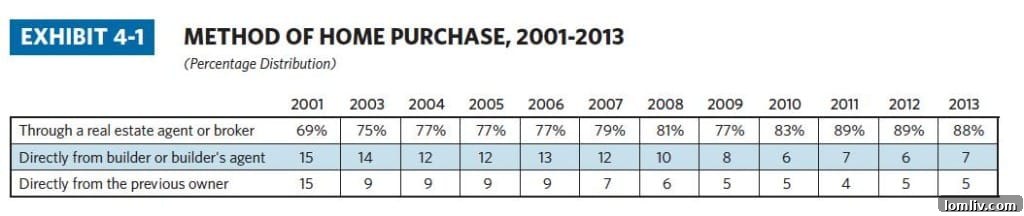
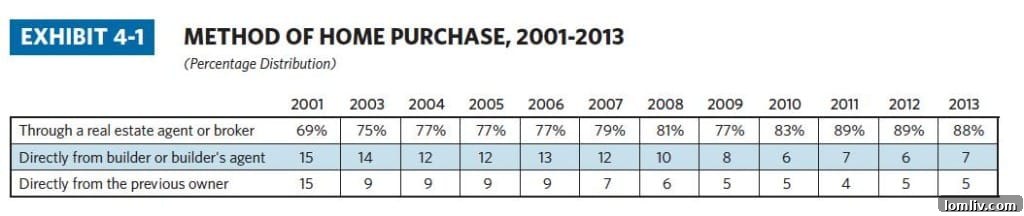
One of James Dwiggins’ most striking revelations, supported by concrete data from 2001 to 2013, highlights a fascinating paradox: during a period characterized by the explosive growth of online real estate platforms, the percentage of individuals utilizing a real estate broker for their home purchases actually increased significantly. This surge in agent reliance, nearing 20%, occurred precisely while the digital ecosystem for home searching was rapidly expanding and maturing.
This trend defies the common expectation that widespread access to online listings and tools would diminish the need for professional real estate agents. Instead, it underscores a crucial truth: while technology excels at the initial information-gathering and search phases, the deeper complexities of a real estate transaction — from intricate legal documentation and strategic negotiation to navigating emotional decisions — still necessitate expert human guidance. The sustained, even increased, reliance on agents demonstrates that consumers value the specialized knowledge, local market insights, and transactional acumen that only a human professional can provide. This symbiotic relationship between advanced technology and human expertise is a defining characteristic of the modern real estate landscape.
Dissecting the Fear: Why Zillow and Trulia Will NOT Become Brokerages
Following the Zillow-Trulia merger, a significant concern among many real estate professionals was the potential for the combined entity, affectionately known as “Zulia,” to evolve into a direct online brokerage. This fear envisioned Zillow and Trulia entering direct competition with the very agents who populate their platforms. However, James Dwiggins unequivocally dismisses this notion, arguing that such a strategic pivot would be fundamentally illogical and counterproductive to their established business model. He firmly believes that the idea of Zillow and Trulia transitioning into a real estate company “would make no sense whatsoever.”
The Core Business Model: Advertising Revenue from Agents
Dwiggins’ argument is rooted in the fundamental financial structure of both Zillow and Trulia. Their immense profitability hinges on an advertising-driven model, primarily fueled by “premier agent” subscriptions. As of Q1 2014, Zillow boasted 52,968 premier agent subscribers, while Trulia had 66,700. These agents invest in these platforms to gain enhanced visibility for their listings, access to qualified leads, and preferential placement that boosts their market presence. This mutually beneficial relationship is the lifeblood of Zillow and Trulia’s financial health.
If these companies were to suddenly shift to a brokerage model, they would instantly alienate and convert their vast network of paying agents into direct competitors. The immediate and inevitable consequence would be a massive exodus of these premier agents, leading to a catastrophic loss of advertising revenue. This would not merely impact their bottom line; it would dismantle the entire economic engine that powers these technology giants. Such a move would be, from a shareholder’s perspective, an act of self-sabotage.
The Unavoidable Conflict of Interest
Beyond the financial fallout, a deeper, inherent conflict of interest would arise. No successful real estate brokerage, whether traditional or innovative, allows competing agents to advertise on its proprietary platform. Such a practice would be absurd, directly funneling potential clients away from their own agents to rivals. If Zillow and Trulia became brokerages, they would be compelled to prohibit competing agents from advertising, thereby eliminating their core business model altogether. This fundamental incompatibility between operating as an advertising platform for agents and functioning as a direct competitor makes the brokerage model utterly unfeasible for Zillow and Trulia.
Learning from Redfin: A Different Path to Innovation
Dwiggins astutely points to Redfin as a contrasting example, a company that genuinely operates on an alternative, broker-centric model. Redfin functions as a technology-powered brokerage, employing its own agents and offering a distinct commission structure, often emphasizing efficiency and a tech-first approach to client service. While Redfin’s strategy presents its own unique set of challenges and opportunities, it serves as a concrete illustration of a company actively pursuing the integrated brokerage model. Dwiggins’ message is clear: if the industry is concerned about tech companies becoming brokerages, their focus should be on models like Redfin’s, rather than misinterpreting the strategic intent of advertising-centric platforms like Zillow and Trulia.
The Author’s Perspective: Media Mastery and Traditional Media’s Missed Opportunity
Expanding on Dwiggins’ analysis, it’s essential to recognize Zillow and Trulia’s brilliance in positioning themselves not merely as listing aggregators, but as powerful media companies. My personal observation is that conventional media outlets have, for far too long, underserved real estate agents. They often demanded exorbitant fees for branding advertisements, yet offered little to no substantive editorial support or genuine understanding of the evolving digital landscape. Agents found themselves paying a premium for fleeting visibility in local newspapers or magazines, receiving minimal return on investment beyond basic ad placement.
This significant void became the fertile ground for Zillow and Trulia’s rise. By providing comprehensive (and initially, often scraped) listing data, coupled with user-friendly interfaces and massive online traffic, they swiftly became the premier destinations for home searches. They didn’t just sell ad space; they built vibrant communities, curated valuable content, and established themselves as indispensable information hubs for both buyers and sellers. As Kael Goodman of BlankSlate sagely observed, many traditional media companies simply failed to grasp the true, transformative potential of the digital era, clinging to outdated revenue models. This strategic misstep by legacy media outlets undeniably paved the way for nimble, tech-first entrants like Zillow and Trulia to dominate the crucial “attention economy” within real estate, evolving into formidable media powerhouses in their own right. The significant acquisition of Curbed.com by Vox Media, reportedly for $20 million, further underscores the immense value placed on digital content, community building, and niche authority in today’s media landscape.
Beyond the Search: The Complex 95% of Homebuying
Dwiggins’ most profound argument regarding the enduring necessity of real estate agents hinges on a crucial distinction in the homebuying journey. He pragmatically asserts that while finding a home online has become incredibly accessible – a task that constitutes perhaps a mere 5% of the entire process – the true complexity, the “hard part,” commences once a buyer moves beyond mere browsing to the critical stages of making an offer and completing the actual purchase. This “hard part” encompasses a myriad of intricate and often stressful steps that are difficult, if not impossible, to navigate without expert assistance:
- Strategic Negotiation: Crafting competitive and compelling offers, understanding nuanced market values, and skillfully negotiating terms with sellers to secure the best possible outcome.
- Legal and Contractual Acumen: Deciphering complex purchase agreements, ensuring compliance with local, state, and federal regulations, and meticulously protecting the client’s legal and financial interests throughout the transaction.
- Due Diligence Coordination: Orchestrating and interpreting various inspections (home, pest, environmental), appraisals, and surveys, which are vital for informed decision-making.
- Problem Resolution: Addressing the inevitable unforeseen issues that arise during escrow, from unexpected repair requests to financing complications, often requiring quick thinking and creative solutions.
- Emotional Guidance and Support: Providing an objective, calming presence during what is often one of the most significant and emotionally charged financial decisions a person will make.
The consistent increase in agent usage, as meticulously documented by the National Association of Realtors (NAR) – from 69% in 2001 to 88% in 2013 – directly refutes the idea that online tools render agents obsolete. If consumers truly believed that online search encompassed the entirety of the homebuying process, these statistics would show a decline, not an increase. Furthermore, numerous direct buyer-seller connection models that emerged in previous years ultimately failed, reinforcing the irreplaceable value of a human agent’s expertise and guidance during the most critical and complex phases of a property transaction.
The Quest for the Next Real Estate “Game-Changer”
While Zillow and Trulia undeniably hold dominant positions in the current online real estate portal landscape, James Dwiggins provides a crucial historical reminder: no market leader, regardless of its current supremacy, is invulnerable to disruption. Their dominance, he argues, will persist only “until either ‘organized real estate’ starts listening to consumer needs and builds something they actually want and will use, or another outside entity creates it.” This sentiment echoes the cyclical nature of technological innovation, where once-mighty giants such as AOL, Netscape Navigator, Internet Explorer, and even IBM in certain sectors, eventually ceded their thrones to more agile and innovative successors. The real estate industry, despite its deep-rooted traditions, is certainly no exception to this inexorable pattern; a new “mousetrap” – a truly revolutionary solution – will inevitably emerge.
The question then becomes: what form might this next real estate game-changer take? It could manifest as a platform that leverages sophisticated artificial intelligence (AI) for hyper-personalized property recommendations, moving beyond simple filters to anticipate individual desires and lifestyle needs. Perhaps it will integrate advanced virtual and augmented reality (VR/AR) to offer truly immersive and interactive property tours, blurring the lines between digital viewing and physical presence. Blockchain technology could revolutionize transaction transparency and efficiency, streamlining the complex web of documents and trust. Alternatively, the next disruption might stem from entirely novel business models that redefine how agents connect with clients, emphasizing community, bespoke services, or novel commission structures. Dwiggins’ core message to the industry is profound: genuine innovation lies in proactively addressing evolving consumer needs and pain points that current platforms, despite their strengths, may not fully resolve. The industry’s challenge is to cultivate this future, rather than passively awaiting an external disruptor to seize the initiative.
Consolidation, Streamlining, and the Path to Profitability for Tech Giants
Ultimately, the Zillow-Trulia merger should be understood as a strategic act of business consolidation within an increasingly competitive and saturated online market. With a combined base of just over 110,000 premier agent subscribers in an industry that Dwiggins estimates has approximately 200,000 potential subscribers at best, the merger was a calculated move to optimize resources, expand market share, and enhance operational efficiency. This was not merely about eliminating a direct competitor; it was a sophisticated play to achieve significant synergies, streamline redundant processes, and consolidate vast amounts of data, thereby creating a more powerful, integrated platform.
While such mergers often involve “job consolidation” – a euphemism for the elimination of overlapping roles – their overarching goal is to drive profitability through economies of scale and reduced operational costs. For the individual real estate agent, this consolidation implies a potentially more dominant, albeit singular, advertising ecosystem. While the competition for leads on these platforms may intensify, the combined entity theoretically offers a broader reach and more sophisticated analytical tools for agents who are willing to invest in their premier services. The long-term success and sustained profitability of this consolidated entity, like any major enterprise, will depend heavily on its ability to continuously adapt to market shifts, innovate its offerings, provide demonstrable value to both consumers and agents, and effectively fend off future disruptors.
Conclusion: The Resilience of the Human Element in a Tech-Driven World
James Dwiggins’ incisive analysis provides an invaluable framework for understanding the complex trajectory of online real estate. The Zillow-Trulia merger, while undoubtedly a landmark event, is best understood as a strategic consolidation of market power within the advertising and lead generation space, rather than a precursor to these platforms becoming direct brokerages. The most enduring and salient lesson, however, remains the remarkable resilience, adaptability, and indeed, the increasing relevance of the human real estate agent.
As technology continues its relentless march forward, simplifying and democratizing the initial stages of home discovery, it simultaneously underscores and amplifies the critical need for expert human guidance. The complex, emotional, and legally intricate journey of property acquisition demands more than just data; it requires nuanced negotiation, empathetic communication, astute problem-solving, and unwavering advocacy – qualities inherent to skilled professionals. The future of real estate is not a zero-sum battle between technology and agents; rather, it is a synergistic landscape where innovative digital platforms empower highly skilled human professionals to deliver unparalleled service, ultimately creating a more efficient, transparent, and satisfying experience for consumers. The enduring human touch remains the irreplaceable cornerstone of a successful real estate transaction.
We invite you to share your valuable insights and diverse perspectives on these pivotal industry transformations. Your thoughts are welcomed:
Rob,
Keith,
Imran,
Nobu,
Aaron