

In a significant move to accelerate urban development and foster stronger relationships with the building community, the Dallas Development Services Department (DSD) has rolled out an innovative program designed to dramatically expedite the permitting process for high-volume residential builders. Officially launched earlier this month, the Residential Plan Review Fast Track Permit Program promises a new era of efficiency for developers submitting up to 10 plans per week, allowing them to gain simultaneous review and approval for multiple, repetitive floor plans. This initiative marks a crucial step forward for Dallas, addressing long-standing concerns regarding permit turnaround times and solidifying the city’s commitment to supporting a thriving construction sector.
The Dallas Development Services Department has faced considerable scrutiny in recent times, with calls for enhanced technological integration and significant reductions in permit processing delays. This new fast-track program emerges as a direct response to these demands, representing a cornerstone in the department’s strategy to streamline operations and enhance overall efficiency. According to Deputy Building Official James Metzgar, the program is not merely about speed; it’s about fostering collaboration and trust. “Contractors appreciate the department’s approach with not only getting permits out faster, but more importantly, the ability to build a relationship with staff and our leadership team,” Metzgar stated. “It’s these partnerships we pride ourselves on and we understand that we have to work together in our joint efforts.”
The program has already garnered significant interest and participation from key players in the Dallas residential construction landscape. Five high-volume contractors, including industry giants such as DR Horton, Lennar, Camden Homes, and Ashton Woods Homes, are among the initial cohort to enroll. Their early adoption underscores the program’s potential to alleviate bottlenecks and pave the way for more predictable and efficient project timelines. For these builders, who frequently submit variations of standard floor plans, the ability to have multiple designs reviewed and approved concurrently offers a tremendous advantage, reducing administrative overhead and accelerating market entry for new housing developments.
Navigating Dallas’s Expedited Permitting Options for Residential Development
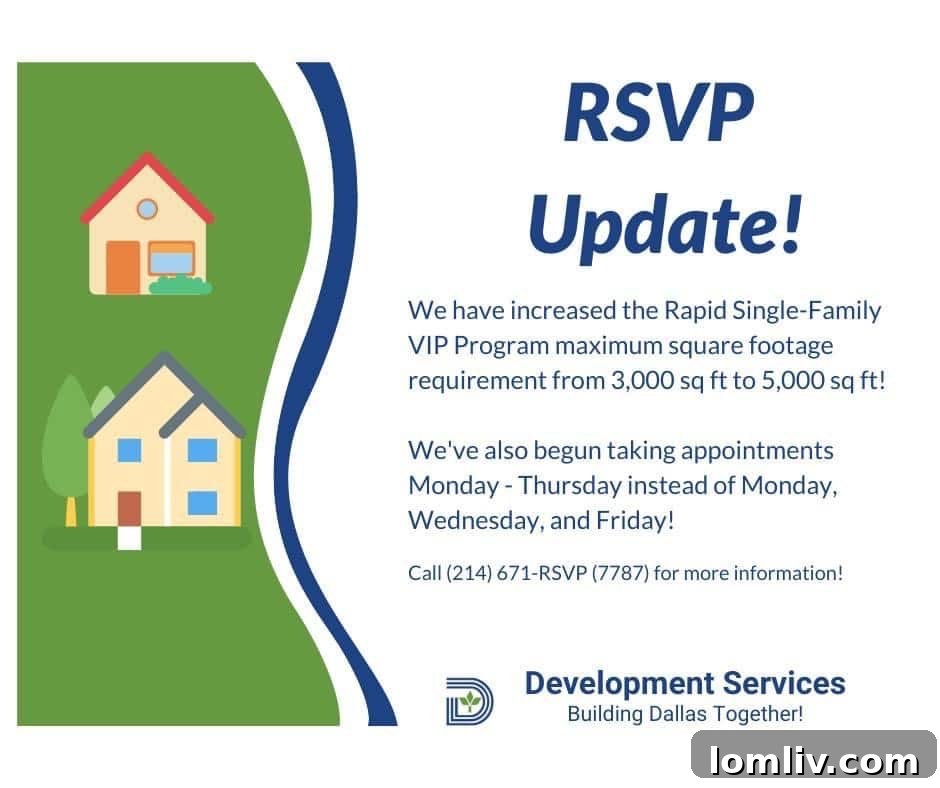
The Residential Plan Review Fast Track Permit Program is not the DSD’s sole initiative aimed at speeding up development. It complements existing solutions such as the Rapid Single Family VIP Program (RSVP). While both programs are designed to expedite permit issuance, they cater to different needs and come with distinct parameters. The RSVP program allows builders to pay a premium fee of $200 per hour to “jump the line” for same-day permit processing. This option is particularly beneficial for urgent projects or situations where a swift start on construction is critical. Initially, RSVP was limited to homes under 3,000 square feet, a restriction that has since been expanded to include residences up to 5,000 square feet, reflecting evolving market demands and construction trends within the Dallas area.
However, much like the RSVP program, the new fast-track residential program is not universally applicable. Designed for efficiency in specific scenarios, it comes with certain restrictions to ensure its effectiveness and proper implementation. For instance, applications for homes situated on corner lots will not be accepted under this expedited review process. Corner lots often present unique site plan challenges related to setbacks, easements, and visibility, which typically require a more individualized and thorough review. Furthermore, builders contemplating projects within environmentally sensitive areas or districts with special zoning designations—such as floodplains, historic overlay districts, conservation districts, public utility districts, or planned development areas—are strongly advised to consult with city staff prior to submitting any fast-track requests. These consultations are crucial for understanding potential complexities and ensuring compliance with specific regulations that might necessitate a standard review process rather than an expedited one.
These limitations are not arbitrary but are in place to manage the unique challenges posed by certain types of properties or locations. Projects in floodplains, for example, are subject to stringent environmental regulations and require specialized hydrological assessments. Similarly, historic districts impose strict preservation guidelines that affect design, materials, and construction methods, making a standardized fast-track review unsuitable. By clearly defining the scope of the fast-track program, the DSD ensures that expedited services are provided where they can be most effective, while maintaining the necessary diligence and detailed scrutiny for more intricate developments. This approach helps prevent future complications, ensures adherence to urban planning principles, and upholds the integrity of Dallas’s diverse neighborhoods, balancing efficiency with responsible development.
A New Chapter for Faster Permitting Times in Dallas
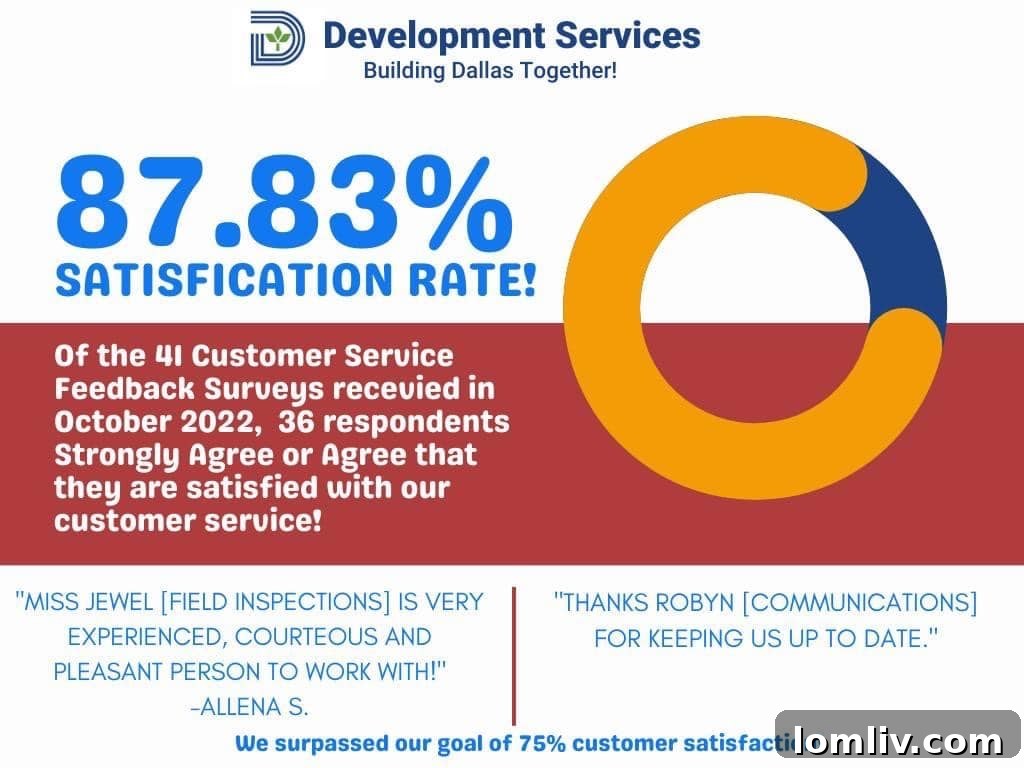
The introduction of the Fast Track Permit Program is part of a broader, concerted effort by the Dallas Development Services Department to dramatically improve its operational efficiency and customer service. Over the past six months, the DSD has strategically implemented a series of initiatives aimed at fostering collaborative customer partnerships and significantly streamlining the entire permit issuance process. Andrew Espinoza, the Director of Development Services, highlighted the positive outcomes of these transformative efforts. “These initiatives have resulted in improved customer service delivery, collaborative partnerships, and faster permitting times,” Espinoza confirmed, emphasizing the tangible benefits already being realized by the city’s development community.
Espinoza elaborated that the fast-track program is a vital “tool in the toolkit” that is already yielding impressive results. One of the most critical indicators of success is the progress made in addressing the department’s notorious “overdue project list”—a backlog that has long plagued the processing of new single-family home permits, causing significant delays and frustrations for builders. With renewed focus and streamlined procedures, the DSD projects that this backlog, once a significant impediment to development, will be completely eliminated by the end of the current calendar year. As of November 15, department officials reported to the city council’s Government Performance and Financial Management Committee that the list had been reduced to a mere 131 permits, a testament to the effectiveness of the new strategies and the dedication of the DSD team.
This remarkable progress instills confidence in the DSD’s ambitious future goals. Director Espinoza articulated the department’s ultimate vision: “We are determined to continue to improve and reach our ultimate goal of reviewing and processing all new single-family permits within three to five business days.” Achieving this aggressive target would position Dallas as a leader in efficient municipal services, significantly reducing the financial burden and logistical complexities often associated with lengthy permit delays for builders and homeowners alike. The commitment extends beyond just speed, aiming for a transparent, predictable, and supportive environment for all development projects within the city, thereby fostering economic growth and improving the quality of life for its residents.
The DSD’s focus on technology and process re-engineering, including the adoption of digital platforms like ProjectDox, plays a pivotal role in these improvements. By digitizing submissions and reviews, the department not only cuts down on physical paperwork but also enhances accessibility and traceability for all stakeholders. This digital transformation allows for real-time tracking of permit applications, reduces the potential for lost documents, and facilitates quicker communication between applicants and reviewers. Furthermore, ongoing staff training and a cultural shift towards proactive problem-solving and collaboration are integral to sustaining these gains. The aim is to create a seamless experience from initial application to final approval, reinforcing Dallas’s reputation as a business-friendly city that actively supports growth and innovation in its vibrant construction sector.
Understanding the Fast-Track Plan Review Process and Requirements
The Residential Plan Review Fast Track Permit Program is meticulously designed to ensure accuracy and compliance while significantly accelerating the review cycle. Under this program, Development Services staff will work in close collaboration with applicants to thoroughly review plans. This collaborative approach ensures that all predesignated floor plan models are not only correct but also properly designed and accurately labeled, minimizing errors and re-submissions. The transparency and direct communication embedded in the process aim to create a more cooperative environment between city officials and developers, fostering mutual understanding and efficiency.

To facilitate these customer partnerships and ensure the resounding success of the program, a clear set of requirements and procedural steps has been outlined:
- Initial Request Submission: Applicants interested in utilizing the Fast-Track Plan Review option must begin by submitting a formal request using a specific program form. This initial step helps the DSD identify eligible projects, verify compliance with initial criteria, and allocate appropriate resources for the expedited review, ensuring that the process starts on the right foot.
- Prompt Scheduling: Following the submission of the request, city staff are committed to responding within 24 hours, or by the next business day, to schedule an appointment with the applicant. This prompt scheduling is crucial for an initial review of master plan submittals, allowing for early dialogue and setting the stage for the collaborative process without unnecessary delays.
- Comprehensive Document Submission: Applicants are required to provide individual flash drives, each containing a comprehensive set of documents for every unique floor plan model they wish to have fast-tracked. This includes detailed elevation specifics, engineering reports, a site plan, and all other pertinent documentation as outlined in the Department’s New Construction One- and Two-Family Dwelling Checklist. The meticulous organization of these submissions is key to a smooth and efficient review process.
- Initial Review and Feedback: During the initial review meeting, city staff will meticulously assess the submitted documentation. They will provide a clear, concise list of any missing items, discrepancies, or necessary adjustments that must be addressed for the project to qualify and proceed under the fast-track process. This vital feedback loop is designed to identify and rectify potential issues early, preventing delays later on and ensuring full compliance.
- Electronic Stamping and Storage: Once all required documentation has been submitted and thoroughly reviewed for compliance with city codes and program guidelines, city staff will electronically stamp the pre-reviewed floor plans. These approved plans will then be securely stored on the applicable applicant’s flash drive and promptly returned, providing an efficient, digitally validated record of approval that streamlines subsequent stages of development.
- ProjectDox Platform Utilization: At the time of final project submission, applicants must utilize the ProjectDox Platform, the city’s advanced digital permitting system. It is imperative to accurately provide the name of the subdivision development and the pre-reviewed plan identifier in the description field. Pre-reviewed plans should be uploaded as one consolidated file, while separate site-specific plans and foundation-engineered designs must be uploaded individually for each dwelling to ensure clarity, specificity, and proper structural assessment.
- Handling Mirrored Architectural Plans: Architectural plans that are mirrored (reversed versions of a standard plan) must be clearly labeled as such on a site-specific basis within the submission. Crucially, the accompanying site and foundation plans must always reflect the actual, physical conditions and orientation of the property as built, and should not be labeled as “mirrored,” preventing any ambiguity or potential errors during the construction phase.
- Expedited Issuance Timeline: A significant benefit of the program is the commitment from city staff to issue pre-reviewed submittals within an impressive five business days. This accelerated timeline is a core promise of the fast-track initiative, directly translating to quicker starts for construction projects and significantly improving project predictability for developers.
- Site Eligibility: For a project site to be eligible for the Fast Track Program, it must either be formally platted or have received early release approvals. This prerequisite ensures that the underlying land development approvals are in place, minimizing potential roadblocks further down the construction pipeline and ensuring that only ready-to-build sites enter the expedited review.
These detailed requirements underscore the DSD’s commitment to both efficiency and meticulous planning. By standardizing the submission and review process for repetitive plans, the department can devote more resources to complex, non-fast-track projects, thereby improving overall service delivery across the board. This holistic approach ensures that Dallas continues to grow responsibly, supporting its builders while upholding high standards of urban development, safety, and environmental stewardship.
Looking Ahead: Dallas’s Commitment to Development Excellence
The Residential Plan Review Fast Track Permit Program is more than just a new policy; it represents a significant paradigm shift in how the City of Dallas interacts with its development community. By actively listening to feedback, embracing technological advancements, and implementing strategic process improvements, the Dallas Development Services Department is not only addressing past challenges but also proactively shaping a more efficient and collaborative future for construction in the city. The initial success stories, particularly the rapid reduction in the permit backlog and the enthusiastic participation of major builders, are compelling indicators of the program’s immediate impact and its potential for long-term transformation.
As Dallas continues its dynamic growth, the ability to process building permits swiftly and predictably will be paramount to meeting escalating housing demands, attracting new investment, and sustaining economic vitality. Programs like the Fast Track initiative demonstrate a clear understanding from city leadership of the critical link between efficient municipal services and robust urban development. This commitment to continuous improvement, evidenced by ambitious goals for future permit processing times, promises a brighter, more streamlined future for builders, residents, and the entire Dallas metropolitan area, fostering an environment where innovation and progress can flourish unhindered by bureaucratic delays. The DSD’s dedication ensures Dallas remains a prime location for residential development, contributing to a vibrant and expanding urban landscape.