By Micah Moore
Special Contributor
A transformative wave of revitalization is sweeping through one of Dallas’s most economically disadvantaged neighborhoods, centered around a long-vacant building on Martin Luther King Jr. Boulevard. This ambitious initiative aims to breathe new life into the area, fostering economic growth, creating vital job opportunities, and establishing a vibrant, walkable urban environment for its residents. The concerted efforts underscore a powerful commitment to community-led development and equitable progress in South Dallas.
The area, now proudly known as the Forest District – a thoughtfully chosen new name for the stretch of Martin Luther King Jr. Boulevard between Lamar Street and the S.M. Wright Freeway – is poised for a significant uplift. The vision is clear: to cultivate a thriving urban neighborhood that not only enhances the quality of life for its long-time residents but also respectfully preserves the unique identity and rich heritage of this historic community. This comprehensive approach to revitalization goes beyond mere development; it’s about nurturing a sense of belonging and collective prosperity.
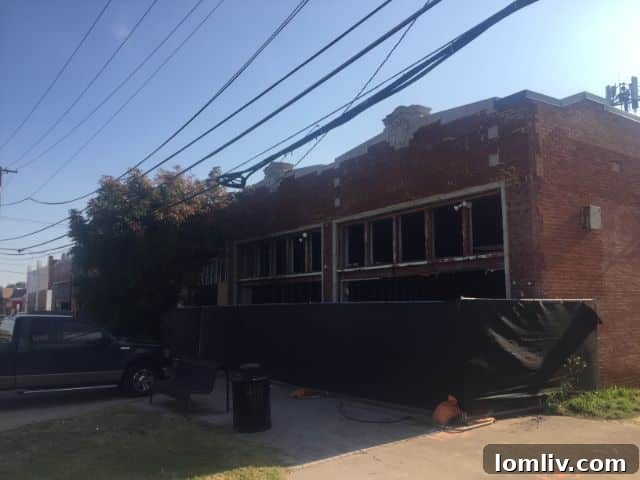
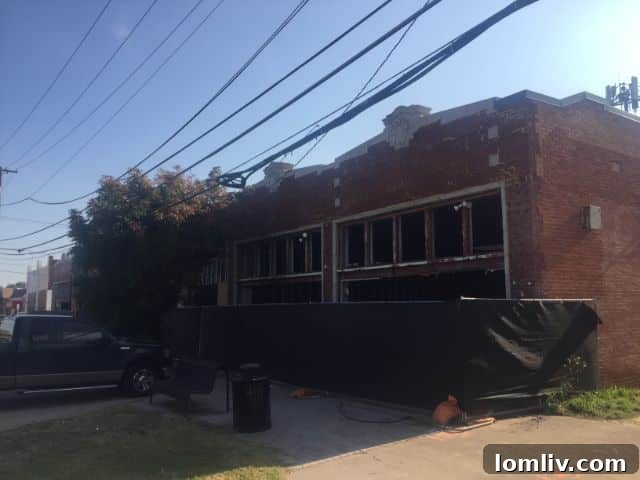
At the heart of this resurgence is a majestic 12,000-square-foot building, originally constructed in 1913, located at 1632 MLK Boulevard. This architectural gem, known for its distinctive original red brick exterior, is slated for a comprehensive renovation. Once completed, it will house five distinct tenants, offering essential services and boosting local commerce. The project has already secured commitments from a promising new restaurant and a much-needed dental practice, signaling a positive shift in the local amenities available to residents. The Dallas City Council recently demonstrated its strong support for this endeavor by approving a substantial $1 million economic development incentive, drawn from the city’s 2017 bond program, recognizing its potential as a catalyst for broader change.
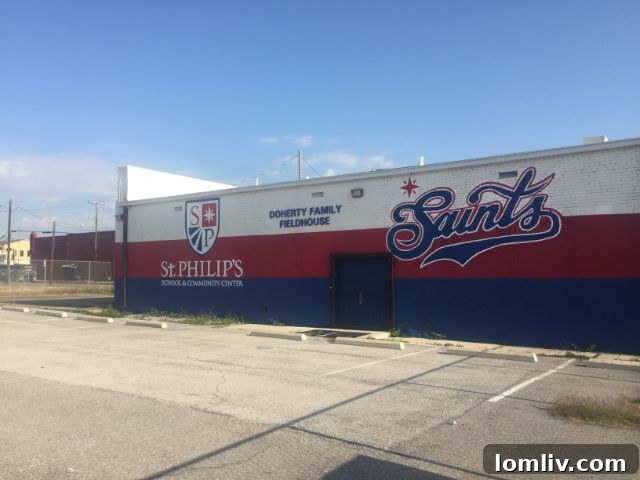
Ownership of this pivotal property rests with St. Philip’s School and Community Center, a venerable nonprofit institution that has served the South Dallas community with unwavering dedication for over seven decades. St. Philip’s deep roots and understanding of the local landscape make it an ideal steward for this revitalization effort. The context of this initiative is starkly highlighted by the local economic realities: the median annual household income in the Forest District is approximately $24,000, underscoring the profound need for sustainable economic development and accessible services that this project promises to deliver.
Dr. Terry Flowers, the esteemed headmaster at St. Philip’s School, articulated the profound significance of this project to the Dallas City Council. “We are incredibly excited about this opportunity to bring forth to Martin Luther King Jr. Boulevard a chance to significantly increase the tax base, substantially enhance job opportunities in the area, and introduce essential services to the community,” Dr. Flowers stated, emphasizing the multifaceted benefits of remodeling the 12,000-square-foot historic structure. His words resonate with the community’s long-held aspirations for progress and self-sufficiency.
Construction on the 1913 building was scheduled to commence in December 2021, with an anticipated completion timeframe of one year. This timeline projects that the new tenants will be ready to open their doors and welcome customers by January 2023, marking a tangible milestone in the district’s journey towards revitalization. Julie Saqueton, Chief Community Advancement Officer at St. Philip’s, further elaborated on the holistic vision underpinning these efforts. “Our comprehensive vision extends beyond merely implementing a transformational economic development project,” Saqueton explained. “We are equally committed to integrating an affordable housing strategy that will meticulously preserve long-term residential affordability within the neighborhood, ensuring that growth benefits all residents.” This dual focus highlights a thoughtful approach to equitable development, preventing displacement while fostering prosperity.
As is customary with all projects funded by economic development bond dollars, specific stipulations and conditions are in place to ensure public accountability and maximize community benefit. The development is mandated to generate a minimum of 15 full-time jobs, each offering a competitive hourly wage of at least $15, thereby directly impacting the economic well-being of local families. Furthermore, a strong emphasis is placed on inclusivity within the project’s execution: minority- and women-owned businesses are expected to constitute at least 25 percent of all construction contractors, promoting equitable access to economic opportunities. To maintain transparency and oversight, the developer is also required to submit annual progress reports to the city, detailing adherence to these crucial stipulations.

From Dallas City Council members to influential community leaders, the project is universally hailed as a “catalyst” for widespread positive change. Its significance has even been formally recognized by The Real Estate Council, which proudly bestowed upon it the prestigious title of its “Dallas Catalyst Project.” This designation underscores the project’s potential to spark a ripple effect of development throughout the Forest District and beyond. Council member Adam Bazaldua, who represents District 7, encompassing the Forest District, highlighted the collaborative spirit driving these efforts. “Numerous partners are working diligently to help usher in beneficial growth,” Bazaldua remarked. He noted the pervasive challenge of vacant and dilapidated retail strips in the area, emphasizing that “these neglected spaces can now serve as a powerful catalyst for a new, brighter future for our community.”
Additional Projects Build Momentum in South Dallas
The enthusiasm generated by the St. Philip’s initiative is indicative of a broader momentum building across the entire neighborhood. This vibrant surge includes another critical community-driven project: a new fresh grocery store being developed by a dedicated nonprofit. This endeavor is particularly vital for an area long identified as a severe “food desert,” where access to nutritious and affordably priced fresh produce has been historically limited. The presence of a local grocery store is not merely a convenience; it’s a foundational element for community health, economic stability, and overall quality of life.
In a significant show of support for this crucial initiative, the Dallas City Council allocated $390,000 in 2017 economic development bond dollars to Cornerstone Baptist Church’s Community Development Corporation. This funding is dedicated to expanding a facility at 2839 S. Ervay, which will not only house a wide array of affordably priced fresh foods but also feature eight dedicated slots within a community kitchen. This innovative kitchen space will be accessible to local entrepreneurs and small businesses, providing them with essential resources to develop and grow their culinary ventures, thereby fostering local economic empowerment and job creation. The synergy between providing fresh food and nurturing local businesses represents a comprehensive approach to community upliftment.
The October 28 City Council meeting marked a particularly momentous day for Council member Bazaldua and the residents of District 7, as both the St. Philip’s and Cornerstone developments received pivotal approvals. Bazaldua reflected on the significance of the occasion, stating, “There aren’t very many Wednesdays that I have such an exciting agenda for South Dallas, and this is one to remember for sure.” His heartfelt sentiment underscores the collective hope and anticipation surrounding these transformative projects, which promise to reshape the landscape and future prospects of South Dallas for generations to come.
Much like St. Philip’s, Cornerstone Baptist Church plays a vital role in empowering residents, offering them invaluable opportunities to improve their lives. Generations of South Dallas residents have benefited from St. Philip’s educational and community programs, including distinguished figures such as Council member Tennell Atkins. Now representing far South Dallas, Atkins himself championed the St. Philip’s project through the council’s Economic Development committee, drawing on his personal connection and deep understanding of the community’s needs. His advocacy highlights the lasting impact of institutions like St. Philip’s on individuals and the broader community.
Council member Atkins passionately articulated the necessity of investing in South Dallas for the city’s overall growth. “If we are going to grow our city, we have to grow the southern part of Dallas,” Atkins asserted, emphasizing a balanced and equitable approach to urban development. He stressed the importance of utilizing “all the tools in the toolbox” – a metaphor for comprehensive strategies encompassing economic incentives, infrastructure improvements, and community engagement – to foster holistic growth throughout the city. His vision is one where no part of Dallas is left behind in the pursuit of prosperity.
However, Atkins also voiced crucial concerns regarding the sustainability of these revitalization efforts. He cautioned that persistent issues such as crime and code violations could impede progress, despite the council’s significant financial investment. He views blight in the form of dirty streets, overgrown vacant lots, and dilapidated buildings as formidable setbacks to sustained advancement. Emphasizing a holistic approach, Atkins also stressed the imperative of proper policing and public safety measures. “We need to maintain our equity. We need to use all our resources to protect our assets in these projects,” Atkins urged during the October 28 meeting. He underscored a critical truth: “These projects will not grow unless we protect our assets,” highlighting the ongoing need for vigilance and coordinated community-wide efforts to safeguard investments and ensure long-term success.
Other council members echoed Atkins’ sentiments, particularly recognizing the profound link between addressing food insecurity and combating crime rates. Council member Omar Narvaez articulated this connection with conviction: “This is a huge victory for this neighborhood. We know that food-stable communities have lower crime rates,” Narvaez stated. He framed the initiative as a fundamental shift in urban policy, declaring, “This is how we begin to reimagine public safety,” suggesting that investing in community well-being, such as access to healthy food, is a powerful proactive measure against crime and an integral component of a safer, more equitable city.
TxDOT’s S.M. Wright Freeway Transformation: Reconnecting a Community
In addition to the private and city-led development projects, local leaders have initiated significant infrastructure projects designed to fundamentally transform this historically neglected neighborhood into a bustling residential and mixed-use area. These infrastructure investments are crucial for creating the connective tissue and foundational support needed for sustainable growth and enhanced quality of life.
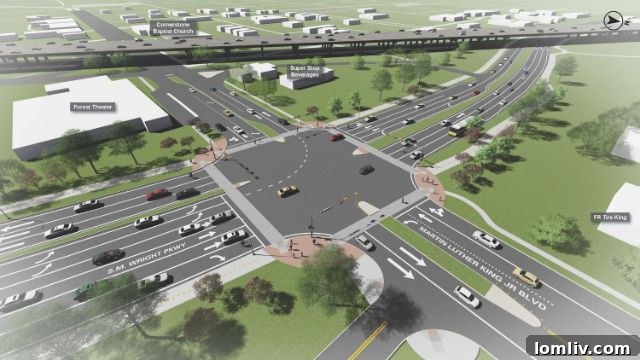
A monumental project by the Texas Department of Transportation (TxDOT) is underway to remove the formidable 10-lane S.M. Wright Freeway. This freeway, originally constructed in phases during the 1950s and ’60s, notoriously sliced and diced the neighborhood apart, creating a physical barrier that isolated communities and impeded local connectivity. Its removal signifies a historic opportunity for reconciliation and reconnection within South Dallas. In its place, the freeway will be rebuilt as a much more community-friendly, low-speed, six-lane boulevard, thoughtfully lined with trees to enhance aesthetics and pedestrian experience. TxDOT’s comprehensive vision for this transformation also includes the creation of pedestrian-friendly pathways and distinctive gateway monuments, further integrating the area and fostering a sense of place and accessibility for residents and visitors alike.
Complementing TxDOT’s efforts, the city recently allocated an additional $3 million for crucial water and other essential infrastructure upgrades. These significant investments are foundational, designed to support the anticipated influx of future development and ensure the neighborhood has the robust underlying systems required for growth. Simultaneously, Martin Luther King Jr. Boulevard itself is slated to receive the “Complete Street” treatment, an urban planning approach that prioritizes the needs of all users – pedestrians, cyclists, and motorists – not just cars. The Regional Transportation Council demonstrated its commitment to this vision by chipping in $500,000 to fund the engineering phase of this transformative street renovation. A “Complete Street” typically includes elements like wider sidewalks, dedicated bike lanes, improved crosswalks, landscaping, and traffic calming measures, all aimed at creating a safer, more accessible, and more inviting thoroughfare.
Julie Saqueton, Chief Community Advancement Officer at St. Philip’s, eloquently summarized the overarching goal: “Our shared vision is a bustling, highly walkable Martin Luther King Jr. Boulevard, vibrant and lined with diverse mixed-use retail establishments.” She powerfully articulated the core philosophy driving these extensive efforts, stating, “We firmly believe that equitable economic development is the absolute key to igniting positive, lasting change within our community.” This philosophy underscores a commitment to development that genuinely benefits all segments of the population, ensuring that growth is inclusive and sustainable.
The success of these multifaceted projects is a testament to the extraordinary collaborative spirit among numerous dedicated organizations. Key partners include CitySquare, St. Philip’s School and Community Center, Cornerstone Baptist Church, Matthews Southwest, and The Real Estate Council. This collective synergy highlights how diverse entities, working together towards a common goal, can achieve remarkable transformations that would be impossible in isolation. Their combined expertise, resources, and unwavering commitment are driving forces behind the revitalization of the Forest District.
Further amplifying the district’s potential, at the opposite end of MLK Boulevard, the ambitious Fair Park Master Plan was also approved on October 28. This comprehensive plan is designed to significantly boost visitor attraction to Fair Park while simultaneously re-stitching and integrating the surrounding South Dallas neighborhoods that have historically felt disconnected. Martin Luther King Jr. Boulevard, originally named Forest Lane, forms a crucial artery, stretching from Fair Park all the way to Lamar Street, making the synergy between these two major initiatives incredibly powerful for the broader South Dallas area.
Council member Bazaldua concluded with a profound reflection on the dedication required to achieve such significant milestones: “This is truly the start of something great,” he affirmed. “These hard-won victories do not come by accident; they are the direct result of tireless movers and shakers on the ground, working day in and day out, pouring their sweat equity into ensuring that we witness and celebrate wins like these.” His words serve as a powerful tribute to the unwavering commitment of community leaders, residents, and organizations whose collaborative efforts are fundamentally reshaping the future of the Forest District and South Dallas.