The recent community meeting regarding the proposed PD-15 redevelopment at Preston Road and Northwest Highway illuminated a recurring challenge in urban planning: the tension between expert data and deeply held community perceptions. While professional traffic engineers presented a meticulously researched study, their findings were met with skepticism by some residents who appeared more aligned with preconceived notions than objective facts.
This discussion isn’t merely about traffic signals; it’s about the very foundation of how cities evolve, the role of data in decision-making, and the intricate balance between progress and preserving neighborhood character. As Dallas continues its dynamic growth, understanding these complex dynamics becomes crucial for fostering sustainable and harmonious urban development.
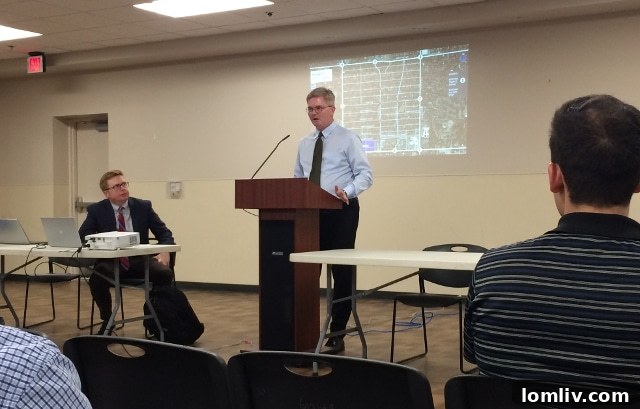
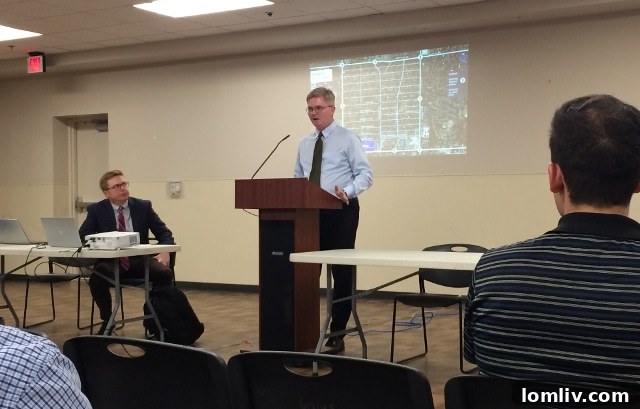
During the pivotal meeting, Steve Stoner, the esteemed Director of Traffic Engineering with Pacheco Koch Consulting Engineers, presented his comprehensive findings on the traffic implications in and around the PD-15 zone. With a master’s degree in civil engineering and accreditations as a Texas Professional Engineer (P.E.) and Professional Traffic Operations Engineer (P.T.O.E.), Stoner brings 25 years of extensive experience to the field. His background underscores a deep understanding of traffic patterns, infrastructure planning, and the rigorous methodologies required for accurate projections. His presentation was not merely a casual observation but a detailed analysis rooted in established engineering principles and extensive data collection.
Despite Stoner’s undeniable credentials and the scientific rigor of the study, a segment of the audience, many of whom were likely encountering a professional traffic study for the first time, openly challenged his “veracity,” the methodologies employed, and the conclusions drawn. This scenario is increasingly common in an era where the acceptance of facts often hinges on their alignment with individual worldviews. When data contradicts existing preconceptions, the immediate response can sometimes be to question the data itself, rather than re-evaluating one’s own perspective. This phenomenon was strikingly evident at the meeting, highlighting the difficulty in bridging the gap between expert analysis and public sentiment.
Furthermore, there were veiled suggestions that Stoner’s conclusions were influenced by the developers who commissioned the study. Such insinuations, though not uncommon in contentious development debates, often bypass the practical reality: conducting a comprehensive traffic study requires significant resources. Those raising doubts had not, themselves, funded an alternative study to substantiate their claims, underscoring a common pattern where it is often easier to critique existing work than to undertake the complex and costly endeavor of independent research. This dynamic frequently complicates productive dialogue in community planning forums.
Some attendees expressed surprise that the traffic study wasn’t an all-encompassing, intricately detailed report addressing every conceivable minor impact. This reaction is understandable for those unfamiliar with the scope and purpose of typical traffic engineering reports. These studies focus on specific, measurable impacts relevant to vehicle flow, capacity, and safety, not an exhaustive account of every potential alteration to daily life. Without a frame of reference for what constitutes a standard traffic study, expectations can easily become misaligned with professional deliverables. Nevertheless, Stoner’s review of the findings largely corroborated prior discussions and analyses, reinforcing the consistency and reliability of the data presented.
The core of the discussion, however, extended beyond the general findings, delving into specific proposals for traffic management.
Tulane Boulevard vs. Edgemere Road: A Critical Crossroads for PD-15 Traffic
At the heart of the traffic management debate for the PD-15 redevelopment lies the strategic decision of where to implement a new traffic signal. Engineer Steve Stoner, approaching the problem from a technical perspective, favored the addition of a traffic signal at Edgemere Road and Northwest Highway. His rationale is grounded in several key engineering principles:
- Optimal Signal Spacing: Edgemere Road provides ideal spacing relative to the existing traffic signals on Northwest Highway at Pickwick and Thackery. Proper signal spacing is critical for maintaining efficient traffic flow and minimizing congestion along major arterial roads.
- Excess Capacity: The existing infrastructure at the Edgemere Road intersection demonstrates excess capacity, making it a suitable candidate for accommodating increased traffic volume without immediately leading to gridlock.
- Public Roadway Access: Edgemere Road is an intersection of public roadways, simplifying the legal and logistical aspects of signal installation and maintenance compared to private access points.
- Minimal Interference: A signal at Edgemere Road would not interfere with the existing turn lane into Park Cities Baptist Church, preserving current access and minimizing disruption to a significant community institution.
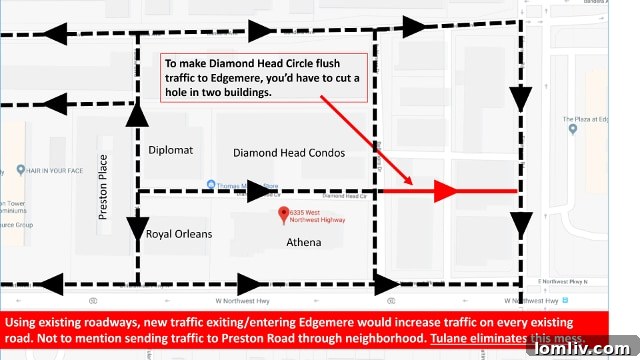
However, from a practical and neighborhood-centric viewpoint, the concept of opening Tulane Boulevard for new development traffic presents a compelling alternative – an idea previously advocated for its potential to better integrate new traffic flow into the existing urban fabric. The accompanying graphic vividly illustrates the consequences if Tulane Boulevard remains closed and a signal is exclusively placed at Edgemere Road. The projection shows traffic generated by the new development dispersing outwards, infiltrating every alley and side street within the surrounding residential areas. If the primary objective of a new traffic signal is to manage development-induced traffic effectively, funneling it through Edgemere Road in this scenario inadvertently creates internal congestion and disruption for the neighborhood, essentially causing a localized “cluster” of traffic issues.
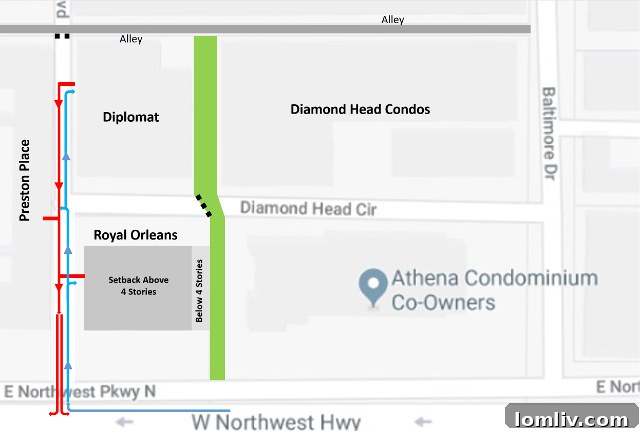
In contrast, the alternative diagram presents a strategic solution: channeling all new traffic generated by the redevelopment of Diplomat, Royal Orleans, and Preston Place directly onto Tulane Boulevard. This approach effectively disengages new development traffic from the larger, established residential neighborhood, as depicted by the distinct red/blue lines. To further fortify neighborhood protection and prevent cut-through traffic, the plan includes the installation of removable bollards (accessible by emergency services) at key points, effectively closing off access to the alley, Bandera, Diamond Head Circle, and by extension, Baltimore (indicated by black dots). This design significantly reduces the likelihood of new traffic impacting existing residential streets.
While this Tulane-centric strategy might not align perfectly with a traditional Northwest Highway or traffic engineer’s generalized perspective, it undeniably offers substantial advantages for the immediate neighborhood. It prioritizes the preservation of local tranquility and minimizes internal disruption. Furthermore, various measures can still be implemented to mitigate any potential impacts on Northwest Highway, ensuring a balanced approach to regional traffic management without compromising neighborhood integrity. These considerations highlight the importance of integrating both technical expertise and localized practical understanding in urban planning decisions.
Seizing the Tulane Opportunity: A “Lightning in a Bottle” Moment
Steve Stoner presented the technical facts, but Preston Place attorney Tommy Mann from Winstead highlighted a crucial aspect: community support can create exceptions. Mann articulated that if there is sufficient collective desire for opening Tulane Boulevard, such a solution could indeed be realized. He metaphorically described the opportunity to open Tulane as akin to catching “lightning in a bottle,” emphasizing its rare and fleeting nature. With heightened city focus on the PD-15 redevelopment, now is the opportune moment for residents and stakeholders to coalesce around this solution. Delaying action for several years risks losing this perfect alignment of circumstances, allowing the window of opportunity to pass without achieving the most beneficial outcome for the neighborhood.
Despite the technical intricacies and sometimes heated debate, a significant number of attendees at the meeting seemed to favor the Tulane solution over Edgemere for a new intersection. This preference was particularly strong among residents of single-family homes north of the “Pink Wall.” For these homeowners, a more active Edgemere Road and Northwest Highway intersection could paradoxically become an “attractive nuisance” for Preston Hollow. While not directly drawing traffic from PD-15, it could encourage cut-through traffic from drivers seeking to bypass congestion on Preston Road or Northwest Highway, funneling it northward into their quiet neighborhood. This highlights how an ostensibly beneficial traffic solution in one area can have unintended, detrimental consequences for adjacent communities, underscoring the need for holistic planning.
A specific concern raised by a couple of Preston Hollow homeowners pertained to traffic cutting through their neighborhood from the Pink Wall area. Referencing pages 39 and 40 of the traffic study, it was noted that during the morning rush hour, 17 cars turn north onto Edgemere from Bandera, while 12 cars make the turn onto Bandera from Edgemere. In the evening rush, these numbers are nine and 12, respectively. Even as a worst-case scenario, doubling these figures would still represent a negligible impact when considering the myriad directions these vehicles might travel from Edgemere, thereby illustrating that this particular concern, while valid from a resident’s perspective, does not represent a significant traffic burden according to expert analysis.
Funding the Future: Money, Money, Money
Naturally, the question of funding was a prominent topic. Attorney Tommy Mann clarified that if developers achieve the desired density for the PD-15 redevelopment, they would be more than willing to fund the construction of a new intersection. This commitment from developers is a crucial component in facilitating the proposed infrastructure improvements.
A key concern among existing residents revolved around Tulane Boulevard’s current status as a private road and who would bear the responsibility for its ongoing maintenance if it were to become a public access point. The fear was that existing homeowners might be partially liable for these costs. However, the situation is more clearly defined: similar to other private roads within PD-15, Tulane Boulevard is owned by the parcels bordering it, which, in this scenario, would be the developers. Consequently, any street improvements and future maintenance would fall squarely on their shoulders. Furthermore, developers have a strong incentive to maintain high standards for infrastructure like Tulane Boulevard. To attract desirable tenants and maintain property values within the redeveloped area, they would ensure that the road does not deteriorate, drawing a clear distinction from the neglected, crater-filled private roads often seen in older condo complexes.
Another point of contention and frequent lamentation from residents centered on the perceived surge in traffic from services like Amazon and Uber Eats deliveries, along with caregivers and housekeepers. Many felt that the official traffic study did not adequately account for these daily movements. However, a closer look at the nature of these services reveals a different picture:
- Amazon Shipments: Deliveries typically occur via major carriers such as the postal service, FedEx, or UPS, usually once a day per address. These are generally integrated into existing commercial delivery routes and do not significantly contribute to peak rush hour congestion for individual residences.
- Housekeepers: Most households employ housekeepers on a weekly or bi-weekly basis, and these visits are rarely scheduled during peak morning or evening rush hours. Their infrequent and off-peak travel patterns have minimal impact on overall traffic flow.
- Uber Eats and Food Deliveries: Food delivery services, by their very nature, primarily operate outside traditional rush hour peaks, as customers are typically at home to receive their meals. This means their traffic generation is staggered and less concentrated during critical commuter times.
- Caregivers: For residents requiring caregivers, their trips are generally consistent and replace, rather than add to, the existing daily vehicle trips associated with the household. Furthermore, caregivers often arrive in the morning as commuters are leaving and depart in the late afternoon, working counter to peak rush hour traffic.
While adequate onsite parking for such services is undoubtedly important for convenience, the overall traffic generated by these ancillary services is often a “red herring” in the broader context of a comprehensive traffic study. Their sporadic and off-peak nature means they do not fundamentally alter the peak hour traffic projections that form the basis of urban planning decisions.
In summary, the meeting underscored a persistent divide: those who prioritize personal anecdotes and subjective experiences continue to question data from experienced professionals, remaining unconvinced by objective analyses that don’t align with their immediate perceptions. For these individuals, the deeply personal memory of “four cars on Pickwick” on a particular August morning can often outweigh years of expert-collected data and rigorous traffic modeling. Navigating this fundamental difference remains one of the central challenges in achieving consensus on urban development projects.

Note: My professional focus encompasses high-rises, homeowners’ associations (HOAs), and renovation trends. I also hold a keen appreciation for the balance between modern and historical architecture, particularly within the context of the YIMBY (Yes In My Backyard) movement’s principles of advocating for greater housing density and development. My writing has received recognition from the National Association of Real Estate Editors, with three Bronze awards in 2016, 2017, and 2018 for pieces on housing styles, property taxes, and condo fires, as well as two Silver awards in 2016 and 2017 for articles featured on second shelters in Marrakech and Bermuda. If you have a story to share, insights to offer, or even a unique proposal, feel free to reach out via email at [email protected]. You are welcome to search for me on Facebook and Twitter, although my public presence on those platforms is intentionally minimal.