

By Jay Firsching
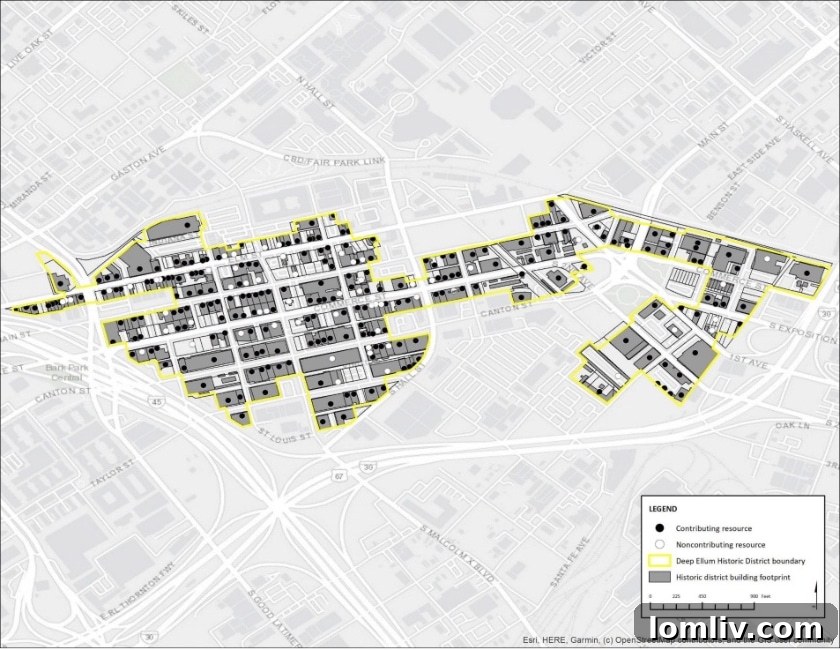
Dallas’s vibrant Deep Ellum neighborhood has recently achieved a significant milestone, earning its place on the prestigious National Register of Historic Places. This federal catalog acknowledges sites across the United States for their profound historical, architectural, archaeological, engineering, or cultural significance. This esteemed recognition brings with it both exciting opportunities and important considerations for property owners and the community at large. Understanding the nuances of this listing – its benefits, limitations, and the processes involved – is crucial for anyone invested in Deep Ellum’s future. For those interested in exploring the district’s rich architectural tapestry and identifying specific contributing buildings, detailed information is readily available here.
Understanding the National Register: Benefits and Limitations for Property Owners
A common misconception surrounding a National Register listing is that it imposes stringent regulatory controls on property owners. It’s imperative to clarify this from the outset: inclusion in the National Register does not entail any regulatory oversight or dictate how property owners manage their buildings. This notion is entirely unfounded. Instead, consider a National Register listing as an honorary designation, a federal endorsement that recognizes a place’s invaluable contribution to American history and culture. It’s akin to a prominent historical society declaring, “This location is profoundly significant and worthy of widespread attention and appreciation.”
Properties can achieve National Register status in one of two ways: as individual listings or as part of a designated historic district. An individual listing demands that a property possesses exceptional distinctiveness or importance on its own merit, a criterion many older structures may not meet independently. Conversely, a district designation, such as Deep Ellum’s, highlights the collective significance of an entire area. The beauty of a historic district lies in its ability to recognize buildings that, while perhaps not individually iconic, contribute to the overarching historical narrative and architectural character of the district. Many structures within Deep Ellum, when viewed individually, might not qualify for singular recognition. However, as integral components of the district, they collectively weave a vital narrative, particularly regarding the profound history of the African-American community in Dallas. If your building contributes to the unique historical and architectural fabric of Deep Ellum, it gains recognition under this esteemed federal program.
For property owners, the primary “drawback” often cited is the potential for increased property values and, consequently, higher property taxes. While this is a valid concern for those aiming to minimize tax burdens, it’s crucial to view it within a broader economic context. A National Register listing inherently elevates a district’s profile, stimulating economic activity, attracting new businesses, residents, and tourists. This increased desirability often leads to an appreciation in property values, which, while affecting taxes, also reflects a growth in asset value and potential for higher rental yields or resale profits. This economic revitalization often far outweighs the potential tax increase, transforming properties into more valuable investments.
Beyond these considerations, the benefits of a National Register listing are substantial and practical. For property owners in Texas, one of the most immediate and tangible advantages is a sales tax exemption on labor for construction, restoration, and rehabilitation projects. This exemption can result in significant savings over the course of an extensive renovation, especially for larger commercial properties or multi-phase projects. It’s crucial to present this sales tax exemption form to contractors before they issue their bills, as securing reimbursement after payment can be a challenging and often unsuccessful endeavor.
Furthermore, a National Register listing can prove invaluable in navigating the complexities of modern building codes. Historic structures often present unique challenges in meeting contemporary codes, particularly concerning accessibility or fire safety. However, building codes frequently incorporate specific allowances and alternative compliance paths for historic properties. This doesn’t mean compromising safety or accessibility; rather, it fosters constructive dialogues with code officials. A historic designation can open doors for innovative, preservation-sensitive solutions that might not be considered otherwise, allowing buildings to remain operational, safe, compliant, and inclusive while preserving their historic integrity. This flexibility ensures that the character of historic buildings is maintained without hindering their contemporary usability.

Unlocking Economic Incentives: Historic Tax Credits for Registered Properties
The economic incentives available for properties listed on the National Register are arguably among the most significant advantages for owners considering rehabilitation or restoration projects. By adhering to rigorous federal rehabilitation standards, property owners can qualify for substantial financial assistance in the form of tax credits from both federal and state governments. The federal program offers a reimbursement of up to 20 percent of the total qualified rehabilitation expenses, while the state of Texas provides an additional credit of up to 25 percent. These credits apply to a broad range of costs, including construction labor and materials, architectural and engineering fees, and various other professional expenses, excluding only site work and FF&E (furniture, fixtures, and equipment).
It’s important not to be daunted by the term “federal rehabilitation standards.” These are, in essence, the Secretary of the Interior’s Standards for Rehabilitation – a set of ten common-sense principles designed to guide preservation work. They emphasize making necessary improvements while preserving a building’s distinctive character, materials, and features. This means projects should repair rather than replace, respect the original design, and ensure any new additions are compatible with the historic character without being false historical recreations. Adhering to these standards ensures that the rehabilitation work not only qualifies for tax credits but also authentically contributes to the preservation of the district’s unique heritage.
While these tax credits offer remarkable financial benefits, acquiring them does involve a significant initial investment, which can be a hurdle for some property owners. To qualify for the federal tax credit, the amount spent on qualified rehabilitation must be substantial – specifically, it must exceed the adjusted basis of the building (generally, the building’s value minus the land). For example, if your building is valued at $200,000, you would need to invest at least $200,000 in qualifying rehabilitation expenses to secure the federal credit. The state credit threshold is considerably more accessible, requiring a minimum investment of just $5,000, making it an excellent incentive for smaller-scale projects or first-time applicants.
The process of applying for and securing these tax credits can be intricate, requiring detailed documentation, adherence to specific timelines, and careful coordination with various state and federal agencies. This complexity is precisely why the expertise of seasoned professionals is invaluable. Engaging with architects specializing in historic preservation, experienced tax accountants familiar with historic tax credit programs, and preservation consultants like myself, can significantly streamline the process. These experts guide owners through every step, from initial project planning and adherence to the Secretary’s Standards to the meticulous documentation required for successful credit application, ensuring that your investment in preservation is both impactful and financially rewarding.

If you are the proud owner of a contributing building within the newly designated Deep Ellum Historic District, congratulations are certainly in order! This recognition is a testament to the enduring legacy and cultural significance of your property and the surrounding area. And rest assured, there is no impending regulatory intervention; your ownership rights and autonomy remain entirely intact. In fact, you have the complete freedom to disregard the district designation if you choose, with no consequences. However, it’s far more likely you’ll find yourself increasingly fascinated by the revitalized charm of your neighborhood and observe neighboring structures undergoing impressive rejuvenation, thanks to the powerful financial incentives available. This collective effort will undoubtedly enhance Deep Ellum’s appeal, attracting more visitors, businesses, and residents, thereby boosting property values and fostering a vibrant community. Should you have any questions or concerns, or simply wish to explore the opportunities that lie ahead, do not hesitate to reach out to your friendly neighborhood preservation professional. We are dedicated to helping you navigate this exciting new chapter for Deep Ellum.
Founding Principal, Jay Firsching, established HRTC Services in March 2023. With nearly 25 years of extensive experience in the field, Jay previously served with Architexas – Architecture, Planning, and Historic Preservation, Inc., a prominent firm with offices in Dallas, Austin, and San Antonio, Texas. As the firm’s dedicated in-house historic preservation professional, he played a pivotal role in both independent projects and larger project teams, contributing significantly to Architexas’s growth into Texas’s largest and most respected preservation-focused architecture firm.
Before his tenure at Architexas, Jay dedicated three years to the Texas Historical Commission, where he specialized in developing comprehensive historic structure reports for Texas’s historic county courthouses. During this period, he was also instrumental in establishing the nation’s largest historic preservation grant program, the acclaimed Texas Historic Courthouse Preservation Program, leaving a lasting legacy in state-wide preservation efforts.