Building Stronger Bonds: How National Night Out Fosters Community Safety and Trust in Dallas
In the early hours of a recent Wednesday morning, the tranquility of East Dallas’s Casa View neighborhood was shattered by a tragic incident: an armed man was fatally shot by Dallas police on Shiloh Road after reportedly firing a handgun. This somber event unfolded not far from where residents of the Little Casa View neighborhood were actively planning their annual National Night Out block party, an event specifically designed to build bridges between law enforcement and the communities they serve. This stark contrast highlights the urgent need for robust police-community partnerships and proactive trust-building initiatives in urban areas like Dallas.
National Night Out, a nationwide campaign, champions community-building by fostering stronger relationships between police officers and the residents who live in the neighborhoods they patrol. It’s an proactive attempt to establish trust and open lines of communication long before a crisis occurs, turning potential adversaries into allies. For communities like Little Casa View, these events are more than just gatherings; they are essential components of their safety strategy and a testament to the power of collective engagement.
The Vital Role of National Night Out: Bridging Gaps, Building Trust
National Night Out (NNO) serves as a critical platform for community engagement across the United States, transforming ordinary neighborhoods into vibrant scenes of collaboration. Advertised as a community-building campaign, its core mission is to promote police-community partnerships and cultivate a sense of trust and unity. In Dallas, this nationwide event takes on particular significance, providing a unique opportunity for residents to interact directly with law enforcement in a relaxed, non-emergency setting. These interactions are invaluable, allowing community members to see officers as individuals dedicated to public safety, rather than just figures of authority.
Lisa Kelly, president of the Little Casa View Neighborhood Association and a dedicated resident since 2008, emphasizes the profound impact of events like NNO. She believes they are instrumental in helping neighborhoods forge meaningful relationships with the police officers assigned to their beats. These relationships are not merely superficial; they lay the groundwork for effective communication and mutual understanding, creating a safer environment for everyone. Throughout Dallas, communities host a variety of events, from lively block parties to friendly cookouts, all aimed at encouraging neighbors to connect with one another and with their local police force. Officers from the Dallas Police Department (DPD), alongside representatives from code enforcement and other city divisions, frequently attend, meeting residents, listening to their concerns, and even engaging in games with children. These seemingly small gestures go a long way in humanizing law enforcement and fostering positive perceptions.
This year, Dallas is set to host more than 90 registered National Night Out events, a testament to the city’s commitment to community policing. Kristin Lowman, the Dallas Police Department’s assistant director for public information, underscores the DPD’s philosophy: “Community policing is being proactive and focusing on how, together, we can be a part of the solution. This requires us to work with different communities, businesses, community leaders, and faith-based [organizations] to be successful in that goal. Building relationships, building trust, and being involved with and in our community makes for a safer city.” This holistic approach acknowledges that public safety is a shared responsibility, requiring active participation from all sectors of society.

A Glimpse into Little Casa View: A Model of Community Engagement
The tragic shooting on Shiloh Road prompted many in the community to reflect on the potential impact of stronger police-community ties. Neighbors speculated that a pre-existing relationship between the armed individual and Dallas police officers might have led to a different outcome, underscoring the preventative power of trust. In Little Casa View, a vibrant community of approximately 3,000 residents, the benefits of such relationships are evident. Lisa Kelly proudly states, “We’ve been doing National Night Out since about 2014.” She acknowledges that while it might sound cliché, these events truly offer neighbors invaluable opportunities to interact with police and code enforcement personnel. The engagement often extends beyond law enforcement, with youth organizations and local council members, such as Paula Blackmon, frequently attending, further cementing community bonds.
Kelly asserts that when these crucial relationships are established proactively, before any problems arise, it becomes significantly easier for residents to reach out to a police officer or a council member when an unfortunate situation occurs. This pre-established rapport transforms what might otherwise be a daunting, impersonal interaction into a dialogue built on familiarity and mutual respect. The results in Little Casa View speak for themselves: “Our crime stats are pretty low,” Kelly notes, despite facing common urban challenges like catalytic converter thefts, stolen vehicles, and attempted break-ins. The consistent presence of their neighborhood patrol officer, Gabe Ortiz, is a key factor. Officer Ortiz attends neighborhood meetings every other month and often contacts Kelly directly to disseminate important notices, ensuring that residents are always informed and connected to their local law enforcement.
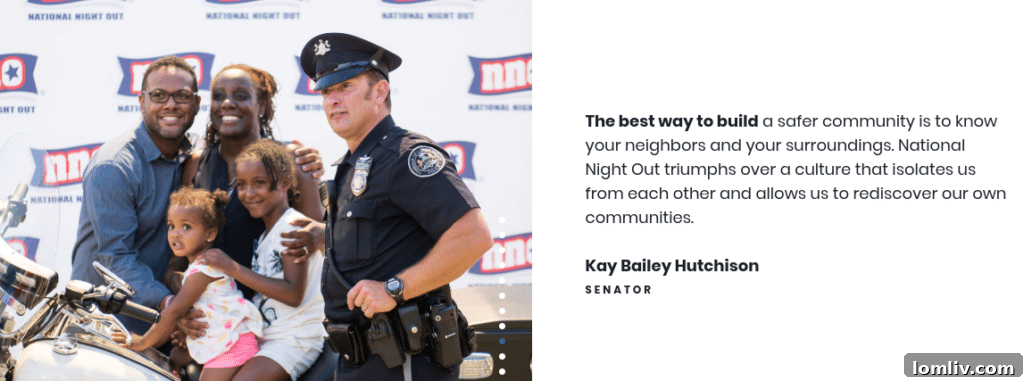
Beyond National Night Out, Little Casa View residents have taken their commitment to safety a step further by participating in the Dallas Police Department’s Volunteers in Patrol (VIP) course. This program equips citizens with the knowledge and skills to identify and report suspicious activities, effectively transforming them into the “eyes and ears for the DPD in our neighborhood,” as Kelly describes. The VIP status also provides a tangible benefit: “Because you’re a VIP, it bumps you up to the top of the list for response,” she adds, highlighting the efficiency gained through active citizen involvement. This dual approach of proactive community events and structured volunteer programs exemplifies how a united community can significantly enhance its own safety and well-being.
Addressing Disparities: Extending the Reach of Community Building
While well-organized neighborhoods like Little Casa View readily embrace initiatives like National Night Out, city officials acknowledge a significant challenge: low-income, high-crime neighborhoods and multifamily developments, which could dramatically benefit from building relationships with the police, are often less organized and typically do not host their own NNO events. This disparity creates a gap in community engagement precisely where it is most needed.
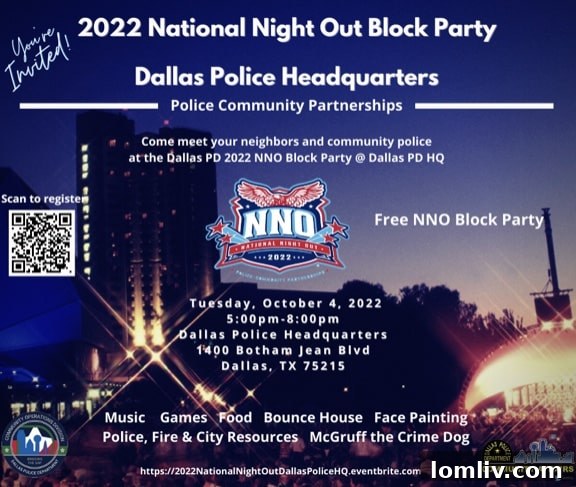
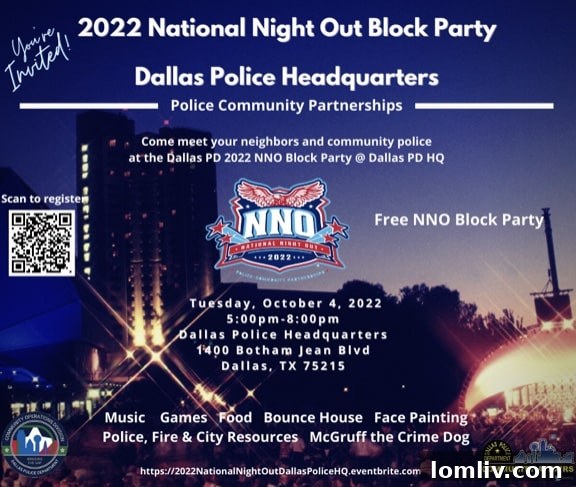
To address this, the Dallas Police Department actively works to ensure that the benefits of National Night Out are accessible to all residents. For those in areas without an organized event, the DPD hosts a free community block party at Dallas Police Headquarters, located at 1400 Botham Jean Blvd. This inclusive event, held from 5 to 8 p.m. on October 4th, offers an alternative for residents to engage with law enforcement, learn about local safety initiatives, and participate in the spirit of community building. These city-wide efforts are crucial in ensuring that no community is left behind in the pursuit of a safer, more connected Dallas.


Dallas Police Department’s Holistic Approach to Crime Reduction
The Dallas Police Department is at the forefront of implementing comprehensive strategies to combat crime and foster community well-being. The DPD’s Violent Crime Reduction Plan starkly illustrates the urgency of these efforts, revealing a nearly 22 percent increase in violent crime over a three-year period from 2018 to 2020. In response, Police Chief Eddie Garcia has firmly established that strong relationships and unwavering trust are the fundamental cornerstones of his community policing strategy. This vision extends beyond mere enforcement, embracing a multifaceted approach that addresses the root causes of crime while enhancing public safety.
The city’s commitment is further amplified by proactive initiatives designed to increase visibility and engagement, particularly in low-income and underserved areas. Jennifer Brown, the city’s manager of public information, explains, “The city has taken the proactive stance of increased visibility and engagement in low-income and underserved areas of our city through an increase in community events, social service access, and by conducting warrant service against known violent offenders that negatively affect the safety of our residents.” This integrated approach recognizes that crime reduction is not solely a police responsibility but requires a collaborative effort involving various city departments and community stakeholders. Furthermore, Brown emphasizes that “Community policing strategies also are most effective when the environment is positively influenced.” This means addressing physical blight and fostering positive social environments.
To achieve this, the city’s Office of Integrated Public Safety Solutions has spearheaded crucial environmental improvements. This includes the installation of over 4,000 lighting upgrades in areas historically known for high night-time crime, leveraging principles of Crime Prevention Through Environmental Design (CPTED) to deter criminal activity. Concurrently, the collaborative Risk Terrain team actively identifies and mitigates urban blight by dispatching mowing teams to care for vacant lots, securing abandoned properties, and removing illegal dumping. These joint efforts not only beautify communities but also signal a commitment from the city to invest in these areas, thereby building trust with the public and creating an environment where crime is less likely to flourish. Further reinforcing this commitment, the Dallas City Council recently passed a $4.75 billion budget, which includes critical funding for 250 new police officers, strategically aimed at increasing police presence and enhancing community engagement across the city.
Cultivating Trust: The Cornerstone of Effective Policing
In established neighborhoods like Little Casa View, there is an invaluable sense of security that arises from strong community bonds. As Lisa Kelly aptly puts it, “Everybody here pretty much knows everybody.” This familiarity fosters an environment where residents feel comfortable discussing issues openly and, crucially, reaching out for help when needed. Over her 14 years in Little Casa View, Kelly has observed the stability of the neighborhood, with properties quickly changing hands when families move, and many residents living in the homes where they grew up. This deep-rooted connection strengthens the community’s collective efficacy and its relationship with law enforcement. Kelly recalls past incidents where the trust factor with officers was evident: “People will contact me and ask if I can call [Officer Ortiz] and say, ‘Here’s the situation.’” This direct line of communication, built on years of positive interactions, is a powerful tool in maintaining neighborhood safety.
The importance of trust extends particularly to young people and law enforcement. Kelly vividly recounted witnessing an officer pull over a car full of youth in another city. She observed the young occupants immediately exiting the vehicle with their hands in the air, a stark reaction suggesting an automatic assumption of an unfriendly interaction. This incident underscores the critical need for positive engagements, like those fostered by National Night Out, which help to dispel fear and build a foundation of trust between youth and police. Kelly emphasizes that such interactions remind residents, especially younger generations, that officers are there to protect and serve them, not as adversaries.
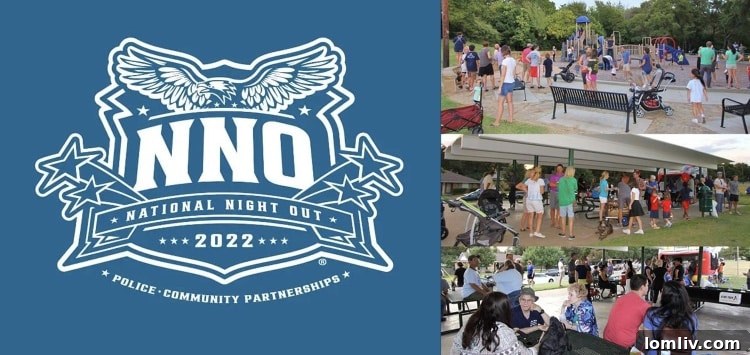
The Little Casa View neighborhood exemplifies how community engagement can extend beyond a single annual event. They regularly organize “trash bash” clean-ups a couple of times a year, targeting sites along Gus Thomasson Road, Centerville Road, or Joaquin Drive. These clean-up efforts often see DPD officers and code enforcement personnel joining in, working alongside residents. Kelly notes the profound impact of these collaborative activities: “When the kids are driving by and they see the police out there working with their parents, I think that shows them these are people who are helping. They’re not adversaries.” These shared experiences reinforce positive perceptions of law enforcement and demonstrate that community safety is a collective, ongoing endeavor.
Conclusion: A Shared Path to a Safer Dallas
The recent tragic events in East Dallas serve as a poignant reminder of the enduring need for robust community-police partnerships. However, the proactive efforts of neighborhoods like Little Casa View, championed by dedicated residents such as Lisa Kelly and supported by the Dallas Police Department, offer a beacon of hope. National Night Out, far from being just a single event, represents a foundational principle: that genuine trust and collaboration between law enforcement and the communities they serve are indispensable for creating truly safe and thriving urban environments.
Dallas’s commitment to community policing, evidenced by city-wide initiatives, environmental improvements, and strategic budget allocations for new officers, illustrates a holistic approach to public safety. By extending the reach of these initiatives to all areas, particularly those most in need, and by fostering consistent, positive interactions, Dallas is paving the way for a future where residents view police officers not as distant figures of authority, but as integral partners in building a stronger, safer, and more connected city for everyone.