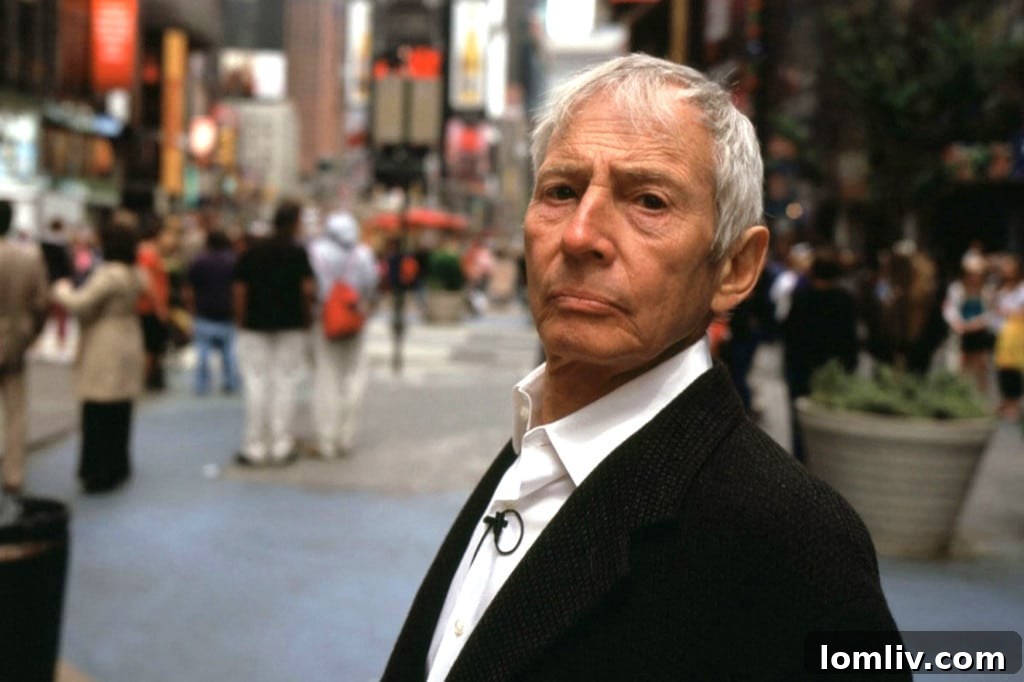
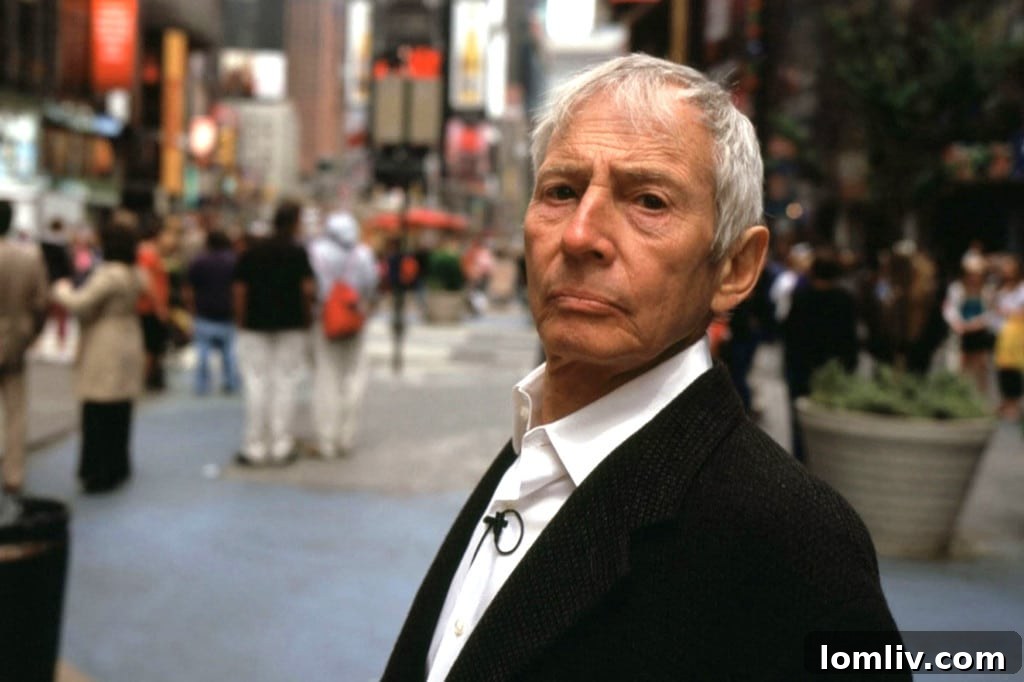
The saga of Robert Durst, the enigmatic New York City real estate scion, culminated in a dramatic verdict that brought a decades-long mystery to a partial close. A Los Angeles jury found Durst guilty of the first-degree murder of his best friend, Susan Berman, a crime that unfolded more than two decades prior. This landmark decision marked a significant chapter in one of America’s most bizarre and captivating true-crime narratives, yet certain aspects of Durst’s dark past continue to baffle investigators and the public alike.
Susan Berman, a prolific writer and screenwriter, was discovered deceased in her Beverly Hills home in December 2000, having suffered a single gunshot wound to the head. Her death sent shockwaves through their shared social circles, particularly as it occurred just weeks before she was scheduled to speak with investigators about another profound mystery: the unsettling 1982 disappearance of Durst’s first wife, Kathleen McCormack Durst. Kathleen, a medical student, was last seen alive in New York and her body has never been recovered, leaving a void that haunted her family for decades. In 2017, she was officially declared legally dead, though the circumstances of her vanishing remain unsolved.
Born into immense wealth and privilege, Robert Durst was the eldest son of Seymour Durst, a visionary real estate mogul credited with building a formidable $500 million empire in New York City. Despite his lineage, Robert Durst consistently resisted taking over the family business, displaying an erratic streak from a young age. After inheriting a substantial fortune, Durst’s life took several unconventional turns, leading him far from the urban landscape of his birth to the vast stretches of Texas. For several years, he resided in Dallas, where he notably leased a sophisticated condo at The Centrum on Oak Lawn at Cedar Springs, unknowingly leaving a trail of peculiar encounters in his wake.
One such encounter involved Linda Zevallos, a real estate agent who briefly dated Durst and whose observations painted a chilling picture. She vividly recalled an instance where she attempted to use the powder room near the kitchen in Durst’s Centrum condo. Durst abruptly stopped her, claiming the room was dirty. What Linda glimpsed inside was far more disturbing than mere untidiness. The floor, she noted, was concrete, and prominently displayed on a stand was a saw – an unsettling “sculpture” that left a lasting impression. Linda also observed a complete absence of pets or animals in his home, a detail that would later gain dark significance in light of Durst’s subsequent alleged behaviors.
A Web of Confessions and Cryptic Notes
The prosecution’s case against Robert Durst for Susan Berman’s murder was largely built on a compelling foundation of circumstantial evidence, including the testimony of those Durst had confided in, and a notorious cryptic note. Prosecutors meticulously argued that Durst, fearful that Berman was about to betray him by revealing crucial information about Kathleen’s disappearance to authorities, shot his confidante in the head to silence her permanently. While no eyewitnesses were present at the scene of the shooting, and a murder weapon was never recovered, the state meticulously pieced together a narrative based on admissions Durst reportedly made to close friends and a distinct piece of evidence known as the “cadaver note.”
Crucial testimony came from friends who stated that Durst had confessed to the killing. Prosecutors alleged that Durst had earlier confided in Berman about killing Kathleen McCormack Durst, and that Berman had subsequently assisted him in covering his tracks, helping him evade suspicion for nearly two decades. On the witness stand, Durst vehemently denied murdering his first wife and, later, Susan Berman. However, under the relentless pressure of cross-examination by lead prosecutor John Lewin, Durst eventually testified that he would perjure himself if he had indeed committed these crimes. Lewin masterfully prompted Durst to admit, astonishingly, that he had perjured himself five times during the trial proceedings, which had resumed in May after a significant 14-month delay caused by the global pandemic. The physical evidence surrounding Berman’s death was notably scarce; there were no direct witnesses to the shooting and no murder weapon ever located. Despite these challenges, prosecutor Habib Balian powerfully emphasized the testimony of one of the state’s strongest witnesses in his closing arguments: Nick Chavin, a long-time friend to both Durst and Berman. Chavin testified that Durst had chillingly told him, regarding Berman, “It was her or me. I had no choice.” Balian declared to the jurors, “Those nine words sum up the entire case,” encapsulating the prosecution’s theory of a desperate act to prevent exposure. Another pivotal piece of evidence was the infamous “cadaver” note, an anonymous, handwritten letter sent to the Beverly Hills Police Department. It contained Berman’s address and the single, capitalized word “CADAVER,” unequivocally leading detectives to her body. In the groundbreaking 2015 HBO documentary series, “The Jinx: The Life and Deaths of Robert Durst,” Durst himself, seemingly unaware he was being recorded, conceded that the letter could only have been sent by Berman’s killer. Throughout the initial stages of the legal proceedings, Durst’s defense lawyers adamantly denied his authorship of the note, even attempting, unsuccessfully, to exclude handwriting evidence from the trial. However, the documentary filmmakers presented Durst with another letter he had once mailed to Berman, which featured nearly identical handwriting to the “cadaver” note. Both letters also shared a distinctive misspelling of “Beverly Hills” as “BEVERLEY.” In a significant reversal, lawyers for the real estate mogul, in a court filing late the previous year, finally acknowledged that Durst had indeed penned the anonymous note. Despite this admission, Durst’s defense attorney, Dick DeGuerin, maintained at the time, “This does not change the fact that Bob Durst did not kill Susan Berman.”
In the aftermath of his conviction, the then 78-year-old Durst, already frail and in poor health, faced further challenges, including a period of quarantine after being exposed to COVID-19 by a driver. His advanced age and various medical conditions meant that the weight of justice, though finally delivered, arrived at a time when his physical capacity was severely diminished.
Texas Connections: A Trail of Unsettling Events
Robert Durst’s journey through Texas was marked by a series of bizarre and violent incidents that further cemented his reputation as a man perpetually surrounded by death and suspicion. After his tenure in Dallas, he relocated to Galveston, a coastal city where his life once again became intertwined with a sensational murder trial. In 2003, Durst was famously acquitted of the murder of his neighbor, Morris Black, on grounds of “self-defense.” The circumstances of Black’s death were grotesque: his body was discovered dismembered and floating in Galveston Bay, a gruesome act that Durst admitted to committing. The acquittal, largely attributed to a sharp legal defense team, shocked many observers and added another perplexing layer to Durst’s already complex history.
The judge who presided over the Morris Black case, former Texas District Court Judge Susan Criss, now an attorney in private practice, later recounted deeply unsettling experiences following the trial. She publicly shared her belief that Durst had a penchant for cruelty towards animals, noting that she found the cleanly severed head of a cat on her doorstep shortly after the trial concluded. Even more chillingly, she voiced her conviction that Durst “practiced dismemberment techniques on the seven dogs he owned, all of which were Malamutes named ‘Igor,'” hinting at a dark preparedness that predated Black’s murder. These anecdotes painted a disturbing portrait of a man capable of extreme acts.
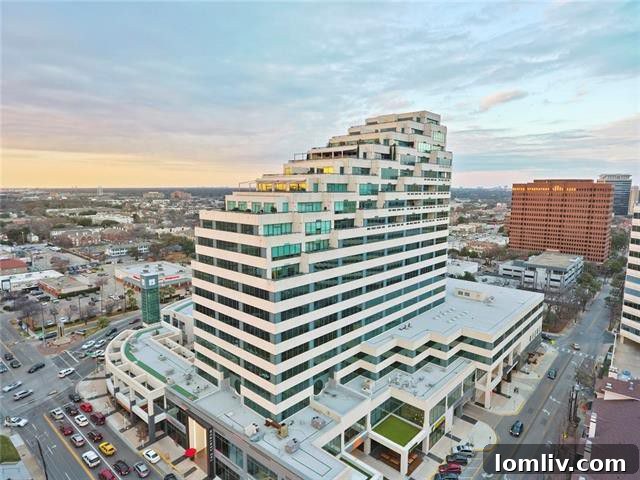
Before his Galveston saga, Durst’s Dallas chapter in the late 1990s at The Centrum on Oak Lawn had its own share of curious interactions. Dallas Realtor Jill Crowder Lucas was one of the professionals who assisted him during his initial settlement in the city, an experience she later reflected upon with a sense of unease and disbelief.
Jill Lucas described her encounter: “In March 1998, I showed residential high rises to a new lease client from New York. After driving him around in my car for two days, and showing him 8 plus high rise buildings… he chose a unit at the Centrum on Oak Lawn in Dallas and signed a one-year lease. That client is now on every TV news channel in the world and featured on a HBO Special… the infamous accused murderer Robert Durst. Obviously, I met him after he fled New York and before he moved to Galveston! Kinda’ gives me chills!” Her words capture the surreal nature of unknowingly assisting a man who would become one of the most infamous figures in American crime history, highlighting the chilling proximity many had to Durst’s concealed life.
The Burden of Accountability: Linda Zevallos’s Story
For individuals like Linda Zevallos, who had a personal connection with Robert Durst, the news of his conviction brought a profound sense of relief and vindication. Linda had witnessed firsthand Durst’s controlling and manipulative tendencies during their brief acquaintance, and the weight of that experience had lingered for years. Upon learning of the verdict, she expressed immense gratitude that justice had finally prevailed for Susan Berman, and by extension, for the victims whose lives Durst had so profoundly impacted.
Linda articulated her relief, stating, “He still has a lot of funds available. Very relieved, yes. He was very controlling. I wasn’t dating Robert, but he would tell me, for example, I need to wear a size 6. I’m glad Susan Berman got justice and he has to be accountable for it.” Her words underscore not only the personal satisfaction of seeing justice served but also the enduring power Durst’s wealth and personality exerted over those around him, even in seemingly minor interactions.
Linda Walker Zevallos, then an agent with Ebby Halliday, first encountered Robert Durst in the late 1990s, at a time when she was navigating a personal divorce and had not yet fully embarked on her real estate career. Their initial meeting was serendipitous, occurring on a first-class flight back to Dallas from a national newspaper convention in New York City. Linda, noticing Durst engrossed in a newspaper, politely inquired if she could read it once he had finished. “He said of course,” she recalled, marking the innocent beginning of a conversation that would reveal unsettling insights into Durst’s character.
Their discussion quickly turned personal, with Linda sharing details about her ongoing divorce. Durst, in turn, offered advice that was both startling and indicative of his own ethical compass. He suggested she break into her estranged husband’s office to steal his financials, a brazen proposal that hinted at a disregard for legality. During this same flight, Durst also casually mentioned that a friend of his ex-wife was missing, a detail that, in the pre-internet era, seemed merely odd. Linda reflected, “We didn’t have Google back then, so I thought it was maybe a little strange, but never researched it.” This seemingly innocuous comment would later acquire a sinister resonance when the true extent of Kathleen McCormack Durst’s disappearance became public knowledge.
Upon landing, Durst’s persistent interest in Linda became evident. He first inquired if she had a car at the airport to give him a ride home, and when that wasn’t possible, he boldly asked if she would consider going out with him sometime. “I’m in Dallas and I don’t know anybody,” he told her, leveraging his perceived vulnerability. Linda, caught off guard and still embroiled in her divorce, hesitated, telling him she would need to think about it. The very next day, a grand gesture arrived at her doorstep: $500 worth of exquisite orchids, accompanied by his phone number and an implicit invitation to call, initiating what would become a brief, peculiar “whirlwind romance.”
A Whirlwind Romance with an Edge
Durst’s pursuit continued with a lunch invitation. They met at The Centrum, where he resided, and he offered champagne, which Linda politely declined, citing the early hour. Instead, they walked across the street to Eatzi’s for lunch, a seemingly ordinary date that would soon reveal Durst’s volatile nature. Linda described him as “as nice as he could be” during the meal. Their pleasant lunch concluded with them caught in a torrential rain downpour, sopping wet and ducking under awnings, a memorable but otherwise innocuous end to their outing. Once back at The Centrum, Linda departed, assuming a typical romantic interlude.
However, Durst’s interest was more intense than typical. “He called me shortly after that,” Linda recounted. During visits to his apartment, Linda noticed numerous real estate-related “things” adorning his walls, a nod to his family legacy. He initially presented himself as a labor lawyer before eventually disclosing that his father was the renowned builder of office buildings in Times Square, a gradual revelation of his true status. The dynamic shifted when Durst proposed taking Linda to a fancy dinner, perhaps at Stephan Pyles’ then-restaurant located within the Centrum building itself. Fate intervened when a snowstorm hit Dallas that day, closing schools and requiring Linda to stay home with her 13-year-old son. She called to cancel their date.
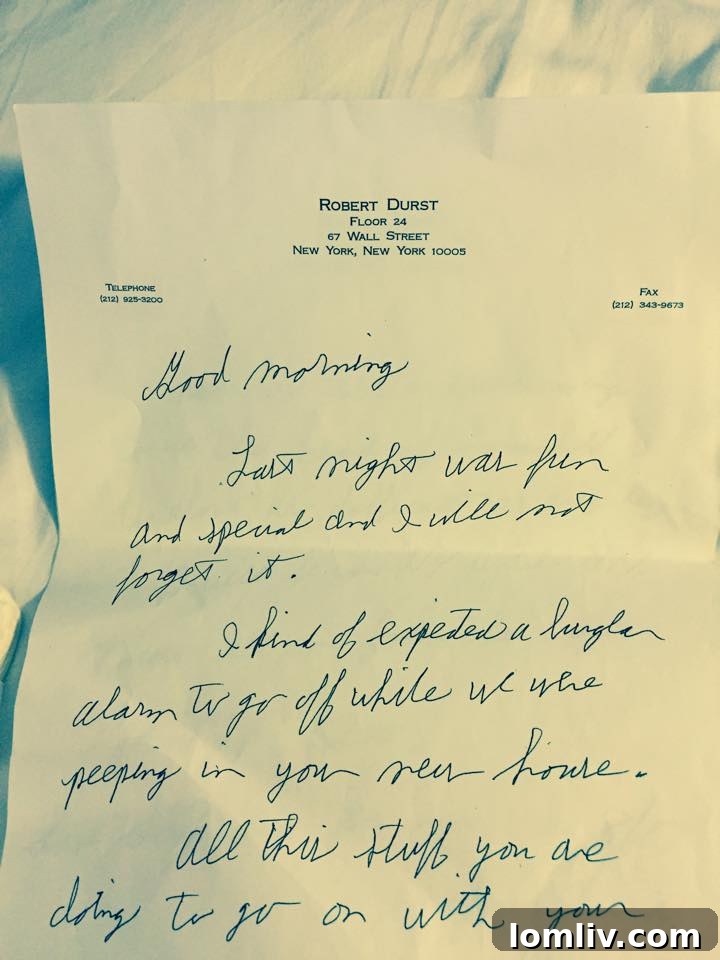
Durst’s reaction was immediate and explosive. “He got furious, really mad,” Linda recalled. “He said ‘I cannot believe you people in Dallas when it snows you just stop.’” His anger was palpable, demonstrating a profound inability to cope with unforeseen circumstances or, more critically, with personal rejection. He only calmed down later, upon discovering that even the restaurant itself had closed due to the weather. Linda astutely observed, “I think he has a real hard time handling rejection; he just cannot bear it.” This insight into his character resonated deeply with the escalating fury he displayed in subsequent years.
Eventually, Linda, unnerved by his intensity, moved residences. Despite her efforts to create distance, Durst continued to call her relentlessly from San Francisco and New York City until November, though she steadfastly refused to answer. Her experiences highlighted the dual nature of his personality: “He could be really nice and then really mean,” she explained, capturing the unpredictable swings in his demeanor. In a final, telling gesture of his complex character, when a rental house Linda planned to secure fell through, Bob Durst, despite their strained interactions, inexplicably offered to let her and her son live in his high-rise apartment, an offer she ultimately declined. One final detail that often emerges in discussions about Robert Durst is his distinctive habit of only writing in green ink. This peculiar preference, now widely known, adds another layer to his enigmatic persona. As he faced the grim reality of a first-degree murder sentence as an elderly man, one can’t help but wonder if his specific requirement for green writing pens would still be so readily available to him, a small but poignant symbol of his final loss of control.