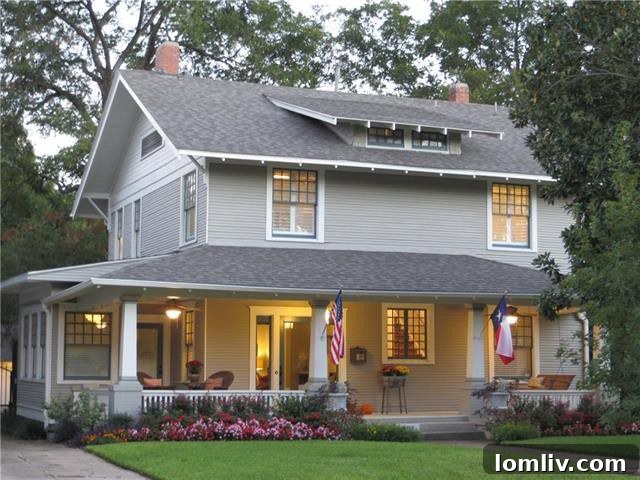
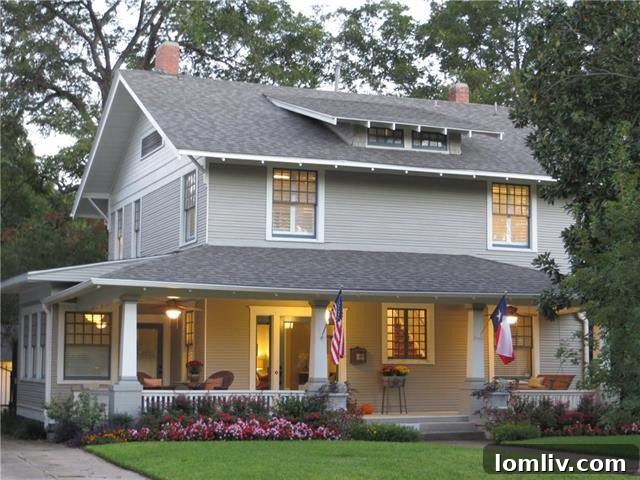
Dallas boasts an impressive collection of historic neighborhoods, each with its unique charm and story. Yet, even among these storied enclaves, Munger Place stands out as a true pioneer and a testament to visionary urban planning. More than just a collection of old homes, Munger Place represents a bold experiment in community design and an enduring symbol of resilience in the heart of Old East Dallas.
Conceived in the early 20th century by the forward-thinking brothers Robert S. Munger, a prosperous cotton gin manufacturer, and Collett Munger, Munger Place was not merely developed but meticulously planned. Spanning an expansive 300 acres, this namesake neighborhood was designed with an unprecedented level of foresight, aiming to attract Dallas’s most discerning and elite homebuyers. The Munger brothers implemented a suite of cutting-edge developmental strategies that would set new standards for residential communities in Texas and beyond. Their vision included not only aesthetic appeal but also robust, modern infrastructure, a rarity for its time.
Residents of the nascent Munger Place were promised all the “bells and whistles” of modern urban living. This included meticulously paved streets, inviting sidewalks perfect for leisurely strolls, and strategically planted shade trees that promised a verdant canopy for generations to come. Beyond these visible amenities, the Mungers invested in essential, albeit unseen, infrastructure, providing gas mains for heating and cooking, a comprehensive sewer system, and the revolutionary amenity of electric street lights, illuminating the neighborhood long after dusk. These features, commonplace today, were luxurious innovations in the early 1900s, signaling Munger Place as a truly upscale and progressive development.
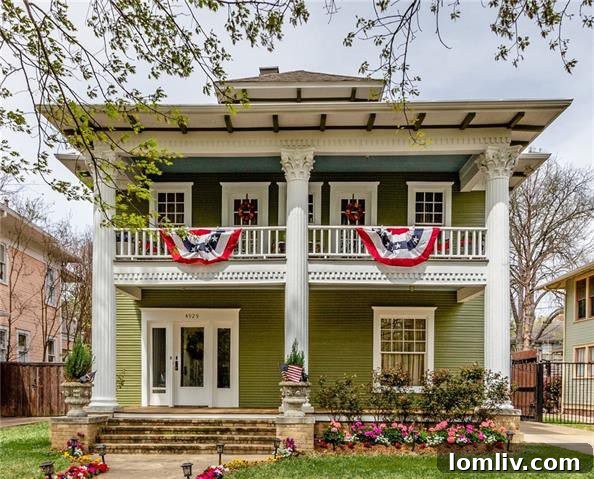
From the critical real estate perspective of “location, location, location,” Munger Place was strategically positioned within Old East Dallas, offering residents the distinct advantage of being just minutes away from the vibrant downtown core. This proximity was a significant draw for professionals and families seeking both the tranquility of a residential enclave and the convenience of urban amenities. While the Munger brothers skillfully integrated every aspect of a modern, upscale neighborhood, their grand undertaking possessed one defining characteristic that truly set it apart: its genesis was circa 1905. This timeline positions Munger Place not just as a historic neighborhood, but as a groundbreaking testament to early 20th-century urban planning innovation.
Pioneering Urban Planning: Early 20th Century Innovation in Dallas
Munger Place quickly earned its reputation as a beacon of residential excellence, proudly branded as “The City Man’s Home.” This moniker reflected its appeal to affluent city dwellers seeking sophisticated living. What truly cemented its groundbreaking status, however, was its distinction as the very first deed-restricted neighborhood in Texas. This innovative legal framework was established to safeguard property values, maintain architectural uniformity, and ensure the long-term integrity and exclusivity of the community. The Mungers understood that by implementing strict guidelines, they could curate a superior living environment that would attract and retain the most desirable residents.
The deed restrictions were remarkably specific and forward-thinking. To ensure a high standard of living and architectural grandeur, homes built in Munger Place were required to meet a minimum construction cost of at least $2,000 – a substantial sum in 1905, indicative of the wealth and quality expected. Furthermore, a two-story minimum height requirement was imposed, contributing to the stately appearance of the streetscapes. Perhaps one of the most distinctive rules prohibited houses from facing a side street, ensuring that every home presented its primary facade to the main avenues, enhancing the overall aesthetic coherence and grand boulevard feel of the neighborhood. These regulations fostered a sense of prestige and quality that was unmatched in Dallas at the time, laying the groundwork for the unique architectural style that would become a hallmark of Munger Place.
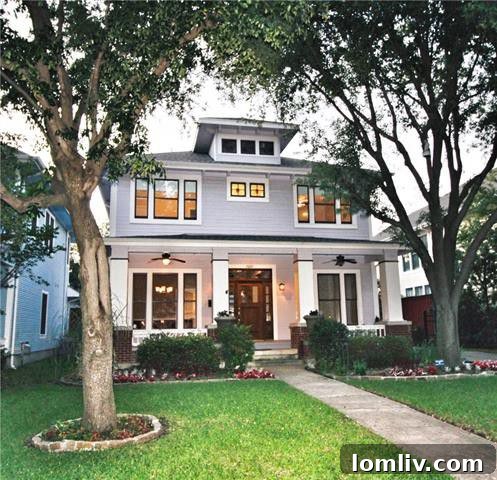
The Munger brothers were also remarkably ahead of their time in their marketing and conceptualization of the neighborhood’s assets. They astutely touted Munger Place’s close proximity to downtown Dallas, recognizing its importance for commuters and those seeking cultural and commercial opportunities. This foresight is even more impressive when considering that the primary mode of transportation in those early days was still horse-drawn carriages. Envisioning a future where urban connectivity would be paramount, the Mungers ensured that their development was not an isolated suburb but a seamlessly integrated extension of the city, accessible and convenient. This innovative approach to combining strict architectural standards with thoughtful urban planning cemented Munger Place’s reputation as a residential masterpiece, attracting a wave of prosperous residents to its tree-lined streets.
The Resilient Journey: The Ups and Downs (and Triumphant Ups) of Munger Place
Like many grand ventures and established communities, Munger Place experienced the ebb and flow of economic tides and societal shifts. Despite its initial success in attracting Dallas’s most affluent residents and establishing itself as a premier address, the devastating impact of The Great Depression, which began in 1929, took a dramatic and prolonged economic toll on the neighborhood. As unemployment soared and financial stability crumbled, many homeowners found themselves in precarious positions. While some were forced to vacate their stately homes, abandoning the grandeur they once enjoyed, others demonstrated remarkable resilience and ingenuity. Faced with economic hardship, these residents made the difficult but necessary decision to reconfigure their large, single-family homes into multi-family apartments, creating much-needed revenue streams to weather the storm.
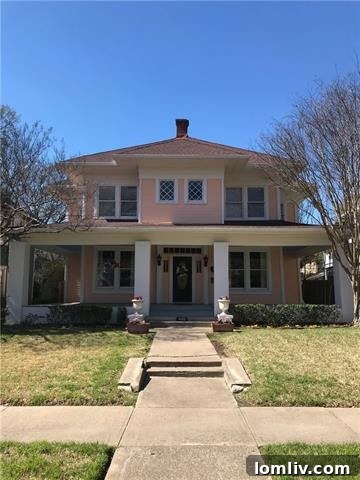
This trend of converting grand homes into smaller, income-generating units continued and intensified during the post-World War II housing shortage. As soldiers returned home and families sought affordable living spaces, the demand for multi-family housing skyrocketed. Even more Munger Place homeowners capitalized on this demand, further subdividing their properties. While these adaptations provided crucial housing solutions and economic relief for property owners, they gradually eroded the neighborhood’s original character and architectural integrity. By the late 1960s, Munger Place was a shadow of its former self. Far too many of its once-magnificent homes had fallen into disrepair, with some being razed completely, others condemned, and many more teetering on their last legs, threatening to erase a vital piece of Dallas history.
However, the story of Munger Place is ultimately one of remarkable revitalization. The neighborhood received a crucial lifeline in the mid-1970s, thanks to the pioneering spirit of a new generation of residents. A dedicated batch of artisans, architects, and urban pioneers, fueled by a passion for historic preservation and a vision for urban renewal, recognized the inherent value in the dilapidated structures. Despite the advanced state of deterioration, these new residents saw beyond the peeling paint and crumbling facades. They were captivated by the historic architecture, the impressive soaring ceilings, the abundant natural light filtering through original leaded glass windows, and the sheer scale and craftsmanship of these early 20th-century homes. They envisioned endless possibilities for restoration and new beginnings, committing themselves to meticulously bringing these grand residences back to their former glory. This grassroots movement ignited a period of renaissance, transforming Munger Place from a forgotten relic into one of Dallas’s most sought-after historic neighborhoods.
Munger Place: A Beacon of Historical Significance and Prairie Style Architecture
Today, Munger Place stands as a celebrated testament to Dallas’s rich architectural heritage and the power of community-led preservation. Its historical significance is formally recognized through its inclusion in two distinct, yet interconnected, historic districts. A substantial portion of the neighborhood falls within the boundaries of the Munger Place Historic District, while another segment is proudly part of the renowned Swiss Avenue Historic District. Both of these districts hold the prestigious distinction of being listed on the National Register of Historic Places, underscoring their national importance and ensuring the continued protection and appreciation of their unique character.
This dual recognition highlights not only the visionary planning of the Munger brothers but also the dedication of generations of residents who have cherished and preserved its unique architectural fabric. Munger Place has re-emerged as one of the hottest and most desirable historic neighborhoods in Dallas, drawing residents who appreciate its blend of historical grandeur and modern urban living. Its appeal is further amplified by a distinctive architectural characteristic: Munger Place boasts the largest concentration of authentic Prairie-style homes in the entire United States. This architectural style, pioneered by Frank Lloyd Wright and his contemporaries in the early 20th century, emphasizes horizontal lines, low-pitched roofs with broad eaves, open floor plans, and a harmonious integration with the natural landscape.
The prevalence of Prairie-style architecture in Munger Place, a direct result of the original deed restrictions and the era of its development, offers a unique visual and historical experience. Walking through the tree-lined streets, one can admire a cohesive collection of homes that exemplify this iconic American architectural movement. These homes, with their craftsman details, expansive porches, and an emphasis on natural light and materials, offer a glimpse into a pivotal period of design innovation. The enduring charm and architectural integrity of its more than 250 historic homes make Munger Place not just a place to live, but a living museum, a vibrant community, and a testament to the enduring appeal of thoughtfully planned urban spaces. Its legacy continues to thrive, making it a cornerstone of Dallas’s identity and a prime example of successful historic preservation.